Passive housing, also known as passive house or Passivhaus, is a rigorous, voluntary standard for energy efficiency in a building, reducing its ecological footprint. It results in ultra-low energy buildings that require little energy for space heating or cooling. Here are the key features and benefits of passive housing:
### Key Features:
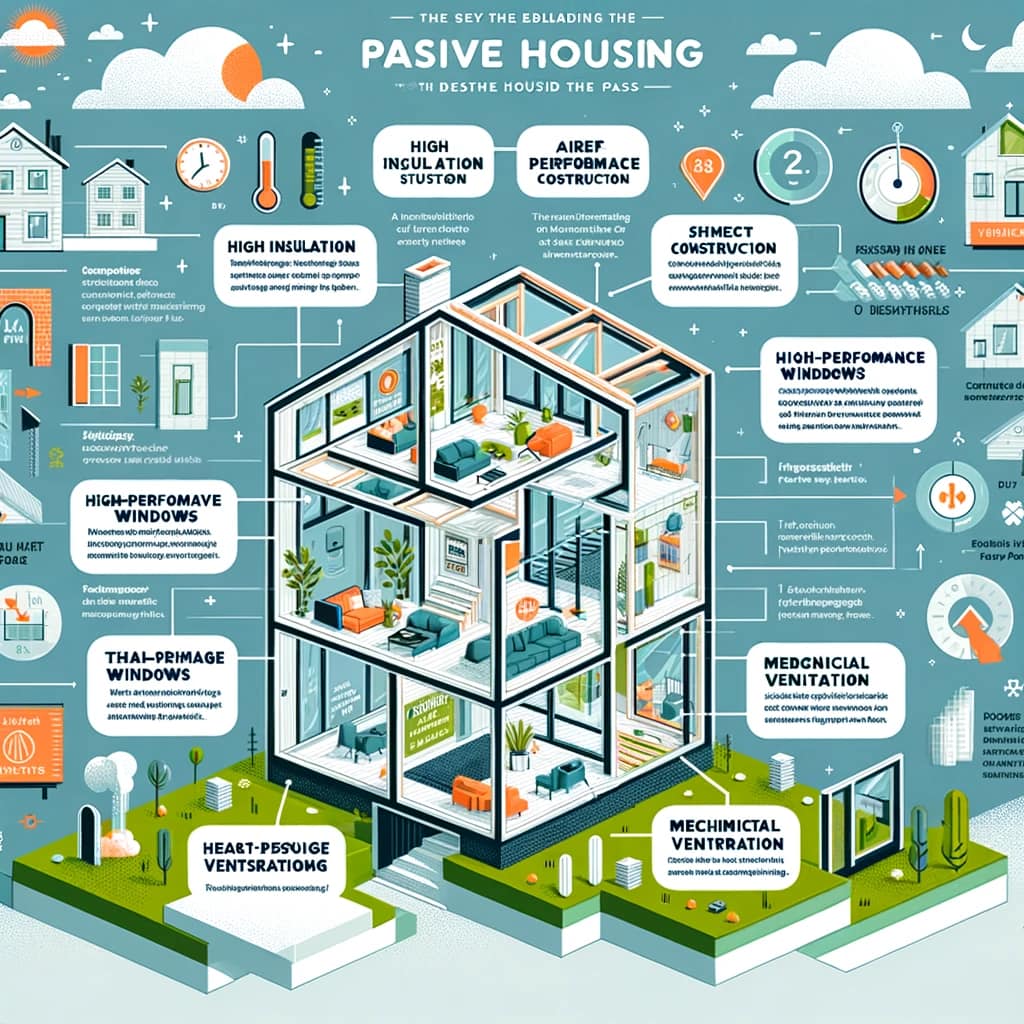
1. **High Insulation**: Passive houses have high levels of insulation in the walls, roof, and floor to minimize heat loss. This keeps the interior temperature stable and reduces the need for active heating and cooling systems.
2. **Airtight Construction**: Airtightness is crucial to prevent heat loss and drafts. Special construction techniques and materials are used to ensure that the building envelope is as airtight as possible.
3. **High-Performance Windows**: Windows in passive houses are typically triple-glazed with low-emissivity coatings and insulated frames to reduce heat transfer.
4. **Thermal Bridge-Free Design**: Passive houses are designed to eliminate thermal bridges, which are weak points in the building envelope where heat can escape.
5. **Mechanical Ventilation with Heat Recovery (MVHR)**: A ventilation system with heat recovery is used to provide fresh air while retaining the heat from the outgoing air. This system significantly reduces the energy needed for heating.
6. **Solar Gain**: Passive houses are oriented and designed to maximize solar gain during the winter and minimize it during the summer, using strategic window placement and shading.
### Benefits:
1. **Energy Efficiency**: Passive houses use up to 90% less energy for heating and cooling compared to traditional buildings. This is achieved through their highly efficient design and construction.
2. **Comfort**: The consistent indoor temperature and high indoor air quality make passive houses very comfortable to live in.
3. **Environmental Impact**: By reducing energy consumption, passive houses significantly lower greenhouse gas emissions and contribute to climate change mitigation.
4. **Cost Savings**: Although the initial construction costs may be higher, the reduced energy bills result in long-term savings.
### How Passive Houses Work:
Passive houses achieve their energy efficiency through a combination of design strategies and technologies that minimize heat loss and maximize heat gains. These buildings rely heavily on natural energy sources, such as solar radiation, to heat the building. The MVHR system ensures that fresh air is constantly supplied while recovering heat from the outgoing air, reducing the need for additional heating.
### Examples and Resources:
- **Passivhaus Institut**: An independent research institute that developed the Passivhaus standard. They provide extensive resources and certification for passive houses.
- [Passivhaus Institut](
https://passiv.de/en/)
- **International Passive House Association (iPHA)**: A global network that promotes the passive house standard and provides resources for building and certifying passive houses.
- [iPHA](
https://www.passivehouse-international.org/)
- **Case Studies**: Numerous case studies of passive houses worldwide demonstrate the effectiveness and benefits of this building standard. These include residential homes, schools, and commercial buildings that have achieved significant energy savings and improved comfort.
Passive housing represents a significant step towards sustainable building practices that align with climate change mitigation efforts. It provides a blueprint for constructing buildings that are both energy-efficient and comfortable, contributing to a sustainable future.
Passive housing, also known as passive house or Passivhaus, is a rigorous, voluntary standard for energy efficiency in a building, reducing its ecological footprint. It results in ultra-low energy buildings that require little energy for space heating or cooling. Here are the key features and benefits of passive housing:
### Key Features:
1. **High Insulation**: Passive houses have high levels of insulation in the walls, roof, and floor to minimize heat loss. This keeps the interior temperature stable and reduces the need for active heating and cooling systems.
2. **Airtight Construction**: Airtightness is crucial to prevent heat loss and drafts. Special construction techniques and materials are used to ensure that the building envelope is as airtight as possible.
3. **High-Performance Windows**: Windows in passive houses are typically triple-glazed with low-emissivity coatings and insulated frames to reduce heat transfer.
4. **Thermal Bridge-Free Design**: Passive houses are designed to eliminate thermal bridges, which are weak points in the building envelope where heat can escape.
5. **Mechanical Ventilation with Heat Recovery (MVHR)**: A ventilation system with heat recovery is used to provide fresh air while retaining the heat from the outgoing air. This system significantly reduces the energy needed for heating.
6. **Solar Gain**: Passive houses are oriented and designed to maximize solar gain during the winter and minimize it during the summer, using strategic window placement and shading.
### Benefits:
1. **Energy Efficiency**: Passive houses use up to 90% less energy for heating and cooling compared to traditional buildings. This is achieved through their highly efficient design and construction.
2. **Comfort**: The consistent indoor temperature and high indoor air quality make passive houses very comfortable to live in.
3. **Environmental Impact**: By reducing energy consumption, passive houses significantly lower greenhouse gas emissions and contribute to climate change mitigation.
4. **Cost Savings**: Although the initial construction costs may be higher, the reduced energy bills result in long-term savings.
### How Passive Houses Work:
Passive houses achieve their energy efficiency through a combination of design strategies and technologies that minimize heat loss and maximize heat gains. These buildings rely heavily on natural energy sources, such as solar radiation, to heat the building. The MVHR system ensures that fresh air is constantly supplied while recovering heat from the outgoing air, reducing the need for additional heating.
### Examples and Resources:
- **Passivhaus Institut**: An independent research institute that developed the Passivhaus standard. They provide extensive resources and certification for passive houses.
- [Passivhaus Institut](https://passiv.de/en/)
- **International Passive House Association (iPHA)**: A global network that promotes the passive house standard and provides resources for building and certifying passive houses.
- [iPHA](https://www.passivehouse-international.org/)
- **Case Studies**: Numerous case studies of passive houses worldwide demonstrate the effectiveness and benefits of this building standard. These include residential homes, schools, and commercial buildings that have achieved significant energy savings and improved comfort.
Passive housing represents a significant step towards sustainable building practices that align with climate change mitigation efforts. It provides a blueprint for constructing buildings that are both energy-efficient and comfortable, contributing to a sustainable future.