• RSIF8
    ROLL NO 77
    Movie review no 3
    moview topic Adams

    **Adams – A Thought-Provoking Short Film**

    *Adams* is a powerful and thought-provoking story about conflict, human behavior, misunderstandings, and the way small disagreements can grow into something much bigger. Through its characters and tense situations, the film encourages us to think about anger, judgment, communication, and how we treat people who are different from us.

    Watch the story, explore its deeper message, and ask yourself: **How easily can a small conflict become a serious problem?**

    #Adams #Movie #ShortFilm #FilmReview #MovieStory #HumanBehavior #Conflict #LifeLessons #ThoughtProvoking #Drama #FilmAnalysis #Movies
    RSIF8 ROLL NO 77 Movie review no 3 moview topic Adams 🎬 **Adams – A Thought-Provoking Short Film** 🎭 *Adams* is a powerful and thought-provoking story about conflict, human behavior, misunderstandings, and the way small disagreements can grow into something much bigger. 🧠⚑ Through its characters and tense situations, the film encourages us to think about anger, judgment, communication, and how we treat people who are different from us. 🀝❀️ Watch the story, explore its deeper message, and ask yourself: **How easily can a small conflict become a serious problem?** πŸŽ₯✨ #Adams #Movie #ShortFilm #FilmReview #MovieStory #HumanBehavior #Conflict #LifeLessons #ThoughtProvoking #Drama #FilmAnalysis #Movies 🎬🍿❀️
    0 Comments 0 Shares 27 Views 2
  • #rsisb
    Roll No 253
    Foundation Level
    Story Post 22
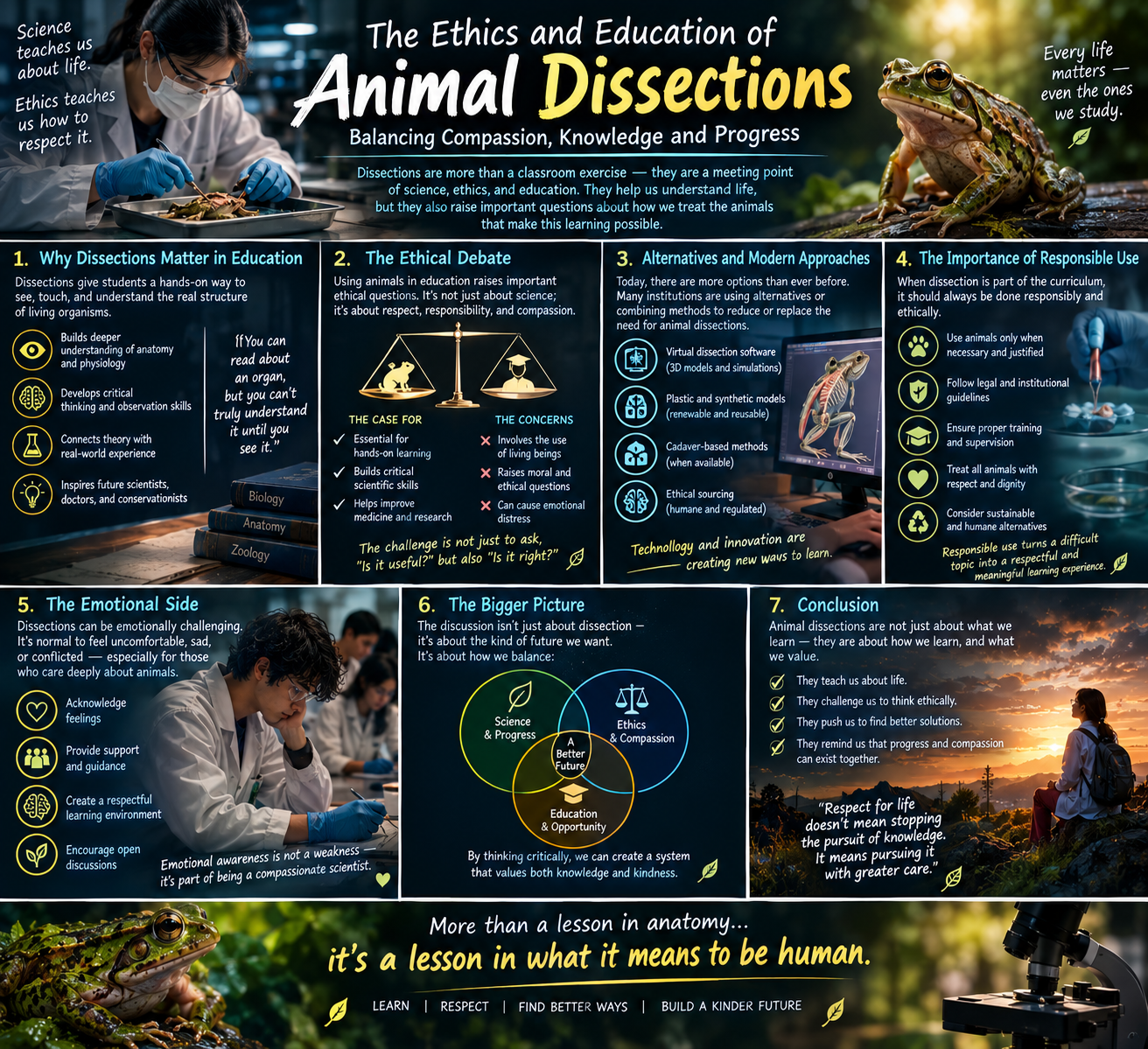
    # The Ethics and Education of Animal Dissections

    ## Balancing Knowledge, Compassion, and Scientific Progress

    Animal dissections have long been used to help students understand anatomy, physiology, and the remarkable complexity of living organisms.

    But dissection is more than a scientific technique.

    It also raises an important question:

    ### **How can we learn about life while treating life with respect?**

    Understanding both the educational value and the ethical considerations surrounding dissections allows us to approach biology with greater knowledge, responsibility, and compassion.

    ---

    ## 1. Why Dissections Matter in Education

    Dissections can provide students with a direct way to explore biological structures that are difficult to fully understand through diagrams or textbooks alone.

    They can help learners:

    Observe real anatomy
    Develop critical thinking
    Understand organ relationships
    Connect theory with physical structures
    Build curiosity about living systems

    Instead of simply memorizing the location of an organ, students can investigate how structures are positioned and connected.

    ### **It turns biological concepts into something tangible.**

    ---

    ## 2. The Ethical Debate

    Using animals for education creates a genuine ethical discussion.

    On one side, supporters may point to the educational benefits of direct anatomical study.

    On the other, concerns include:

    The use of living organisms
    Animal welfare
    Moral responsibility
    Whether alternatives can provide similar educational value

    The central question isn't simply:

    **“Is it useful?”**

    It is also:

    ### **“Is it justified, and can the same learning goals be achieved another way?”**

    Considering both questions encourages students to think scientifically **and ethically**.

    ---

    ## 3. Alternatives and Modern Approaches

    Technology has created new ways to study anatomy without always relying on traditional dissection.

    Modern educational approaches can include:

    Virtual dissection software
    3D anatomical models
    Synthetic or plastic models
    Interactive simulations
    Microscopic analysis
    High-quality anatomical imagery

    These tools can allow students to explore structures repeatedly, change viewpoints, and investigate complex systems in ways that may be difficult with a physical specimen.

    ### **Technology is creating new possibilities for learning.**

    ---

    ## 4. The Importance of Responsible Use

    When animal specimens are used for education or research, responsibility is essential.

    Important principles include:

    Following relevant laws and institutional guidelines
    Providing proper training and supervision
    Using animals only when scientifically or educationally justified
    Treating specimens respectfully
    Considering sustainable and humane alternatives

    Responsible scientific education isn't simply about obtaining knowledge.

    It is about **how that knowledge is obtained.**

    ---

    ## 5. The Emotional Side

    Dissection can affect students differently.

    Some may feel fascinated by anatomy.
    Others may feel uncomfortable.
    Some may experience sadness or conflict because they care deeply about animals.

    These reactions shouldn't automatically be dismissed.

    A respectful educational environment can encourage students to:

    Acknowledge their emotions
    Discuss concerns openly
    Support one another
    Maintain scientific curiosity
    Develop compassion

    ### **Emotional awareness can be part of becoming a responsible scientist.**

    ---

    # 6. The Bigger Picture

    The debate surrounding animal dissection isn't simply about choosing **science or compassion**.

    It is about finding ways for:

    **Scientific progress**
    **Ethical responsibility**
    **Education**
    **Compassion**

    to coexist.

    The goal is to create learning environments where students can develop strong scientific knowledge while also thinking carefully about the consequences of scientific practices.

    ### **Knowledge and compassion don't have to be opposites.**

    ---

    ## 7. What Dissections Can Teach Us

    When conducted appropriately, anatomical study can teach lessons that extend beyond individual organs.

    It can teach us about:

    The complexity of life
    Biological organization
    Interconnected systems
    Evolution and adaptation
    Scientific observation
    Ethical decision-making

    A specimen can become more than an anatomy lesson.

    It can become an opportunity to ask **how we learn, why we learn, and what responsibilities come with knowledge.**

    ---

    # 8. The Real Question

    Perhaps the deepest question isn't simply:

    **“Should animals be dissected?”**

    It is:

    How can we improve biological education?
    How can we reduce unnecessary harm?
    Which alternatives can provide meaningful learning?
    How should scientists balance discovery with responsibility?
    How can future generations learn with greater compassion?

    These questions don't have to end scientific exploration.

    They can make scientific exploration **more thoughtful.**

    ---

    # The Bigger Lesson

    Animal dissections can teach us about anatomy—but the discussion surrounding them can teach us something even larger.

    ### **Science teaches us how life works.**

    ### **Ethics asks us how we should treat it.**

    ### **Education gives us the opportunity to understand both.**

    The future of science isn't only about discovering more.

    It's also about learning to discover **responsibly.**

    So when we look inside an organism to understand its anatomy, we should also look beyond the specimen and consider the larger picture:

    **Respect life.**
    **Pursue knowledge.**
    **Think critically.**
    **Explore better alternatives.**
    **Build a more compassionate future.**

    ## **More than a lesson in anatomy—it's a lesson in what it means to learn responsibly.**


    Asma Shaheen EducationWali
    Saima Empowerment Wali
    Mishaal TrainingWali

    #rsisb Roll No 253 Foundation Level Story Post 22 # πŸΈπŸ”¬ The Ethics and Education of Animal Dissections ## πŸŒΏβš–οΈ Balancing Knowledge, Compassion, and Scientific Progress Animal dissections have long been used to help students understand anatomy, physiology, and the remarkable complexity of living organisms. πŸ§¬πŸ«€πŸ”¬ But dissection is more than a scientific technique. It also raises an important question: ### **How can we learn about life while treating life with respect?** 🐾❀️ Understanding both the educational value and the ethical considerations surrounding dissections allows us to approach biology with greater knowledge, responsibility, and compassion. --- ## πŸŽ“πŸ”¬ 1. Why Dissections Matter in Education Dissections can provide students with a direct way to explore biological structures that are difficult to fully understand through diagrams or textbooks alone. πŸ“šβž‘οΈπŸ”¬ They can help learners: πŸ‘οΈ Observe real anatomy 🧠 Develop critical thinking πŸ«€ Understand organ relationships πŸ”¬ Connect theory with physical structures 🌱 Build curiosity about living systems Instead of simply memorizing the location of an organ, students can investigate how structures are positioned and connected. ### **It turns biological concepts into something tangible.** ✨ --- ## βš–οΈπŸΎ 2. The Ethical Debate Using animals for education creates a genuine ethical discussion. On one side, supporters may point to the educational benefits of direct anatomical study. πŸŽ“πŸ”¬ On the other, concerns include: 🐾 The use of living organisms ❀️ Animal welfare 🧠 Moral responsibility 🌱 Whether alternatives can provide similar educational value The central question isn't simply: **“Is it useful?”** It is also: ### **“Is it justified, and can the same learning goals be achieved another way?”** βš–οΈ Considering both questions encourages students to think scientifically **and ethically**. --- ## πŸ’»πŸ§¬ 3. Alternatives and Modern Approaches Technology has created new ways to study anatomy without always relying on traditional dissection. πŸš€πŸ”¬ Modern educational approaches can include: πŸ’» Virtual dissection software 🧊 3D anatomical models 🧫 Synthetic or plastic models πŸ–₯️ Interactive simulations πŸ”¬ Microscopic analysis πŸ“š High-quality anatomical imagery These tools can allow students to explore structures repeatedly, change viewpoints, and investigate complex systems in ways that may be difficult with a physical specimen. ### **Technology is creating new possibilities for learning.** πŸ’‘πŸŒ --- ## 🧀🐸 4. The Importance of Responsible Use When animal specimens are used for education or research, responsibility is essential. βš–οΈπŸ”¬ Important principles include: πŸ“œ Following relevant laws and institutional guidelines πŸŽ“ Providing proper training and supervision 🐾 Using animals only when scientifically or educationally justified ❀️ Treating specimens respectfully ♻️ Considering sustainable and humane alternatives Responsible scientific education isn't simply about obtaining knowledge. It is about **how that knowledge is obtained.** --- ## πŸ’­β€οΈ 5. The Emotional Side Dissection can affect students differently. Some may feel fascinated by anatomy. πŸ”¬ Others may feel uncomfortable. 😟 Some may experience sadness or conflict because they care deeply about animals. 🐾❀️ These reactions shouldn't automatically be dismissed. A respectful educational environment can encourage students to: 🧠 Acknowledge their emotions πŸ’¬ Discuss concerns openly 🀝 Support one another πŸ”¬ Maintain scientific curiosity ❀️ Develop compassion ### **Emotional awareness can be part of becoming a responsible scientist.** --- # πŸŒβš–οΈ 6. The Bigger Picture The debate surrounding animal dissection isn't simply about choosing **science or compassion**. It is about finding ways for: πŸ”¬ **Scientific progress** βš–οΈ **Ethical responsibility** πŸŽ“ **Education** ❀️ **Compassion** to coexist. The goal is to create learning environments where students can develop strong scientific knowledge while also thinking carefully about the consequences of scientific practices. ### **Knowledge and compassion don't have to be opposites.** 🌱✨ --- ## πŸ§¬πŸ“š 7. What Dissections Can Teach Us When conducted appropriately, anatomical study can teach lessons that extend beyond individual organs. It can teach us about: πŸ«€ The complexity of life 🧬 Biological organization πŸ”— Interconnected systems 🌱 Evolution and adaptation πŸ”¬ Scientific observation βš–οΈ Ethical decision-making A specimen can become more than an anatomy lesson. It can become an opportunity to ask **how we learn, why we learn, and what responsibilities come with knowledge.** 🧠✨ --- # πŸŒ…πŸŒŽ 8. The Real Question Perhaps the deepest question isn't simply: **“Should animals be dissected?”** It is: ❓ How can we improve biological education? ❓ How can we reduce unnecessary harm? ❓ Which alternatives can provide meaningful learning? ❓ How should scientists balance discovery with responsibility? ❓ How can future generations learn with greater compassion? These questions don't have to end scientific exploration. They can make scientific exploration **more thoughtful.** πŸ”¬β€οΈ --- # πŸΈπŸ’š The Bigger Lesson Animal dissections can teach us about anatomy—but the discussion surrounding them can teach us something even larger. ### **Science teaches us how life works.** πŸ”¬ ### **Ethics asks us how we should treat it.** βš–οΈ ### **Education gives us the opportunity to understand both.** πŸŽ“ The future of science isn't only about discovering more. It's also about learning to discover **responsibly.** 🌍🧬 So when we look inside an organism to understand its anatomy, we should also look beyond the specimen and consider the larger picture: 🐾 **Respect life.** πŸ”¬ **Pursue knowledge.** 🧠 **Think critically.** πŸ’‘ **Explore better alternatives.** 🌱 **Build a more compassionate future.** ## ✨ **More than a lesson in anatomy—it's a lesson in what it means to learn responsibly.** πŸΈπŸ”¬β€οΈ Asma Shaheen EducationWali Saima Empowerment Wali Mishaal TrainingWali

    0 Comments 0 Shares 2130 Views
  • Untitled recording - 2026-09-28T223656.537RSIF 8

    Roll no 93

    Movie review no 2

    Movie review topic:— Watch "Gandhi".Bilkul — yeh **ready-to-post description** hai. The film is the 1982 Richard Attenborough film starring Ben Kingsley, and BFI describes its focus on Gandhi’s life, South Africa, India’s independence movement, and the 1919 Amritsar massacre.


    **Movie Review — Gandhi (1982)**


    I watched the movie **Gandhi** and recorded my review in both **English and Urdu**. The film was directed by **Richard Attenborough** and stars **Ben Kingsley** as Gandhi. It presents important periods of Gandhi’s life, including his experiences in South Africa and his involvement in India’s independence movement.


    In my review, I discuss the movie’s themes of **nonviolent resistance, civil disobedience, courage, leadership, social conflict, and historical change**. The film also presents major historical events, including the **1919 Amritsar massacre** and the tensions surrounding the end of British rule in India.


    One important thing I learned from this movie is that history is not only about dates and names. It also involves people, decisions, conflicts, sacrifices, and their consequences. At the same time, a historical movie is a dramatization, so it is useful to learn about the events from historical sources as well.


    **English & Urdu Review Video**

    Learning history through cinema

    Understanding historical events and different perspectives


    #Gandhi #GandhiMovie #MovieReview #History #FilmReview #IndianHistory #SouthAsianHistory #Learning #Education #RichardAttenborough #BenKingsley #HistoricalFilm #RehanSchool #RehanCodingWithAI


    BFI also records that the film won nine Academy Awards, including Best Picture, Best Director, and Best Actor.


    If you want, I can also make this **longer with more emojis and hashtags** for Facebook, Instagram, YouTube, TikTok, and LinkedIn
    Untitled recording - 2026-09-28T223656.537RSIF 8 Roll no 93 Movie review no 2 Movie review topic:— Watch "Gandhi".Bilkul — yeh **ready-to-post description** hai. The film is the 1982 Richard Attenborough film starring Ben Kingsley, and BFI describes its focus on Gandhi’s life, South Africa, India’s independence movement, and the 1919 Amritsar massacre. 🎬 **Movie Review — Gandhi (1982)** I watched the movie **Gandhi** and recorded my review in both **English and Urdu**. The film was directed by **Richard Attenborough** and stars **Ben Kingsley** as Gandhi. It presents important periods of Gandhi’s life, including his experiences in South Africa and his involvement in India’s independence movement. In my review, I discuss the movie’s themes of **nonviolent resistance, civil disobedience, courage, leadership, social conflict, and historical change**. The film also presents major historical events, including the **1919 Amritsar massacre** and the tensions surrounding the end of British rule in India. One important thing I learned from this movie is that history is not only about dates and names. It also involves people, decisions, conflicts, sacrifices, and their consequences. At the same time, a historical movie is a dramatization, so it is useful to learn about the events from historical sources as well. πŸŽ₯ **English & Urdu Review Video** πŸ“š Learning history through cinema 🌍 Understanding historical events and different perspectives #Gandhi #GandhiMovie #MovieReview #History #FilmReview #IndianHistory #SouthAsianHistory #Learning #Education #RichardAttenborough #BenKingsley #HistoricalFilm #RehanSchool #RehanCodingWithAI BFI also records that the film won nine Academy Awards, including Best Picture, Best Director, and Best Actor. If you want, I can also make this **longer with more emojis and hashtags** for Facebook, Instagram, YouTube, TikTok, and LinkedIn
    0 Comments 0 Shares 2429 Views
  • RSIF8
    Roll No: 113
    Canva Post No: 8
    Canva Post Topic: **"Making Peace is a Marathon" – May El-Khalil**

    **"Making Peace is a Marathon" – May El-Khalil **

    This Canva post presents an inspiring message by May El-Khalil about the importance of peace, patience, perseverance, and continuous effort. The idea that making peace is a marathon reminds us that peace cannot always be achieved quickly. It requires time, understanding, cooperation, courage, and commitment.

    Peace is not simply the absence of conflict. It also involves creating understanding, respecting differences, listening to others, and working together toward a better future. Even small efforts can contribute to positive change when people continue working toward peace with determination and hope.

    **The message teaches us:**
    Peace requires patience and persistence
    Positive change takes time
    Understanding can help reduce conflict
    Cooperation is important for building peace
    Small actions can create meaningful change
    We should respect differences and listen to others
    Never give up on the goal of a peaceful future

    Creating this Canva post helped me practice creativity, visual communication, typography, layout, and presenting an important social message through an attractive digital design. It also helped me understand the importance of patience and continuous effort when working toward meaningful goals.

    **Key Message:** Making peace is a long journey that requires patience, courage, understanding, and determination. Like a marathon, progress may take time, but every step toward peace can make a difference.

    **Stay Patient • Spread Understanding • Keep Moving Toward Peace **

    #RSIF8 #RollNo113 #CanvaPostNo8 #Canva #MakingPeaceIsAMarathon #MayElKhalil #Peace #MakingPeace #Patience #Perseverance #Understanding #Unity #Hope #Cooperation #Kindness #PositiveChange #Inspiration #Motivation #Creativity #VisualDesign #GraphicDesign #CanvaDesign #StudentProject #DigitalSkills #PeaceAndUnity #NeverGiveUp
    RSIF8 Roll No: 113 Canva Post No: 8 Canva Post Topic: **"Making Peace is a Marathon" – May El-Khalil** **"Making Peace is a Marathon" – May El-Khalil πŸŒπŸ•ŠοΈ** This Canva post presents an inspiring message by May El-Khalil about the importance of peace, patience, perseverance, and continuous effort. The idea that making peace is a marathon reminds us that peace cannot always be achieved quickly. It requires time, understanding, cooperation, courage, and commitment. 🀝✨ Peace is not simply the absence of conflict. It also involves creating understanding, respecting differences, listening to others, and working together toward a better future. 🌱🌎 Even small efforts can contribute to positive change when people continue working toward peace with determination and hope. πŸ’‘ **The message teaches us:** πŸ”Ή Peace requires patience and persistence πŸ”Ή Positive change takes time πŸ”Ή Understanding can help reduce conflict πŸ”Ή Cooperation is important for building peace πŸ”Ή Small actions can create meaningful change πŸ”Ή We should respect differences and listen to others πŸ”Ή Never give up on the goal of a peaceful future Creating this Canva post helped me practice creativity, visual communication, typography, layout, and presenting an important social message through an attractive digital design. πŸŽ¨πŸ’» It also helped me understand the importance of patience and continuous effort when working toward meaningful goals. 🌟 **Key Message:** Making peace is a long journey that requires patience, courage, understanding, and determination. Like a marathon, progress may take time, but every step toward peace can make a difference. πŸ•ŠοΈπŸ’™ **Stay Patient • Spread Understanding • Keep Moving Toward Peace πŸŒπŸ•ŠοΈ** #RSIF8 #RollNo113 #CanvaPostNo8 #Canva #MakingPeaceIsAMarathon #MayElKhalil #Peace #MakingPeace #Patience #Perseverance #Understanding #Unity #Hope #Cooperation #Kindness #PositiveChange #Inspiration #Motivation #Creativity #VisualDesign #GraphicDesign #CanvaDesign #StudentProject #DigitalSkills #PeaceAndUnity #NeverGiveUp
    0 Comments 1 Shares 2043 Views 1
  • #rsisb Roll no.240 Book A. Level One Song No.27 Date: 9:19:26 “Echoes of Pakistan: A Symphony of Unity” is a heartfelt celebration of the beauty, culture, diversity, and unity of Pakistan. πŸ’šπŸŒ™β­ This song/poem represents the voice of a nation where different cultures, languages, traditions, and regions come together as one beautiful identity. From the green fields of Punjab 🌾 to the rich traditions of Sindh 🏜️, from the majestic mountains of Khyber Pakhtunkhwa πŸ”οΈ to the breathtaking landscapes of Balochistan πŸŒ„, every part of Pakistan adds a unique note to the national symphony. Together, these different voices create a powerful message of love, hope, peace, and unity. 🀝❀️ The green and white flag of Pakistan πŸ‡΅πŸ‡° reminds us of our shared dreams and responsibilities. It represents a nation built on hope, courage, sacrifice, and determination. When we stand together, support one another, respect our differences, and work for a better future, our collective strength becomes greater. πŸ’ͺ✨ This poem is also a message for the younger generation. πŸ“šπŸŒŸ Our future depends on education, hard work, kindness, honesty, and unity. Every student, teacher, worker, artist, farmer, and citizen has an important role in building a peaceful and prosperous Pakistan. πŸŒ±πŸŽ“ Let us celebrate our beautiful diversity while remembering what connects us. Let us choose understanding over division, kindness over hatred, and cooperation over conflict. 🀍🀝 Together, we can make our country brighter, stronger, and more hopeful for future generations. One nation. ❀️ One dream. ✨ One beautiful Pakistan. πŸ‡΅πŸ‡° One voice of unity. 🀝 One symphony of hope. 🎢 May the echoes of love, peace, unity, and hope continue to rise from every corner of Pakistan and inspire generations to come. πŸ‡΅πŸ‡°πŸ’šπŸŒ™βœ¨ #Pakistan #PakistanZindabad #EchoesOfPakistan #Unity #UnityInDiversity #OnePakistan #PakistaniPride #PakistanCulture #PakistaniCulture #PakistanPoetry #UrduPoetry #PakistaniPoetry #PakistanHistory #NationalUnity #Peace #Hope #LoveForPakistan #GreenAndWhite #PakistaniYouth #Education #HardWork #Inspiration #Motivation #Patriotism #BeautifulPakistan #MyPakistan #ProudPakistani #PakistanDay #PakistanForever πŸ‡΅πŸ‡°πŸ’šπŸŒ™βœ¨πŸ€πŸŽΆπŸ“šπŸŒŸ Rehan School Islamabad Campus Asma Shaheen EducationWali Irum Asim Leadershipwali Saima Happinesswali https://www.facebook.com/share/v/1EaSW77ux3/
    WWW.FACEBOOK.COM
    Facebook
    #rsisb Roll no.240 Book A. Level One Song No.27 Date: 9:19:26 “Echoes of Pakistan: A Symphony of Unity” is a heartfelt celebration of the beauty, culture, diversity, and unity of Pakistan. πŸ’šπŸŒ™β­ This...
    0 Comments 0 Shares 4458 Views
  • RSIF8
    Roll no 97
    Task no 12
    Task topic The Clever Plan of Mulla Nasrudin

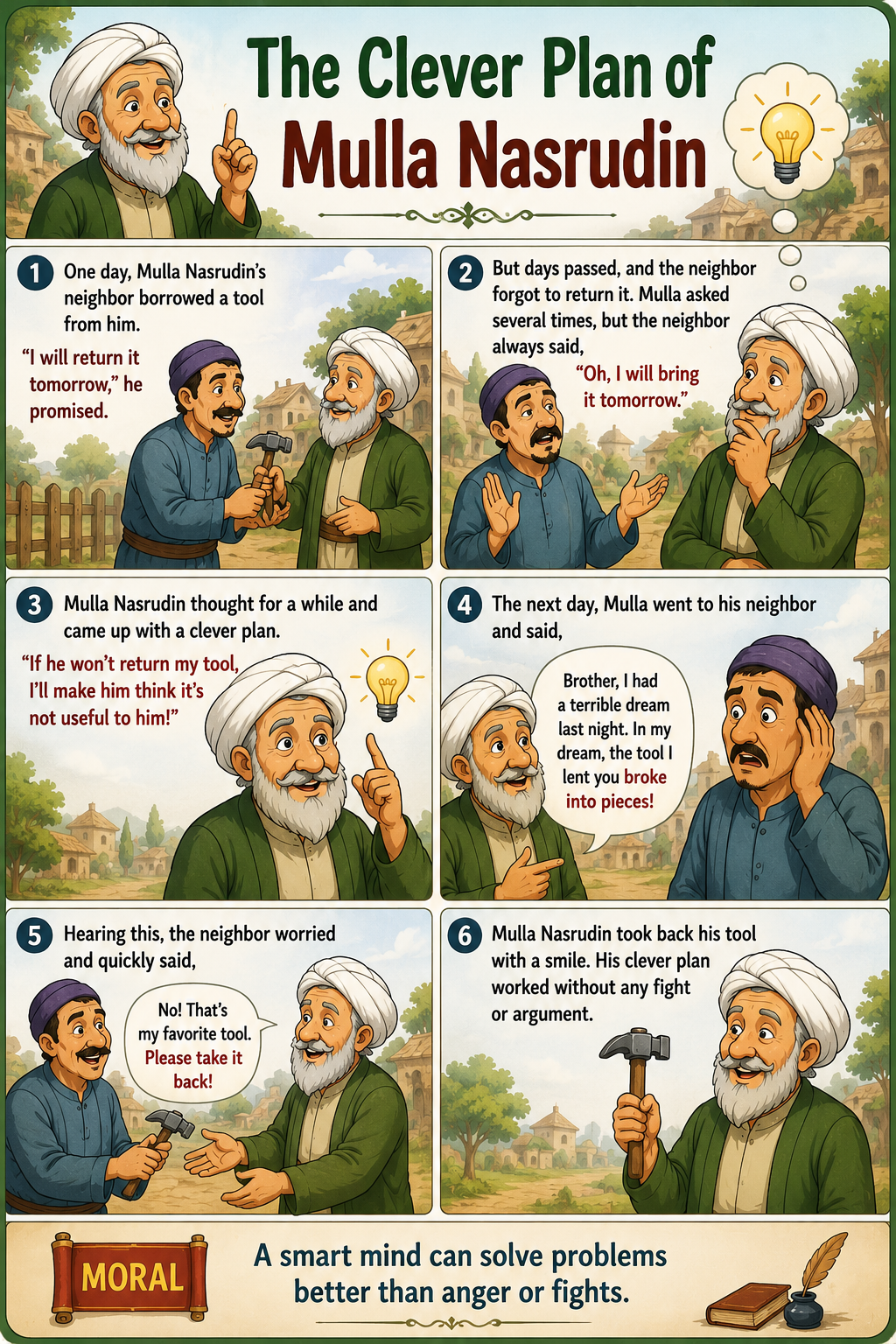
    Mulla Nasrudin was known for his wisdom, quick thinking, and clever solutions. In this entertaining story, he faces a problem that could have led to arguments and frustration, but instead of getting angry, he uses intelligence and creativity to solve it peacefully. His clever plan teaches us that patience, wisdom, and smart thinking can often achieve better results than conflict. A timeless tale that reminds us to use our minds before our emotions when dealing with challenges.

    #MullaNasrudin #CleverPlan #WisdomStories #MoralStory #StoryTime #LifeLessons #SmartThinking #ProblemSolving #InspirationalStories #ClassicTales #HumorAndWisdom #PositiveThinking
    RSIF8 Roll no 97 Task no 12 Task topic The Clever Plan of Mulla Nasrudin Mulla Nasrudin was known for his wisdom, quick thinking, and clever solutions. In this entertaining story, he faces a problem that could have led to arguments and frustration, but instead of getting angry, he uses intelligence and creativity to solve it peacefully. His clever plan teaches us that patience, wisdom, and smart thinking can often achieve better results than conflict. A timeless tale that reminds us to use our minds before our emotions when dealing with challenges. 🌟😊 #MullaNasrudin #CleverPlan #WisdomStories #MoralStory #StoryTime #LifeLessons #SmartThinking #ProblemSolving #InspirationalStories #ClassicTales #HumorAndWisdom #PositiveThinking
    0 Comments 0 Shares 1728 Views
  • #rsisb
    Roll no.239
    Song no .3
    Foundation Level


    Law plays a fundamental role in maintaining peace, justice, and order within society. It provides a set of rules and principles that guide human behavior and help people live together in a safe and organized way. Without laws, society could face confusion, conflict, injustice, and insecurity.

    Legal systems establish clear standards of acceptable and unacceptable behavior. Laws protect the rights and freedoms of individuals while also defining their responsibilities toward others. For example, laws against theft, violence, and fraud help protect people and their property from harm.

    Another important role of law is to ensure justice. Courts and legal institutions provide a structured way to resolve disputes and hold individuals or organizations accountable for their actions. This helps prevent people from taking justice into their own hands and promotes peaceful solutions to conflicts.

    Law also promotes equality by establishing that everyone should be treated fairly under the legal system. Although legal systems may differ from one country to another, the central purpose remains similar: creating a stable society where rights are protected and responsibilities are respected.

    Furthermore, laws support social progress by addressing important issues such as education, employment, environmental protection, public safety, and human rights. As society changes, laws can also evolve to respond to new challenges and technologies.

    In conclusion, law is an essential foundation of an organized society. By establishing rules, protecting rights, resolving disputes, and promoting justice, legal systems help maintain order and create a safer environment for everyone.

    #Law #LegalSystem #Justice #Society #RuleOfLaw #HumanRights #Equality #Peace #SocialOrder #Education
    #rsisb Roll no.239 Song no .3 Foundation Level Law plays a fundamental role in maintaining peace, justice, and order within society. It provides a set of rules and principles that guide human behavior and help people live together in a safe and organized way. Without laws, society could face confusion, conflict, injustice, and insecurity. Legal systems establish clear standards of acceptable and unacceptable behavior. Laws protect the rights and freedoms of individuals while also defining their responsibilities toward others. For example, laws against theft, violence, and fraud help protect people and their property from harm. Another important role of law is to ensure justice. Courts and legal institutions provide a structured way to resolve disputes and hold individuals or organizations accountable for their actions. This helps prevent people from taking justice into their own hands and promotes peaceful solutions to conflicts. Law also promotes equality by establishing that everyone should be treated fairly under the legal system. Although legal systems may differ from one country to another, the central purpose remains similar: creating a stable society where rights are protected and responsibilities are respected. Furthermore, laws support social progress by addressing important issues such as education, employment, environmental protection, public safety, and human rights. As society changes, laws can also evolve to respond to new challenges and technologies. In conclusion, law is an essential foundation of an organized society. By establishing rules, protecting rights, resolving disputes, and promoting justice, legal systems help maintain order and create a safer environment for everyone. βš–οΈπŸŒ #Law #LegalSystem #Justice #Society #RuleOfLaw #HumanRights #Equality #Peace #SocialOrder #Education
    0 Comments 0 Shares 3426 Views 9
  • #rsisb
    roll no.247
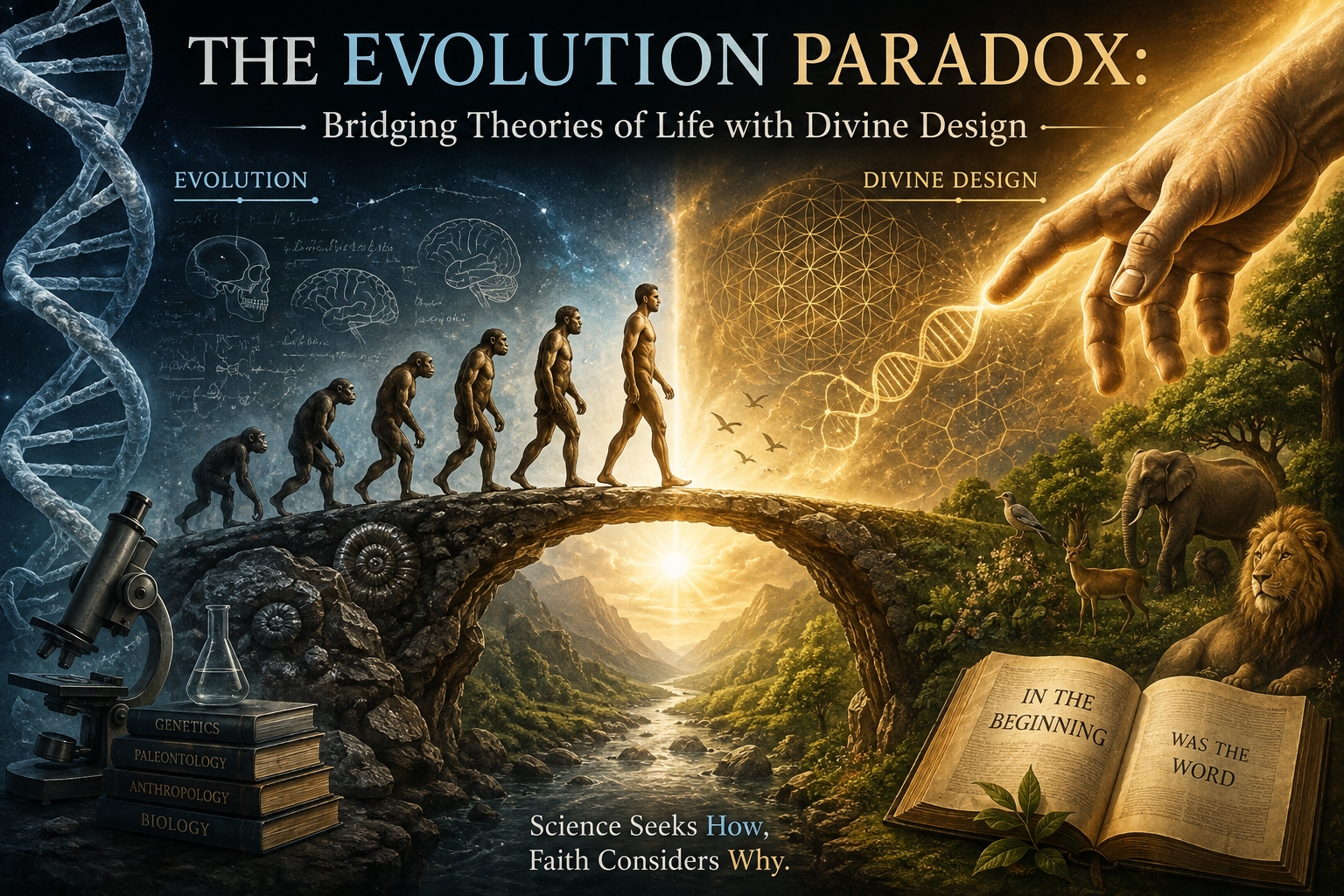
    Foundation level # The Evolution Paradox: Bridging Theories of Life with Divine Design

    The story of life is one of the greatest mysteries ever explored by humanity. From the smallest living cell to the incredible diversity of plants, animals, and human beings, nature presents a fascinating journey filled with questions about **origins, adaptation, complexity, and purpose**.

    **“The Evolution Paradox: Bridging Theories of Life with Divine Design”** explores the thought-provoking relationship between scientific ideas about evolution and philosophical or religious perspectives about creation and divine purpose. Rather than treating these subjects as simple opposites, this topic invites us to think deeply about how different ways of understanding the universe can raise meaningful questions about the same extraordinary reality.

    Evolutionary theory provides a scientific framework for explaining how populations of living organisms change across generations and how biodiversity develops over vast periods of time. Fossils, genetics, comparative anatomy, and observations of living organisms all contribute to our understanding of life's history.

    At the same time, many people look beyond scientific mechanisms and ask questions about **meaning, purpose, consciousness, and why the universe exists at all**. These questions belong not only to laboratories but also to philosophy, theology, and human reflection.

    The fascinating “paradox” arises when we consider how a natural process can be studied scientifically while questions about ultimate purpose remain philosophical or theological. For some people, evolutionary processes and belief in divine creation can coexist: evolution may describe **how biological change occurs**, while faith addresses questions of **meaning and ultimate purpose**.

    This discussion encourages curiosity rather than conflict. It reminds us that science seeks evidence-based explanations for the natural world, while philosophy and religion often explore broader questions about existence and meaning.

    Whether you approach the subject as a scientist, student, philosopher, or person of faith, the study of life encourages one powerful habit: **keep asking questions.** The more we discover about DNA, cells, ecosystems, fossils, and the history of life, the more fascinating the natural world becomes.

    **Life is not only a subject to study—it is a mystery that inspires us to learn, question, discover, and reflect.**

    Let this journey encourage thoughtful conversations between **science, philosophy, and faith**, while respecting the different perspectives people hold.

    #EvolutionParadox #Evolution #DivineDesign #OriginsOfLife #ScienceAndFaith #Biology #Genetics #DNA #LifeScience #NaturalWorld #Science #Philosophy #Theology #Creation #Biodiversity #HumanOrigins #Fossils #Nature #Discovery #Curiosity #Knowledge #Education #CriticalThinking #ExploreScience #MysteriesOfLife #Universe #LifeOnEarth #ScienceEducation #FaithAndScience #DeepQuestions
    #rsisb roll no.247 Foundation level # 🌍🧬 The Evolution Paradox: Bridging Theories of Life with Divine Design βœ¨πŸ™ The story of life is one of the greatest mysteries ever explored by humanity. πŸŒ±πŸ”¬ From the smallest living cell to the incredible diversity of plants, animals, and human beings, nature presents a fascinating journey filled with questions about **origins, adaptation, complexity, and purpose**. 🧬🌎 **“The Evolution Paradox: Bridging Theories of Life with Divine Design”** explores the thought-provoking relationship between scientific ideas about evolution and philosophical or religious perspectives about creation and divine purpose. πŸ”¬πŸ“–βœ¨ Rather than treating these subjects as simple opposites, this topic invites us to think deeply about how different ways of understanding the universe can raise meaningful questions about the same extraordinary reality. πŸŒŒπŸ’­ Evolutionary theory provides a scientific framework for explaining how populations of living organisms change across generations and how biodiversity develops over vast periods of time. 🧬🌿 Fossils, genetics, comparative anatomy, and observations of living organisms all contribute to our understanding of life's history. πŸ”ŽπŸ¦΄ At the same time, many people look beyond scientific mechanisms and ask questions about **meaning, purpose, consciousness, and why the universe exists at all**. πŸ™πŸŒŒ These questions belong not only to laboratories but also to philosophy, theology, and human reflection. πŸ“šπŸ’‘ The fascinating “paradox” arises when we consider how a natural process can be studied scientifically while questions about ultimate purpose remain philosophical or theological. πŸ€”βœ¨ For some people, evolutionary processes and belief in divine creation can coexist: evolution may describe **how biological change occurs**, while faith addresses questions of **meaning and ultimate purpose**. πŸŒ±πŸ™ This discussion encourages curiosity rather than conflict. It reminds us that science seeks evidence-based explanations for the natural world, while philosophy and religion often explore broader questions about existence and meaning. πŸ”¬πŸ“–πŸŒ Whether you approach the subject as a scientist, student, philosopher, or person of faith, the study of life encourages one powerful habit: **keep asking questions.** β“πŸ§ βœ¨ The more we discover about DNA, cells, ecosystems, fossils, and the history of life, the more fascinating the natural world becomes. πŸ§¬πŸ”¬πŸŒΏ 🌟 **Life is not only a subject to study—it is a mystery that inspires us to learn, question, discover, and reflect.** 🌟 Let this journey encourage thoughtful conversations between **science, philosophy, and faith**, while respecting the different perspectives people hold. πŸ€πŸŒŽπŸ’« #EvolutionParadox #Evolution #DivineDesign #OriginsOfLife #ScienceAndFaith #Biology #Genetics #DNA #LifeScience #NaturalWorld #Science #Philosophy #Theology #Creation #Biodiversity #HumanOrigins #Fossils #Nature #Discovery #Curiosity #Knowledge #Education #CriticalThinking #ExploreScience #MysteriesOfLife #Universe #LifeOnEarth #ScienceEducation #FaithAndScience #DeepQuestions πŸ§¬πŸŒπŸ”¬
    0 Comments 0 Shares 7295 Views
  • #rsisb Roll No.240 Song No.9 Foundation Level ## **The Role of Law: How Legal Systems Maintain Order in Society** Law is one of the most important foundations of a peaceful and organized society. It provides rules that help people understand what is right, what is wrong, and what responsibilities they have toward one another. Without laws, society could become unsafe and disorganized, because people might act only according to their own interests. In this educational video, we explore **the role of law and how legal systems maintain order in society**. We explain how laws protect people's rights, prevent crime, settle disputes, and promote justice and equality. Laws also provide a system through which people can seek justice when their rights are violated. A strong legal system does not only punish people who break the law. It also protects innocent people, supports fairness, maintains public safety, and creates stability in everyday life. From traffic rules and property laws to criminal laws and human rights, legal systems affect many parts of our daily lives. The video also explains why **everyone should be treated equally under the law**, regardless of their wealth, position, or social status. When citizens respect the law and understand their responsibilities, communities become safer, more peaceful, and more cooperative. Through simple examples and easy explanations, this video helps students and viewers understand why laws are necessary and how they contribute to a better society. βš–οΈ **Key Topics Covered:** * What is law? * Why do societies need laws? * How laws maintain peace and order * Protection of human rights * Equality and justice under the law * Prevention of crime * The role of courts and legal institutions * Responsibilities of citizens * How laws resolve conflicts * Why respecting the law is important * The connection between law, justice, and social stability **Learn how law helps transform a group of individuals into a safe, organized, and responsible society.** #TheRoleOfLaw #Law #LegalSystem #Justice #RuleOfLaw #Society #HumanRights #Equality #Peace #SocialOrder #Education #Civics #LegalEducation #JusticeForAll #LawAndSociety #Government #Citizenship #Knowledge #EducationalVideo #Learning #UrduEducation Rehan School Islamabad Campus Asma Shaheen EducationWali Irum Asim Saima Happinesswali https://www.facebook.com/share/v/1S6sC4a2BC/
    WWW.FACEBOOK.COM
    Facebook
    #rsisb Roll No.240 Song No.9 Foundation Level ## **The Role of Law: How Legal Systems Maintain Order in Society** Law is one of the most important foundations of a peaceful and organized society....
    0 Comments 0 Shares 5375 Views
  • #rsisb
    Roll no.239
    Song no.1
    Foundation Level


    Law plays a vital role in maintaining peace, stability, and fairness in society. It establishes clear rules that guide people’s behavior and helps protect their rights, safety, and freedom. Without laws, society could become chaotic because individuals might act according to their own interests without considering the rights of others.

    Legal systems help maintain order by defining what is acceptable and what is prohibited. Laws discourage criminal activities such as theft, violence, fraud, and abuse by establishing penalties for those who break the rules. At the same time, laws protect citizens by ensuring that everyone is treated fairly and has access to justice.

    Another important role of law is resolving conflicts. Courts and legal institutions provide peaceful ways to settle disagreements between individuals, businesses, and organizations. Instead of using violence or personal revenge, people can rely on legal procedures to seek justice.

    Laws also promote equality and social responsibility. They establish standards for areas such as education, employment, property, contracts, and public safety. When laws are applied fairly, they help create trust between citizens and institutions.

    In conclusion, legal systems are essential for a peaceful and organized society. They protect rights, prevent wrongdoing, resolve disputes, and promote justice. A strong and fair legal system helps create an environment where people can live, work, and progress with security and confidence.
    #rsisb Roll no.239 Song no.1 Foundation Level Law plays a vital role in maintaining peace, stability, and fairness in society. It establishes clear rules that guide people’s behavior and helps protect their rights, safety, and freedom. Without laws, society could become chaotic because individuals might act according to their own interests without considering the rights of others. Legal systems help maintain order by defining what is acceptable and what is prohibited. Laws discourage criminal activities such as theft, violence, fraud, and abuse by establishing penalties for those who break the rules. At the same time, laws protect citizens by ensuring that everyone is treated fairly and has access to justice. Another important role of law is resolving conflicts. Courts and legal institutions provide peaceful ways to settle disagreements between individuals, businesses, and organizations. Instead of using violence or personal revenge, people can rely on legal procedures to seek justice. Laws also promote equality and social responsibility. They establish standards for areas such as education, employment, property, contracts, and public safety. When laws are applied fairly, they help create trust between citizens and institutions. In conclusion, legal systems are essential for a peaceful and organized society. They protect rights, prevent wrongdoing, resolve disputes, and promote justice. A strong and fair legal system helps create an environment where people can live, work, and progress with security and confidence.
    1
    0 Comments 0 Shares 3425 Views 7
More Results