0 Comments
0 Shares
144 Views
Directory
Discover new people, create new connections and make new friends
- Please log in to like, share and comment!
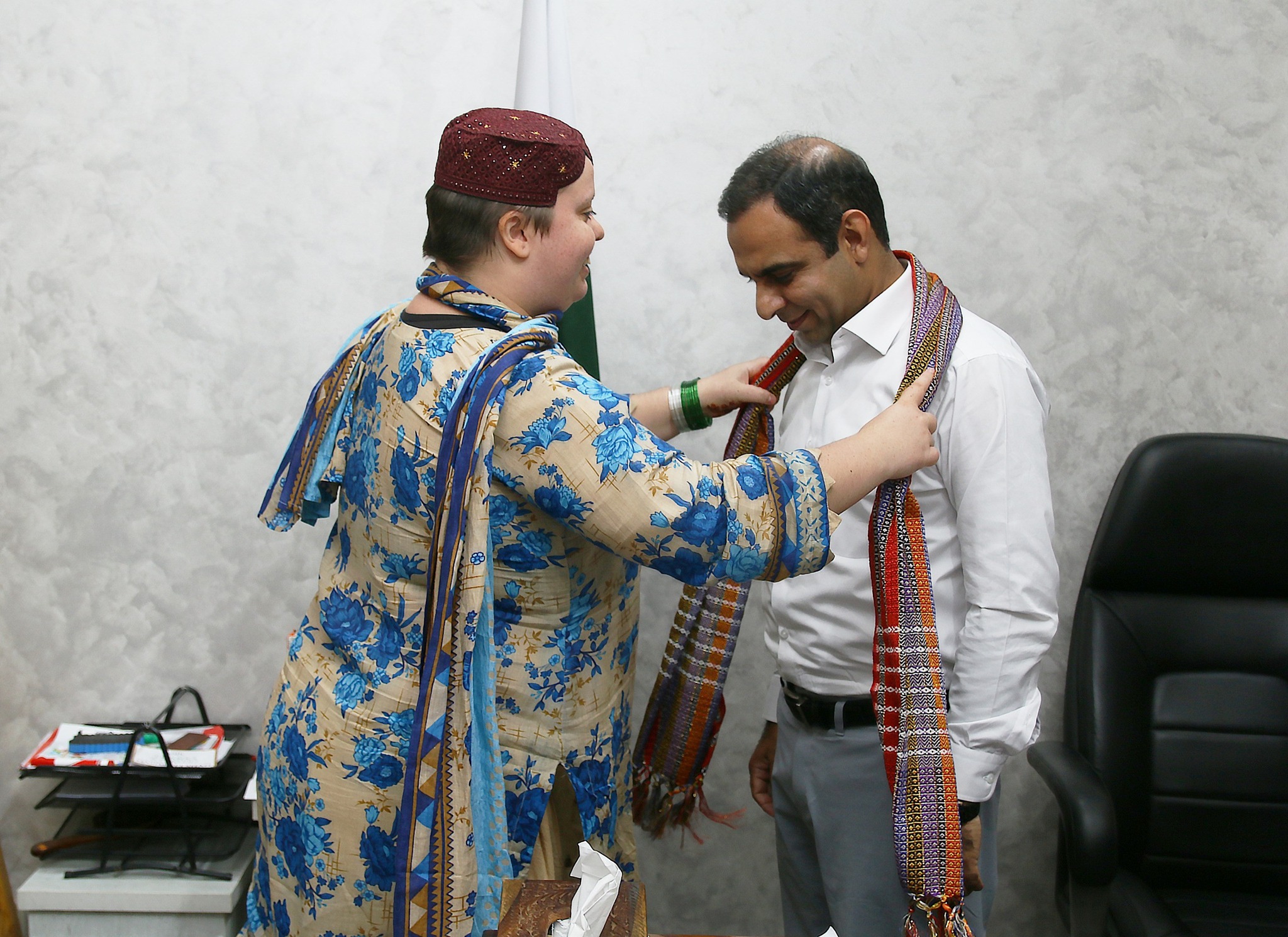
- Thank You Qasim Ali Shah for hosting our guest Jasmine Pakistanwali at Qasim Ali Shah FoundationThank You Qasim Ali Shah for hosting our guest Jasmine Pakistanwali at Qasim Ali Shah Foundation0 Comments 0 Shares 120 Views
- "Mindset"
In her groundbreaking book Mindset: The New Psychology of Success, Stanford psychologist Carol S. Dweck introduces the concepts of the "fixed mindset" and the "growth mindset." She argues that these two mindsets shape every aspect of our lives, from our professional success to our personal relationships. A fixed mindset is the belief that our qualities, such as intelligence or talent, are static and unchangeable. People with a fixed mindset tend to avoid challenges, give up easily, and feel threatened by the success of others. In contrast, a growth mindset is the belief that our abilities can be developed through dedication and hard work. Individuals with a growth mindset embrace challenges, persist in the face of setbacks, and find inspiration in the success of others. Dweck provides compelling research and real-world examples to show how cultivating a growth mindset can unlock our true potential and lead to greater achievement and happiness.
10 Key Lessons and Insights
1. The Two Mindsets are Fundamentally Different: Dwecks core insight is that your fundamental belief about your abilities—whether they are fixed or can be developed—is the single most important factor in determining your success.
2. Praise Effort, Not Talent: Praising children or employees for being "smart" or "talented" can actually instill a fixed mindset. Instead, Dweck advises praising effort, strategy, persistence, and improvement, which reinforces the value of hard work.
3. Embrace Challenges: The fixed mindset sees challenges as threats to their innate abilities, while the growth mindset sees them as opportunities for growth. Learning to embrace difficulty is a key step toward a growth mindset.
4. Failure is an Opportunity to Grow: People with a fixed mindset are devastated by failure, but those with a growth mindset see it as valuable feedback. They use setbacks to learn, adjust their strategies, and try again.
5. Effort is the Key to Mastery: The fixed mindset views effort as a sign of weakness—if you have to work hard, it means youre not naturally good. The growth mindset, however, understands that effort is what makes you better and that hard work is essential for mastery.
6. Find Inspiration in Others Success: People with a fixed mindset may feel threatened or jealous when they see others succeed. A growth mindset, by contrast, finds inspiration in the achievements of others, viewing their success as a roadmap for their own potential.
7. Choose the Right Mentors and Partners: Dweck suggests surrounding yourself with people who challenge you and believe in your potential to grow. Whether its a boss, a romantic partner, or a friend, their mindset can either limit or expand your own.
8. Mindsets Can Be Changed: The most hopeful lesson of the book is that you are not stuck with the mindset you have. By becoming aware of your fixed mindset triggers and actively choosing to respond with a growth mindset, you can train your brain to think differently.
9. The "Power of Yet": Dweck suggests using the word "yet" to reframe failure. Instead of saying "I cant do this," say "I cant do this yet." This small change in language shifts the focus from a fixed limitation to a growth-oriented possibility.
10. Mindsets Affect Every Area of Life: The principles of fixed and growth mindsets apply to more than just intelligence and career. They influence how you handle relationships, sports, and personal health. Cultivating a growth mindset is a holistic approach to living a more fulfilled life.
BOOK: https://amzn.to/46faqUL
You can ENJOY the AUDIOBOOK for FREE (When you register for Audible Membership Trial) using the same link above."Mindset" In her groundbreaking book Mindset: The New Psychology of Success, Stanford psychologist Carol S. Dweck introduces the concepts of the "fixed mindset" and the "growth mindset." She argues that these two mindsets shape every aspect of our lives, from our professional success to our personal relationships. A fixed mindset is the belief that our qualities, such as intelligence or talent, are static and unchangeable. People with a fixed mindset tend to avoid challenges, give up easily, and feel threatened by the success of others. In contrast, a growth mindset is the belief that our abilities can be developed through dedication and hard work. Individuals with a growth mindset embrace challenges, persist in the face of setbacks, and find inspiration in the success of others. Dweck provides compelling research and real-world examples to show how cultivating a growth mindset can unlock our true potential and lead to greater achievement and happiness. 10 Key Lessons and Insights 1. The Two Mindsets are Fundamentally Different: Dweck's core insight is that your fundamental belief about your abilities—whether they are fixed or can be developed—is the single most important factor in determining your success. 2. Praise Effort, Not Talent: Praising children or employees for being "smart" or "talented" can actually instill a fixed mindset. Instead, Dweck advises praising effort, strategy, persistence, and improvement, which reinforces the value of hard work. 3. Embrace Challenges: The fixed mindset sees challenges as threats to their innate abilities, while the growth mindset sees them as opportunities for growth. Learning to embrace difficulty is a key step toward a growth mindset. 4. Failure is an Opportunity to Grow: People with a fixed mindset are devastated by failure, but those with a growth mindset see it as valuable feedback. They use setbacks to learn, adjust their strategies, and try again. 5. Effort is the Key to Mastery: The fixed mindset views effort as a sign of weakness—if you have to work hard, it means you're not naturally good. The growth mindset, however, understands that effort is what makes you better and that hard work is essential for mastery. 6. Find Inspiration in Others' Success: People with a fixed mindset may feel threatened or jealous when they see others succeed. A growth mindset, by contrast, finds inspiration in the achievements of others, viewing their success as a roadmap for their own potential. 7. Choose the Right Mentors and Partners: Dweck suggests surrounding yourself with people who challenge you and believe in your potential to grow. Whether it's a boss, a romantic partner, or a friend, their mindset can either limit or expand your own. 8. Mindsets Can Be Changed: The most hopeful lesson of the book is that you are not stuck with the mindset you have. By becoming aware of your fixed mindset triggers and actively choosing to respond with a growth mindset, you can train your brain to think differently. 9. The "Power of Yet": Dweck suggests using the word "yet" to reframe failure. Instead of saying "I can't do this," say "I can't do this yet." This small change in language shifts the focus from a fixed limitation to a growth-oriented possibility. 10. Mindsets Affect Every Area of Life: The principles of fixed and growth mindsets apply to more than just intelligence and career. They influence how you handle relationships, sports, and personal health. Cultivating a growth mindset is a holistic approach to living a more fulfilled life. BOOK: https://amzn.to/46faqUL You can ENJOY the AUDIOBOOK for FREE (When you register for Audible Membership Trial) using the same link above.0 Comments 0 Shares 137 Views - Come and try Rehan BiryaniCome and try Rehan Biryani0 Comments 0 Shares 126 Views
-
-
-
-
-
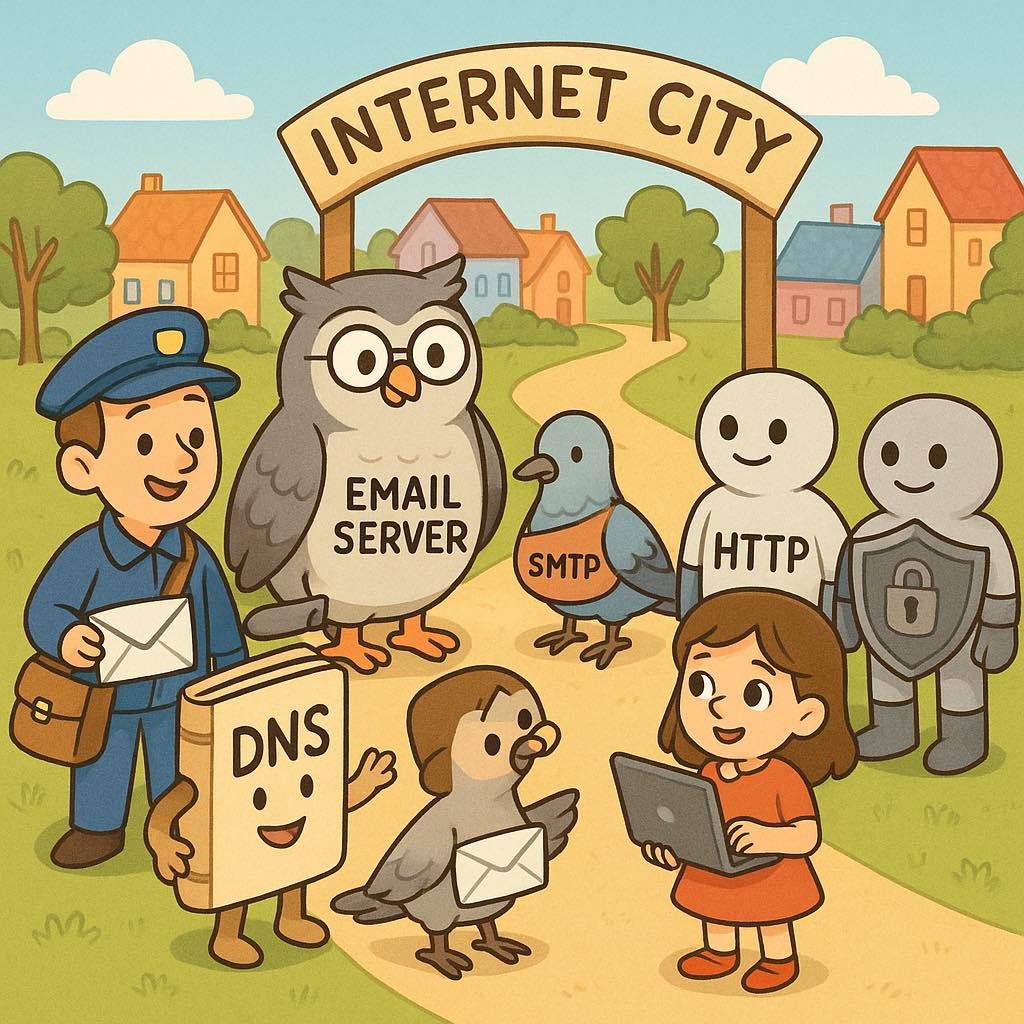
- The Story of Little Dot and the Internet City
Once upon a time, in a land called Internet City, lived a curious little girl named Dot. She had a magic computer that could talk. One day, Dot asked,
“Computer, how do you find websites and send emails?”
The computer smiled, “Let me introduce you to my friends.”
⸻
Domain – The Name of Every House
First came Domain, a cheerful postman with a big book of names.
“I give names to every house in Internet City,” he explained.
“Instead of saying 123.45.67.89 Street, you just say rehan.com or google.com. Easy to remember, right?”
Dot clapped her hands. “So a domain is just the house name!”
⸻
DNS – The Phonebook of the Internet
Next, DNS arrived carrying a huge magical phonebook.
“Domains tell you names, but I tell you the exact address. If you ask me for rehan.com, I look in my book and say, ‘Oh, its number is 123.45.67.89!’”
Dot giggled, “So you’re like the phonebook that finds the real number behind the name!”
⸻
Email Server & SMTP – The Letter Deliverers
Dot then met Email Server, a big friendly owl.
“I live in special mail houses. When you write a letter, I keep it safe and send it to the right person.”
Flying beside him was SMTP, a speedy pigeon.
“I am Simple Mail Transfer Protocol,” he said proudly.
“I take letters from one owl’s house and fly them safely to another owl’s house. Without me, your emails would never leave!”
Dot asked, “And how do you receive?”
Email Server hooted, “I use IMAP or POP3—they bring letters into your mailbox when you open it!”
⸻
FTP – The File Mover
Suddenly a strong robot came with a big backpack.
“I am FTP — File Transfer Protocol. I help you move big boxes of files from your computer to a web server, or back to your computer. If you want to upload photos to your website, I carry them for you!”
⸻
HTTP & 🛡 HTTPS – The Web Messengers
Two twins walked in next.
“I am HTTP — HyperText Transfer Protocol,” said the first.
“I bring you web pages. When you type a website, I carry the text, pictures, and videos from the server to your screen.”
The second twin wore shining armor.
“I am HTTPS. I do the same job as HTTP, but with extra safety. I wear armor called encryption. Hackers cannot read the secret messages I deliver!”
Dot whispered, “So HTTPS keeps me safe online?”
“Exactly!” the armored twin nodded.
⸻
✉ How Email Travels Between Many Servers
Dot was still curious. “But how can I receive emails from different places?”
The owl (Email Server) explained,
“When people send you letters, SMTP pigeons carry them across many owl houses (servers). Some letters may pass through New York, some through London, some through Karachi. But in the end, all letters find your mailbox because DNS tells them exactly where your mailbox lives.”
⸻
The Lesson
Dot looked around at all her new friends — Domain, DNS, Email Server, SMTP, FTP, HTTP, and HTTPS.
She said,
“So the internet is like a city full of helpers.
• Domains are house names.
• DNS is the phonebook.
• Email servers and SMTP send letters.
• FTP carries big boxes.
• HTTP and HTTPS bring me websites.”
Her computer smiled,
“Yes, Dot! The internet may seem magical, but it works because all these helpers follow rules called protocols. That’s why we can chat, play, and learn together every day.”
Dot hugged her computer. “Now I understand — and I’ll never forget my new friends!”
And with that, Dot’s magical adventure in Internet City continued…🌍 The Story of Little Dot and the Internet City Once upon a time, in a land called Internet City, lived a curious little girl named Dot. She had a magic computer that could talk. One day, Dot asked, “Computer, how do you find websites and send emails?” The computer smiled, “Let me introduce you to my friends.” ⸻ 🏰 Domain – The Name of Every House First came Domain, a cheerful postman with a big book of names. “I give names to every house in Internet City,” he explained. “Instead of saying 123.45.67.89 Street, you just say rehan.com or google.com. Easy to remember, right?” Dot clapped her hands. “So a domain is just the house name!” ⸻ 📖 DNS – The Phonebook of the Internet Next, DNS arrived carrying a huge magical phonebook. “Domains tell you names, but I tell you the exact address. If you ask me for rehan.com, I look in my book and say, ‘Oh, its number is 123.45.67.89!’” Dot giggled, “So you’re like the phonebook that finds the real number behind the name!” ⸻ 📬 Email Server & 📤 SMTP – The Letter Deliverers Dot then met Email Server, a big friendly owl. “I live in special mail houses. When you write a letter, I keep it safe and send it to the right person.” Flying beside him was SMTP, a speedy pigeon. “I am Simple Mail Transfer Protocol,” he said proudly. “I take letters from one owl’s house and fly them safely to another owl’s house. Without me, your emails would never leave!” Dot asked, “And how do you receive?” Email Server hooted, “I use IMAP or POP3—they bring letters into your mailbox when you open it!” ⸻ 📂 FTP – The File Mover Suddenly a strong robot came with a big backpack. “I am FTP — File Transfer Protocol. I help you move big boxes of files from your computer to a web server, or back to your computer. If you want to upload photos to your website, I carry them for you!” ⸻ 🌐 HTTP & 🛡 HTTPS – The Web Messengers Two twins walked in next. “I am HTTP — HyperText Transfer Protocol,” said the first. “I bring you web pages. When you type a website, I carry the text, pictures, and videos from the server to your screen.” The second twin wore shining armor. “I am HTTPS. I do the same job as HTTP, but with extra safety. I wear armor called encryption. Hackers cannot read the secret messages I deliver!” Dot whispered, “So HTTPS keeps me safe online?” “Exactly!” the armored twin nodded. ⸻ ✉ How Email Travels Between Many Servers Dot was still curious. “But how can I receive emails from different places?” The owl (Email Server) explained, “When people send you letters, SMTP pigeons carry them across many owl houses (servers). Some letters may pass through New York, some through London, some through Karachi. But in the end, all letters find your mailbox because DNS tells them exactly where your mailbox lives.” ⸻ 🌟 The Lesson Dot looked around at all her new friends — Domain, DNS, Email Server, SMTP, FTP, HTTP, and HTTPS. She said, “So the internet is like a city full of helpers. • Domains are house names. • DNS is the phonebook. • Email servers and SMTP send letters. • FTP carries big boxes. • HTTP and HTTPS bring me websites.” Her computer smiled, “Yes, Dot! The internet may seem magical, but it works because all these helpers follow rules called protocols. That’s why we can chat, play, and learn together every day.” Dot hugged her computer. “Now I understand — and I’ll never forget my new friends!” And with that, Dot’s magical adventure in Internet City continued…0 Comments 0 Shares 1599 Views