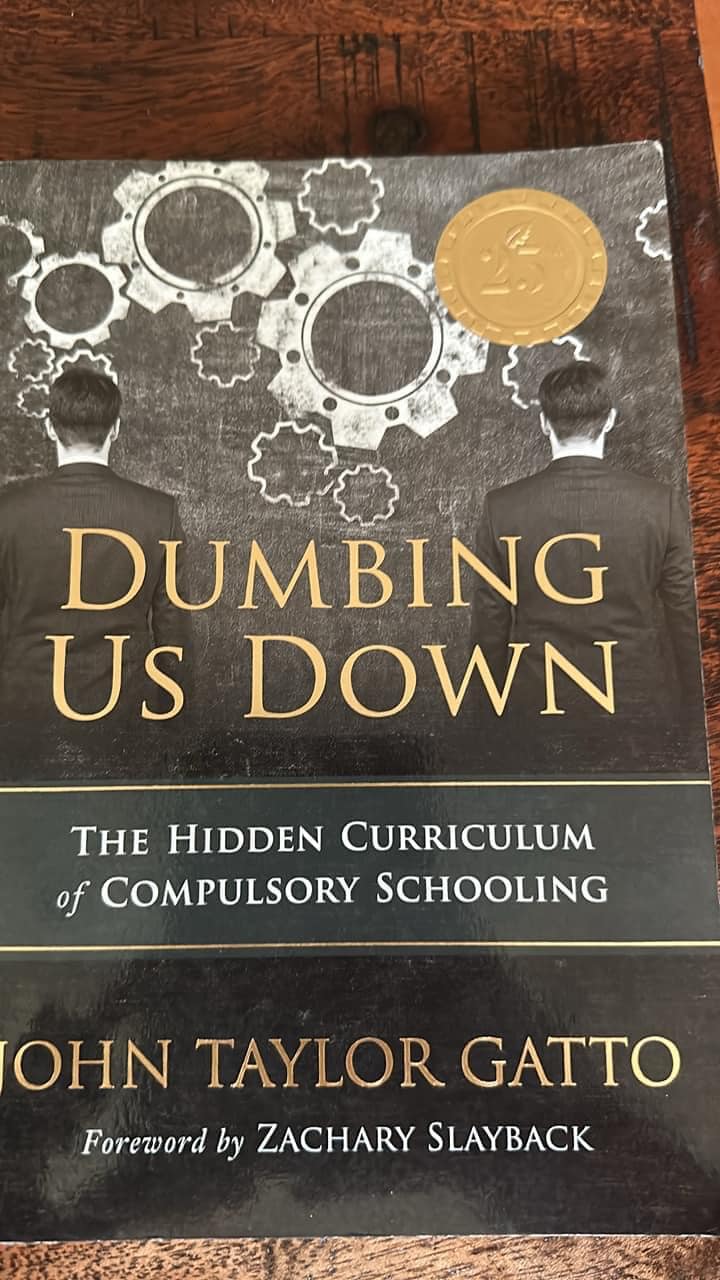
"Dumbing Us Down: The Hidden Curriculum of Compulsory Schooling" by John Taylor Gatto offers a critical examination of the modern educational system. Gatto, an award-winning teacher, provides insights into how compulsory schooling undermines true learning and personal development. Here are the key points and a summary of the book:
### Summary
John Taylor Gatto uses his extensive experience as a teacher to expose what he believes are the detrimental effects of the traditional schooling system. He argues that the system is designed to create a conformist and obedient workforce rather than fostering intellectual and emotional growth. Through a collection of essays, Gatto highlights how the structure and methods of compulsory schooling serve to "dumb down" students.
### Key Points
1. **The Seven-Lesson Schoolteacher**:
- Gatto outlines the implicit lessons taught in schools, which include confusion, class position, indifference, emotional dependency, intellectual dependency, provisional self-esteem, and the lack of privacy.
- These lessons, he argues, undermine the development of critical thinking and personal autonomy.
2. **Boredom and Dependency**:
- Gatto claims that the school system fosters boredom in students and teachers alike. He suggests that this boredom is a result of a lack of meaningful engagement and an overemphasis on rote learning.
- The dependency created by the school environment discourages students from taking charge of their own education and fosters reliance on external authority.
3. **The Myth of the Good Student**:
- Gatto challenges the notion that the best students are those who comply with the systems demands. He argues that true learning happens when students pursue their interests and passions, often outside the confines of formal education.
4. **Family and Community as Educators**:
- The book emphasizes the importance of family and community in the education process. Gatto believes that real education is rooted in these social structures rather than in institutional settings.
5. **Alternatives to Compulsory Schooling**:
- Gatto advocates for alternatives to traditional schooling, including homeschooling, unschooling, and other forms of self-directed learning.
- He argues that these approaches can better cater to individual learning styles and promote a more holistic development.
6. **Critique of Standardized Testing**:
- Gatto criticizes the over-reliance on standardized tests, which he believes measure conformity rather than genuine understanding or intelligence.
- He argues that these tests fail to capture the full spectrum of human abilities and potential.
7. **The Purpose of Education**:
- At its core, Gattos book questions the true purpose of education. He believes that education should be about nurturing critical thinking, creativity, and the ability to learn independently.
### Conclusion
"Dumbing Us Down" calls for a reevaluation of how society approaches education. Gattos critique is a powerful reminder of the potential harm caused by a one-size-fits-all schooling system and serves as a call to action for more personalized and meaningful approaches to learning.
"Dumbing Us Down: The Hidden Curriculum of Compulsory Schooling" by John Taylor Gatto offers a critical examination of the modern educational system. Gatto, an award-winning teacher, provides insights into how compulsory schooling undermines true learning and personal development. Here are the key points and a summary of the book:
### Summary
John Taylor Gatto uses his extensive experience as a teacher to expose what he believes are the detrimental effects of the traditional schooling system. He argues that the system is designed to create a conformist and obedient workforce rather than fostering intellectual and emotional growth. Through a collection of essays, Gatto highlights how the structure and methods of compulsory schooling serve to "dumb down" students.
### Key Points
1. **The Seven-Lesson Schoolteacher**:
- Gatto outlines the implicit lessons taught in schools, which include confusion, class position, indifference, emotional dependency, intellectual dependency, provisional self-esteem, and the lack of privacy.
- These lessons, he argues, undermine the development of critical thinking and personal autonomy.
2. **Boredom and Dependency**:
- Gatto claims that the school system fosters boredom in students and teachers alike. He suggests that this boredom is a result of a lack of meaningful engagement and an overemphasis on rote learning.
- The dependency created by the school environment discourages students from taking charge of their own education and fosters reliance on external authority.
3. **The Myth of the 'Good' Student**:
- Gatto challenges the notion that the best students are those who comply with the system's demands. He argues that true learning happens when students pursue their interests and passions, often outside the confines of formal education.
4. **Family and Community as Educators**:
- The book emphasizes the importance of family and community in the education process. Gatto believes that real education is rooted in these social structures rather than in institutional settings.
5. **Alternatives to Compulsory Schooling**:
- Gatto advocates for alternatives to traditional schooling, including homeschooling, unschooling, and other forms of self-directed learning.
- He argues that these approaches can better cater to individual learning styles and promote a more holistic development.
6. **Critique of Standardized Testing**:
- Gatto criticizes the over-reliance on standardized tests, which he believes measure conformity rather than genuine understanding or intelligence.
- He argues that these tests fail to capture the full spectrum of human abilities and potential.
7. **The Purpose of Education**:
- At its core, Gatto's book questions the true purpose of education. He believes that education should be about nurturing critical thinking, creativity, and the ability to learn independently.
### Conclusion
"Dumbing Us Down" calls for a reevaluation of how society approaches education. Gatto's critique is a powerful reminder of the potential harm caused by a one-size-fits-all schooling system and serves as a call to action for more personalized and meaningful approaches to learning.