


#rsisb
Roll no.239
Foundation Level
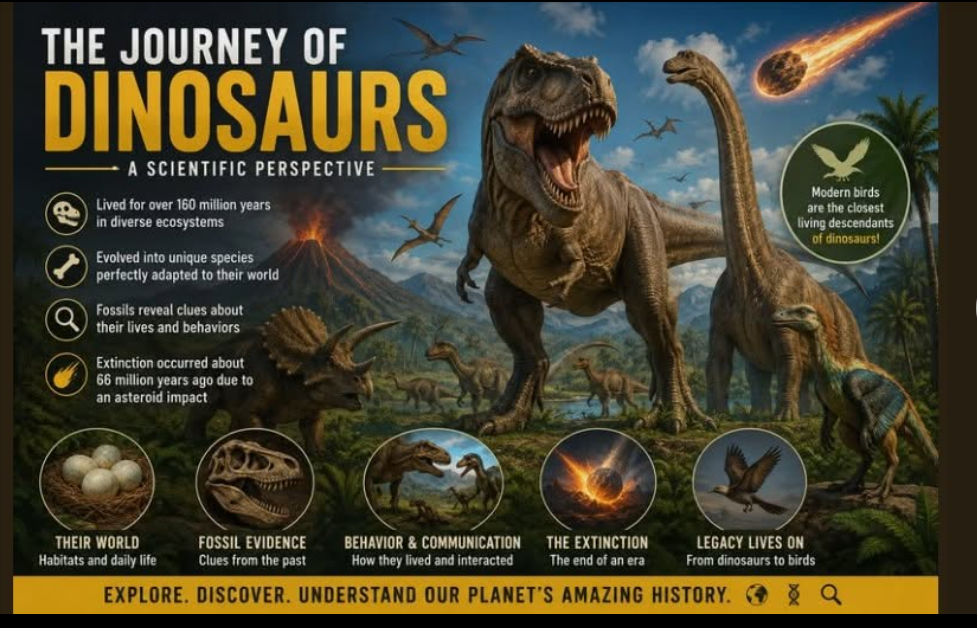
Dinosaurs are among the most fascinating creatures that ever lived on Earth. Their story is a remarkable journey through millions of years of evolution, adaptation, survival, and extinction. Scientists study dinosaur fossils, footprints, and ancient environments to understand how these incredible animals lived and how they shaped the history of our planet.
**The Beginning of the Dinosaur Era**
Dinosaurs first appeared around **230 million years ago** during the **Mesozoic Era**. They evolved from early reptiles and quickly became one of the most successful groups of animals on Earth. Over time, they adapted to different environments, developing unique features that helped them survive.
**The Age of Dinosaurs**
The Mesozoic Era is often called the **"Age of Dinosaurs"** and lasted for more than 180 million years. It was divided into three major periods:
**Triassic Period** (about 252–201 million years ago)
The first dinosaurs appeared and began spreading across the planet. Small, fast-moving dinosaurs evolved during this time.
**Jurassic Period** (about 201–145 million years ago)
Dinosaurs became larger and more diverse. Giant plant-eaters like long-necked sauropods and powerful predators ruled many landscapes.
**Cretaceous Period** (about 145–66 million years ago)
Dinosaurs reached their greatest variety. Famous species such as **Tyrannosaurus rex** and **Triceratops** lived during this time.
**How Scientists Study Dinosaurs**
Scientists called **paleontologists** uncover clues from the past by studying:
Fossilized bones
Ancient footprints
Dinosaur eggs
Fossil plants
Geological evidence
These discoveries help researchers learn about dinosaur behavior, diets, movement, and habitats.
**Dinosaur Adaptations and Survival**
Dinosaurs developed amazing adaptations to survive:
Sharp teeth for hunting
Armor and horns for protection
🪽 Feathers in some species
Strong legs for movement
Different feeding strategies
Some dinosaurs evolved into birds, making modern birds the living descendants of these ancient creatures.
**The Great Extinction Event**
Around **66 million years ago**, a massive asteroid impact contributed to the extinction of many dinosaur species. This event changed life on Earth forever and opened opportunities for new groups of animals, including mammals, to expand.
**The Scientific Importance of Dinosaurs**
Studying dinosaurs helps scientists understand:
How life evolves over time
How Earth’s environments change
How species adapt and survive
How ancient ecosystems worked
Dinosaurs remind us that life on Earth is constantly changing. Their story teaches us about resilience, adaptation, and the incredible history of our planet.
**The journey of dinosaurs is not just a story of the past — it is a scientific window into the evolution of life itself.** See less
Roll no.239
Foundation Level
Dinosaurs are among the most fascinating creatures that ever lived on Earth. Their story is a remarkable journey through millions of years of evolution, adaptation, survival, and extinction. Scientists study dinosaur fossils, footprints, and ancient environments to understand how these incredible animals lived and how they shaped the history of our planet.
**The Beginning of the Dinosaur Era**
Dinosaurs first appeared around **230 million years ago** during the **Mesozoic Era**. They evolved from early reptiles and quickly became one of the most successful groups of animals on Earth. Over time, they adapted to different environments, developing unique features that helped them survive.
**The Age of Dinosaurs**
The Mesozoic Era is often called the **"Age of Dinosaurs"** and lasted for more than 180 million years. It was divided into three major periods:
**Triassic Period** (about 252–201 million years ago)
The first dinosaurs appeared and began spreading across the planet. Small, fast-moving dinosaurs evolved during this time.
**Jurassic Period** (about 201–145 million years ago)
Dinosaurs became larger and more diverse. Giant plant-eaters like long-necked sauropods and powerful predators ruled many landscapes.
**Cretaceous Period** (about 145–66 million years ago)
Dinosaurs reached their greatest variety. Famous species such as **Tyrannosaurus rex** and **Triceratops** lived during this time.
**How Scientists Study Dinosaurs**
Scientists called **paleontologists** uncover clues from the past by studying:
Fossilized bones
Ancient footprints
Dinosaur eggs
Fossil plants
Geological evidence
These discoveries help researchers learn about dinosaur behavior, diets, movement, and habitats.
**Dinosaur Adaptations and Survival**
Dinosaurs developed amazing adaptations to survive:
Sharp teeth for hunting
Armor and horns for protection
🪽 Feathers in some species
Strong legs for movement
Different feeding strategies
Some dinosaurs evolved into birds, making modern birds the living descendants of these ancient creatures.
**The Great Extinction Event**
Around **66 million years ago**, a massive asteroid impact contributed to the extinction of many dinosaur species. This event changed life on Earth forever and opened opportunities for new groups of animals, including mammals, to expand.
**The Scientific Importance of Dinosaurs**
Studying dinosaurs helps scientists understand:
How life evolves over time
How Earth’s environments change
How species adapt and survive
How ancient ecosystems worked
Dinosaurs remind us that life on Earth is constantly changing. Their story teaches us about resilience, adaptation, and the incredible history of our planet.
**The journey of dinosaurs is not just a story of the past — it is a scientific window into the evolution of life itself.** See less
#rsisb
Roll no.239
Foundation Level
Dinosaurs are among the most fascinating creatures that ever lived on Earth. Their story is a remarkable journey through millions of years of evolution, adaptation, survival, and extinction. 🌎🦕 Scientists study dinosaur fossils, footprints, and ancient environments to understand how these incredible animals lived and how they shaped the history of our planet. 🔍📚
🕰️ **The Beginning of the Dinosaur Era** 🌱🦖
Dinosaurs first appeared around **230 million years ago** during the **Mesozoic Era**. They evolved from early reptiles and quickly became one of the most successful groups of animals on Earth. Over time, they adapted to different environments, developing unique features that helped them survive. 🌿✨
🌎 **The Age of Dinosaurs** 🦕🏞️
The Mesozoic Era is often called the **"Age of Dinosaurs"** and lasted for more than 180 million years. It was divided into three major periods:
🌋 **Triassic Period** (about 252–201 million years ago)
➡️ The first dinosaurs appeared and began spreading across the planet. Small, fast-moving dinosaurs evolved during this time. 🦎
🌿 **Jurassic Period** (about 201–145 million years ago)
➡️ Dinosaurs became larger and more diverse. Giant plant-eaters like long-necked sauropods and powerful predators ruled many landscapes. 🌳🦕
🔥 **Cretaceous Period** (about 145–66 million years ago)
➡️ Dinosaurs reached their greatest variety. Famous species such as **Tyrannosaurus rex** and **Triceratops** lived during this time. 🌎⚔️
🔬 **How Scientists Study Dinosaurs** 🧪📖
Scientists called **paleontologists** uncover clues from the past by studying:
🦴 Fossilized bones
👣 Ancient footprints
🥚 Dinosaur eggs
🌿 Fossil plants
🏞️ Geological evidence
These discoveries help researchers learn about dinosaur behavior, diets, movement, and habitats. 🔍✨
🦖 **Dinosaur Adaptations and Survival** 💪🌱
Dinosaurs developed amazing adaptations to survive:
🦷 Sharp teeth for hunting
🛡️ Armor and horns for protection
🪽 Feathers in some species
🏃 Strong legs for movement
🌿 Different feeding strategies
Some dinosaurs evolved into birds, making modern birds the living descendants of these ancient creatures. 🐦✨
☄️ **The Great Extinction Event** 🌑🌍
Around **66 million years ago**, a massive asteroid impact contributed to the extinction of many dinosaur species. This event changed life on Earth forever and opened opportunities for new groups of animals, including mammals, to expand. 🌎💫
🌟 **The Scientific Importance of Dinosaurs** 🔬
Studying dinosaurs helps scientists understand:
🌱 How life evolves over time
🌍 How Earth’s environments change
🧬 How species adapt and survive
🔭 How ancient ecosystems worked
Dinosaurs remind us that life on Earth is constantly changing. Their story teaches us about resilience, adaptation, and the incredible history of our planet. 🌎🦖
✨ **The journey of dinosaurs is not just a story of the past — it is a scientific window into the evolution of life itself.** 🌟🔬 See less
0 Comments
0 Shares
1363 Views