


RSIF8
ROll no:82
Story post: 1
Story post topic:Climate and Culture: How Geography Shapes Our Way of Life
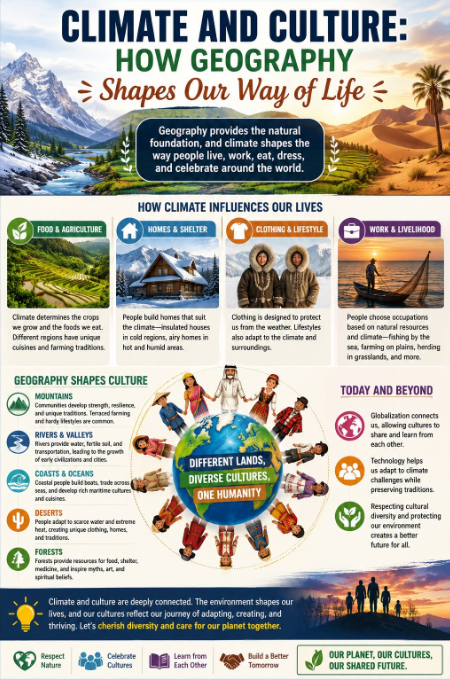
The world is a beautiful tapestry of cultures, traditions, and lifestyles, and one of the greatest influences behind this diversity is geography. Mountains, deserts, forests, rivers, oceans, and climate all play a significant role in shaping how people live, work, eat, dress, and celebrate. From the frozen landscapes of the Arctic to the warm tropical islands, every environment has inspired unique ways of life that reflect the challenges and opportunities of nature.
Climate affects the food we grow, the homes we build, and the clothes we wear. People living in colder regions often construct well-insulated houses and wear warm clothing to protect themselves from harsh winters, while communities in hotter climates design homes with natural ventilation and wear lightweight fabrics to stay cool. Agriculture also depends on climate, influencing the crops that become part of local cuisines and cultural traditions.
Geography has shaped trade routes, languages, occupations, and even the customs passed down through generations. Coastal communities often develop strong maritime traditions through fishing, shipping, and trade, while mountain communities rely on farming, livestock, and local craftsmanship. Rivers have given rise to some of the world's earliest civilizations, providing fresh water, fertile land, and transportation that supported the growth of cities and cultures.
Despite these differences, every culture reflects humanity's creativity, resilience, and ability to adapt to its surroundings. Today, technology and globalization connect people across continents, allowing cultures to share ideas while preserving their unique identities. Understanding how geography influences culture helps us appreciate the diversity of our world and encourages respect for the traditions and lifestyles of others.
Climate and culture are deeply connected, reminding us that the environment not only shapes the landscapes we see but also the stories, values, and traditions that define who we are. By protecting our planet and respecting cultural diversity, we preserve the rich heritage that makes our world vibrant and extraordinary.
"Geography shapes the land beneath our feet, while culture shapes the lives we lead—together they tell the story of humanity." See less
ROll no:82
Story post: 1
Story post topic:Climate and Culture: How Geography Shapes Our Way of Life
The world is a beautiful tapestry of cultures, traditions, and lifestyles, and one of the greatest influences behind this diversity is geography. Mountains, deserts, forests, rivers, oceans, and climate all play a significant role in shaping how people live, work, eat, dress, and celebrate. From the frozen landscapes of the Arctic to the warm tropical islands, every environment has inspired unique ways of life that reflect the challenges and opportunities of nature.
Climate affects the food we grow, the homes we build, and the clothes we wear. People living in colder regions often construct well-insulated houses and wear warm clothing to protect themselves from harsh winters, while communities in hotter climates design homes with natural ventilation and wear lightweight fabrics to stay cool. Agriculture also depends on climate, influencing the crops that become part of local cuisines and cultural traditions.
Geography has shaped trade routes, languages, occupations, and even the customs passed down through generations. Coastal communities often develop strong maritime traditions through fishing, shipping, and trade, while mountain communities rely on farming, livestock, and local craftsmanship. Rivers have given rise to some of the world's earliest civilizations, providing fresh water, fertile land, and transportation that supported the growth of cities and cultures.
Despite these differences, every culture reflects humanity's creativity, resilience, and ability to adapt to its surroundings. Today, technology and globalization connect people across continents, allowing cultures to share ideas while preserving their unique identities. Understanding how geography influences culture helps us appreciate the diversity of our world and encourages respect for the traditions and lifestyles of others.
Climate and culture are deeply connected, reminding us that the environment not only shapes the landscapes we see but also the stories, values, and traditions that define who we are. By protecting our planet and respecting cultural diversity, we preserve the rich heritage that makes our world vibrant and extraordinary.
"Geography shapes the land beneath our feet, while culture shapes the lives we lead—together they tell the story of humanity." See less
RSIF8
ROll no:82
Story post: 1
Story post topic:Climate and Culture: How Geography Shapes Our Way of Life
The world is a beautiful tapestry of cultures, traditions, and lifestyles, and one of the greatest influences behind this diversity is geography. Mountains, deserts, forests, rivers, oceans, and climate all play a significant role in shaping how people live, work, eat, dress, and celebrate. From the frozen landscapes of the Arctic to the warm tropical islands, every environment has inspired unique ways of life that reflect the challenges and opportunities of nature.
Climate affects the food we grow, the homes we build, and the clothes we wear. People living in colder regions often construct well-insulated houses and wear warm clothing to protect themselves from harsh winters, while communities in hotter climates design homes with natural ventilation and wear lightweight fabrics to stay cool. Agriculture also depends on climate, influencing the crops that become part of local cuisines and cultural traditions.
Geography has shaped trade routes, languages, occupations, and even the customs passed down through generations. Coastal communities often develop strong maritime traditions through fishing, shipping, and trade, while mountain communities rely on farming, livestock, and local craftsmanship. Rivers have given rise to some of the world's earliest civilizations, providing fresh water, fertile land, and transportation that supported the growth of cities and cultures.
Despite these differences, every culture reflects humanity's creativity, resilience, and ability to adapt to its surroundings. Today, technology and globalization connect people across continents, allowing cultures to share ideas while preserving their unique identities. Understanding how geography influences culture helps us appreciate the diversity of our world and encourages respect for the traditions and lifestyles of others.
Climate and culture are deeply connected, reminding us that the environment not only shapes the landscapes we see but also the stories, values, and traditions that define who we are. By protecting our planet and respecting cultural diversity, we preserve the rich heritage that makes our world vibrant and extraordinary.
"Geography shapes the land beneath our feet, while culture shapes the lives we lead—together they tell the story of humanity." See less
0 Comentários
0 Compartilhamentos
103 Visualizações