


RSIF8
Roll NO:92
Story Post No:30
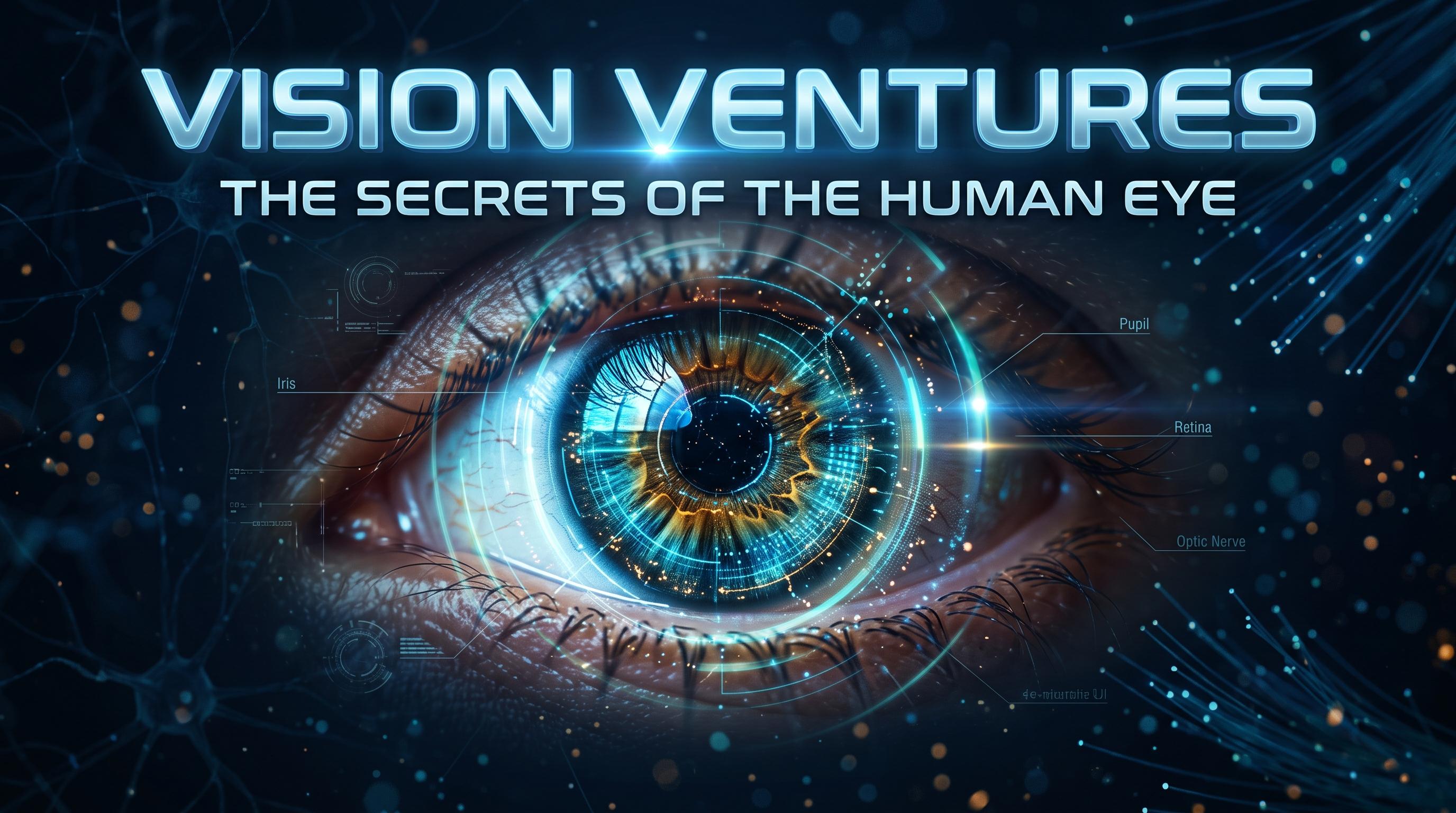
Topic:Vision Ventures: The Secrets of the Human Eye
The human eye functions as both a biological marvel and a high-precision optical instrument, translating ambient light into the complex visual reality processed by the brain.
The Optical Aperture: Light enters through the cornea and passes through the pupil, where the iris dynamically contracts and expands to regulate illumination levels, much like an advanced camera aperture.
The Focusing Engine: The crystalline lens fine-tunes incoming light rays, utilizing ciliary muscles to alter its shape—a process called accommodation—to snap objects into sharp focus across varying distances.
The Photoreceptive Sensor: The retina lines the back of the eye with over 120 million rods and cones, converting incoming photons into biochemical and electrical impulses. Rods handle peripheral vision and low-light detection, while cones provide sharp central detail and full-spectrum color discernment.
The Neural Bridge: Millions of retinal nerve fibers converge at the optic disc to form the optic nerve, an information superhighway transmitting raw electrical signals at rapid speeds to the visual cortex for interpretation.
Roll NO:92
Story Post No:30
Topic:Vision Ventures: The Secrets of the Human Eye
The human eye functions as both a biological marvel and a high-precision optical instrument, translating ambient light into the complex visual reality processed by the brain.
The Optical Aperture: Light enters through the cornea and passes through the pupil, where the iris dynamically contracts and expands to regulate illumination levels, much like an advanced camera aperture.
The Focusing Engine: The crystalline lens fine-tunes incoming light rays, utilizing ciliary muscles to alter its shape—a process called accommodation—to snap objects into sharp focus across varying distances.
The Photoreceptive Sensor: The retina lines the back of the eye with over 120 million rods and cones, converting incoming photons into biochemical and electrical impulses. Rods handle peripheral vision and low-light detection, while cones provide sharp central detail and full-spectrum color discernment.
The Neural Bridge: Millions of retinal nerve fibers converge at the optic disc to form the optic nerve, an information superhighway transmitting raw electrical signals at rapid speeds to the visual cortex for interpretation.
RSIF8
Roll NO:92
Story Post No:30
Topic:Vision Ventures: The Secrets of the Human Eye
The human eye functions as both a biological marvel and a high-precision optical instrument, translating ambient light into the complex visual reality processed by the brain.
The Optical Aperture: Light enters through the cornea and passes through the pupil, where the iris dynamically contracts and expands to regulate illumination levels, much like an advanced camera aperture.
The Focusing Engine: The crystalline lens fine-tunes incoming light rays, utilizing ciliary muscles to alter its shape—a process called accommodation—to snap objects into sharp focus across varying distances.
The Photoreceptive Sensor: The retina lines the back of the eye with over 120 million rods and cones, converting incoming photons into biochemical and electrical impulses. Rods handle peripheral vision and low-light detection, while cones provide sharp central detail and full-spectrum color discernment.
The Neural Bridge: Millions of retinal nerve fibers converge at the optic disc to form the optic nerve, an information superhighway transmitting raw electrical signals at rapid speeds to the visual cortex for interpretation.
0 التعليقات
0 المشاركات
113 مشاهدة