


RSIF8
Roll no:85
Task no:55
Task topic: Winds and Environment: The Impact of Change
The wind is one of nature's most powerful forces, shaping landscapes, influencing weather, and supporting life across the planet. It carries moisture that nourishes forests and farmland, spreads seeds that help plants grow, and drives ocean currents that regulate Earth's climate. For centuries, humans have relied on the wind for travel, agriculture, and renewable energy. Understanding how wind interacts with the environment helps us appreciate its essential role in maintaining the balance of nature.
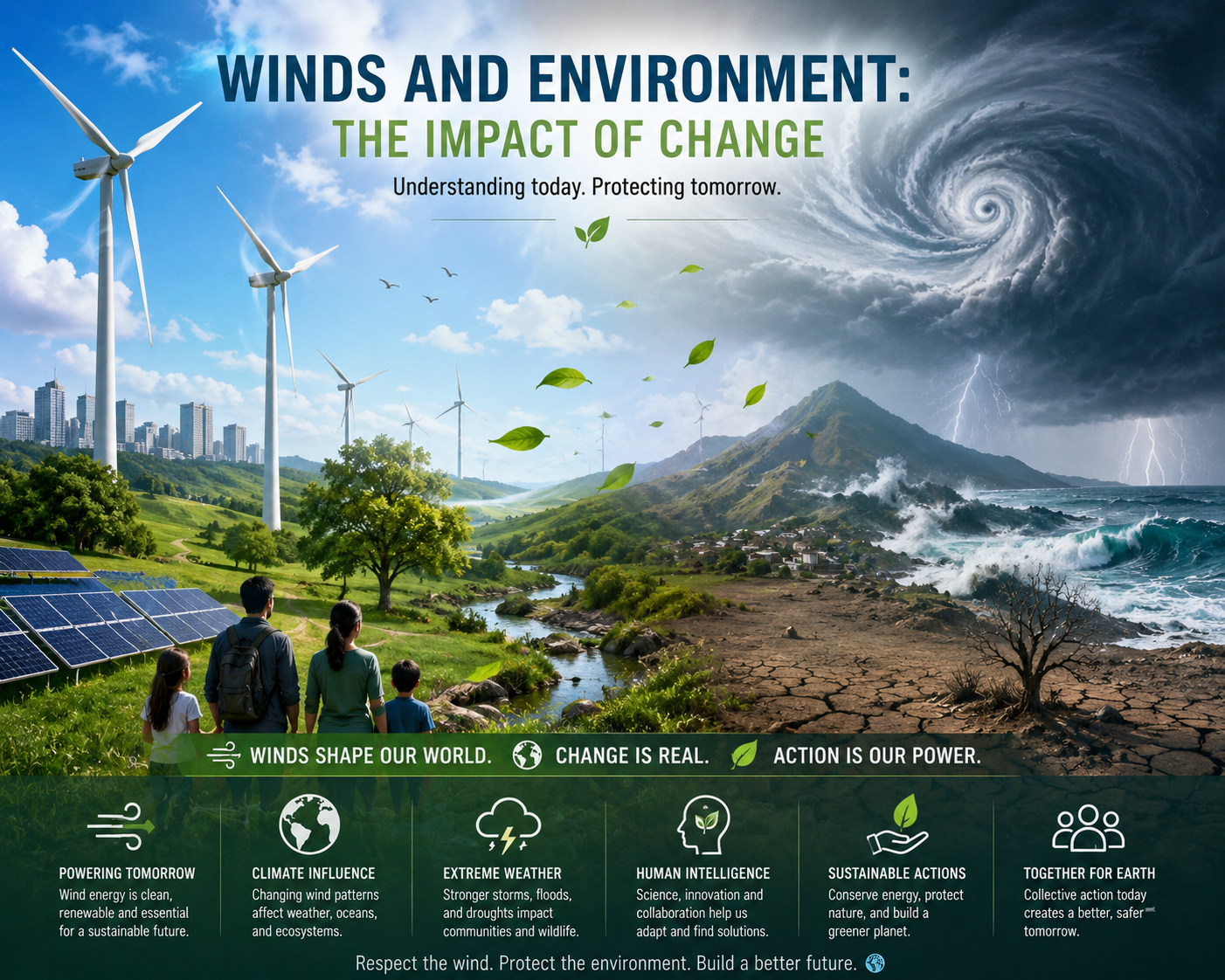
As the global climate changes, wind patterns are also shifting in many regions. Rising temperatures, changing air pressure, and altered weather systems can influence the strength, direction, and frequency of winds. These changes may contribute to more intense storms in some areas, prolonged droughts in others, and increased challenges for farming, transportation, and wildlife. Scientists continue to study these complex interactions to better predict future environmental conditions and help communities prepare for changing climates.
Human intelligence plays a vital role in addressing environmental challenges. Through scientific research, technological innovation, and international cooperation, people are developing cleaner energy sources, improving weather forecasting, and creating sustainable practices that reduce environmental impact. Wind energy, in particular, has become one of the fastest-growing renewable energy sources, offering a cleaner alternative to fossil fuels while helping reduce greenhouse gas emissions.
Protecting the environment requires both knowledge and action. Every individual can contribute by conserving energy, planting trees, reducing waste, and supporting sustainable solutions. By combining human intelligence with respect for nature, we can better understand the changing relationship between winds and the environment and work toward a healthier, more resilient future for generations to come.
Roll no:85
Task no:55
Task topic: Winds and Environment: The Impact of Change
The wind is one of nature's most powerful forces, shaping landscapes, influencing weather, and supporting life across the planet. It carries moisture that nourishes forests and farmland, spreads seeds that help plants grow, and drives ocean currents that regulate Earth's climate. For centuries, humans have relied on the wind for travel, agriculture, and renewable energy. Understanding how wind interacts with the environment helps us appreciate its essential role in maintaining the balance of nature.
As the global climate changes, wind patterns are also shifting in many regions. Rising temperatures, changing air pressure, and altered weather systems can influence the strength, direction, and frequency of winds. These changes may contribute to more intense storms in some areas, prolonged droughts in others, and increased challenges for farming, transportation, and wildlife. Scientists continue to study these complex interactions to better predict future environmental conditions and help communities prepare for changing climates.
Human intelligence plays a vital role in addressing environmental challenges. Through scientific research, technological innovation, and international cooperation, people are developing cleaner energy sources, improving weather forecasting, and creating sustainable practices that reduce environmental impact. Wind energy, in particular, has become one of the fastest-growing renewable energy sources, offering a cleaner alternative to fossil fuels while helping reduce greenhouse gas emissions.
Protecting the environment requires both knowledge and action. Every individual can contribute by conserving energy, planting trees, reducing waste, and supporting sustainable solutions. By combining human intelligence with respect for nature, we can better understand the changing relationship between winds and the environment and work toward a healthier, more resilient future for generations to come.
RSIF8
Roll no:85
Task no:55
Task topic: Winds and Environment: The Impact of Change
The wind is one of nature's most powerful forces, shaping landscapes, influencing weather, and supporting life across the planet. It carries moisture that nourishes forests and farmland, spreads seeds that help plants grow, and drives ocean currents that regulate Earth's climate. For centuries, humans have relied on the wind for travel, agriculture, and renewable energy. Understanding how wind interacts with the environment helps us appreciate its essential role in maintaining the balance of nature.
As the global climate changes, wind patterns are also shifting in many regions. Rising temperatures, changing air pressure, and altered weather systems can influence the strength, direction, and frequency of winds. These changes may contribute to more intense storms in some areas, prolonged droughts in others, and increased challenges for farming, transportation, and wildlife. Scientists continue to study these complex interactions to better predict future environmental conditions and help communities prepare for changing climates.
Human intelligence plays a vital role in addressing environmental challenges. Through scientific research, technological innovation, and international cooperation, people are developing cleaner energy sources, improving weather forecasting, and creating sustainable practices that reduce environmental impact. Wind energy, in particular, has become one of the fastest-growing renewable energy sources, offering a cleaner alternative to fossil fuels while helping reduce greenhouse gas emissions.
Protecting the environment requires both knowledge and action. Every individual can contribute by conserving energy, planting trees, reducing waste, and supporting sustainable solutions. By combining human intelligence with respect for nature, we can better understand the changing relationship between winds and the environment and work toward a healthier, more resilient future for generations to come.
0 Commentaires
0 Parts
120 Vue