


RSIF8
Roll no:85
Task no:62
Task topic: Periodic Table: The Language of Science
The periodic table is one of the greatest achievements in science,
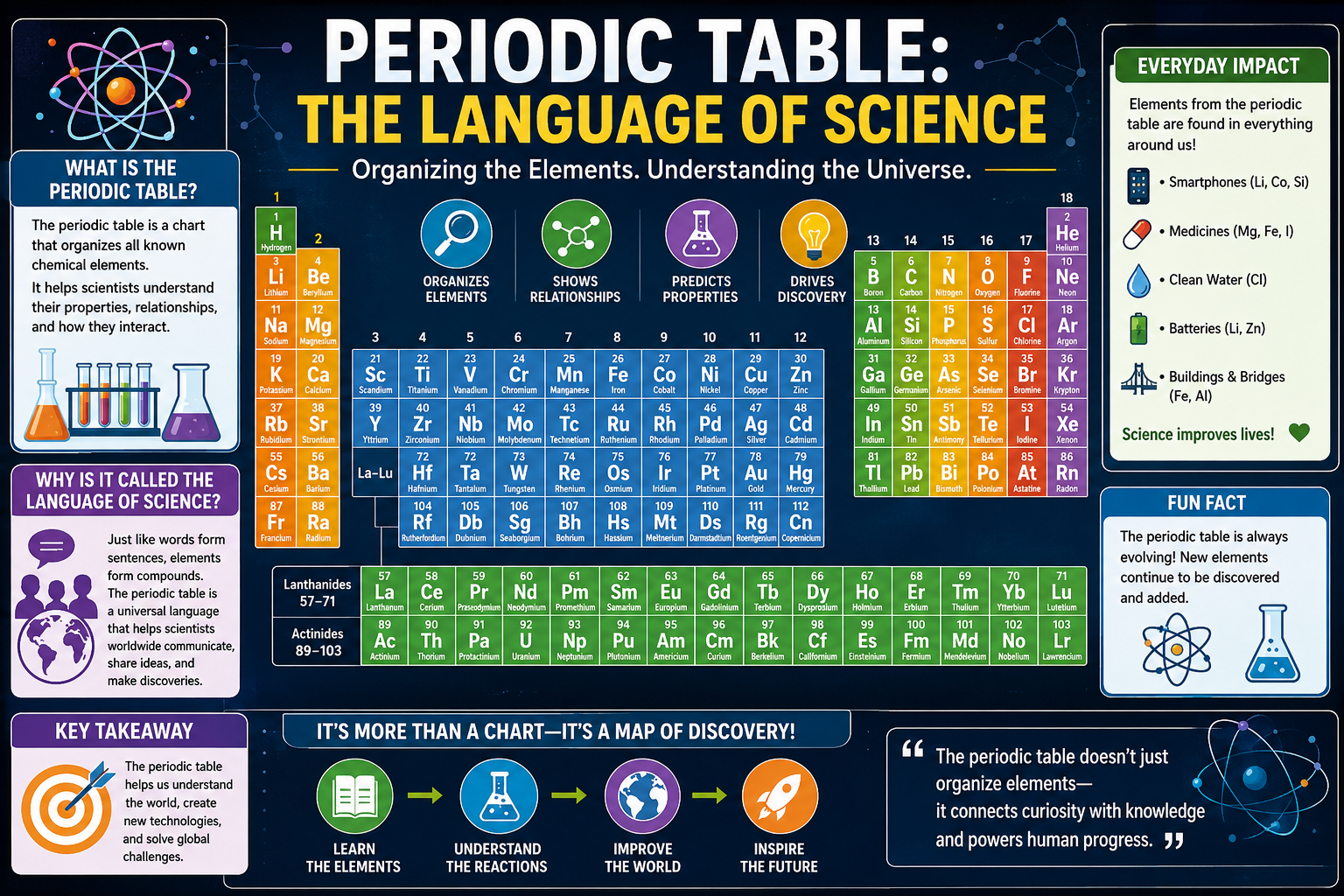
organizing all known chemical elements into a simple and meaningful chart. It helps scientists understand the properties, behavior, and relationships of elements, making it easier to study chemistry and discover new materials. From hydrogen to oganesson, every element has its unique place and purpose in the universe.
The periodic table is often called the "language of science" because it allows scientists around the world to communicate using the same system. By studying the arrangement of elements, students can predict how different substances will react, form compounds, and contribute to everyday life. It is an essential tool in classrooms, laboratories, and scientific research.
Many of the things we use every day—such as smartphones, medicines, clean water systems, batteries, and building materials—depend on elements from the periodic table. Understanding these elements helps us develop new technologies, improve healthcare, and protect the environment. The periodic table continues to inspire innovation and scientific discovery across the globe.
Learning the periodic table is more than memorizing symbols and numbers—it is about understanding the building blocks of everything around us. Whether you dream of becoming a scientist, engineer, doctor, or teacher, the periodic table opens the door to endless possibilities. It reminds us that science is a universal language that connects knowledge, curiosity, and progress.
Roll no:85
Task no:62
Task topic: Periodic Table: The Language of Science
The periodic table is one of the greatest achievements in science,
organizing all known chemical elements into a simple and meaningful chart. It helps scientists understand the properties, behavior, and relationships of elements, making it easier to study chemistry and discover new materials. From hydrogen to oganesson, every element has its unique place and purpose in the universe.
The periodic table is often called the "language of science" because it allows scientists around the world to communicate using the same system. By studying the arrangement of elements, students can predict how different substances will react, form compounds, and contribute to everyday life. It is an essential tool in classrooms, laboratories, and scientific research.
Many of the things we use every day—such as smartphones, medicines, clean water systems, batteries, and building materials—depend on elements from the periodic table. Understanding these elements helps us develop new technologies, improve healthcare, and protect the environment. The periodic table continues to inspire innovation and scientific discovery across the globe.
Learning the periodic table is more than memorizing symbols and numbers—it is about understanding the building blocks of everything around us. Whether you dream of becoming a scientist, engineer, doctor, or teacher, the periodic table opens the door to endless possibilities. It reminds us that science is a universal language that connects knowledge, curiosity, and progress.
RSIF8
Roll no:85
Task no:62
Task topic: Periodic Table: The Language of Science
The periodic table is one of the greatest achievements in science,
organizing all known chemical elements into a simple and meaningful chart. It helps scientists understand the properties, behavior, and relationships of elements, making it easier to study chemistry and discover new materials. From hydrogen to oganesson, every element has its unique place and purpose in the universe. 🌍⚛️
The periodic table is often called the "language of science" because it allows scientists around the world to communicate using the same system. By studying the arrangement of elements, students can predict how different substances will react, form compounds, and contribute to everyday life. It is an essential tool in classrooms, laboratories, and scientific research. 📚🧑🔬🔍
Many of the things we use every day—such as smartphones, medicines, clean water systems, batteries, and building materials—depend on elements from the periodic table. Understanding these elements helps us develop new technologies, improve healthcare, and protect the environment. The periodic table continues to inspire innovation and scientific discovery across the globe. 💊📱⚡🌱
Learning the periodic table is more than memorizing symbols and numbers—it is about understanding the building blocks of everything around us. Whether you dream of becoming a scientist, engineer, doctor, or teacher, the periodic table opens the door to endless possibilities. It reminds us that science is a universal language that connects knowledge, curiosity, and progress. 🌟🔬🚀
0 Reacties
0 aandelen
64 Views