


RSIF8
Roll no:85
Task no:69
Task topic:Acids and Bases: The Balance of Nature
Have you ever wondered why a lemon tastes sour, why soap feels slippery, or how our stomach digests food? The answer lies in the fascinating world of acids and bases. These substances are found everywhere—in nature, in our homes, and even inside our bodies. Together, they help maintain the delicate balance that supports life on Earth.
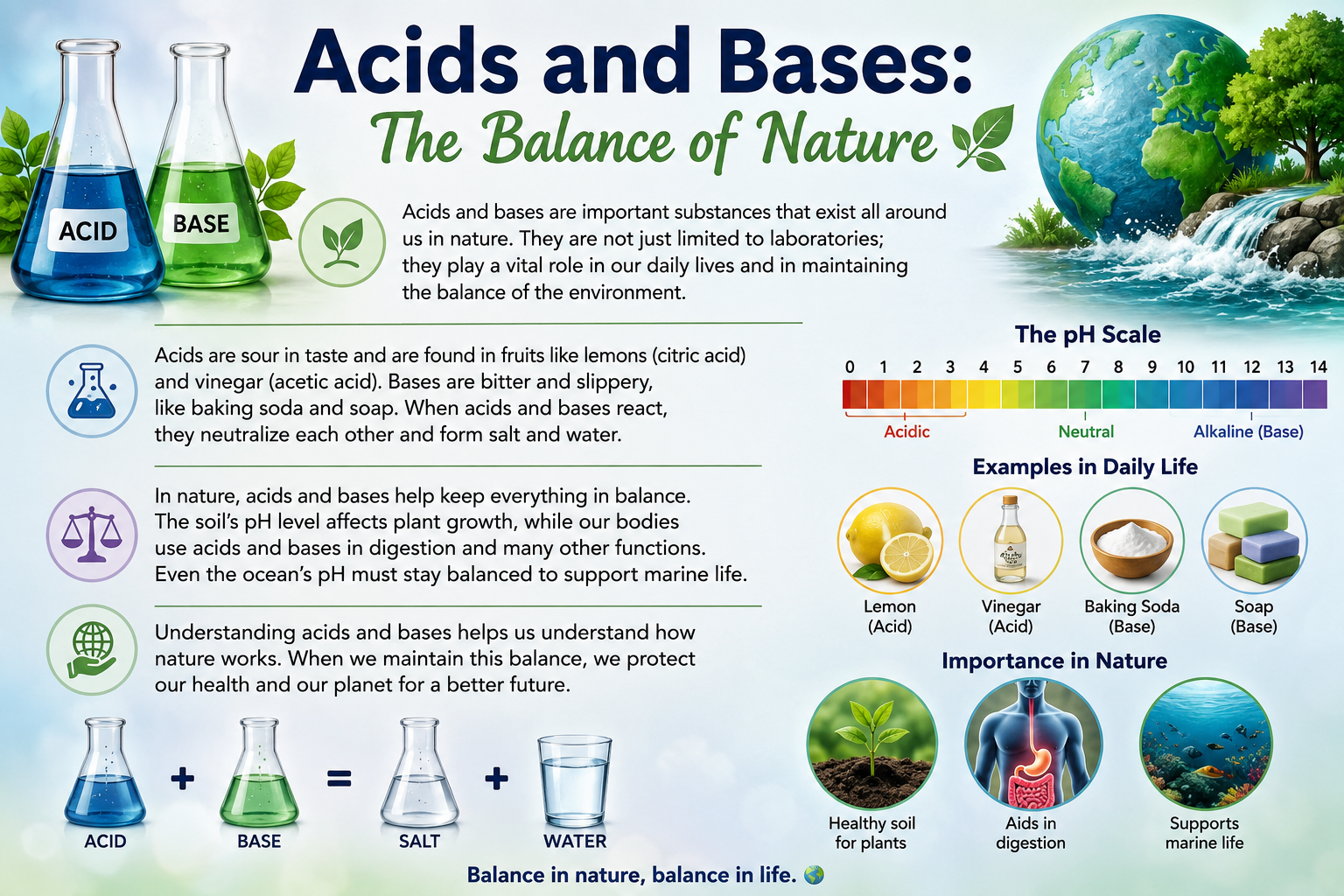
Acids are substances that usually taste sour and have a pH below 7. Common examples include citric acid in lemons, acetic acid in vinegar, and hydrochloric acid in the stomach, which helps digest food. Bases, on the other hand, usually have a pH above 7 and feel slippery. Baking soda, soap, and many cleaning products are everyday examples of bases.
One of the most amazing things about acids and bases is that they can neutralize each other. When an acid reacts with a base, they produce salt and water. This neutralization process is important in many areas of life, from treating acidic soil for better farming to making medicines that reduce excess stomach acid.
Nature depends on the balance between acids and bases. Healthy soil has the right pH for plants to grow, rivers and oceans need balanced pH levels to support aquatic life, and our bodies carefully regulate pH so that organs and enzymes can function properly. Even a small change in this balance can affect living organisms.
Understanding acids and bases helps us appreciate how chemistry works in everyday life. They are not just laboratory chemicals—they are essential to cooking, cleaning, farming, medicine, and the environment. By learning about them, we gain a deeper understanding of the natural world and the scientific principles that keep it in harmony
Roll no:85
Task no:69
Task topic:Acids and Bases: The Balance of Nature
Have you ever wondered why a lemon tastes sour, why soap feels slippery, or how our stomach digests food? The answer lies in the fascinating world of acids and bases. These substances are found everywhere—in nature, in our homes, and even inside our bodies. Together, they help maintain the delicate balance that supports life on Earth.
Acids are substances that usually taste sour and have a pH below 7. Common examples include citric acid in lemons, acetic acid in vinegar, and hydrochloric acid in the stomach, which helps digest food. Bases, on the other hand, usually have a pH above 7 and feel slippery. Baking soda, soap, and many cleaning products are everyday examples of bases.
One of the most amazing things about acids and bases is that they can neutralize each other. When an acid reacts with a base, they produce salt and water. This neutralization process is important in many areas of life, from treating acidic soil for better farming to making medicines that reduce excess stomach acid.
Nature depends on the balance between acids and bases. Healthy soil has the right pH for plants to grow, rivers and oceans need balanced pH levels to support aquatic life, and our bodies carefully regulate pH so that organs and enzymes can function properly. Even a small change in this balance can affect living organisms.
Understanding acids and bases helps us appreciate how chemistry works in everyday life. They are not just laboratory chemicals—they are essential to cooking, cleaning, farming, medicine, and the environment. By learning about them, we gain a deeper understanding of the natural world and the scientific principles that keep it in harmony
RSIF8
Roll no:85
Task no:69
Task topic:Acids and Bases: The Balance of Nature
Have you ever wondered why a lemon tastes sour, why soap feels slippery, or how our stomach digests food? The answer lies in the fascinating world of acids and bases. These substances are found everywhere—in nature, in our homes, and even inside our bodies. Together, they help maintain the delicate balance that supports life on Earth.
Acids are substances that usually taste sour and have a pH below 7. Common examples include citric acid in lemons, acetic acid in vinegar, and hydrochloric acid in the stomach, which helps digest food. Bases, on the other hand, usually have a pH above 7 and feel slippery. Baking soda, soap, and many cleaning products are everyday examples of bases.
One of the most amazing things about acids and bases is that they can neutralize each other. When an acid reacts with a base, they produce salt and water. This neutralization process is important in many areas of life, from treating acidic soil for better farming to making medicines that reduce excess stomach acid.
Nature depends on the balance between acids and bases. Healthy soil has the right pH for plants to grow, rivers and oceans need balanced pH levels to support aquatic life, and our bodies carefully regulate pH so that organs and enzymes can function properly. Even a small change in this balance can affect living organisms.
Understanding acids and bases helps us appreciate how chemistry works in everyday life. They are not just laboratory chemicals—they are essential to cooking, cleaning, farming, medicine, and the environment. By learning about them, we gain a deeper understanding of the natural world and the scientific principles that keep it in harmony
0 التعليقات
0 المشاركات
51 مشاهدة