


Mohsin RS F8
Roll NO:13
Canva post NO:45
Class: Foundaton Level
Made by Me
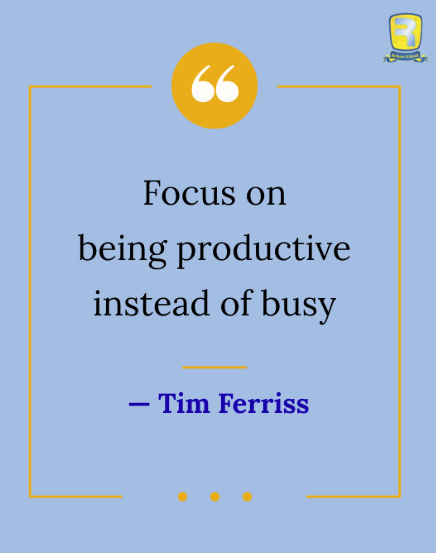
“Focus on being productive instead of busy.” — Tim Ferriss
In today’s fast-moving world, it is easy to confuse being busy with being productive. A person can spend hours studying, working, checking messages, organizing tasks, and moving from one activity to another without making meaningful progress. True productivity is not about how many things we do; it is about whether the time and effort we spend actually move us closer to our goals.
Being busy often means having a long list of activities. Productivity, however, means choosing the activities that matter most. For example, a student may spend several hours with books open but become distracted by notifications or unrelated tasks. Another student might study for a shorter period with clear concentration and complete the most important work. The second approach can be more productive because the focus is on results rather than simply spending time.
Productivity begins with knowing what is important. When we understand our priorities, it becomes easier to decide where our attention should go. Instead of trying to complete everything at once, we can identify the most valuable tasks and work on them one by one. This helps reduce distractions and makes large goals feel more manageable.
Focus is another important part of productivity. Our attention is limited, and constantly switching between tasks can make it harder to do each one well. Giving full attention to one meaningful task can help us understand information better, solve problems more effectively, and complete our work with greater care. Even small periods of focused work can make a difference when they are used wisely.
Being productive also means learning when to say no. Not every task, invitation, notification, or activity deserves our attention. Sometimes we become busy because we accept too many unnecessary responsibilities. Understanding our priorities allows us to protect our time and concentrate on what truly matters.
Another important lesson is that rest is not the opposite of productivity. Taking reasonable breaks, sleeping well.
Roll NO:13
Canva post NO:45
Class: Foundaton Level
Made by Me
“Focus on being productive instead of busy.” — Tim Ferriss
In today’s fast-moving world, it is easy to confuse being busy with being productive. A person can spend hours studying, working, checking messages, organizing tasks, and moving from one activity to another without making meaningful progress. True productivity is not about how many things we do; it is about whether the time and effort we spend actually move us closer to our goals.
Being busy often means having a long list of activities. Productivity, however, means choosing the activities that matter most. For example, a student may spend several hours with books open but become distracted by notifications or unrelated tasks. Another student might study for a shorter period with clear concentration and complete the most important work. The second approach can be more productive because the focus is on results rather than simply spending time.
Productivity begins with knowing what is important. When we understand our priorities, it becomes easier to decide where our attention should go. Instead of trying to complete everything at once, we can identify the most valuable tasks and work on them one by one. This helps reduce distractions and makes large goals feel more manageable.
Focus is another important part of productivity. Our attention is limited, and constantly switching between tasks can make it harder to do each one well. Giving full attention to one meaningful task can help us understand information better, solve problems more effectively, and complete our work with greater care. Even small periods of focused work can make a difference when they are used wisely.
Being productive also means learning when to say no. Not every task, invitation, notification, or activity deserves our attention. Sometimes we become busy because we accept too many unnecessary responsibilities. Understanding our priorities allows us to protect our time and concentrate on what truly matters.
Another important lesson is that rest is not the opposite of productivity. Taking reasonable breaks, sleeping well.
Mohsin RS F8 🎓✨
Roll NO:13
Canva post NO:45
Class: Foundaton Level 📚
Made by Me
“Focus on being productive instead of busy.” — Tim Ferriss
In today’s fast-moving world, it is easy to confuse being busy with being productive. A person can spend hours studying, working, checking messages, organizing tasks, and moving from one activity to another without making meaningful progress. True productivity is not about how many things we do; it is about whether the time and effort we spend actually move us closer to our goals.
Being busy often means having a long list of activities. Productivity, however, means choosing the activities that matter most. For example, a student may spend several hours with books open but become distracted by notifications or unrelated tasks. Another student might study for a shorter period with clear concentration and complete the most important work. The second approach can be more productive because the focus is on results rather than simply spending time.
Productivity begins with knowing what is important. When we understand our priorities, it becomes easier to decide where our attention should go. Instead of trying to complete everything at once, we can identify the most valuable tasks and work on them one by one. This helps reduce distractions and makes large goals feel more manageable.
Focus is another important part of productivity. Our attention is limited, and constantly switching between tasks can make it harder to do each one well. Giving full attention to one meaningful task can help us understand information better, solve problems more effectively, and complete our work with greater care. Even small periods of focused work can make a difference when they are used wisely.
Being productive also means learning when to say no. Not every task, invitation, notification, or activity deserves our attention. Sometimes we become busy because we accept too many unnecessary responsibilities. Understanding our priorities allows us to protect our time and concentrate on what truly matters.
Another important lesson is that rest is not the opposite of productivity. Taking reasonable breaks, sleeping well.
0 Yorumlar
0 hisse senetleri
80 Views