


Mohsin RS F8
Story post NO:20
roll NO:13
Class: Foundation Level
Made by Me
Climate and Culture: How Geography Shapes Our Way of Life
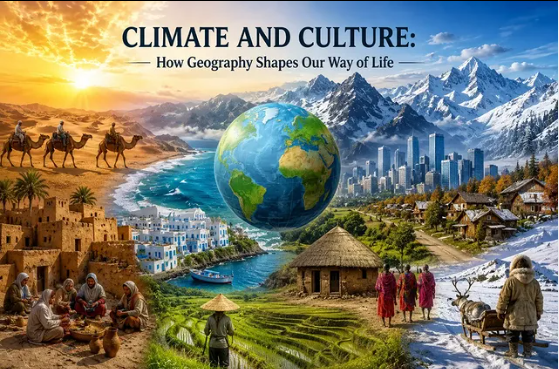
Climate and geography have a powerful influence on the way people live, work, eat, dress, build homes, and develop traditions. From hot deserts to cold mountains, every environment creates different challenges and opportunities that shape human lifestyles and cultures.
In areas with hot climates, people often choose lightweight clothing, shaded buildings, and lifestyles adapted to high temperatures. In colder regions, homes are designed to retain warmth, and people commonly wear layered clothing to protect themselves from the cold. Similarly, communities living near rivers, coastlines, and fertile plains often develop strong connections with farming, fishing, trade, and water resources.
Geography also influences food and traditions. Local crops, animals, and available resources become important parts of traditional dishes and cultural practices. Mountains, deserts, forests, and oceans can create natural boundaries that influence languages, customs, occupations, and patterns of settlement.
However, geography does not completely determine culture. People adapt, innovate, migrate, and exchange ideas with other communities. Modern technology has also reduced many geographical limitations, allowing cultures to interact and evolve in new ways.
Understanding the relationship between climate, geography, and culture helps us appreciate the incredible diversity of human life. It reminds us that the places we live in are not just backgrounds to our lives—they can influence our choices, traditions, communities, and connection with the natural world.
Story post NO:20
roll NO:13
Class: Foundation Level
Made by Me
Climate and Culture: How Geography Shapes Our Way of Life
Climate and geography have a powerful influence on the way people live, work, eat, dress, build homes, and develop traditions. From hot deserts to cold mountains, every environment creates different challenges and opportunities that shape human lifestyles and cultures.
In areas with hot climates, people often choose lightweight clothing, shaded buildings, and lifestyles adapted to high temperatures. In colder regions, homes are designed to retain warmth, and people commonly wear layered clothing to protect themselves from the cold. Similarly, communities living near rivers, coastlines, and fertile plains often develop strong connections with farming, fishing, trade, and water resources.
Geography also influences food and traditions. Local crops, animals, and available resources become important parts of traditional dishes and cultural practices. Mountains, deserts, forests, and oceans can create natural boundaries that influence languages, customs, occupations, and patterns of settlement.
However, geography does not completely determine culture. People adapt, innovate, migrate, and exchange ideas with other communities. Modern technology has also reduced many geographical limitations, allowing cultures to interact and evolve in new ways.
Understanding the relationship between climate, geography, and culture helps us appreciate the incredible diversity of human life. It reminds us that the places we live in are not just backgrounds to our lives—they can influence our choices, traditions, communities, and connection with the natural world.
Mohsin RS F8 🎓✨
Story post NO:20
roll NO:13
Class: Foundation Level 📚
Made by Me 💻🚀
Climate and Culture: How Geography Shapes Our Way of Life 🌍🌦️
Climate and geography have a powerful influence on the way people live, work, eat, dress, build homes, and develop traditions. From hot deserts to cold mountains, every environment creates different challenges and opportunities that shape human lifestyles and cultures.
In areas with hot climates, people often choose lightweight clothing, shaded buildings, and lifestyles adapted to high temperatures. In colder regions, homes are designed to retain warmth, and people commonly wear layered clothing to protect themselves from the cold. Similarly, communities living near rivers, coastlines, and fertile plains often develop strong connections with farming, fishing, trade, and water resources.
Geography also influences food and traditions. Local crops, animals, and available resources become important parts of traditional dishes and cultural practices. Mountains, deserts, forests, and oceans can create natural boundaries that influence languages, customs, occupations, and patterns of settlement.
However, geography does not completely determine culture. People adapt, innovate, migrate, and exchange ideas with other communities. Modern technology has also reduced many geographical limitations, allowing cultures to interact and evolve in new ways.
Understanding the relationship between climate, geography, and culture helps us appreciate the incredible diversity of human life. It reminds us that the places we live in are not just backgrounds to our lives—they can influence our choices, traditions, communities, and connection with the natural world. 🌱🏔️🏜️🌊
0 Comments
0 Shares
34 Views