


accl book
rehan school urdu bazar campus
roll no 16
foundation leval
PAGE 1 — ENGLISH STORY
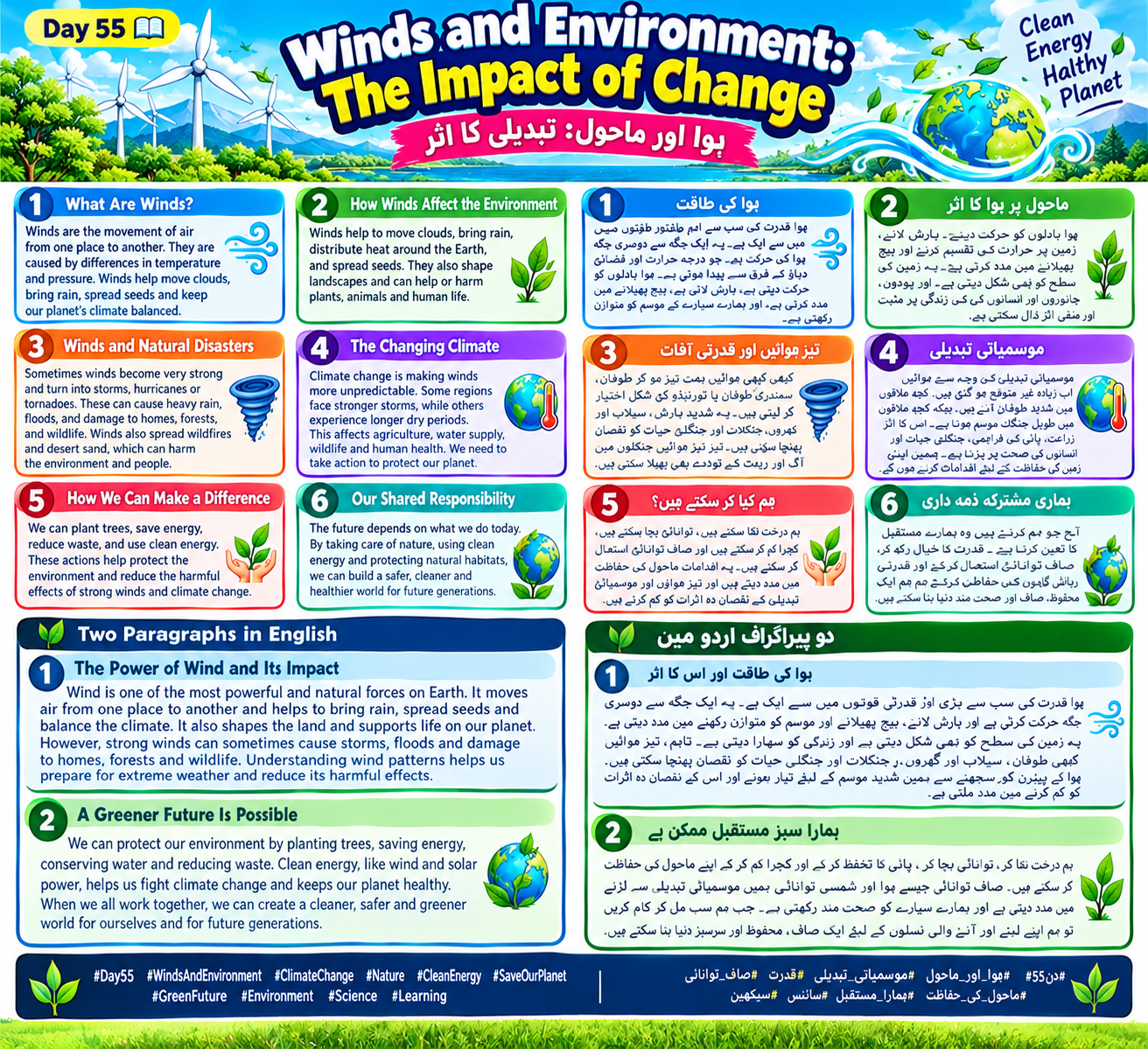
Winds and Environment: The Impact of Change
Paragraph 1: The Power of Wind
Wind is one of the most important natural forces on our planet. It is created when air moves from one place to another because of differences in temperature and air pressure. Wind helps move clouds across the sky, brings rain to many regions, and spreads seeds from one place to another. It also helps balance temperatures and influences weather conditions around the world. Gentle winds make the weather pleasant, while strong winds can sometimes become dangerous storms. Although we cannot see the wind itself, we can observe its effects on trees, rivers, oceans, and the environment around us. Wind is a powerful part of nature that supports life in many different ways.
Paragraph 2: How Wind Affects the Environment
Wind plays a major role in shaping our environment and supporting living things. It helps plants spread their seeds, moves moisture through the atmosphere, and influences rainfall in different regions. Wind also affects oceans by helping create waves and contributing to the movement of ocean currents. However, extremely strong winds can damage forests, destroy crops, break trees, and damage houses and buildings. Dust storms can reduce air quality and make it difficult for people and animals to breathe comfortably. Changes in wind patterns can also affect farming, water supplies, and wildlife habitats. Understanding these effects helps scientists study the environment and prepare communities for changing weather conditions.
Paragraph 3: Climate Change and Natural Disasters
Climate change is affecting weather patterns in many parts of the world. Rising temperatures can influence atmospheric circulation and may change the strength, timing, and location of certain winds and storms. Powerful winds can contribute to hurricanes, cyclones, and other severe weather events that bring heavy rainfall and flooding. These disasters can damage homes, roads, farms, and natural habitats. Farmers may lose crops, families may be forced to leave their homes, and animals may lose the places where they live. Scien
33s
accl book
rehan school urdu bazar campus
roll no 16
foundation leval
PAGE 1 — ENGLISH STORY
Winds and Environment: The Impact of Change
Paragraph 1: The Power of Wind
Wind is one of the most important natural forces on our planet. It is created when air moves from one place to another because of differences in temperature and air pressure. Wind helps move clouds across the sky, brings rain to many regions, and spreads seeds from one place to another. It also helps balance temperatures and influences weather conditions around the world. Gentle winds make the weather pleasant, while strong winds can sometimes become dangerous storms. Although we cannot see the wind itself, we can observe its effects on trees, rivers, oceans, and the environment around us. Wind is a powerful part of nature that supports life in many different ways.
Paragraph 2: How Wind Affects the Environment
Wind plays a major role in shaping our environment and supporting living things. It helps plants spread their seeds, moves moisture through the atmosphere, and influences rainfall in different regions. Wind also affects oceans by helping create waves and contributing to the movement of ocean currents. However, extremely strong winds can damage forests, destroy crops, break trees, and damage houses and buildings. Dust storms can reduce air quality and make it difficult for people and animals to breathe comfortably. Changes in wind patterns can also affect farming, water supplies, and wildlife habitats. Understanding these effects helps scientists study the environment and prepare communities for changing weather conditions.
Paragraph 3: Climate Change and Natural Disasters
Climate change is affecting weather patterns in many parts of the world. Rising temperatures can influence atmospheric circulation and may change the strength, timing, and location of certain winds and storms. Powerful winds can contribute to hurricanes, cyclones, and other severe weather events that bring heavy rainfall and flooding. These disasters can damage homes, roads, farms, and natural habitats. Farmers may lose crops, families may be forced to leave their homes, and animals may lose the places where they live. Scien
33s
0 التعليقات
0 المشاركات
120 مشاهدة