


**Roll No: 2**
**Batch: 14**
**Book: ACCL**
**Task No: 161**
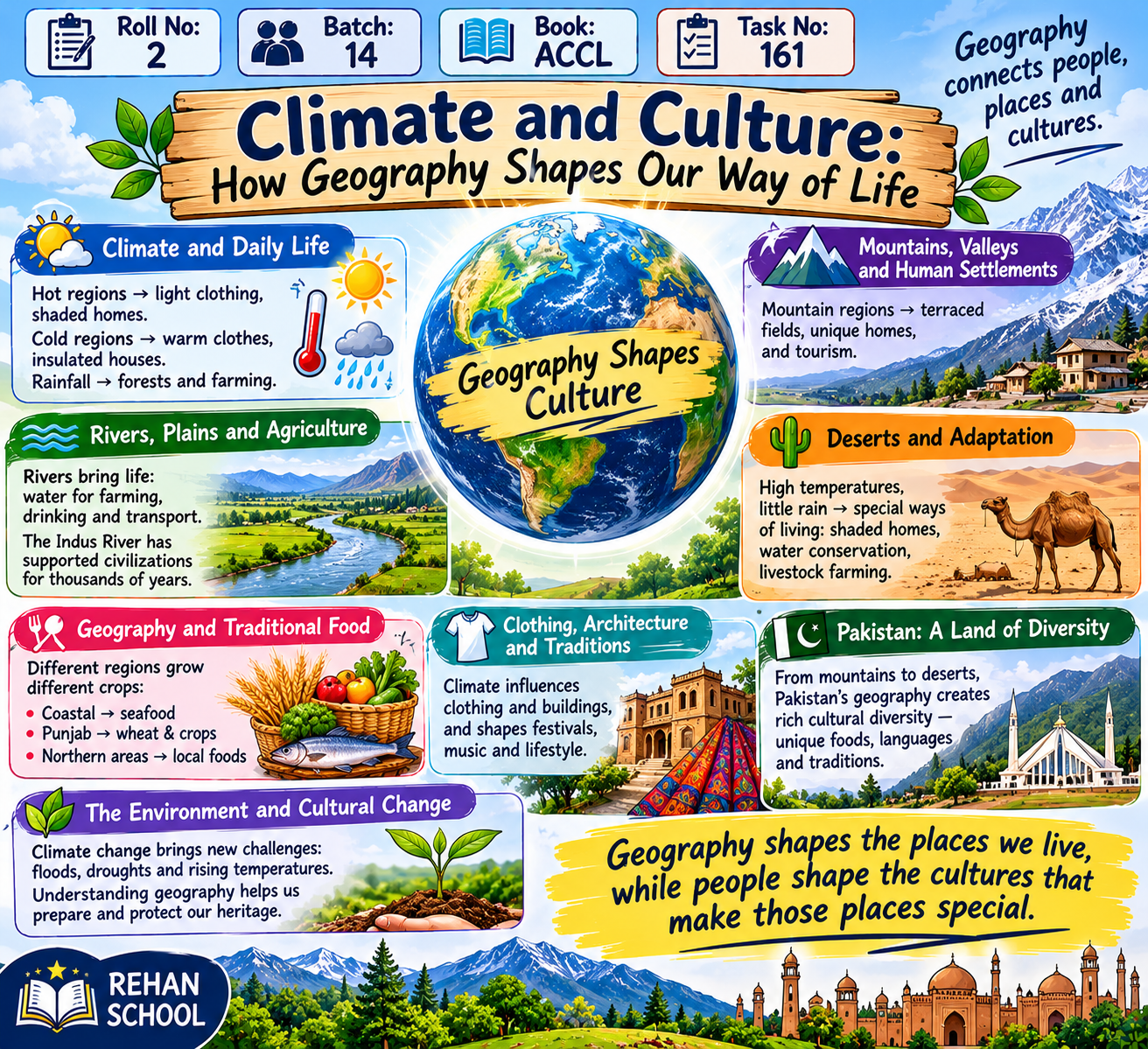
# Climate and Culture: How Geography Shapes Our Way of Life
Have you ever wondered why people in different parts of the world wear different clothes, eat different foods, build different houses, and celebrate different traditions? One important reason is geography. The physical features of a region, including its mountains, rivers, deserts, forests, and climate, influence how people live and develop their cultures. Geography is not just about maps and locations; it is also about understanding the relationship between people and their environment.
**Climate refers to the long-term patterns of weather in a particular region, while geography describes the physical features and location of places.** These two factors influence many aspects of human life, including agriculture, housing, transportation, clothing, occupations, and cultural traditions. Over generations, communities develop ways of living that respond to the conditions around them.
## Climate and Daily Life
Climate plays an important role in determining people's daily activities. In hot regions, people often prefer lightweight clothing and buildings designed to provide shade and ventilation. In colder areas, warm clothing, insulated houses, and heating systems help people remain comfortable.
Rainfall also affects daily life. Regions receiving plenty of rain may support forests, rivers, and farming, while areas with limited rainfall often require careful water management. These environmental conditions influence where communities settle and how they use natural resources.
## Mountains, Valleys, and Human Settlements
Mountains and valleys create unique living environments. People living in mountainous regions may build houses on slopes or in valleys and develop transportation systems suited to difficult terrain. Farming practices may include terraced fields, where steps are created on hillsides to make agricultural land more usable.
Mountain communities often develop strong connections with their natural surroundings. Tourism, livestock farming, handicrafts, and forestry can become important sources of livelihood. In Pakistan, regions such as Gilgit-Baltistan and parts of Khyber Pakhtunkhwa demonstrate how mountain geography influences local lifestyles and traditions.
## Rivers, Plains, and Agriculture
Rivers and fertile plains have played a major role in the development of human civilizations. Rivers provide water for drinking, farming, transportation, and other activities. Their surrounding land can contain fertile soil that supports the growth of crops.
The Indus River is an important example. It has supported communities and agriculture in Pakistan for thousands of years. The Indus Valley Civilization developed around this river system, demonstrating how access to water and suitable land can contribute to the growth of cities, trade, and organized societies.
## Deserts and Adaptation
Desert regions have high temperatures, limited rainfall, and scarce water resources. People living in these areas develop ways to adapt to challenging environmental conditions. They may use traditional methods of water conservation, construct buildings that provide shade, and organize their activities around cooler parts of the day.
In some desert communities, livestock farming, trade, and traditional crafts are important occupations. Their clothing, food, architecture, and customs reflect generations of experience in living with a dry climate.
## Geography and Traditional Food
Food is another interesting example of how geography shapes culture. Different regions grow different crops depending on their climate, soil, and water availability. Coastal communities often include fish and seafood in their diets, while agricultural regions may depend more on wheat, rice, vegetables, and fruits.
In Pakistan, regional food traditions reflect local environments and cultural history. Punjab is famous for its agricultural products and traditional dishes, while coastal Sindh and Balochistan have strong connections with seafood. Northern areas are known for regional foods influenced by their mountain environment and local ingredients.
## Clothing, Architecture, and Traditions
Geography influences the materials people use for clothing and construction. In cold climates, wool and other insulating materials are useful, while lighter fabrics are often preferred in hot environments.
Traditional architecture also reflects local conditions. Houses in warm regions may have courtyards and shaded spaces, while buildings in colder areas may use materials and designs that help retain heat. Local traditions, festivals, music, and celebrations can also develop through people's relationship with their environment, history, and community life.
## The Environment and Cultural Change
Although geography influences culture, human communities are not limited by their surroundings. People use creativity, technology, and knowledge to adapt to changing conditions. Modern transportation, irrigation systems, renewable energy, and improved construction methods have changed the way many communities live.
Climate change is creating new challenges around the world. Rising temperatures, changing rainfall patterns, floods, droughts, and extreme weather events can affect agriculture, water supplies, homes, and traditional livelihoods. Understanding the connection between geography and culture can help communities prepare for these challenges and protect their natural and cultural heritage.
## Pakistan: A Land of Geographical and Cultural Diversity
Pakistan is an excellent example of how geography creates cultural diversity. From the high mountains of the north to the deserts of the south, from fertile plains to coastal areas, every region has its own environmental characteristics and traditions.
The people of different regions speak various languages, prepare different foods, wear traditional clothing, and celebrate unique cultural events. These differences make Pakistan a country rich in heritage and identity. At the same time, shared history and national values connect its communities.
Geography teaches us that every place has its own story. The mountains, rivers, deserts, forests, and climates around us influence how societies grow, adapt, and preserve their traditions. By understanding these connections, we can appreciate cultural diversity and recognize the importance of protecting our environment.
**Geography shapes the places we live, while people shape the cultures that make those places special. When we understand the relationship between climate, land, and human life, we gain a deeper appreciation of our world's diversity and the remarkable ways people adapt to their surroundings. **
#ClimateAndCulture #Geography #CulturalDiversity #Environment #Pakistan #HumanGeography #ClimateChange #ACCL #Batch14 #Task161
**Roll No: 2**
**Batch: 14**
**Book: ACCL**
**Task No: 161**
# 🌍🏔️ Climate and Culture: How Geography Shapes Our Way of Life 🌦️🏡
Have you ever wondered why people in different parts of the world wear different clothes, eat different foods, build different houses, and celebrate different traditions? 🌎✨ One important reason is geography. The physical features of a region, including its mountains, rivers, deserts, forests, and climate, influence how people live and develop their cultures. Geography is not just about maps and locations; it is also about understanding the relationship between people and their environment.
**Climate refers to the long-term patterns of weather in a particular region, while geography describes the physical features and location of places.** 🌤️ These two factors influence many aspects of human life, including agriculture, housing, transportation, clothing, occupations, and cultural traditions. Over generations, communities develop ways of living that respond to the conditions around them.
## 🌞 Climate and Daily Life
Climate plays an important role in determining people's daily activities. In hot regions, people often prefer lightweight clothing and buildings designed to provide shade and ventilation. In colder areas, warm clothing, insulated houses, and heating systems help people remain comfortable. ❄️☀️
Rainfall also affects daily life. Regions receiving plenty of rain may support forests, rivers, and farming, while areas with limited rainfall often require careful water management. These environmental conditions influence where communities settle and how they use natural resources.
## 🏔️ Mountains, Valleys, and Human Settlements
Mountains and valleys create unique living environments. 🏔️ People living in mountainous regions may build houses on slopes or in valleys and develop transportation systems suited to difficult terrain. Farming practices may include terraced fields, where steps are created on hillsides to make agricultural land more usable.
Mountain communities often develop strong connections with their natural surroundings. Tourism, livestock farming, handicrafts, and forestry can become important sources of livelihood. In Pakistan, regions such as Gilgit-Baltistan and parts of Khyber Pakhtunkhwa demonstrate how mountain geography influences local lifestyles and traditions. 🇵🇰
## 🌾 Rivers, Plains, and Agriculture
Rivers and fertile plains have played a major role in the development of human civilizations. 🌊 Rivers provide water for drinking, farming, transportation, and other activities. Their surrounding land can contain fertile soil that supports the growth of crops.
The Indus River is an important example. It has supported communities and agriculture in Pakistan for thousands of years. The Indus Valley Civilization developed around this river system, demonstrating how access to water and suitable land can contribute to the growth of cities, trade, and organized societies. 🌾🏛️
## 🏜️ Deserts and Adaptation
Desert regions have high temperatures, limited rainfall, and scarce water resources. 🐪 People living in these areas develop ways to adapt to challenging environmental conditions. They may use traditional methods of water conservation, construct buildings that provide shade, and organize their activities around cooler parts of the day.
In some desert communities, livestock farming, trade, and traditional crafts are important occupations. Their clothing, food, architecture, and customs reflect generations of experience in living with a dry climate.
## 🍲 Geography and Traditional Food
Food is another interesting example of how geography shapes culture. 🍚 Different regions grow different crops depending on their climate, soil, and water availability. Coastal communities often include fish and seafood in their diets, while agricultural regions may depend more on wheat, rice, vegetables, and fruits.
In Pakistan, regional food traditions reflect local environments and cultural history. Punjab is famous for its agricultural products and traditional dishes, while coastal Sindh and Balochistan have strong connections with seafood. Northern areas are known for regional foods influenced by their mountain environment and local ingredients. 🍛🇵🇰
## 👕 Clothing, Architecture, and Traditions
Geography influences the materials people use for clothing and construction. In cold climates, wool and other insulating materials are useful, while lighter fabrics are often preferred in hot environments. 🧥
Traditional architecture also reflects local conditions. Houses in warm regions may have courtyards and shaded spaces, while buildings in colder areas may use materials and designs that help retain heat. Local traditions, festivals, music, and celebrations can also develop through people's relationship with their environment, history, and community life. 🎶🏡
## 🌱 The Environment and Cultural Change
Although geography influences culture, human communities are not limited by their surroundings. People use creativity, technology, and knowledge to adapt to changing conditions. Modern transportation, irrigation systems, renewable energy, and improved construction methods have changed the way many communities live.
Climate change is creating new challenges around the world. Rising temperatures, changing rainfall patterns, floods, droughts, and extreme weather events can affect agriculture, water supplies, homes, and traditional livelihoods. 🌍 Understanding the connection between geography and culture can help communities prepare for these challenges and protect their natural and cultural heritage.
## 🇵🇰 Pakistan: A Land of Geographical and Cultural Diversity
Pakistan is an excellent example of how geography creates cultural diversity. From the high mountains of the north to the deserts of the south, from fertile plains to coastal areas, every region has its own environmental characteristics and traditions. 🏔️🌊
The people of different regions speak various languages, prepare different foods, wear traditional clothing, and celebrate unique cultural events. These differences make Pakistan a country rich in heritage and identity. At the same time, shared history and national values connect its communities.
Geography teaches us that every place has its own story. The mountains, rivers, deserts, forests, and climates around us influence how societies grow, adapt, and preserve their traditions. By understanding these connections, we can appreciate cultural diversity and recognize the importance of protecting our environment. 🌳🤝
**Geography shapes the places we live, while people shape the cultures that make those places special. When we understand the relationship between climate, land, and human life, we gain a deeper appreciation of our world's diversity and the remarkable ways people adapt to their surroundings. 🌍💚✨**
#ClimateAndCulture #Geography #CulturalDiversity #Environment #Pakistan #HumanGeography #ClimateChange #ACCL #Batch14 #Task161 🌍🏔️🌦️
0 التعليقات
0 المشاركات
166 مشاهدة