


Foundation leave
day 111
task create a story post
topic The Evolution Paradox: Bridging Theories of Life with Divine Design
# The Evolution Paradox: Bridging Theories of Life with Divine Design
An Educational Story About Evolution, Science, Faith, and the Mystery of Life
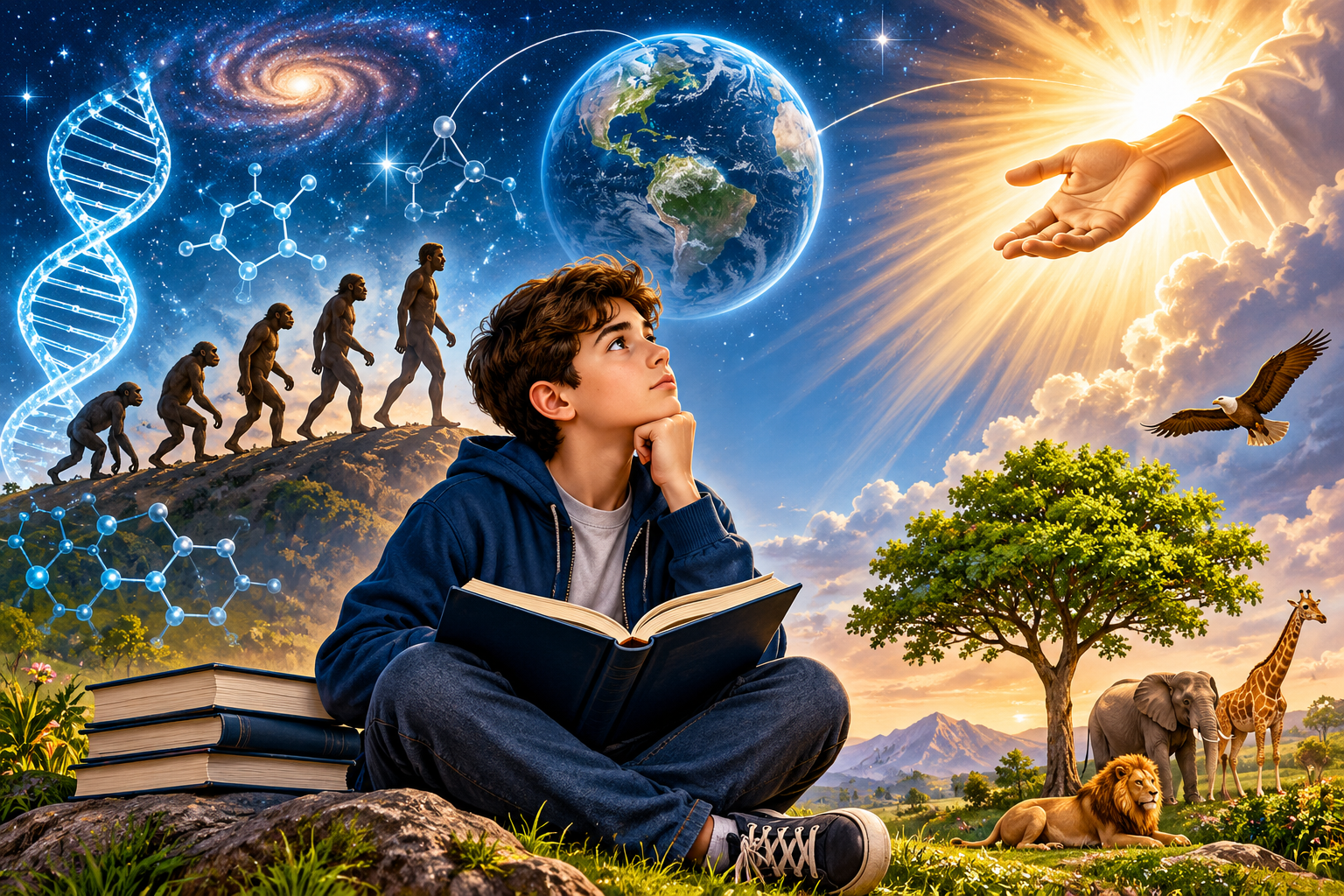
Once upon a time, there was a curious young student named Adam who loved learning about science, nature, and the universe. One day, while reading a science book, he discovered the theory of evolution. He learned that living things change over many generations and that all life on Earth shares connections through ancient ancestors. This discovery made him wonder: "How did life begin, and why is our world so beautifully designed?"
The next day, Adam discussed his questions with his science teacher. The teacher explained that evolution is a scientific theory that describes how living organisms change over generations through processes such as natural selection and genetic variation. Scientists study fossils, DNA, and living organisms to understand the history of life. Adam was amazed to learn how much information DNA contains and how it helps scientists understand relationships between different species.
However, Adam also had questions about divine design. He asked, "Can science and belief in a Creator exist together?" His teacher explained that science investigates how the natural world works, while religious and philosophical beliefs explore deeper questions about purpose, meaning, and creation. People have different opinions about how evolution and divine design relate to each other. Some see them as conflicting explanations, while others believe that scientific processes can be part of a divine plan.
Adam realized that asking questions was important. He understood that studying evolution did not mean ignoring faith, and discussing divine design did not mean ignoring scientific evidence. Both subjects encouraged him to think deeply about the mysteries of existence. He began reading more, listening to different viewpoints, and respecting people who had different beliefs.
Finally, Adam shared his thoughts with his classmates. He said, "Life is full of mysteries, and learning helps us understand more about our world. Science teaches us to investigate, while philosophy and faith encourage us to explore questions of purpose and meaning. We should never stop asking questions or searching for knowledge."
Moral of the Story: Knowledge grows when we remain curious, respect different perspectives, and explore life's mysteries with an open mind.
Key Lessons:
- Evolution explains how life changes over generations.
- DNA provides important evidence about the history of life.
- Science investigates the natural world through evidence.
- Faith and philosophy explore questions of purpose and meaning.
- Curiosity, respect, and critical thinking help us learn.
The End.
Foundation leave
day 111
task create a story post
topic The Evolution Paradox: Bridging Theories of Life with Divine Design
# The Evolution Paradox: Bridging Theories of Life with Divine Design
An Educational Story About Evolution, Science, Faith, and the Mystery of Life
Once upon a time, there was a curious young student named Adam who loved learning about science, nature, and the universe. One day, while reading a science book, he discovered the theory of evolution. He learned that living things change over many generations and that all life on Earth shares connections through ancient ancestors. This discovery made him wonder: "How did life begin, and why is our world so beautifully designed?"
The next day, Adam discussed his questions with his science teacher. The teacher explained that evolution is a scientific theory that describes how living organisms change over generations through processes such as natural selection and genetic variation. Scientists study fossils, DNA, and living organisms to understand the history of life. Adam was amazed to learn how much information DNA contains and how it helps scientists understand relationships between different species.
However, Adam also had questions about divine design. He asked, "Can science and belief in a Creator exist together?" His teacher explained that science investigates how the natural world works, while religious and philosophical beliefs explore deeper questions about purpose, meaning, and creation. People have different opinions about how evolution and divine design relate to each other. Some see them as conflicting explanations, while others believe that scientific processes can be part of a divine plan.
Adam realized that asking questions was important. He understood that studying evolution did not mean ignoring faith, and discussing divine design did not mean ignoring scientific evidence. Both subjects encouraged him to think deeply about the mysteries of existence. He began reading more, listening to different viewpoints, and respecting people who had different beliefs.
Finally, Adam shared his thoughts with his classmates. He said, "Life is full of mysteries, and learning helps us understand more about our world. Science teaches us to investigate, while philosophy and faith encourage us to explore questions of purpose and meaning. We should never stop asking questions or searching for knowledge."
Moral of the Story: Knowledge grows when we remain curious, respect different perspectives, and explore life's mysteries with an open mind.
Key Lessons:
- Evolution explains how life changes over generations.
- DNA provides important evidence about the history of life.
- Science investigates the natural world through evidence.
- Faith and philosophy explore questions of purpose and meaning.
- Curiosity, respect, and critical thinking help us learn.
The End.
0 Kommentare
0 Anteile
311 Ansichten