


foundation level
day: 146
task: create a story post
story # **The Ethics and Education of Animal Dissections**
### **A Story About Science, Learning, and Respect for Life**
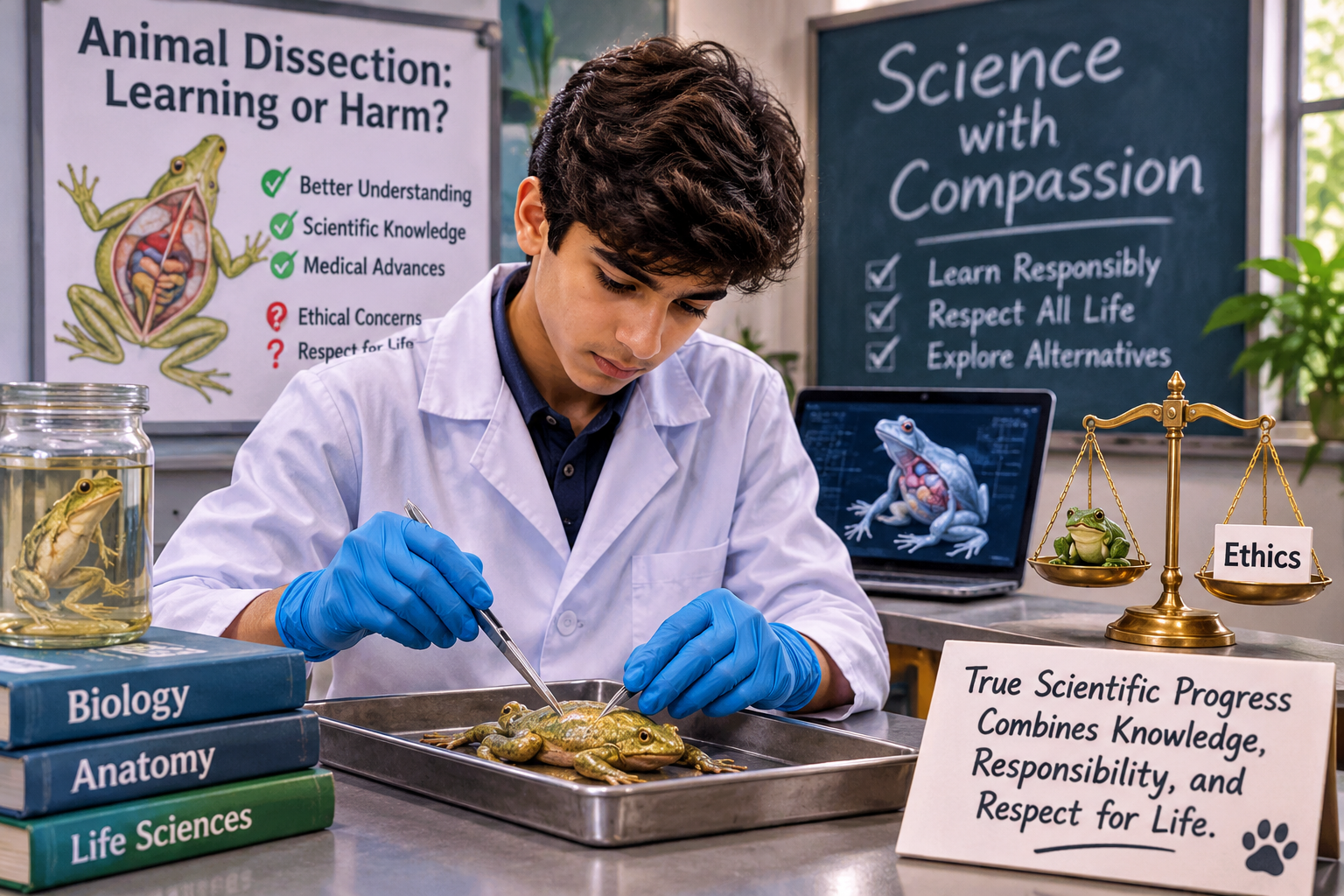
Science is a journey of discovery, and understanding living organisms is an important part of education. For many years, students have studied animal anatomy through dissection to learn how different organs work and how living bodies are organized. By observing the structures inside an organism, students can develop a deeper understanding of biology and the complexity of life.
However, animal dissection also raises important ethical questions. Animals are living creatures, and their lives deserve respect. Some people believe dissection is a valuable educational method, while others argue that animals should not be harmed for classroom learning. This discussion encourages students to think about the responsibilities that come with scientific knowledge.
Today, technology provides new ways to study anatomy without using real animals. Virtual dissections, 3D models, videos, and computer simulations allow students to explore the human and animal body in an interactive way. These alternatives can make learning easier while reducing the need for animal use in education.
The real purpose of science is not only to gain knowledge but also to use it responsibly. Students should learn to balance scientific curiosity with kindness, compassion, and respect for living things. Education becomes more meaningful when we understand that every form of life has value.
**Moral:** True scientific progress combines knowledge, responsibility, and respect for life.
foundation level
day: 146
task: create a story post
story # **The Ethics and Education of Animal Dissections**
### **A Story About Science, Learning, and Respect for Life**
Science is a journey of discovery, and understanding living organisms is an important part of education. For many years, students have studied animal anatomy through dissection to learn how different organs work and how living bodies are organized. By observing the structures inside an organism, students can develop a deeper understanding of biology and the complexity of life.
However, animal dissection also raises important ethical questions. Animals are living creatures, and their lives deserve respect. Some people believe dissection is a valuable educational method, while others argue that animals should not be harmed for classroom learning. This discussion encourages students to think about the responsibilities that come with scientific knowledge.
Today, technology provides new ways to study anatomy without using real animals. Virtual dissections, 3D models, videos, and computer simulations allow students to explore the human and animal body in an interactive way. These alternatives can make learning easier while reducing the need for animal use in education.
The real purpose of science is not only to gain knowledge but also to use it responsibly. Students should learn to balance scientific curiosity with kindness, compassion, and respect for living things. Education becomes more meaningful when we understand that every form of life has value.
**Moral:** True scientific progress combines knowledge, responsibility, and respect for life.
0 Σχόλια
0 Μοιράστηκε
30 Views