


A Cup Before the Conversation
In a world where debates become louder than understanding, perhaps humanity has forgotten one of its oldest technologies for peace: sharing tea before sharing opinions.
Across China, tea has never been just a drink. For thousands of years, tea has represented patience, respect, and the belief that no conversation should begin with anger. Before discussing business, politics, family disputes, or philosophy, people often sat together, allowing silence to arrive before words.
Whether two people were lifelong friends or complete strangers, the tea came first.
Imagine if even enemies did the same.
Not because tea magically solves conflict—but because it changes the pace of the human heart.
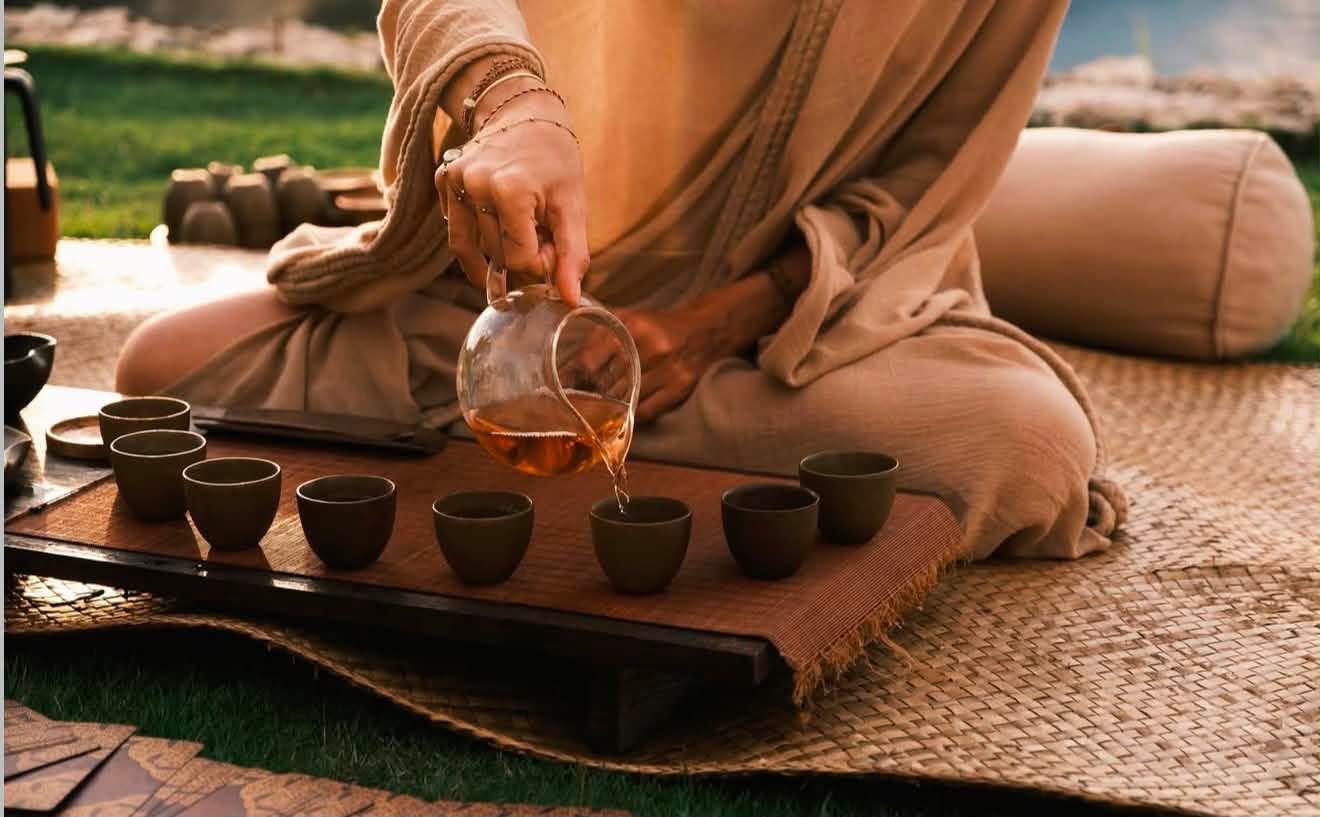
When someone carefully pours tea into a tiny cup, both people slow down. There is no rushing. No interrupting. No shouting across a table. The small cup requires many refills, giving the conversation natural pauses. Those pauses often become more important than the words themselves.
The traditional setting is intentionally simple.
A low wooden table.
A woven mat.
Six to eight small clay cups.
A small teapot.
Perhaps a tree, a garden, or a quiet courtyard.
No television.
No phones.
No loud music.
Just two people—or perhaps six—sitting on the same level. Nobody occupies the “head” of the table. Everyone is equal before the tea.
The cups themselves are tiny, often holding only a few sips.
At first this seems impractical.
But that is the wisdom.
Instead of drinking one large mug while talking endlessly, everyone drinks together, waits, refills together, and continues. The rhythm encourages listening as much as speaking.
The tea becomes the moderator.
Imagine inviting someone with whom you strongly disagree.
Instead of saying,
“Let’s debate.”
You say,
“Come have tea.”
The purpose is not to convince.
It is to understand.
The rule is simple:
First tea.
Then listening.
Only then speaking.
No interrupting.
No insults.
No raising voices.
Leave with more understanding than when you arrived—even if nobody changes their opinion.
Perhaps every neighborhood could create a small tea corner.
Not expensive.
Just a shaded area with a mat, a small table, a kettle, and six tiny cups.
Neighbors could meet every Friday evening.
Families could settle disagreements there.
Young entrepreneurs could exchange ideas.
Religious leaders could discuss peace.
People from different political parties could finally see one another as human beings instead of opponents.
Children would grow up watching adults solve disagreements over tea instead of through shouting on television or social media.
The cost would be almost nothing.
The return could be immeasurable.
Today we build bigger conference rooms, yet conversations become smaller.
Perhaps what we need is not another meeting room.
Perhaps we need a tea mat.
Because before changing someone’s mind, we must first calm our own.
History shows that civilizations are not remembered only for the wars they fought.
They are remembered for the traditions that taught people how to live together.
Maybe every city, every school, every university, every mosque, every temple, every church, every community center, and every home should have one simple invitation hanging on the wall:
“Before we disagree, let us share a cup of tea.”
The world may discover that peace doesn’t always begin with a treaty.
Sometimes, it begins with a tiny cup.
In a world where debates become louder than understanding, perhaps humanity has forgotten one of its oldest technologies for peace: sharing tea before sharing opinions.
Across China, tea has never been just a drink. For thousands of years, tea has represented patience, respect, and the belief that no conversation should begin with anger. Before discussing business, politics, family disputes, or philosophy, people often sat together, allowing silence to arrive before words.
Whether two people were lifelong friends or complete strangers, the tea came first.
Imagine if even enemies did the same.
Not because tea magically solves conflict—but because it changes the pace of the human heart.
When someone carefully pours tea into a tiny cup, both people slow down. There is no rushing. No interrupting. No shouting across a table. The small cup requires many refills, giving the conversation natural pauses. Those pauses often become more important than the words themselves.
The traditional setting is intentionally simple.
A low wooden table.
A woven mat.
Six to eight small clay cups.
A small teapot.
Perhaps a tree, a garden, or a quiet courtyard.
No television.
No phones.
No loud music.
Just two people—or perhaps six—sitting on the same level. Nobody occupies the “head” of the table. Everyone is equal before the tea.
The cups themselves are tiny, often holding only a few sips.
At first this seems impractical.
But that is the wisdom.
Instead of drinking one large mug while talking endlessly, everyone drinks together, waits, refills together, and continues. The rhythm encourages listening as much as speaking.
The tea becomes the moderator.
Imagine inviting someone with whom you strongly disagree.
Instead of saying,
“Let’s debate.”
You say,
“Come have tea.”
The purpose is not to convince.
It is to understand.
The rule is simple:
First tea.
Then listening.
Only then speaking.
No interrupting.
No insults.
No raising voices.
Leave with more understanding than when you arrived—even if nobody changes their opinion.
Perhaps every neighborhood could create a small tea corner.
Not expensive.
Just a shaded area with a mat, a small table, a kettle, and six tiny cups.
Neighbors could meet every Friday evening.
Families could settle disagreements there.
Young entrepreneurs could exchange ideas.
Religious leaders could discuss peace.
People from different political parties could finally see one another as human beings instead of opponents.
Children would grow up watching adults solve disagreements over tea instead of through shouting on television or social media.
The cost would be almost nothing.
The return could be immeasurable.
Today we build bigger conference rooms, yet conversations become smaller.
Perhaps what we need is not another meeting room.
Perhaps we need a tea mat.
Because before changing someone’s mind, we must first calm our own.
History shows that civilizations are not remembered only for the wars they fought.
They are remembered for the traditions that taught people how to live together.
Maybe every city, every school, every university, every mosque, every temple, every church, every community center, and every home should have one simple invitation hanging on the wall:
“Before we disagree, let us share a cup of tea.”
The world may discover that peace doesn’t always begin with a treaty.
Sometimes, it begins with a tiny cup.
A Cup Before the Conversation
In a world where debates become louder than understanding, perhaps humanity has forgotten one of its oldest technologies for peace: sharing tea before sharing opinions.
Across China, tea has never been just a drink. For thousands of years, tea has represented patience, respect, and the belief that no conversation should begin with anger. Before discussing business, politics, family disputes, or philosophy, people often sat together, allowing silence to arrive before words.
Whether two people were lifelong friends or complete strangers, the tea came first.
Imagine if even enemies did the same.
Not because tea magically solves conflict—but because it changes the pace of the human heart.
When someone carefully pours tea into a tiny cup, both people slow down. There is no rushing. No interrupting. No shouting across a table. The small cup requires many refills, giving the conversation natural pauses. Those pauses often become more important than the words themselves.
The traditional setting is intentionally simple.
A low wooden table.
A woven mat.
Six to eight small clay cups.
A small teapot.
Perhaps a tree, a garden, or a quiet courtyard.
No television.
No phones.
No loud music.
Just two people—or perhaps six—sitting on the same level. Nobody occupies the “head” of the table. Everyone is equal before the tea.
The cups themselves are tiny, often holding only a few sips.
At first this seems impractical.
But that is the wisdom.
Instead of drinking one large mug while talking endlessly, everyone drinks together, waits, refills together, and continues. The rhythm encourages listening as much as speaking.
The tea becomes the moderator.
Imagine inviting someone with whom you strongly disagree.
Instead of saying,
“Let’s debate.”
You say,
“Come have tea.”
The purpose is not to convince.
It is to understand.
The rule is simple:
First tea.
Then listening.
Only then speaking.
No interrupting.
No insults.
No raising voices.
Leave with more understanding than when you arrived—even if nobody changes their opinion.
Perhaps every neighborhood could create a small tea corner.
Not expensive.
Just a shaded area with a mat, a small table, a kettle, and six tiny cups.
Neighbors could meet every Friday evening.
Families could settle disagreements there.
Young entrepreneurs could exchange ideas.
Religious leaders could discuss peace.
People from different political parties could finally see one another as human beings instead of opponents.
Children would grow up watching adults solve disagreements over tea instead of through shouting on television or social media.
The cost would be almost nothing.
The return could be immeasurable.
Today we build bigger conference rooms, yet conversations become smaller.
Perhaps what we need is not another meeting room.
Perhaps we need a tea mat.
Because before changing someone’s mind, we must first calm our own.
History shows that civilizations are not remembered only for the wars they fought.
They are remembered for the traditions that taught people how to live together.
Maybe every city, every school, every university, every mosque, every temple, every church, every community center, and every home should have one simple invitation hanging on the wall:
“Before we disagree, let us share a cup of tea.”
The world may discover that peace doesn’t always begin with a treaty.
Sometimes, it begins with a tiny cup.
0 Comments
0 Shares
29 Views