


Chapter 4
The Broom Before the Book
A young man had traveled for weeks.
His sandals were worn.
His clothes were covered with the dust of the road.
Every village he passed through spoke of one man.
“If you truly seek wisdom,” they told him, “go to Bayazid Bastami.”
The young man imagined what the first day would be like.
Perhaps the great teacher would open ancient books.
Perhaps he would reveal secrets of faith.
Perhaps he would answer the questions that had filled the student’s heart for years.
Finally he reached the humble home of Bayazid.
The old master looked at him quietly.
No welcome speech.
No ceremony.
No lecture.
Only one question.
“Why have you come?”
The young man replied,
“I have come to learn from you.”
Bayazid nodded.
He disappeared into another room.
The student smiled.
Surely he was bringing a precious manuscript.
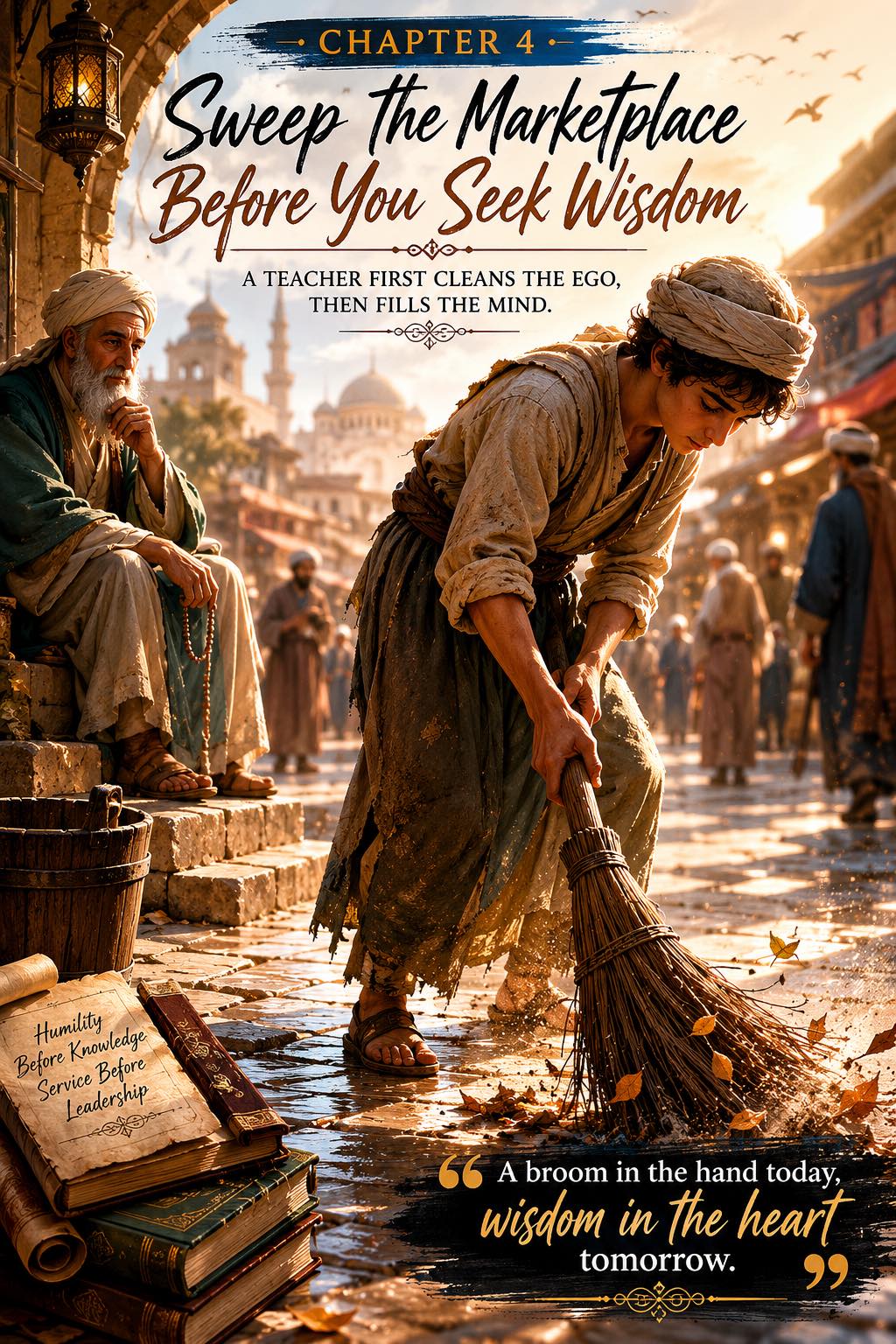
Instead, Bayazid returned carrying an old broom.
He placed it in the student’s hands.
“Go to the marketplace.”
The student waited.
Perhaps there were more instructions.
“There,” Bayazid continued, “you will sweep the streets every morning.”
The student looked at the broom.
Then at the master.
He wondered if this was some kind of joke.
“I came to learn wisdom.”
“You are.”
The First Week
Every morning before sunrise the student swept the marketplace.
He cleaned dirt that returned the next day.
Shopkeepers barely noticed him.
Children laughed at him.
Travelers walked across the clean streets he had just swept.
Nobody thanked him.
At sunset he returned to Bayazid.
The master asked only one question.
“Did you sweep well?”
The student answered,
“Yes.”
Nothing more was said.
No lecture.
No explanation.
No reward.
The next morning he swept again.
The First Month
Weeks passed.
The student became restless.
Other students were reading.
Others were discussing great ideas.
He was holding a broom.
Finally he could no longer remain silent.
“Master, I crossed mountains to study with you.”
“I know.”
“I left my family.”
“I know.”
“I wish to learn.”
Bayazid looked at him gently.
“So do I.”
The student did not understand.
The Hidden Lesson
The next morning, while sweeping, a merchant shouted at him.
“You missed a corner.”
The student became angry.
His heart filled with pride.
He wanted to answer back.
That evening Bayazid asked,
“What happened today?”
The student told him.
Bayazid smiled.
“So the dirt is no longer only on the street.”
The student was silent.
Bayazid continued,
“Every morning you remove the dust from the marketplace.”
“But who will remove the dust from your heart?”
The student finally understood.
The broom had never been for the street.
It had always been for him.
The Teachers We Have Forgotten
Modern teachers often begin with information.
Ancient masters often began with transformation.
They understood something we have forgotten.
Knowledge is dangerous inside an arrogant heart.
A clever liar becomes a dangerous liar.
An intelligent criminal becomes a dangerous criminal.
A talented person without humility becomes a dangerous leader.
Before filling the mind, great teachers first emptied the ego.
Sometimes they did it with silence.
Sometimes with service.
Sometimes with waiting.
Sometimes with disappointment.
Because disappointment reveals character.
Success only reveals talent.
Why Simple Work Matters
There is no such thing as small work.
Only small attitudes.
A student who complains while sweeping a floor will one day complain while managing a company.
A student who cuts corners while cleaning a room will cut corners while building a business.
A student who believes some work is beneath them will eventually believe some people are beneath them.
That is how arrogance begins.
Great teachers stop it before it grows.
The Rehan School Method
This philosophy lives at Rehan School every single day.
Before our students open their books, they practice Osoji, the Japanese tradition of cleaning.
Every classroom is cleaned by the students themselves.
Desks are wiped.
Floors are swept.
Books are arranged.
Walls are cleaned.
Everything is left better than it was found.
Visitors sometimes ask,
“Why are students cleaning? Why don’t you hire cleaners?”
Because we are not only educating minds.
We are building leaders.
Once every week, our students also clean the school toilets.
Some parents are shocked.
But we ask them a simple question.
If your child believes cleaning a toilet is beneath them, how will they ever truly respect the people who clean them every day?
Respect is not taught by speeches.
It is learned through experience.
Our college students take this philosophy even further.
For months, they are assigned roles as waiters, laborers, support staff, and service workers.
Some serve meals.
Some carry furniture.
Some perform physically demanding work.
Some assist with maintenance.
People often ask,
“Why would future entrepreneurs and CEOs do this?”
Because one day they will lead people whose lives look exactly like that.
We want them to understand service before authority.
Work before status.
Humility before success.
A CEO who has once been a waiter speaks differently to waiters.
A founder who has once carried bricks respects laborers.
A principal who has cleaned toilets values every member of the school.
These experiences cannot be learned from a textbook.
They must be lived.
The Last Lesson
Bayazid never taught his student that a broom was important.
He taught him something far greater.
If you cannot sweep a street with excellence,
you will never lead a nation with excellence.
If you cannot clean a toilet with humility,
you cannot build a company with humility.
If you cannot serve people when nobody knows your name,
you are not ready to lead people when everyone knows it.
The world is searching for intelligent people.
Great teachers are searching for humble ones.
Because intelligence builds successful businesses.
Humility builds civilizations.
And that is why, before every great book, there must first be a broom.
The Broom Before the Book
A young man had traveled for weeks.
His sandals were worn.
His clothes were covered with the dust of the road.
Every village he passed through spoke of one man.
“If you truly seek wisdom,” they told him, “go to Bayazid Bastami.”
The young man imagined what the first day would be like.
Perhaps the great teacher would open ancient books.
Perhaps he would reveal secrets of faith.
Perhaps he would answer the questions that had filled the student’s heart for years.
Finally he reached the humble home of Bayazid.
The old master looked at him quietly.
No welcome speech.
No ceremony.
No lecture.
Only one question.
“Why have you come?”
The young man replied,
“I have come to learn from you.”
Bayazid nodded.
He disappeared into another room.
The student smiled.
Surely he was bringing a precious manuscript.
Instead, Bayazid returned carrying an old broom.
He placed it in the student’s hands.
“Go to the marketplace.”
The student waited.
Perhaps there were more instructions.
“There,” Bayazid continued, “you will sweep the streets every morning.”
The student looked at the broom.
Then at the master.
He wondered if this was some kind of joke.
“I came to learn wisdom.”
“You are.”
The First Week
Every morning before sunrise the student swept the marketplace.
He cleaned dirt that returned the next day.
Shopkeepers barely noticed him.
Children laughed at him.
Travelers walked across the clean streets he had just swept.
Nobody thanked him.
At sunset he returned to Bayazid.
The master asked only one question.
“Did you sweep well?”
The student answered,
“Yes.”
Nothing more was said.
No lecture.
No explanation.
No reward.
The next morning he swept again.
The First Month
Weeks passed.
The student became restless.
Other students were reading.
Others were discussing great ideas.
He was holding a broom.
Finally he could no longer remain silent.
“Master, I crossed mountains to study with you.”
“I know.”
“I left my family.”
“I know.”
“I wish to learn.”
Bayazid looked at him gently.
“So do I.”
The student did not understand.
The Hidden Lesson
The next morning, while sweeping, a merchant shouted at him.
“You missed a corner.”
The student became angry.
His heart filled with pride.
He wanted to answer back.
That evening Bayazid asked,
“What happened today?”
The student told him.
Bayazid smiled.
“So the dirt is no longer only on the street.”
The student was silent.
Bayazid continued,
“Every morning you remove the dust from the marketplace.”
“But who will remove the dust from your heart?”
The student finally understood.
The broom had never been for the street.
It had always been for him.
The Teachers We Have Forgotten
Modern teachers often begin with information.
Ancient masters often began with transformation.
They understood something we have forgotten.
Knowledge is dangerous inside an arrogant heart.
A clever liar becomes a dangerous liar.
An intelligent criminal becomes a dangerous criminal.
A talented person without humility becomes a dangerous leader.
Before filling the mind, great teachers first emptied the ego.
Sometimes they did it with silence.
Sometimes with service.
Sometimes with waiting.
Sometimes with disappointment.
Because disappointment reveals character.
Success only reveals talent.
Why Simple Work Matters
There is no such thing as small work.
Only small attitudes.
A student who complains while sweeping a floor will one day complain while managing a company.
A student who cuts corners while cleaning a room will cut corners while building a business.
A student who believes some work is beneath them will eventually believe some people are beneath them.
That is how arrogance begins.
Great teachers stop it before it grows.
The Rehan School Method
This philosophy lives at Rehan School every single day.
Before our students open their books, they practice Osoji, the Japanese tradition of cleaning.
Every classroom is cleaned by the students themselves.
Desks are wiped.
Floors are swept.
Books are arranged.
Walls are cleaned.
Everything is left better than it was found.
Visitors sometimes ask,
“Why are students cleaning? Why don’t you hire cleaners?”
Because we are not only educating minds.
We are building leaders.
Once every week, our students also clean the school toilets.
Some parents are shocked.
But we ask them a simple question.
If your child believes cleaning a toilet is beneath them, how will they ever truly respect the people who clean them every day?
Respect is not taught by speeches.
It is learned through experience.
Our college students take this philosophy even further.
For months, they are assigned roles as waiters, laborers, support staff, and service workers.
Some serve meals.
Some carry furniture.
Some perform physically demanding work.
Some assist with maintenance.
People often ask,
“Why would future entrepreneurs and CEOs do this?”
Because one day they will lead people whose lives look exactly like that.
We want them to understand service before authority.
Work before status.
Humility before success.
A CEO who has once been a waiter speaks differently to waiters.
A founder who has once carried bricks respects laborers.
A principal who has cleaned toilets values every member of the school.
These experiences cannot be learned from a textbook.
They must be lived.
The Last Lesson
Bayazid never taught his student that a broom was important.
He taught him something far greater.
If you cannot sweep a street with excellence,
you will never lead a nation with excellence.
If you cannot clean a toilet with humility,
you cannot build a company with humility.
If you cannot serve people when nobody knows your name,
you are not ready to lead people when everyone knows it.
The world is searching for intelligent people.
Great teachers are searching for humble ones.
Because intelligence builds successful businesses.
Humility builds civilizations.
And that is why, before every great book, there must first be a broom.
Chapter 4
The Broom Before the Book
A young man had traveled for weeks.
His sandals were worn.
His clothes were covered with the dust of the road.
Every village he passed through spoke of one man.
“If you truly seek wisdom,” they told him, “go to Bayazid Bastami.”
The young man imagined what the first day would be like.
Perhaps the great teacher would open ancient books.
Perhaps he would reveal secrets of faith.
Perhaps he would answer the questions that had filled the student’s heart for years.
Finally he reached the humble home of Bayazid.
The old master looked at him quietly.
No welcome speech.
No ceremony.
No lecture.
Only one question.
“Why have you come?”
The young man replied,
“I have come to learn from you.”
Bayazid nodded.
He disappeared into another room.
The student smiled.
Surely he was bringing a precious manuscript.
Instead, Bayazid returned carrying an old broom.
He placed it in the student’s hands.
“Go to the marketplace.”
The student waited.
Perhaps there were more instructions.
“There,” Bayazid continued, “you will sweep the streets every morning.”
The student looked at the broom.
Then at the master.
He wondered if this was some kind of joke.
“I came to learn wisdom.”
“You are.”
The First Week
Every morning before sunrise the student swept the marketplace.
He cleaned dirt that returned the next day.
Shopkeepers barely noticed him.
Children laughed at him.
Travelers walked across the clean streets he had just swept.
Nobody thanked him.
At sunset he returned to Bayazid.
The master asked only one question.
“Did you sweep well?”
The student answered,
“Yes.”
Nothing more was said.
No lecture.
No explanation.
No reward.
The next morning he swept again.
The First Month
Weeks passed.
The student became restless.
Other students were reading.
Others were discussing great ideas.
He was holding a broom.
Finally he could no longer remain silent.
“Master, I crossed mountains to study with you.”
“I know.”
“I left my family.”
“I know.”
“I wish to learn.”
Bayazid looked at him gently.
“So do I.”
The student did not understand.
The Hidden Lesson
The next morning, while sweeping, a merchant shouted at him.
“You missed a corner.”
The student became angry.
His heart filled with pride.
He wanted to answer back.
That evening Bayazid asked,
“What happened today?”
The student told him.
Bayazid smiled.
“So the dirt is no longer only on the street.”
The student was silent.
Bayazid continued,
“Every morning you remove the dust from the marketplace.”
“But who will remove the dust from your heart?”
The student finally understood.
The broom had never been for the street.
It had always been for him.
The Teachers We Have Forgotten
Modern teachers often begin with information.
Ancient masters often began with transformation.
They understood something we have forgotten.
Knowledge is dangerous inside an arrogant heart.
A clever liar becomes a dangerous liar.
An intelligent criminal becomes a dangerous criminal.
A talented person without humility becomes a dangerous leader.
Before filling the mind, great teachers first emptied the ego.
Sometimes they did it with silence.
Sometimes with service.
Sometimes with waiting.
Sometimes with disappointment.
Because disappointment reveals character.
Success only reveals talent.
Why Simple Work Matters
There is no such thing as small work.
Only small attitudes.
A student who complains while sweeping a floor will one day complain while managing a company.
A student who cuts corners while cleaning a room will cut corners while building a business.
A student who believes some work is beneath them will eventually believe some people are beneath them.
That is how arrogance begins.
Great teachers stop it before it grows.
The Rehan School Method
This philosophy lives at Rehan School every single day.
Before our students open their books, they practice Osoji, the Japanese tradition of cleaning.
Every classroom is cleaned by the students themselves.
Desks are wiped.
Floors are swept.
Books are arranged.
Walls are cleaned.
Everything is left better than it was found.
Visitors sometimes ask,
“Why are students cleaning? Why don’t you hire cleaners?”
Because we are not only educating minds.
We are building leaders.
Once every week, our students also clean the school toilets.
Some parents are shocked.
But we ask them a simple question.
If your child believes cleaning a toilet is beneath them, how will they ever truly respect the people who clean them every day?
Respect is not taught by speeches.
It is learned through experience.
Our college students take this philosophy even further.
For months, they are assigned roles as waiters, laborers, support staff, and service workers.
Some serve meals.
Some carry furniture.
Some perform physically demanding work.
Some assist with maintenance.
People often ask,
“Why would future entrepreneurs and CEOs do this?”
Because one day they will lead people whose lives look exactly like that.
We want them to understand service before authority.
Work before status.
Humility before success.
A CEO who has once been a waiter speaks differently to waiters.
A founder who has once carried bricks respects laborers.
A principal who has cleaned toilets values every member of the school.
These experiences cannot be learned from a textbook.
They must be lived.
The Last Lesson
Bayazid never taught his student that a broom was important.
He taught him something far greater.
If you cannot sweep a street with excellence,
you will never lead a nation with excellence.
If you cannot clean a toilet with humility,
you cannot build a company with humility.
If you cannot serve people when nobody knows your name,
you are not ready to lead people when everyone knows it.
The world is searching for intelligent people.
Great teachers are searching for humble ones.
Because intelligence builds successful businesses.
Humility builds civilizations.
And that is why, before every great book, there must first be a broom.
0 Commenti
0 condivisioni
794 Views