


The Nations That Used Computers Became Successful
(A 30-Year Reality Check with Facts and Proofs)
Over the last 30 years (1995–2025), one pattern appears again and again in global data:
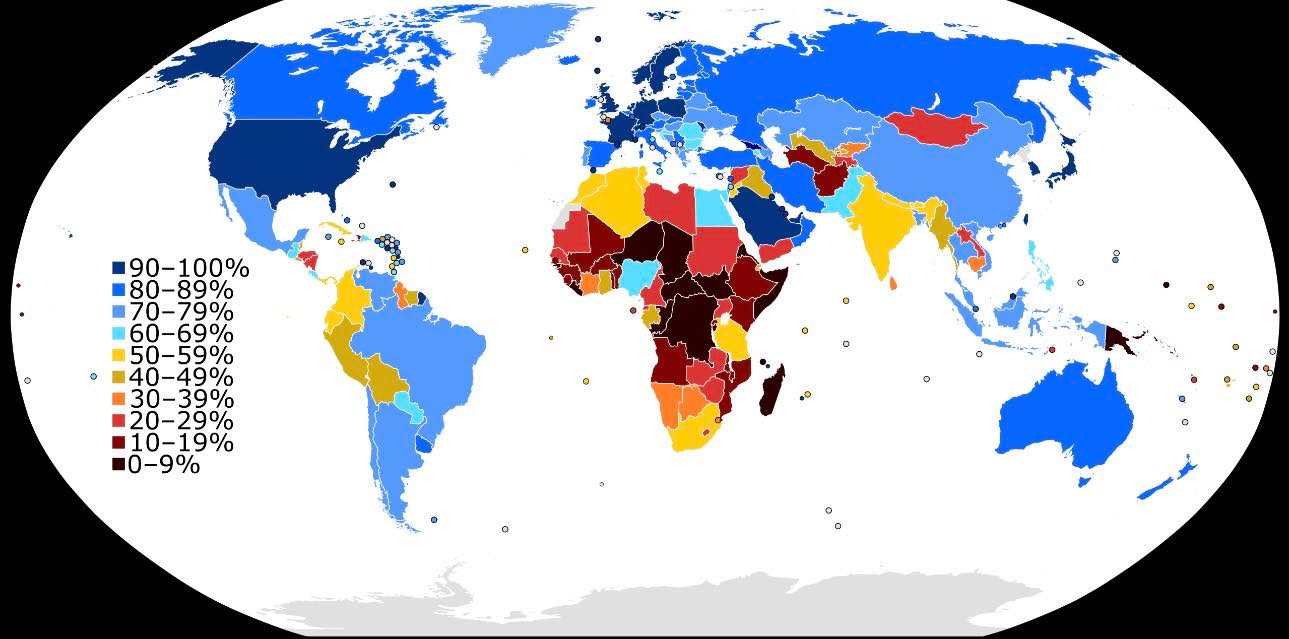
countries that adopted computers early and deeply became richer, more productive, and more powerful.
This is not an opinion. It is visible in GDP growth, exports, education quality, governance, and global influence.
Computers did not just make offices faster.
They rewired entire nations.
⸻
1. The Computer = A Productivity Multiplier
A computer does three things that no human system can do alone:
1. Scales intelligence (one skilled person can serve millions)
2. Reduces cost to near zero (email vs letters, software vs factories)
3. Preserves and multiplies knowledge (code, data, automation)
Countries that understood this early won the modern world.
⸻
2. The United States: Software Ate the Economy
In 1990:
• The US was strong, but manufacturing-heavy.
• Most value came from physical industries.
After computers + internet:
• Software, cloud, AI, and platforms dominated.
• Companies like Microsoft, Apple, Google, Amazon emerged.
Results:
• US GDP grew from ~$6 trillion (1990) to ~$27 trillion (2024).
• Over 70% of global tech platforms are US-based.
• The most valuable companies in history are software-driven.
Key fact:
A single software company today earns more than entire countries’ exports.
This happened because computers became mandatory, not optional.
⸻
3. India: From Poverty to Digital Power
In the early 1990s:
• India was poor, slow, and bureaucratic.
• Foreign reserves could barely cover weeks of imports.
Then India made a strategic move:
• Focus on computers, software, and IT education
• English + programming became national assets
Results:
• IT exports grew from near zero (1990) to $250+ billion/year
• Millions of middle-class jobs created
• India became the global back office and now a startup hub
Key proof:
India did not become rich by factories first —
it became rich by keyboards.
⸻
4. China: Computers as a Weapon of Scale
China did not copy the West blindly.
It absorbed computers into manufacturing, logistics, surveillance, and governance.
What China did right:
• Computerized factories (Industry 4.0)
• Digitized supply chains
• Massive state investment in STEM and computing
Results:
• Became the world’s factory
• Lifted 800+ million people out of poverty
• Built tech giants (Alibaba, Tencent, Huawei)
Key insight:
China used computers not just to code —
but to control complexity at national scale.
⸻
5. South Korea: Poor to Powerhouse in One Generation
In the 1960s:
• South Korea had GDP similar to Pakistan.
• War-torn and resource-poor.
Strategic decision:
• Computers + electronics + education
• Government-industry-university alignment
Results:
• Home of Samsung, LG, Hyundai
• One of the highest broadband speeds globally
• Top ranks in digital literacy
Proof point:
A country with no oil became rich by exporting chips and code.
⸻
6. Small Countries, Big Brains: Estonia
Estonia is a tiny country.
No natural resources.
Small population.
What they did:
• Put government on computers
• Digital ID, e-residency, online courts, online voting
Results:
• One of the most efficient governments on Earth
• Startups per capita among the highest globally
Key lesson:
Size does not matter.
Digitization does.
⸻
7. Countries That Missed Computers Paid the Price
Many countries delayed:
• Treated computers as luxury
• Restricted internet
• Focused only on rote education
Consequences:
• Low productivity
• Brain drain
• Weak currencies
• Dependency on imports
Harsh truth:
In the 21st century, illiteracy is not reading —
it is not knowing how to use a computer.
⸻
8. The Hidden Equation (Simple but Brutal)
National Prosperity ≈
• Computers per citizen
• × Internet access
• × Skill usage (not degrees)
• × Freedom to experiment
Where this equation was applied → success followed.
Where it was ignored → stagnation followed.
⸻
9. What This Means for the Next 30 Years
Now the game has moved again:
• From computers → AI
• From typing → thinking with machines
Countries that:
• Put AI + computers in the hands of children
• Allow experimentation
• Focus on earning skills, not certificates
…will dominate the next 30 years.
Others will consume what they produce.
⸻
Final Line
History is clear:
Nations that adopted computers early became rich.
Nations that delayed are still catching up.
The next chapter is being written now —
and it will belong to those who put AI and computers in every hand, not just in offices.
The future does not wait.
(A 30-Year Reality Check with Facts and Proofs)
Over the last 30 years (1995–2025), one pattern appears again and again in global data:
countries that adopted computers early and deeply became richer, more productive, and more powerful.
This is not an opinion. It is visible in GDP growth, exports, education quality, governance, and global influence.
Computers did not just make offices faster.
They rewired entire nations.
⸻
1. The Computer = A Productivity Multiplier
A computer does three things that no human system can do alone:
1. Scales intelligence (one skilled person can serve millions)
2. Reduces cost to near zero (email vs letters, software vs factories)
3. Preserves and multiplies knowledge (code, data, automation)
Countries that understood this early won the modern world.
⸻
2. The United States: Software Ate the Economy
In 1990:
• The US was strong, but manufacturing-heavy.
• Most value came from physical industries.
After computers + internet:
• Software, cloud, AI, and platforms dominated.
• Companies like Microsoft, Apple, Google, Amazon emerged.
Results:
• US GDP grew from ~$6 trillion (1990) to ~$27 trillion (2024).
• Over 70% of global tech platforms are US-based.
• The most valuable companies in history are software-driven.
Key fact:
A single software company today earns more than entire countries’ exports.
This happened because computers became mandatory, not optional.
⸻
3. India: From Poverty to Digital Power
In the early 1990s:
• India was poor, slow, and bureaucratic.
• Foreign reserves could barely cover weeks of imports.
Then India made a strategic move:
• Focus on computers, software, and IT education
• English + programming became national assets
Results:
• IT exports grew from near zero (1990) to $250+ billion/year
• Millions of middle-class jobs created
• India became the global back office and now a startup hub
Key proof:
India did not become rich by factories first —
it became rich by keyboards.
⸻
4. China: Computers as a Weapon of Scale
China did not copy the West blindly.
It absorbed computers into manufacturing, logistics, surveillance, and governance.
What China did right:
• Computerized factories (Industry 4.0)
• Digitized supply chains
• Massive state investment in STEM and computing
Results:
• Became the world’s factory
• Lifted 800+ million people out of poverty
• Built tech giants (Alibaba, Tencent, Huawei)
Key insight:
China used computers not just to code —
but to control complexity at national scale.
⸻
5. South Korea: Poor to Powerhouse in One Generation
In the 1960s:
• South Korea had GDP similar to Pakistan.
• War-torn and resource-poor.
Strategic decision:
• Computers + electronics + education
• Government-industry-university alignment
Results:
• Home of Samsung, LG, Hyundai
• One of the highest broadband speeds globally
• Top ranks in digital literacy
Proof point:
A country with no oil became rich by exporting chips and code.
⸻
6. Small Countries, Big Brains: Estonia
Estonia is a tiny country.
No natural resources.
Small population.
What they did:
• Put government on computers
• Digital ID, e-residency, online courts, online voting
Results:
• One of the most efficient governments on Earth
• Startups per capita among the highest globally
Key lesson:
Size does not matter.
Digitization does.
⸻
7. Countries That Missed Computers Paid the Price
Many countries delayed:
• Treated computers as luxury
• Restricted internet
• Focused only on rote education
Consequences:
• Low productivity
• Brain drain
• Weak currencies
• Dependency on imports
Harsh truth:
In the 21st century, illiteracy is not reading —
it is not knowing how to use a computer.
⸻
8. The Hidden Equation (Simple but Brutal)
National Prosperity ≈
• Computers per citizen
• × Internet access
• × Skill usage (not degrees)
• × Freedom to experiment
Where this equation was applied → success followed.
Where it was ignored → stagnation followed.
⸻
9. What This Means for the Next 30 Years
Now the game has moved again:
• From computers → AI
• From typing → thinking with machines
Countries that:
• Put AI + computers in the hands of children
• Allow experimentation
• Focus on earning skills, not certificates
…will dominate the next 30 years.
Others will consume what they produce.
⸻
Final Line
History is clear:
Nations that adopted computers early became rich.
Nations that delayed are still catching up.
The next chapter is being written now —
and it will belong to those who put AI and computers in every hand, not just in offices.
The future does not wait.
The Nations That Used Computers Became Successful
(A 30-Year Reality Check with Facts and Proofs)
Over the last 30 years (1995–2025), one pattern appears again and again in global data:
countries that adopted computers early and deeply became richer, more productive, and more powerful.
This is not an opinion. It is visible in GDP growth, exports, education quality, governance, and global influence.
Computers did not just make offices faster.
They rewired entire nations.
⸻
1. The Computer = A Productivity Multiplier
A computer does three things that no human system can do alone:
1. Scales intelligence (one skilled person can serve millions)
2. Reduces cost to near zero (email vs letters, software vs factories)
3. Preserves and multiplies knowledge (code, data, automation)
Countries that understood this early won the modern world.
⸻
2. The United States: Software Ate the Economy
In 1990:
• The US was strong, but manufacturing-heavy.
• Most value came from physical industries.
After computers + internet:
• Software, cloud, AI, and platforms dominated.
• Companies like Microsoft, Apple, Google, Amazon emerged.
Results:
• US GDP grew from ~$6 trillion (1990) to ~$27 trillion (2024).
• Over 70% of global tech platforms are US-based.
• The most valuable companies in history are software-driven.
Key fact:
A single software company today earns more than entire countries’ exports.
This happened because computers became mandatory, not optional.
⸻
3. India: From Poverty to Digital Power
In the early 1990s:
• India was poor, slow, and bureaucratic.
• Foreign reserves could barely cover weeks of imports.
Then India made a strategic move:
• Focus on computers, software, and IT education
• English + programming became national assets
Results:
• IT exports grew from near zero (1990) to $250+ billion/year
• Millions of middle-class jobs created
• India became the global back office and now a startup hub
Key proof:
India did not become rich by factories first —
it became rich by keyboards.
⸻
4. China: Computers as a Weapon of Scale
China did not copy the West blindly.
It absorbed computers into manufacturing, logistics, surveillance, and governance.
What China did right:
• Computerized factories (Industry 4.0)
• Digitized supply chains
• Massive state investment in STEM and computing
Results:
• Became the world’s factory
• Lifted 800+ million people out of poverty
• Built tech giants (Alibaba, Tencent, Huawei)
Key insight:
China used computers not just to code —
but to control complexity at national scale.
⸻
5. South Korea: Poor to Powerhouse in One Generation
In the 1960s:
• South Korea had GDP similar to Pakistan.
• War-torn and resource-poor.
Strategic decision:
• Computers + electronics + education
• Government-industry-university alignment
Results:
• Home of Samsung, LG, Hyundai
• One of the highest broadband speeds globally
• Top ranks in digital literacy
Proof point:
A country with no oil became rich by exporting chips and code.
⸻
6. Small Countries, Big Brains: Estonia
Estonia is a tiny country.
No natural resources.
Small population.
What they did:
• Put government on computers
• Digital ID, e-residency, online courts, online voting
Results:
• One of the most efficient governments on Earth
• Startups per capita among the highest globally
Key lesson:
Size does not matter.
Digitization does.
⸻
7. Countries That Missed Computers Paid the Price
Many countries delayed:
• Treated computers as luxury
• Restricted internet
• Focused only on rote education
Consequences:
• Low productivity
• Brain drain
• Weak currencies
• Dependency on imports
Harsh truth:
In the 21st century, illiteracy is not reading —
it is not knowing how to use a computer.
⸻
8. The Hidden Equation (Simple but Brutal)
National Prosperity ≈
• Computers per citizen
• × Internet access
• × Skill usage (not degrees)
• × Freedom to experiment
Where this equation was applied → success followed.
Where it was ignored → stagnation followed.
⸻
9. What This Means for the Next 30 Years
Now the game has moved again:
• From computers → AI
• From typing → thinking with machines
Countries that:
• Put AI + computers in the hands of children
• Allow experimentation
• Focus on earning skills, not certificates
…will dominate the next 30 years.
Others will consume what they produce.
⸻
Final Line
History is clear:
Nations that adopted computers early became rich.
Nations that delayed are still catching up.
The next chapter is being written now —
and it will belong to those who put AI and computers in every hand, not just in offices.
The future does not wait.
0 Kommentare
0 Anteile
50 Ansichten