


Taxila (Takshashila): The University That Lived Before the Word “University”
Long before the modern world learned to spell the word university, before degrees, campuses, and rankings existed, there was a place where knowledge lived freely, fearlessly, and fully.
That place was Taxila—also known as Takshashila.
It stood on the land that is today Pakistan.
And that fact alone should change how we see ourselves.
⸻
A City Built Around Knowledge
Taxila was not founded as a building.
It was not inaugurated with a ribbon-cutting ceremony.
It did not have a single gate or a single classroom.
Taxila was a city of learning.
Around 600 BCE—more than 2,600 years ago—students began arriving there from all directions:
from India, Central Asia, China, Persia, and even the Greek world.
They did not come for certificates.
They came for wisdom.
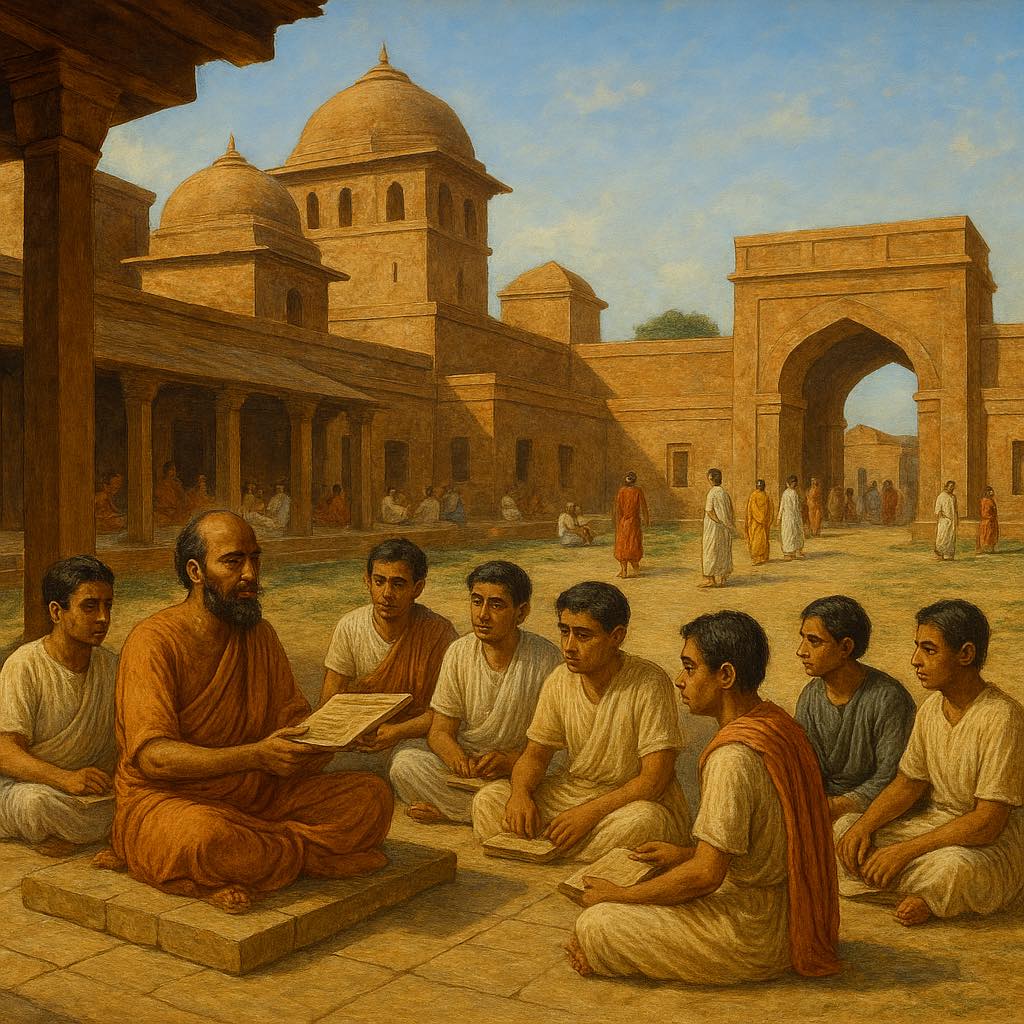
In Taxila, learning did not happen inside four walls.
It happened in homes of teachers, under trees, in discussion circles, in debates, in practice.
Knowledge was not stored in buildings.
It was alive in people.
⸻
Older Than Most of the World’s Universities
When people talk about ancient universities, they often name:
• Oxford
• Bologna
• Paris
But these institutions were founded 1,500 years after Taxila.
When Taxila was already flourishing:
• Europe was still in the early stages of organized education
• Formal universities did not yet exist in the West
Taxila was not just old.
It was ahead of its time.
⸻
What Made Taxila Different
Taxila did not divide knowledge into artificial boxes.
There was no idea that:
• Science is separate from philosophy
• Medicine is separate from ethics
• Governance is separate from morality
In Taxila, everything was connected.
A student of medicine learned:
• Anatomy
• Surgery
• Herbal science
• Ethics
• Responsibility toward society
A student of politics learned:
• Law
• Philosophy
• Human behavior
• Economics
• Moral leadership
A student of language studied:
• Grammar
• Logic
• Debate
• Culture
• Meaning
This was not specialization without understanding.
This was depth with wholeness.
⸻
Teachers Who Shaped Civilizations
Taxila produced and hosted some of the greatest minds of the ancient world.
It trained:
• Statesmen
• Physicians
• Philosophers
• Military strategists
• Linguists
• Thinkers
Legends like Chanakya (Kautilya)—author of the Arthashastra, one of the earliest books on economics and governance—were connected to Taxila.
Doctors trained here performed advanced surgeries at a time when much of the world believed illness was caused by spirits.
This was evidence-based thinking—thousands of years ago.
⸻
No Exams, No Degrees—Only Mastery
There were no standardized exams in Taxila.
No grades.
No diplomas.
Instead:
• A student stayed with a teacher until mastery was achieved
• Learning ended when the teacher believed the student was ready to serve society
• Education was judged by capability, not certificates
The goal was not employment.
The goal was competence, wisdom, and contribution.
⸻
A Truly International University
Taxila was global before globalization.
Students came speaking different languages, carrying different beliefs, asking different questions.
And yet, they learned together.
Taxila did not impose one ideology.
It welcomed dialogue.
This made it one of the first truly international universities on Earth—not by passport, but by mindset.
⸻
The Tragedy of Forgetting
Over centuries, invasions, destruction, and colonial narratives buried this history.
A dangerous idea slowly took root:
“Knowledge never existed here.”
This is one of the greatest lies ever told to this region.
Knowledge did exist here.
Innovation was born here.
Universities thrived here.
But when a civilization forgets its intellectual past, it begins to doubt its future.
⸻
Why Pakistanis Must Be Proud
Taxila is not just an archaeological site.
It is proof.
Proof that:
• This land has produced thinkers, not just survivors
• This region was once a cradle of global knowledge
• Pakistanis are heirs to an intellectual legacy, not an empty one
We are not starting from zero.
We are remembering.
⸻
Taking It Back
To honor Taxila is not to build statues.
It is to revive the spirit.
That spirit says:
• Ask questions
• Connect knowledge
• Think independently
• Learn for mastery, not marks
• Use knowledge to serve humanity
We must stop believing that wisdom only comes from outside.
We must stop importing confidence.
This land once educated the world.
It can do so again.
⸻
The Real Lesson of Taxila
Taxila teaches us one powerful truth:
A university is not a building.
It is a culture of thinking.
And that culture once lived here.
It can live here again—
if we choose knowledge over fear,
curiosity over imitation,
and confidence over forgetting.
Taxila is not just history.
It is a calling.
Long before the modern world learned to spell the word university, before degrees, campuses, and rankings existed, there was a place where knowledge lived freely, fearlessly, and fully.
That place was Taxila—also known as Takshashila.
It stood on the land that is today Pakistan.
And that fact alone should change how we see ourselves.
⸻
A City Built Around Knowledge
Taxila was not founded as a building.
It was not inaugurated with a ribbon-cutting ceremony.
It did not have a single gate or a single classroom.
Taxila was a city of learning.
Around 600 BCE—more than 2,600 years ago—students began arriving there from all directions:
from India, Central Asia, China, Persia, and even the Greek world.
They did not come for certificates.
They came for wisdom.
In Taxila, learning did not happen inside four walls.
It happened in homes of teachers, under trees, in discussion circles, in debates, in practice.
Knowledge was not stored in buildings.
It was alive in people.
⸻
Older Than Most of the World’s Universities
When people talk about ancient universities, they often name:
• Oxford
• Bologna
• Paris
But these institutions were founded 1,500 years after Taxila.
When Taxila was already flourishing:
• Europe was still in the early stages of organized education
• Formal universities did not yet exist in the West
Taxila was not just old.
It was ahead of its time.
⸻
What Made Taxila Different
Taxila did not divide knowledge into artificial boxes.
There was no idea that:
• Science is separate from philosophy
• Medicine is separate from ethics
• Governance is separate from morality
In Taxila, everything was connected.
A student of medicine learned:
• Anatomy
• Surgery
• Herbal science
• Ethics
• Responsibility toward society
A student of politics learned:
• Law
• Philosophy
• Human behavior
• Economics
• Moral leadership
A student of language studied:
• Grammar
• Logic
• Debate
• Culture
• Meaning
This was not specialization without understanding.
This was depth with wholeness.
⸻
Teachers Who Shaped Civilizations
Taxila produced and hosted some of the greatest minds of the ancient world.
It trained:
• Statesmen
• Physicians
• Philosophers
• Military strategists
• Linguists
• Thinkers
Legends like Chanakya (Kautilya)—author of the Arthashastra, one of the earliest books on economics and governance—were connected to Taxila.
Doctors trained here performed advanced surgeries at a time when much of the world believed illness was caused by spirits.
This was evidence-based thinking—thousands of years ago.
⸻
No Exams, No Degrees—Only Mastery
There were no standardized exams in Taxila.
No grades.
No diplomas.
Instead:
• A student stayed with a teacher until mastery was achieved
• Learning ended when the teacher believed the student was ready to serve society
• Education was judged by capability, not certificates
The goal was not employment.
The goal was competence, wisdom, and contribution.
⸻
A Truly International University
Taxila was global before globalization.
Students came speaking different languages, carrying different beliefs, asking different questions.
And yet, they learned together.
Taxila did not impose one ideology.
It welcomed dialogue.
This made it one of the first truly international universities on Earth—not by passport, but by mindset.
⸻
The Tragedy of Forgetting
Over centuries, invasions, destruction, and colonial narratives buried this history.
A dangerous idea slowly took root:
“Knowledge never existed here.”
This is one of the greatest lies ever told to this region.
Knowledge did exist here.
Innovation was born here.
Universities thrived here.
But when a civilization forgets its intellectual past, it begins to doubt its future.
⸻
Why Pakistanis Must Be Proud
Taxila is not just an archaeological site.
It is proof.
Proof that:
• This land has produced thinkers, not just survivors
• This region was once a cradle of global knowledge
• Pakistanis are heirs to an intellectual legacy, not an empty one
We are not starting from zero.
We are remembering.
⸻
Taking It Back
To honor Taxila is not to build statues.
It is to revive the spirit.
That spirit says:
• Ask questions
• Connect knowledge
• Think independently
• Learn for mastery, not marks
• Use knowledge to serve humanity
We must stop believing that wisdom only comes from outside.
We must stop importing confidence.
This land once educated the world.
It can do so again.
⸻
The Real Lesson of Taxila
Taxila teaches us one powerful truth:
A university is not a building.
It is a culture of thinking.
And that culture once lived here.
It can live here again—
if we choose knowledge over fear,
curiosity over imitation,
and confidence over forgetting.
Taxila is not just history.
It is a calling.
Taxila (Takshashila): The University That Lived Before the Word “University”
Long before the modern world learned to spell the word university, before degrees, campuses, and rankings existed, there was a place where knowledge lived freely, fearlessly, and fully.
That place was Taxila—also known as Takshashila.
It stood on the land that is today Pakistan.
And that fact alone should change how we see ourselves.
⸻
A City Built Around Knowledge
Taxila was not founded as a building.
It was not inaugurated with a ribbon-cutting ceremony.
It did not have a single gate or a single classroom.
Taxila was a city of learning.
Around 600 BCE—more than 2,600 years ago—students began arriving there from all directions:
from India, Central Asia, China, Persia, and even the Greek world.
They did not come for certificates.
They came for wisdom.
In Taxila, learning did not happen inside four walls.
It happened in homes of teachers, under trees, in discussion circles, in debates, in practice.
Knowledge was not stored in buildings.
It was alive in people.
⸻
Older Than Most of the World’s Universities
When people talk about ancient universities, they often name:
• Oxford
• Bologna
• Paris
But these institutions were founded 1,500 years after Taxila.
When Taxila was already flourishing:
• Europe was still in the early stages of organized education
• Formal universities did not yet exist in the West
Taxila was not just old.
It was ahead of its time.
⸻
What Made Taxila Different
Taxila did not divide knowledge into artificial boxes.
There was no idea that:
• Science is separate from philosophy
• Medicine is separate from ethics
• Governance is separate from morality
In Taxila, everything was connected.
A student of medicine learned:
• Anatomy
• Surgery
• Herbal science
• Ethics
• Responsibility toward society
A student of politics learned:
• Law
• Philosophy
• Human behavior
• Economics
• Moral leadership
A student of language studied:
• Grammar
• Logic
• Debate
• Culture
• Meaning
This was not specialization without understanding.
This was depth with wholeness.
⸻
Teachers Who Shaped Civilizations
Taxila produced and hosted some of the greatest minds of the ancient world.
It trained:
• Statesmen
• Physicians
• Philosophers
• Military strategists
• Linguists
• Thinkers
Legends like Chanakya (Kautilya)—author of the Arthashastra, one of the earliest books on economics and governance—were connected to Taxila.
Doctors trained here performed advanced surgeries at a time when much of the world believed illness was caused by spirits.
This was evidence-based thinking—thousands of years ago.
⸻
No Exams, No Degrees—Only Mastery
There were no standardized exams in Taxila.
No grades.
No diplomas.
Instead:
• A student stayed with a teacher until mastery was achieved
• Learning ended when the teacher believed the student was ready to serve society
• Education was judged by capability, not certificates
The goal was not employment.
The goal was competence, wisdom, and contribution.
⸻
A Truly International University
Taxila was global before globalization.
Students came speaking different languages, carrying different beliefs, asking different questions.
And yet, they learned together.
Taxila did not impose one ideology.
It welcomed dialogue.
This made it one of the first truly international universities on Earth—not by passport, but by mindset.
⸻
The Tragedy of Forgetting
Over centuries, invasions, destruction, and colonial narratives buried this history.
A dangerous idea slowly took root:
“Knowledge never existed here.”
This is one of the greatest lies ever told to this region.
Knowledge did exist here.
Innovation was born here.
Universities thrived here.
But when a civilization forgets its intellectual past, it begins to doubt its future.
⸻
Why Pakistanis Must Be Proud
Taxila is not just an archaeological site.
It is proof.
Proof that:
• This land has produced thinkers, not just survivors
• This region was once a cradle of global knowledge
• Pakistanis are heirs to an intellectual legacy, not an empty one
We are not starting from zero.
We are remembering.
⸻
Taking It Back
To honor Taxila is not to build statues.
It is to revive the spirit.
That spirit says:
• Ask questions
• Connect knowledge
• Think independently
• Learn for mastery, not marks
• Use knowledge to serve humanity
We must stop believing that wisdom only comes from outside.
We must stop importing confidence.
This land once educated the world.
It can do so again.
⸻
The Real Lesson of Taxila
Taxila teaches us one powerful truth:
A university is not a building.
It is a culture of thinking.
And that culture once lived here.
It can live here again—
if we choose knowledge over fear,
curiosity over imitation,
and confidence over forgetting.
Taxila is not just history.
It is a calling.
0 Комментарии
0 Поделились
259 Просмотры