


How Anyone Can Build a Water-From-Air Device in Pakistan by chatgpt
A Pathway to Solving Water Scarcity Through Local Innovation
⸻
The Problem We Face
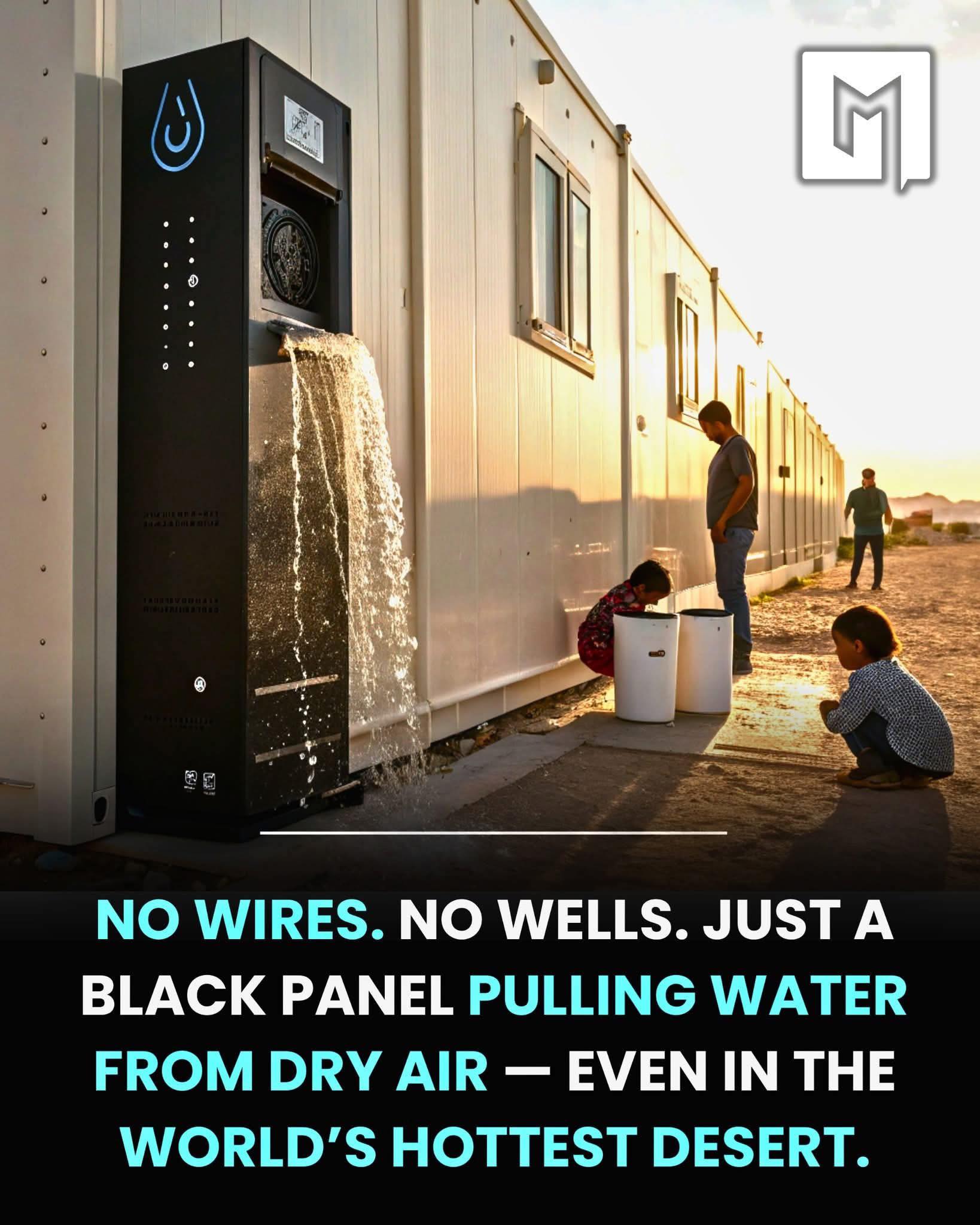
Pakistan faces acute water scarcity. According to international reports, the country could face severe shortages by 2030. Many rural and desert regions — especially Tharparkar, Balochistan, and Cholistan — have no access to clean groundwater. The idea of extracting water directly from air, once a dream, is now scientifically possible thanks to breakthroughs like MIT’s hydrogel-based atmospheric water harvester.
This technology doesn’t need electricity, wells, or pipelines. It can be built locally with basic chemistry knowledge, sunlight, and simple materials.
⸻
Understanding How It Works
The device uses three natural processes that already happen in our environment:
1. Absorption: Certain salts and gels absorb humidity from the air at night.
2. Evaporation: When the sun heats them during the day, the absorbed water turns to vapour.
3. Condensation: The vapour touches a cooler surface (like glass or metal) and becomes liquid water.
MIT’s invention uses a hydrogel matrix — a sponge-like material mixed with:
• Hygroscopic salts (like calcium chloride or lithium chloride) that attract water from air.
• Glycerol (used in soaps and creams) to prevent salt crystallisation and leakage.
• A transparent cover that lets sunlight in and helps condense the vapour.
You can replicate this using locally available materials and tools.
⸻
Materials Needed (All Available in Pakistan)
Component Purpose Local Source
Calcium chloride (CaCl₂) Absorbs humidity Hardware stores (used in dehumidifiers, cement dryers)
Glycerol Prevents salt leakage and keeps gel soft Pharmacy or chemical store
Gelatin or Polyacrylamide To create hydrogel (the sponge matrix) Available in school lab supply stores
Black aluminum sheet or solar absorber Heats up during day Local metal workshop
Glass or acrylic sheet Transparent top layer for condensation Any glass shop
Silicone sealant or rubber gasket To seal edges Hardware store
Plastic or metal tray For collecting condensed water Household item
All materials can be sourced for under PKR 5,000–7,000 for a small prototype.
⸻
Step-By-Step Construction
Create the Hydrogel
• Mix gelatin powder or polyacrylamide crystals with warm water to form a jelly-like gel.
• Dissolve calcium chloride in water (ratio: 1 part salt : 3 parts water).
• Add a few drops of glycerol to the salt solution.
• Blend the salt solution with the hydrogel mixture and spread it on a flat tray.
• Let it set and dry — you’ll now have a water-absorbing gel sheet.
Design the Panel
• Take a black metal or plastic backing (acts as heat absorber).
• Place the hydrogel sheet on it.
• Cover it with a transparent glass sheet, leaving small vents at top/bottom for air flow.
• Seal edges with silicone.
Collect the Condensed Water
• Mount the panel vertically or at a 45° angle facing the sun.
• As the sun heats it, water will evaporate from the gel and condense on the glass.
• Let the condensed droplets run down into a collection tray or pipe.
• Filter (optional) through activated charcoal or sand for taste and safety.
⸻
Operating Principle
• At night: the hydrogel absorbs moisture from air.
• At day: the sun heats the black backing, vapour rises, and condenses on the glass.
• Each cycle (24 hours) can yield 100–200 ml of water per panel, depending on humidity.
If ten panels are combined (costing about PKR 50,000 total), they can generate 1.5–2 litres of drinking water per day — enough for a small family in desert areas.
⸻
Scaling Up in Pakistan
Here’s how it can grow beyond a science project:
1. School or University Labs
Encourage students in NED, NUST, Mehran, and Sindh University to replicate this as a STEM project.
They can locally test different materials — e.g. cheaper salts like magnesium chloride, or natural gels from aloe vera or starch.
2. Startup Model
• Start a small business making “Air Water Panels.”
• Sell them for PKR 15,000–20,000 each to NGOs, camping companies, or off-grid villages.
• Partner with Saylani Welfare, Edhi, or Rehan Foundation for rural pilot installations.
3. Rural Deployment
Combine panels with:
• Solar lights
• Rainwater storage tanks
• Small bio-sand filters
Create self-sufficient water kiosks for desert schools and communities.
⸻
Environmental & Social Benefits
• Zero carbon emissions: no electricity, no pumps.
• Portable: can be moved like a solar panel.
• Scalable: from one house to an entire village.
• Empowering youth: teaches science, sustainability, and entrepreneurship.
If 10,000 young Pakistanis build just 10 panels each, that’s 100,000 families with new access to clean drinking water.
⸻
Challenges to Solve
1. Efficiency: Increase yield in dry air by experimenting with different salts.
2. Durability: Ensure the gel lasts 6–12 months under sunlight.
3. Safety: Test for contamination (with university support).
4. Cost Reduction: Mass-produce the panels using moulds or recycled plastic.
These are all within reach for Pakistani students and makers.
⸻
Vision: Made in Pakistan for the World
By 2030, Pakistan can lead the world in low-cost atmospheric water technology — not by importing, but by inventing locally.
A network of Rehan School AI students, young makers, and solar entrepreneurs could design, build, and sell “Water-From-Air” devices across South Asia, Africa, and the Middle East — transforming deserts into thriving communities.
⸻
Conclusion
Water scarcity is not destiny. It’s a solvable engineering problem.
MIT showed the science — Pakistan can show the scalability.
From Karachi to Thar, Gwadar to Gilgit, every rooftop or school window could soon be a mini water factory powered by the sun.
A Pathway to Solving Water Scarcity Through Local Innovation
⸻
The Problem We Face
Pakistan faces acute water scarcity. According to international reports, the country could face severe shortages by 2030. Many rural and desert regions — especially Tharparkar, Balochistan, and Cholistan — have no access to clean groundwater. The idea of extracting water directly from air, once a dream, is now scientifically possible thanks to breakthroughs like MIT’s hydrogel-based atmospheric water harvester.
This technology doesn’t need electricity, wells, or pipelines. It can be built locally with basic chemistry knowledge, sunlight, and simple materials.
⸻
Understanding How It Works
The device uses three natural processes that already happen in our environment:
1. Absorption: Certain salts and gels absorb humidity from the air at night.
2. Evaporation: When the sun heats them during the day, the absorbed water turns to vapour.
3. Condensation: The vapour touches a cooler surface (like glass or metal) and becomes liquid water.
MIT’s invention uses a hydrogel matrix — a sponge-like material mixed with:
• Hygroscopic salts (like calcium chloride or lithium chloride) that attract water from air.
• Glycerol (used in soaps and creams) to prevent salt crystallisation and leakage.
• A transparent cover that lets sunlight in and helps condense the vapour.
You can replicate this using locally available materials and tools.
⸻
Materials Needed (All Available in Pakistan)
Component Purpose Local Source
Calcium chloride (CaCl₂) Absorbs humidity Hardware stores (used in dehumidifiers, cement dryers)
Glycerol Prevents salt leakage and keeps gel soft Pharmacy or chemical store
Gelatin or Polyacrylamide To create hydrogel (the sponge matrix) Available in school lab supply stores
Black aluminum sheet or solar absorber Heats up during day Local metal workshop
Glass or acrylic sheet Transparent top layer for condensation Any glass shop
Silicone sealant or rubber gasket To seal edges Hardware store
Plastic or metal tray For collecting condensed water Household item
All materials can be sourced for under PKR 5,000–7,000 for a small prototype.
⸻
Step-By-Step Construction
Create the Hydrogel
• Mix gelatin powder or polyacrylamide crystals with warm water to form a jelly-like gel.
• Dissolve calcium chloride in water (ratio: 1 part salt : 3 parts water).
• Add a few drops of glycerol to the salt solution.
• Blend the salt solution with the hydrogel mixture and spread it on a flat tray.
• Let it set and dry — you’ll now have a water-absorbing gel sheet.
Design the Panel
• Take a black metal or plastic backing (acts as heat absorber).
• Place the hydrogel sheet on it.
• Cover it with a transparent glass sheet, leaving small vents at top/bottom for air flow.
• Seal edges with silicone.
Collect the Condensed Water
• Mount the panel vertically or at a 45° angle facing the sun.
• As the sun heats it, water will evaporate from the gel and condense on the glass.
• Let the condensed droplets run down into a collection tray or pipe.
• Filter (optional) through activated charcoal or sand for taste and safety.
⸻
Operating Principle
• At night: the hydrogel absorbs moisture from air.
• At day: the sun heats the black backing, vapour rises, and condenses on the glass.
• Each cycle (24 hours) can yield 100–200 ml of water per panel, depending on humidity.
If ten panels are combined (costing about PKR 50,000 total), they can generate 1.5–2 litres of drinking water per day — enough for a small family in desert areas.
⸻
Scaling Up in Pakistan
Here’s how it can grow beyond a science project:
1. School or University Labs
Encourage students in NED, NUST, Mehran, and Sindh University to replicate this as a STEM project.
They can locally test different materials — e.g. cheaper salts like magnesium chloride, or natural gels from aloe vera or starch.
2. Startup Model
• Start a small business making “Air Water Panels.”
• Sell them for PKR 15,000–20,000 each to NGOs, camping companies, or off-grid villages.
• Partner with Saylani Welfare, Edhi, or Rehan Foundation for rural pilot installations.
3. Rural Deployment
Combine panels with:
• Solar lights
• Rainwater storage tanks
• Small bio-sand filters
Create self-sufficient water kiosks for desert schools and communities.
⸻
Environmental & Social Benefits
• Zero carbon emissions: no electricity, no pumps.
• Portable: can be moved like a solar panel.
• Scalable: from one house to an entire village.
• Empowering youth: teaches science, sustainability, and entrepreneurship.
If 10,000 young Pakistanis build just 10 panels each, that’s 100,000 families with new access to clean drinking water.
⸻
Challenges to Solve
1. Efficiency: Increase yield in dry air by experimenting with different salts.
2. Durability: Ensure the gel lasts 6–12 months under sunlight.
3. Safety: Test for contamination (with university support).
4. Cost Reduction: Mass-produce the panels using moulds or recycled plastic.
These are all within reach for Pakistani students and makers.
⸻
Vision: Made in Pakistan for the World
By 2030, Pakistan can lead the world in low-cost atmospheric water technology — not by importing, but by inventing locally.
A network of Rehan School AI students, young makers, and solar entrepreneurs could design, build, and sell “Water-From-Air” devices across South Asia, Africa, and the Middle East — transforming deserts into thriving communities.
⸻
Conclusion
Water scarcity is not destiny. It’s a solvable engineering problem.
MIT showed the science — Pakistan can show the scalability.
From Karachi to Thar, Gwadar to Gilgit, every rooftop or school window could soon be a mini water factory powered by the sun.
💧 How Anyone Can Build a Water-From-Air Device in Pakistan by chatgpt
A Pathway to Solving Water Scarcity Through Local Innovation
⸻
🌍 The Problem We Face
Pakistan faces acute water scarcity. According to international reports, the country could face severe shortages by 2030. Many rural and desert regions — especially Tharparkar, Balochistan, and Cholistan — have no access to clean groundwater. The idea of extracting water directly from air, once a dream, is now scientifically possible thanks to breakthroughs like MIT’s hydrogel-based atmospheric water harvester.
This technology doesn’t need electricity, wells, or pipelines. It can be built locally with basic chemistry knowledge, sunlight, and simple materials.
⸻
🔬 Understanding How It Works
The device uses three natural processes that already happen in our environment:
1. Absorption: Certain salts and gels absorb humidity from the air at night.
2. Evaporation: When the sun heats them during the day, the absorbed water turns to vapour.
3. Condensation: The vapour touches a cooler surface (like glass or metal) and becomes liquid water.
MIT’s invention uses a hydrogel matrix — a sponge-like material mixed with:
• Hygroscopic salts (like calcium chloride or lithium chloride) that attract water from air.
• Glycerol (used in soaps and creams) to prevent salt crystallisation and leakage.
• A transparent cover that lets sunlight in and helps condense the vapour.
You can replicate this using locally available materials and tools.
⸻
🧪 Materials Needed (All Available in Pakistan)
Component Purpose Local Source
Calcium chloride (CaCl₂) Absorbs humidity Hardware stores (used in dehumidifiers, cement dryers)
Glycerol Prevents salt leakage and keeps gel soft Pharmacy or chemical store
Gelatin or Polyacrylamide To create hydrogel (the sponge matrix) Available in school lab supply stores
Black aluminum sheet or solar absorber Heats up during day Local metal workshop
Glass or acrylic sheet Transparent top layer for condensation Any glass shop
Silicone sealant or rubber gasket To seal edges Hardware store
Plastic or metal tray For collecting condensed water Household item
All materials can be sourced for under PKR 5,000–7,000 for a small prototype.
⸻
🧰 Step-By-Step Construction
1️⃣ Create the Hydrogel
• Mix gelatin powder or polyacrylamide crystals with warm water to form a jelly-like gel.
• Dissolve calcium chloride in water (ratio: 1 part salt : 3 parts water).
• Add a few drops of glycerol to the salt solution.
• Blend the salt solution with the hydrogel mixture and spread it on a flat tray.
• Let it set and dry — you’ll now have a water-absorbing gel sheet.
2️⃣ Design the Panel
• Take a black metal or plastic backing (acts as heat absorber).
• Place the hydrogel sheet on it.
• Cover it with a transparent glass sheet, leaving small vents at top/bottom for air flow.
• Seal edges with silicone.
3️⃣ Collect the Condensed Water
• Mount the panel vertically or at a 45° angle facing the sun.
• As the sun heats it, water will evaporate from the gel and condense on the glass.
• Let the condensed droplets run down into a collection tray or pipe.
• Filter (optional) through activated charcoal or sand for taste and safety.
⸻
☀️ Operating Principle
• At night: the hydrogel absorbs moisture from air.
• At day: the sun heats the black backing, vapour rises, and condenses on the glass.
• Each cycle (24 hours) can yield 100–200 ml of water per panel, depending on humidity.
If ten panels are combined (costing about PKR 50,000 total), they can generate 1.5–2 litres of drinking water per day — enough for a small family in desert areas.
⸻
🏭 Scaling Up in Pakistan
Here’s how it can grow beyond a science project:
🧑🔬 1. School or University Labs
Encourage students in NED, NUST, Mehran, and Sindh University to replicate this as a STEM project.
They can locally test different materials — e.g. cheaper salts like magnesium chloride, or natural gels from aloe vera or starch.
🧑💼 2. Startup Model
• Start a small business making “Air Water Panels.”
• Sell them for PKR 15,000–20,000 each to NGOs, camping companies, or off-grid villages.
• Partner with Saylani Welfare, Edhi, or Rehan Foundation for rural pilot installations.
🧑🌾 3. Rural Deployment
Combine panels with:
• Solar lights
• Rainwater storage tanks
• Small bio-sand filters
Create self-sufficient water kiosks for desert schools and communities.
⸻
🌱 Environmental & Social Benefits
• Zero carbon emissions: no electricity, no pumps.
• Portable: can be moved like a solar panel.
• Scalable: from one house to an entire village.
• Empowering youth: teaches science, sustainability, and entrepreneurship.
If 10,000 young Pakistanis build just 10 panels each, that’s 100,000 families with new access to clean drinking water.
⸻
🔧 Challenges to Solve
1. Efficiency: Increase yield in dry air by experimenting with different salts.
2. Durability: Ensure the gel lasts 6–12 months under sunlight.
3. Safety: Test for contamination (with university support).
4. Cost Reduction: Mass-produce the panels using moulds or recycled plastic.
These are all within reach for Pakistani students and makers.
⸻
🕊️ Vision: Made in Pakistan for the World
By 2030, Pakistan can lead the world in low-cost atmospheric water technology — not by importing, but by inventing locally.
A network of Rehan School AI students, young makers, and solar entrepreneurs could design, build, and sell “Water-From-Air” devices across South Asia, Africa, and the Middle East — transforming deserts into thriving communities.
⸻
💡 Conclusion
Water scarcity is not destiny. It’s a solvable engineering problem.
MIT showed the science — Pakistan can show the scalability.
From Karachi to Thar, Gwadar to Gilgit, every rooftop or school window could soon be a mini water factory powered by the sun.
0 Comentários
0 Compartilhamentos
627 Visualizações