


The Silent Sage: The Life and Teachings of Lao Tzu 2500 years ago !
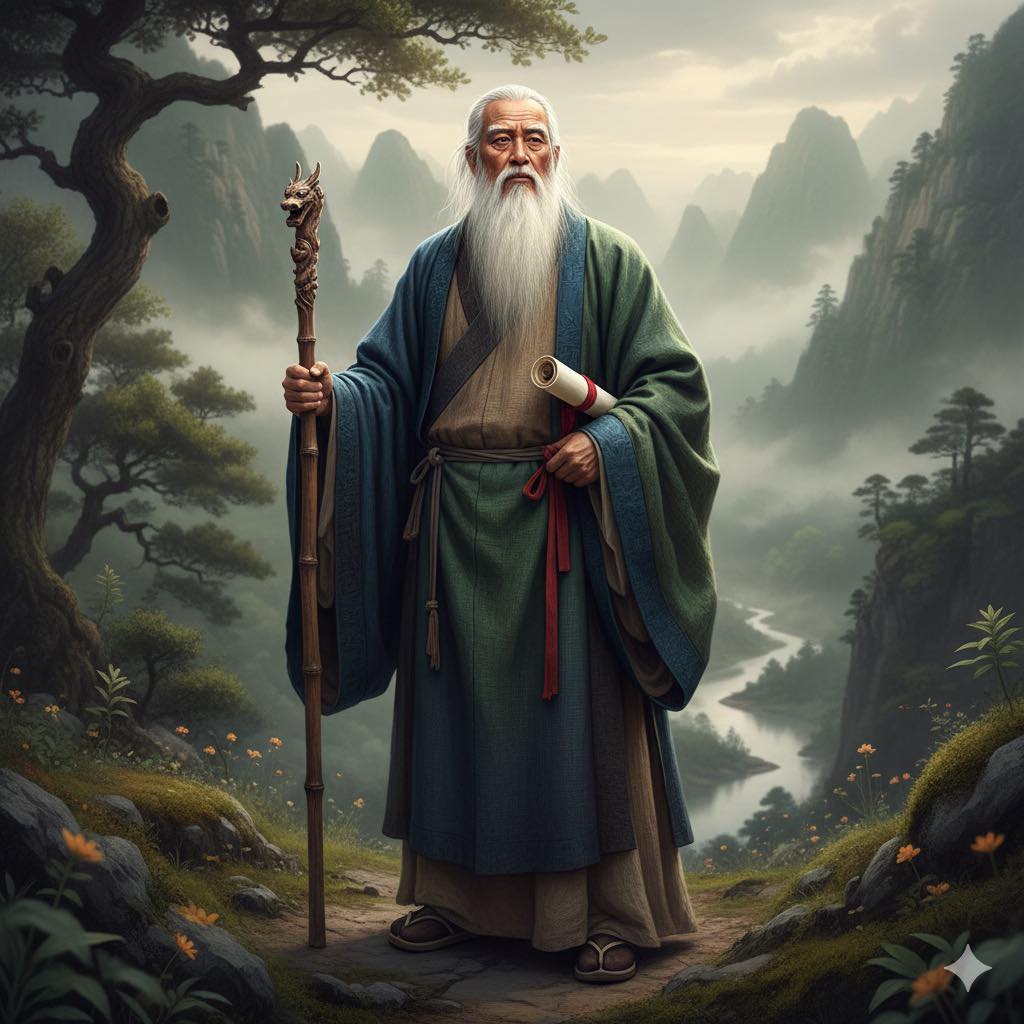
In the mist of ancient China, more than twenty-five centuries ago, a quiet old man rode a water buffalo toward the western mountains. His name was Lao Tzu, meaning “The Old Master.” He carried no possessions, no titles, and no ambition — only wisdom that would outlast empires. Before disappearing into the wilderness, he left behind a small manuscript of about five thousand Chinese characters — the Tao Te Ching, or “The Book of the Way and Its Virtue.”
From that single book, a river of philosophy began to flow — shaping Taoism, influencing Zen, and whispering to humanity that the greatest power lies not in conquest, but in harmony.
⸻
The Legend of His Life
Little is known with certainty about Lao Tzu’s life. He is said to have been born in the 6th century BCE, in the state of Chu, during China’s Spring and Autumn Period. He served as a keeper of the royal archives — a librarian surrounded by history, scrolls, and silence.
He observed how rulers obsessed over wealth and war, while people suffered. Disillusioned, he decided to leave the city and live in nature. When he reached the western border, the gatekeeper, Yin Xi, recognized his brilliance and pleaded, “Master, before you go, write down your wisdom for us.”
So, Lao Tzu dismounted his ox, took a brush, and wrote — in one sitting — the Tao Te Ching. When he finished, he handed it over and disappeared into legend.
⸻
The Way (Tao)
At the heart of his book is the concept of Tao (道) — The Way, the invisible rhythm that moves through all things. It is both the origin and the flow of the universe — the eternal path that everything follows.
“The Tao that can be spoken is not the eternal Tao.
The name that can be named is not the eternal name.”
To Lao Tzu, the universe was a living organism, not a machine. The more we try to control it, the more it slips away. True peace, he taught, comes when we move with the current of life, not against it.
“Man follows the earth.
Earth follows the heavens.
Heaven follows the Tao.
The Tao follows what is natural.”
⸻
Simplicity and Stillness
Lao Tzu saw human life as a mirror of nature. A tree grows without hurry; water flows without effort; the sky shines without asking for permission. So should human beings live — gently, naturally, without forcing outcomes.
“Do you have the patience to wait
till your mud settles and the water is clear?
Can you remain unmoving
till the right action arises by itself?”
He warned against overcomplication and ego-driven action:
“In the pursuit of knowledge, every day something is added.
In the pursuit of the Tao, every day something is dropped.”
To follow the Tao, one must unlearn — unlearn greed, pride, and fear — and return to simplicity.
⸻
Power Through Humility
Lao Tzu’s idea of power was revolutionary.
In a world that worshiped armies and kings, he said the strongest force is the softest one.
“Water is fluid, soft, and yielding.
But water will wear away rock, which is rigid and cannot yield.
What is soft is strong.”
He admired the humble and despised arrogance:
“All streams flow to the sea because it is lower than they are.
Humility gives it its power.”
A true leader, he said, does not dominate but serves — guiding quietly from behind.
“A leader is best when people barely know he exists.
When his work is done, his aim fulfilled,
They will say: we did it ourselves.”
⸻
The Inner World
Lao Tzu taught that self-mastery is greater than controlling others.
“He who conquers others is strong;
He who conquers himself is mighty.”
He believed the human heart is like a lake — only when it is still can it reflect the sky. Meditation, silence, and awareness are the true treasures of life.
“Knowing others is intelligence;
Knowing yourself is true wisdom.
Mastering others is strength;
Mastering yourself is true power.”
⸻
Non-Action (Wu Wei)
Perhaps his most subtle and misunderstood teaching is Wu Wei (无为) — “action through non-action.”
It doesn’t mean doing nothing — it means acting in harmony with the flow, without struggle or force.
“The sage does nothing, yet nothing is left undone.”
In modern terms, it is the art of effortless excellence — like a dancer moving with music, not against it.
⸻
The Return to Simplicity
Lao Tzu believed civilization’s greatest tragedy was forgetting how to be natural. He longed for a world where people lived simply, honestly, and close to nature.
“I have three treasures:
Simplicity, patience, and compassion.
These three are your greatest treasures.”
He taught that wealth, fame, and power are illusions — they bring anxiety, not peace. The true richness lies in stillness, kindness, and self-contentment.
“He who knows that enough is enough
will always have enough.”
⸻
The Legacy
After Lao Tzu’s disappearance, his book quietly spread through China and later the entire world. Dynasties rose and fell; empires burned; yet his 81 verses remained fresh, like spring water.
His influence reached Confucian scholars, Zen monks in Japan, poets like Rumi, and even modern philosophers and psychologists.
He showed humanity that the highest wisdom is simplicity, and the greatest strength is gentleness.
“When I let go of what I am,
I become what I might be.”
⸻
Conclusion
Lao Tzu’s life is a mystery — perhaps he was one man, perhaps a symbol for timeless wisdom. Yet his message echoes clearly through centuries:
The Way cannot be forced; it can only be followed. The wise do not strive to control life — they learn to flow with it.
He taught humanity how to walk softly, love deeply, and live wisely. And so his whisper continues to guide millions:
“A journey of a thousand miles
begins with a single step.”
In the mist of ancient China, more than twenty-five centuries ago, a quiet old man rode a water buffalo toward the western mountains. His name was Lao Tzu, meaning “The Old Master.” He carried no possessions, no titles, and no ambition — only wisdom that would outlast empires. Before disappearing into the wilderness, he left behind a small manuscript of about five thousand Chinese characters — the Tao Te Ching, or “The Book of the Way and Its Virtue.”
From that single book, a river of philosophy began to flow — shaping Taoism, influencing Zen, and whispering to humanity that the greatest power lies not in conquest, but in harmony.
⸻
The Legend of His Life
Little is known with certainty about Lao Tzu’s life. He is said to have been born in the 6th century BCE, in the state of Chu, during China’s Spring and Autumn Period. He served as a keeper of the royal archives — a librarian surrounded by history, scrolls, and silence.
He observed how rulers obsessed over wealth and war, while people suffered. Disillusioned, he decided to leave the city and live in nature. When he reached the western border, the gatekeeper, Yin Xi, recognized his brilliance and pleaded, “Master, before you go, write down your wisdom for us.”
So, Lao Tzu dismounted his ox, took a brush, and wrote — in one sitting — the Tao Te Ching. When he finished, he handed it over and disappeared into legend.
⸻
The Way (Tao)
At the heart of his book is the concept of Tao (道) — The Way, the invisible rhythm that moves through all things. It is both the origin and the flow of the universe — the eternal path that everything follows.
“The Tao that can be spoken is not the eternal Tao.
The name that can be named is not the eternal name.”
To Lao Tzu, the universe was a living organism, not a machine. The more we try to control it, the more it slips away. True peace, he taught, comes when we move with the current of life, not against it.
“Man follows the earth.
Earth follows the heavens.
Heaven follows the Tao.
The Tao follows what is natural.”
⸻
Simplicity and Stillness
Lao Tzu saw human life as a mirror of nature. A tree grows without hurry; water flows without effort; the sky shines without asking for permission. So should human beings live — gently, naturally, without forcing outcomes.
“Do you have the patience to wait
till your mud settles and the water is clear?
Can you remain unmoving
till the right action arises by itself?”
He warned against overcomplication and ego-driven action:
“In the pursuit of knowledge, every day something is added.
In the pursuit of the Tao, every day something is dropped.”
To follow the Tao, one must unlearn — unlearn greed, pride, and fear — and return to simplicity.
⸻
Power Through Humility
Lao Tzu’s idea of power was revolutionary.
In a world that worshiped armies and kings, he said the strongest force is the softest one.
“Water is fluid, soft, and yielding.
But water will wear away rock, which is rigid and cannot yield.
What is soft is strong.”
He admired the humble and despised arrogance:
“All streams flow to the sea because it is lower than they are.
Humility gives it its power.”
A true leader, he said, does not dominate but serves — guiding quietly from behind.
“A leader is best when people barely know he exists.
When his work is done, his aim fulfilled,
They will say: we did it ourselves.”
⸻
The Inner World
Lao Tzu taught that self-mastery is greater than controlling others.
“He who conquers others is strong;
He who conquers himself is mighty.”
He believed the human heart is like a lake — only when it is still can it reflect the sky. Meditation, silence, and awareness are the true treasures of life.
“Knowing others is intelligence;
Knowing yourself is true wisdom.
Mastering others is strength;
Mastering yourself is true power.”
⸻
Non-Action (Wu Wei)
Perhaps his most subtle and misunderstood teaching is Wu Wei (无为) — “action through non-action.”
It doesn’t mean doing nothing — it means acting in harmony with the flow, without struggle or force.
“The sage does nothing, yet nothing is left undone.”
In modern terms, it is the art of effortless excellence — like a dancer moving with music, not against it.
⸻
The Return to Simplicity
Lao Tzu believed civilization’s greatest tragedy was forgetting how to be natural. He longed for a world where people lived simply, honestly, and close to nature.
“I have three treasures:
Simplicity, patience, and compassion.
These three are your greatest treasures.”
He taught that wealth, fame, and power are illusions — they bring anxiety, not peace. The true richness lies in stillness, kindness, and self-contentment.
“He who knows that enough is enough
will always have enough.”
⸻
The Legacy
After Lao Tzu’s disappearance, his book quietly spread through China and later the entire world. Dynasties rose and fell; empires burned; yet his 81 verses remained fresh, like spring water.
His influence reached Confucian scholars, Zen monks in Japan, poets like Rumi, and even modern philosophers and psychologists.
He showed humanity that the highest wisdom is simplicity, and the greatest strength is gentleness.
“When I let go of what I am,
I become what I might be.”
⸻
Conclusion
Lao Tzu’s life is a mystery — perhaps he was one man, perhaps a symbol for timeless wisdom. Yet his message echoes clearly through centuries:
The Way cannot be forced; it can only be followed. The wise do not strive to control life — they learn to flow with it.
He taught humanity how to walk softly, love deeply, and live wisely. And so his whisper continues to guide millions:
“A journey of a thousand miles
begins with a single step.”
The Silent Sage: The Life and Teachings of Lao Tzu 2500 years ago !
In the mist of ancient China, more than twenty-five centuries ago, a quiet old man rode a water buffalo toward the western mountains. His name was Lao Tzu, meaning “The Old Master.” He carried no possessions, no titles, and no ambition — only wisdom that would outlast empires. Before disappearing into the wilderness, he left behind a small manuscript of about five thousand Chinese characters — the Tao Te Ching, or “The Book of the Way and Its Virtue.”
From that single book, a river of philosophy began to flow — shaping Taoism, influencing Zen, and whispering to humanity that the greatest power lies not in conquest, but in harmony.
⸻
The Legend of His Life
Little is known with certainty about Lao Tzu’s life. He is said to have been born in the 6th century BCE, in the state of Chu, during China’s Spring and Autumn Period. He served as a keeper of the royal archives — a librarian surrounded by history, scrolls, and silence.
He observed how rulers obsessed over wealth and war, while people suffered. Disillusioned, he decided to leave the city and live in nature. When he reached the western border, the gatekeeper, Yin Xi, recognized his brilliance and pleaded, “Master, before you go, write down your wisdom for us.”
So, Lao Tzu dismounted his ox, took a brush, and wrote — in one sitting — the Tao Te Ching. When he finished, he handed it over and disappeared into legend.
⸻
The Way (Tao)
At the heart of his book is the concept of Tao (道) — The Way, the invisible rhythm that moves through all things. It is both the origin and the flow of the universe — the eternal path that everything follows.
“The Tao that can be spoken is not the eternal Tao.
The name that can be named is not the eternal name.”
To Lao Tzu, the universe was a living organism, not a machine. The more we try to control it, the more it slips away. True peace, he taught, comes when we move with the current of life, not against it.
“Man follows the earth.
Earth follows the heavens.
Heaven follows the Tao.
The Tao follows what is natural.”
⸻
Simplicity and Stillness
Lao Tzu saw human life as a mirror of nature. A tree grows without hurry; water flows without effort; the sky shines without asking for permission. So should human beings live — gently, naturally, without forcing outcomes.
“Do you have the patience to wait
till your mud settles and the water is clear?
Can you remain unmoving
till the right action arises by itself?”
He warned against overcomplication and ego-driven action:
“In the pursuit of knowledge, every day something is added.
In the pursuit of the Tao, every day something is dropped.”
To follow the Tao, one must unlearn — unlearn greed, pride, and fear — and return to simplicity.
⸻
Power Through Humility
Lao Tzu’s idea of power was revolutionary.
In a world that worshiped armies and kings, he said the strongest force is the softest one.
“Water is fluid, soft, and yielding.
But water will wear away rock, which is rigid and cannot yield.
What is soft is strong.”
He admired the humble and despised arrogance:
“All streams flow to the sea because it is lower than they are.
Humility gives it its power.”
A true leader, he said, does not dominate but serves — guiding quietly from behind.
“A leader is best when people barely know he exists.
When his work is done, his aim fulfilled,
They will say: we did it ourselves.”
⸻
The Inner World
Lao Tzu taught that self-mastery is greater than controlling others.
“He who conquers others is strong;
He who conquers himself is mighty.”
He believed the human heart is like a lake — only when it is still can it reflect the sky. Meditation, silence, and awareness are the true treasures of life.
“Knowing others is intelligence;
Knowing yourself is true wisdom.
Mastering others is strength;
Mastering yourself is true power.”
⸻
Non-Action (Wu Wei)
Perhaps his most subtle and misunderstood teaching is Wu Wei (无为) — “action through non-action.”
It doesn’t mean doing nothing — it means acting in harmony with the flow, without struggle or force.
“The sage does nothing, yet nothing is left undone.”
In modern terms, it is the art of effortless excellence — like a dancer moving with music, not against it.
⸻
The Return to Simplicity
Lao Tzu believed civilization’s greatest tragedy was forgetting how to be natural. He longed for a world where people lived simply, honestly, and close to nature.
“I have three treasures:
Simplicity, patience, and compassion.
These three are your greatest treasures.”
He taught that wealth, fame, and power are illusions — they bring anxiety, not peace. The true richness lies in stillness, kindness, and self-contentment.
“He who knows that enough is enough
will always have enough.”
⸻
The Legacy
After Lao Tzu’s disappearance, his book quietly spread through China and later the entire world. Dynasties rose and fell; empires burned; yet his 81 verses remained fresh, like spring water.
His influence reached Confucian scholars, Zen monks in Japan, poets like Rumi, and even modern philosophers and psychologists.
He showed humanity that the highest wisdom is simplicity, and the greatest strength is gentleness.
“When I let go of what I am,
I become what I might be.”
⸻
Conclusion
Lao Tzu’s life is a mystery — perhaps he was one man, perhaps a symbol for timeless wisdom. Yet his message echoes clearly through centuries:
The Way cannot be forced; it can only be followed. The wise do not strive to control life — they learn to flow with it.
He taught humanity how to walk softly, love deeply, and live wisely. And so his whisper continues to guide millions:
“A journey of a thousand miles
begins with a single step.”
0 Commentarios
0 Acciones
23 Views