


Chairman of the Pakistan Chamber of Education and Member of the National Curriculum Council Visits Rehan School Lahore — October 17, 2025
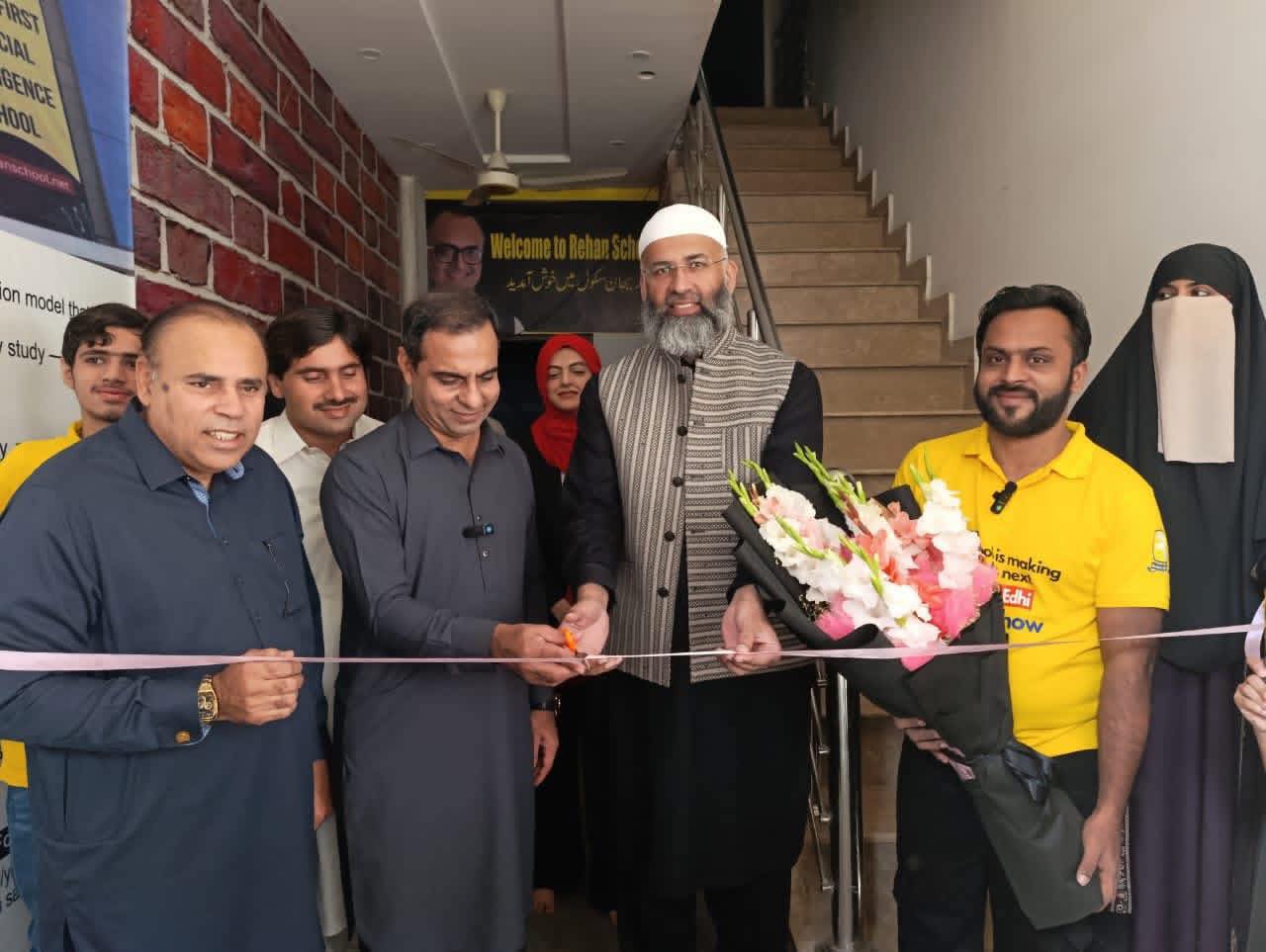
Today, Mr. Ali Raza, Chairman of the Pakistan Chamber of Education and Member of the National Curriculum Council (NCC), Government of Pakistan, visited Rehan School Lahore to explore how the school is integrating artificial intelligence and modern learning tools into its curriculum.
⸻
About the Pakistan Chamber of Education
The Pakistan Chamber of Education (PCE) is a national alliance of schools, colleges, teacher training institutions, and educational organizations across Pakistan.
Its mission is to create a unified national platform that strengthens collaboration between public and private institutions, promotes innovation, and represents the collective voice of the education sector in policymaking.
Under the leadership of Chairman Ali Raza, the Chamber works to:
• Facilitate communication between government bodies and educational institutions.
• Encourage teacher training, professional development, and digital literacy.
• Promote curriculum modernization and international alignment.
• Recognize and scale innovative school models across Pakistan.
Member institutions include both established school networks and independent schools from various cities — all working under one umbrella to improve educational quality and equity.
⸻
Ali Raza’s Role in Curriculum Development
In addition to his position as Chairman of the Chamber, Ali Raza serves as a Member of the National Curriculum Council (NCC) — the official federal body under the Ministry of Federal Education and Professional Training.
As part of the NCC, he contributes to:
• Reviewing and improving Pakistan’s national curriculum frameworks.
• Advising on subject content, learning outcomes, and teaching standards.
• Ensuring that education policies are aligned with real-world classroom needs.
• Promoting innovation, technology integration, and modern learning methods.
Through this dual role — in both the private sector and the national curriculum body — he plays a unique part in bridging policy with practice. His presence ensures that the voices of schools and teachers reach the policymaking table.
⸻
Today’s Visit to Rehan School Lahore
During his visit today, Ali Raza was received by the Rehan School team and met students who demonstrated how they use AI tools like ChatGPT and other digital platforms in their daily studies. He observed classes focused on English speaking, creativity, and problem-solving through technology.
Teachers shared how the Rehan School model uses artificial intelligence to assist instruction, track progress, and encourage personalized learning. The Chairman appreciated how these modern tools are being used in an accessible, low-cost way to empower underprivileged communities.
He expressed admiration for the vision of Rehan School — to make every student confident, tech-enabled, and future-ready — and discussed ways to share similar models with other schools across Pakistan.
⸻
Significance of the Visit
This visit is an important development for Pakistan’s education landscape.
It represents the coming together of policy, practice, and innovation — where the person shaping curriculum at the national level visits a ground-level school that is already implementing 21st-century education methods.
It also highlights a growing recognition that the future of Pakistan’s education depends on:
• Integrating AI and digital literacy into mainstream learning.
• Empowering teachers through technology and continuous training.
• Encouraging schools to innovate rather than wait for directives.
Ali Raza’s visit sends a clear message that modern learning initiatives like Rehan School are not just experiments — they are blueprints for the future.
⸻
Looking Ahead
Both the Pakistan Chamber of Education and Rehan School expressed interest in exploring partnerships for:
• Teacher AI training programs,
• Digital learning content development, and
• Community-based school improvement initiatives.
If implemented, these collaborations could help bring Pakistan’s education system closer to a new model — one that values creativity, technology, and critical thinking alongside traditional academics.
⸻
Conclusion
The visit of Mr. Ali Raza — Chairman of the Pakistan Chamber of Education and Member of the National Curriculum Council — to Rehan School Lahore marks an important step toward linking classroom innovation with national curriculum reform.
By connecting policymakers with practitioners, today’s event reinforces a shared goal:
to prepare every Pakistani child for the challenges and opportunities of the modern world through relevant, technology-driven, and inclusive education.
Today, Mr. Ali Raza, Chairman of the Pakistan Chamber of Education and Member of the National Curriculum Council (NCC), Government of Pakistan, visited Rehan School Lahore to explore how the school is integrating artificial intelligence and modern learning tools into its curriculum.
⸻
About the Pakistan Chamber of Education
The Pakistan Chamber of Education (PCE) is a national alliance of schools, colleges, teacher training institutions, and educational organizations across Pakistan.
Its mission is to create a unified national platform that strengthens collaboration between public and private institutions, promotes innovation, and represents the collective voice of the education sector in policymaking.
Under the leadership of Chairman Ali Raza, the Chamber works to:
• Facilitate communication between government bodies and educational institutions.
• Encourage teacher training, professional development, and digital literacy.
• Promote curriculum modernization and international alignment.
• Recognize and scale innovative school models across Pakistan.
Member institutions include both established school networks and independent schools from various cities — all working under one umbrella to improve educational quality and equity.
⸻
Ali Raza’s Role in Curriculum Development
In addition to his position as Chairman of the Chamber, Ali Raza serves as a Member of the National Curriculum Council (NCC) — the official federal body under the Ministry of Federal Education and Professional Training.
As part of the NCC, he contributes to:
• Reviewing and improving Pakistan’s national curriculum frameworks.
• Advising on subject content, learning outcomes, and teaching standards.
• Ensuring that education policies are aligned with real-world classroom needs.
• Promoting innovation, technology integration, and modern learning methods.
Through this dual role — in both the private sector and the national curriculum body — he plays a unique part in bridging policy with practice. His presence ensures that the voices of schools and teachers reach the policymaking table.
⸻
Today’s Visit to Rehan School Lahore
During his visit today, Ali Raza was received by the Rehan School team and met students who demonstrated how they use AI tools like ChatGPT and other digital platforms in their daily studies. He observed classes focused on English speaking, creativity, and problem-solving through technology.
Teachers shared how the Rehan School model uses artificial intelligence to assist instruction, track progress, and encourage personalized learning. The Chairman appreciated how these modern tools are being used in an accessible, low-cost way to empower underprivileged communities.
He expressed admiration for the vision of Rehan School — to make every student confident, tech-enabled, and future-ready — and discussed ways to share similar models with other schools across Pakistan.
⸻
Significance of the Visit
This visit is an important development for Pakistan’s education landscape.
It represents the coming together of policy, practice, and innovation — where the person shaping curriculum at the national level visits a ground-level school that is already implementing 21st-century education methods.
It also highlights a growing recognition that the future of Pakistan’s education depends on:
• Integrating AI and digital literacy into mainstream learning.
• Empowering teachers through technology and continuous training.
• Encouraging schools to innovate rather than wait for directives.
Ali Raza’s visit sends a clear message that modern learning initiatives like Rehan School are not just experiments — they are blueprints for the future.
⸻
Looking Ahead
Both the Pakistan Chamber of Education and Rehan School expressed interest in exploring partnerships for:
• Teacher AI training programs,
• Digital learning content development, and
• Community-based school improvement initiatives.
If implemented, these collaborations could help bring Pakistan’s education system closer to a new model — one that values creativity, technology, and critical thinking alongside traditional academics.
⸻
Conclusion
The visit of Mr. Ali Raza — Chairman of the Pakistan Chamber of Education and Member of the National Curriculum Council — to Rehan School Lahore marks an important step toward linking classroom innovation with national curriculum reform.
By connecting policymakers with practitioners, today’s event reinforces a shared goal:
to prepare every Pakistani child for the challenges and opportunities of the modern world through relevant, technology-driven, and inclusive education.
Chairman of the Pakistan Chamber of Education and Member of the National Curriculum Council Visits Rehan School Lahore — October 17, 2025
Today, Mr. Ali Raza, Chairman of the Pakistan Chamber of Education and Member of the National Curriculum Council (NCC), Government of Pakistan, visited Rehan School Lahore to explore how the school is integrating artificial intelligence and modern learning tools into its curriculum.
⸻
About the Pakistan Chamber of Education
The Pakistan Chamber of Education (PCE) is a national alliance of schools, colleges, teacher training institutions, and educational organizations across Pakistan.
Its mission is to create a unified national platform that strengthens collaboration between public and private institutions, promotes innovation, and represents the collective voice of the education sector in policymaking.
Under the leadership of Chairman Ali Raza, the Chamber works to:
• Facilitate communication between government bodies and educational institutions.
• Encourage teacher training, professional development, and digital literacy.
• Promote curriculum modernization and international alignment.
• Recognize and scale innovative school models across Pakistan.
Member institutions include both established school networks and independent schools from various cities — all working under one umbrella to improve educational quality and equity.
⸻
Ali Raza’s Role in Curriculum Development
In addition to his position as Chairman of the Chamber, Ali Raza serves as a Member of the National Curriculum Council (NCC) — the official federal body under the Ministry of Federal Education and Professional Training.
As part of the NCC, he contributes to:
• Reviewing and improving Pakistan’s national curriculum frameworks.
• Advising on subject content, learning outcomes, and teaching standards.
• Ensuring that education policies are aligned with real-world classroom needs.
• Promoting innovation, technology integration, and modern learning methods.
Through this dual role — in both the private sector and the national curriculum body — he plays a unique part in bridging policy with practice. His presence ensures that the voices of schools and teachers reach the policymaking table.
⸻
Today’s Visit to Rehan School Lahore
During his visit today, Ali Raza was received by the Rehan School team and met students who demonstrated how they use AI tools like ChatGPT and other digital platforms in their daily studies. He observed classes focused on English speaking, creativity, and problem-solving through technology.
Teachers shared how the Rehan School model uses artificial intelligence to assist instruction, track progress, and encourage personalized learning. The Chairman appreciated how these modern tools are being used in an accessible, low-cost way to empower underprivileged communities.
He expressed admiration for the vision of Rehan School — to make every student confident, tech-enabled, and future-ready — and discussed ways to share similar models with other schools across Pakistan.
⸻
Significance of the Visit
This visit is an important development for Pakistan’s education landscape.
It represents the coming together of policy, practice, and innovation — where the person shaping curriculum at the national level visits a ground-level school that is already implementing 21st-century education methods.
It also highlights a growing recognition that the future of Pakistan’s education depends on:
• Integrating AI and digital literacy into mainstream learning.
• Empowering teachers through technology and continuous training.
• Encouraging schools to innovate rather than wait for directives.
Ali Raza’s visit sends a clear message that modern learning initiatives like Rehan School are not just experiments — they are blueprints for the future.
⸻
Looking Ahead
Both the Pakistan Chamber of Education and Rehan School expressed interest in exploring partnerships for:
• Teacher AI training programs,
• Digital learning content development, and
• Community-based school improvement initiatives.
If implemented, these collaborations could help bring Pakistan’s education system closer to a new model — one that values creativity, technology, and critical thinking alongside traditional academics.
⸻
Conclusion
The visit of Mr. Ali Raza — Chairman of the Pakistan Chamber of Education and Member of the National Curriculum Council — to Rehan School Lahore marks an important step toward linking classroom innovation with national curriculum reform.
By connecting policymakers with practitioners, today’s event reinforces a shared goal:
to prepare every Pakistani child for the challenges and opportunities of the modern world through relevant, technology-driven, and inclusive education.
0 Kommentare
0 Anteile
45 Ansichten