


The Story of the Hinduja Group — From a Small Trading Office to a Global Empire
More than a century ago, in 1914, a young and determined man named Parmanand Deepchand Hinduja left his hometown Shikarpur (then part of British India, now in Pakistan) with only a few rupees in his pocket and a heart full of dreams.
He travelled to Bombay (now Mumbai) and soon after to Iran, where he began trading goods such as carpets, dried fruits, and textiles between the Indian subcontinent and Persia.
Parmanand was not just a businessman — he was a visionary. He believed in honesty, hard work, and the Indian value of Dharma — the duty to do good without worrying about rewards. His simple motto was:
“Work to give, not to take.”
⸻
The Early Days – From Persia to the World
By the 1920s, Parmanand’s trading company had become one of the most respected businesses in Iran.
He imported Indian products and exported Persian goods — creating a bridge between two great civilizations. Soon, the Hinduja name stood for trust and integrity.
During this time, his sons — Srichand, Gopichand, Prakash, and Ashok — began learning the business. They grew up watching their father deal with kings, merchants, and diplomats, and they learned the art of combining business with values.
When India gained independence in 1947, the family began expanding their interests beyond trading. They opened offices in India, Iran, Switzerland, and the United Kingdom.
⸻
Building an Empire
In the 1960s and 70s, as the world changed, so did the Hinduja vision. The brothers saw that the future was in diversification — spreading across different industries and countries to build strength.
They invested in:
• Automobiles: buying and growing Ashok Leyland, India’s largest truck manufacturer after Tata.
• Banking: founding IndusInd Bank, one of India’s top private banks.
• Oil and Energy: launching Gulf Oil International, known for its distinctive orange-blue logo.
• IT and BPO: through Hinduja Global Solutions (HGS), which today serves major global corporations.
• Media: through NXTDIGITAL (earlier Hinduja Ventures).
• Healthcare: running the world-class Hinduja Hospital in Mumbai.
By the 1980s, they had shifted their base to London, making it their global headquarters. The Hinduja brothers became well-known for blending Eastern ethics with Western efficiency — a rare and powerful mix.
⸻
The London Era – From Traders to Titans
From their elegant offices in Carlton House Terrace, overlooking Buckingham Palace, the Hinduja brothers continued to expand their empire into 100+ countries with over 200,000 employees.
Their wealth grew, but so did their humility and commitment to giving back.
Through the Hinduja Foundation, they built schools, hospitals, and rural development programs across India and beyond.
Their guiding principle remained:
“Everything belongs to God. We are merely trustees of wealth.”
⸻
The Crown Jewel — Raffles London at The OWO
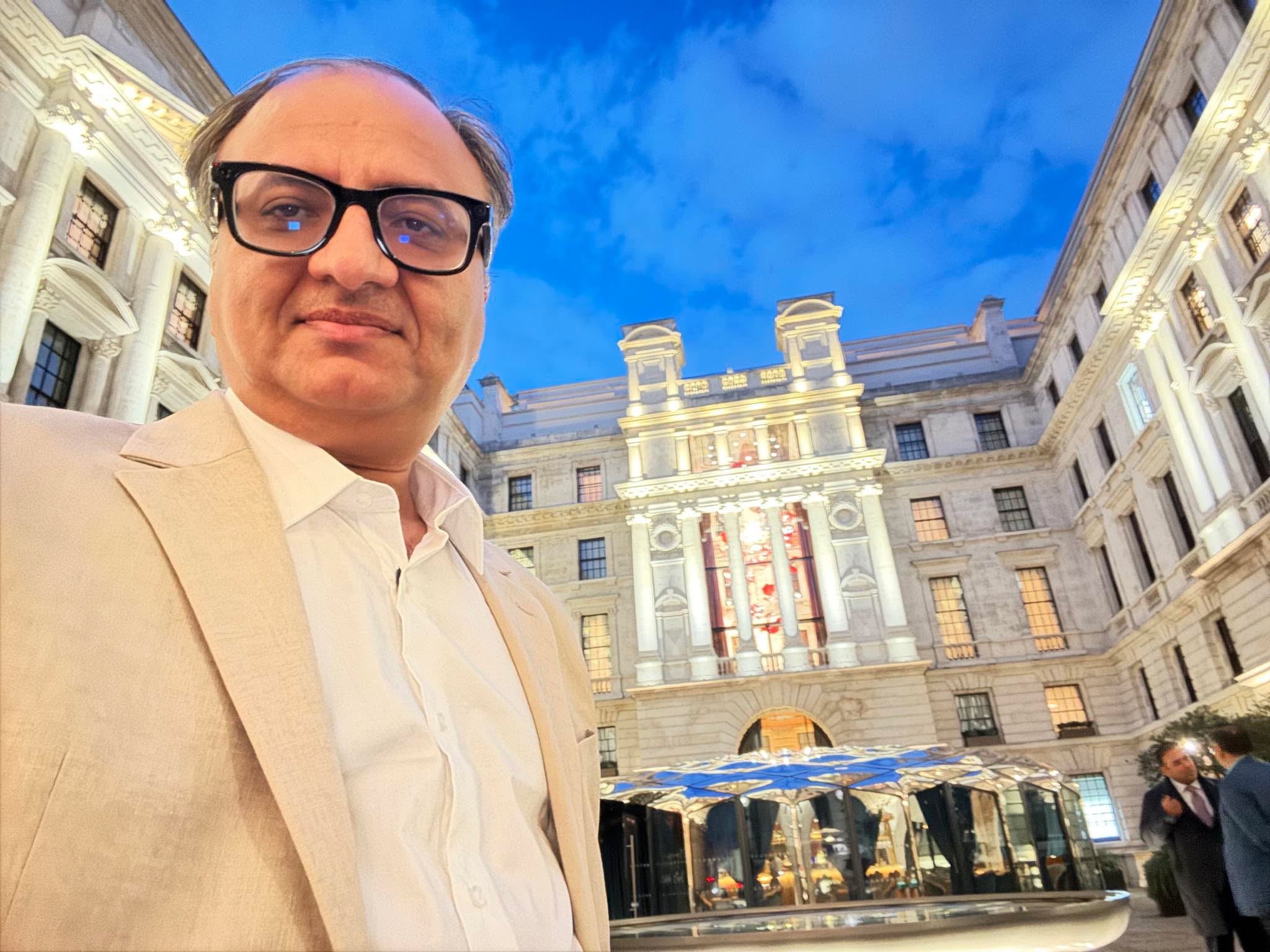
In 2016, the Hinduja Group bought the legendary Old War Office in London — the same building where Winston Churchill once worked.
After a billion-pound restoration, it reopened in 2023 as the Raffles London at The OWO — one of the most luxurious hotels in the world.
It became a symbol of how far the Hinduja dream had come — from a small trading office in Shikarpur to owning one of London’s greatest landmarks.
⸻
Legacy of the Four Brothers
• Srichand Hinduja (the eldest, known as SP) focused on spirituality and charity.
• Gopichand Hinduja (GP) became the global chairman and business strategist.
• Prakash Hinduja expanded operations in Europe.
• Ashok Hinduja managed India operations and philanthropy.
Together, they turned their father’s small dream into a $40+ billion global group, proving that family unity, strong values, and vision can create miracles.
⸻
Moral of the Story
The Hinduja story teaches us:
1. Start small, but think big.
2. Do business with ethics and trust.
3. Use wealth to serve humanity.
4. Blend tradition with modernity.
More than a century ago, in 1914, a young and determined man named Parmanand Deepchand Hinduja left his hometown Shikarpur (then part of British India, now in Pakistan) with only a few rupees in his pocket and a heart full of dreams.
He travelled to Bombay (now Mumbai) and soon after to Iran, where he began trading goods such as carpets, dried fruits, and textiles between the Indian subcontinent and Persia.
Parmanand was not just a businessman — he was a visionary. He believed in honesty, hard work, and the Indian value of Dharma — the duty to do good without worrying about rewards. His simple motto was:
“Work to give, not to take.”
⸻
The Early Days – From Persia to the World
By the 1920s, Parmanand’s trading company had become one of the most respected businesses in Iran.
He imported Indian products and exported Persian goods — creating a bridge between two great civilizations. Soon, the Hinduja name stood for trust and integrity.
During this time, his sons — Srichand, Gopichand, Prakash, and Ashok — began learning the business. They grew up watching their father deal with kings, merchants, and diplomats, and they learned the art of combining business with values.
When India gained independence in 1947, the family began expanding their interests beyond trading. They opened offices in India, Iran, Switzerland, and the United Kingdom.
⸻
Building an Empire
In the 1960s and 70s, as the world changed, so did the Hinduja vision. The brothers saw that the future was in diversification — spreading across different industries and countries to build strength.
They invested in:
• Automobiles: buying and growing Ashok Leyland, India’s largest truck manufacturer after Tata.
• Banking: founding IndusInd Bank, one of India’s top private banks.
• Oil and Energy: launching Gulf Oil International, known for its distinctive orange-blue logo.
• IT and BPO: through Hinduja Global Solutions (HGS), which today serves major global corporations.
• Media: through NXTDIGITAL (earlier Hinduja Ventures).
• Healthcare: running the world-class Hinduja Hospital in Mumbai.
By the 1980s, they had shifted their base to London, making it their global headquarters. The Hinduja brothers became well-known for blending Eastern ethics with Western efficiency — a rare and powerful mix.
⸻
The London Era – From Traders to Titans
From their elegant offices in Carlton House Terrace, overlooking Buckingham Palace, the Hinduja brothers continued to expand their empire into 100+ countries with over 200,000 employees.
Their wealth grew, but so did their humility and commitment to giving back.
Through the Hinduja Foundation, they built schools, hospitals, and rural development programs across India and beyond.
Their guiding principle remained:
“Everything belongs to God. We are merely trustees of wealth.”
⸻
The Crown Jewel — Raffles London at The OWO
In 2016, the Hinduja Group bought the legendary Old War Office in London — the same building where Winston Churchill once worked.
After a billion-pound restoration, it reopened in 2023 as the Raffles London at The OWO — one of the most luxurious hotels in the world.
It became a symbol of how far the Hinduja dream had come — from a small trading office in Shikarpur to owning one of London’s greatest landmarks.
⸻
Legacy of the Four Brothers
• Srichand Hinduja (the eldest, known as SP) focused on spirituality and charity.
• Gopichand Hinduja (GP) became the global chairman and business strategist.
• Prakash Hinduja expanded operations in Europe.
• Ashok Hinduja managed India operations and philanthropy.
Together, they turned their father’s small dream into a $40+ billion global group, proving that family unity, strong values, and vision can create miracles.
⸻
Moral of the Story
The Hinduja story teaches us:
1. Start small, but think big.
2. Do business with ethics and trust.
3. Use wealth to serve humanity.
4. Blend tradition with modernity.
🌍 The Story of the Hinduja Group — From a Small Trading Office to a Global Empire
More than a century ago, in 1914, a young and determined man named Parmanand Deepchand Hinduja left his hometown Shikarpur (then part of British India, now in Pakistan) with only a few rupees in his pocket and a heart full of dreams.
He travelled to Bombay (now Mumbai) and soon after to Iran, where he began trading goods such as carpets, dried fruits, and textiles between the Indian subcontinent and Persia.
Parmanand was not just a businessman — he was a visionary. He believed in honesty, hard work, and the Indian value of Dharma — the duty to do good without worrying about rewards. His simple motto was:
“Work to give, not to take.”
⸻
🕰️ The Early Days – From Persia to the World
By the 1920s, Parmanand’s trading company had become one of the most respected businesses in Iran.
He imported Indian products and exported Persian goods — creating a bridge between two great civilizations. Soon, the Hinduja name stood for trust and integrity.
During this time, his sons — Srichand, Gopichand, Prakash, and Ashok — began learning the business. They grew up watching their father deal with kings, merchants, and diplomats, and they learned the art of combining business with values.
When India gained independence in 1947, the family began expanding their interests beyond trading. They opened offices in India, Iran, Switzerland, and the United Kingdom.
⸻
💼 Building an Empire
In the 1960s and 70s, as the world changed, so did the Hinduja vision. The brothers saw that the future was in diversification — spreading across different industries and countries to build strength.
They invested in:
• Automobiles: buying and growing Ashok Leyland, India’s largest truck manufacturer after Tata.
• Banking: founding IndusInd Bank, one of India’s top private banks.
• Oil and Energy: launching Gulf Oil International, known for its distinctive orange-blue logo.
• IT and BPO: through Hinduja Global Solutions (HGS), which today serves major global corporations.
• Media: through NXTDIGITAL (earlier Hinduja Ventures).
• Healthcare: running the world-class Hinduja Hospital in Mumbai.
By the 1980s, they had shifted their base to London, making it their global headquarters. The Hinduja brothers became well-known for blending Eastern ethics with Western efficiency — a rare and powerful mix.
⸻
🏦 The London Era – From Traders to Titans
From their elegant offices in Carlton House Terrace, overlooking Buckingham Palace, the Hinduja brothers continued to expand their empire into 100+ countries with over 200,000 employees.
Their wealth grew, but so did their humility and commitment to giving back.
Through the Hinduja Foundation, they built schools, hospitals, and rural development programs across India and beyond.
Their guiding principle remained:
“Everything belongs to God. We are merely trustees of wealth.”
⸻
🏰 The Crown Jewel — Raffles London at The OWO
In 2016, the Hinduja Group bought the legendary Old War Office in London — the same building where Winston Churchill once worked.
After a billion-pound restoration, it reopened in 2023 as the Raffles London at The OWO — one of the most luxurious hotels in the world.
It became a symbol of how far the Hinduja dream had come — from a small trading office in Shikarpur to owning one of London’s greatest landmarks.
⸻
🌟 Legacy of the Four Brothers
• Srichand Hinduja (the eldest, known as SP) focused on spirituality and charity.
• Gopichand Hinduja (GP) became the global chairman and business strategist.
• Prakash Hinduja expanded operations in Europe.
• Ashok Hinduja managed India operations and philanthropy.
Together, they turned their father’s small dream into a $40+ billion global group, proving that family unity, strong values, and vision can create miracles.
⸻
💫 Moral of the Story
The Hinduja story teaches us:
1. 🌱 Start small, but think big.
2. 🤝 Do business with ethics and trust.
3. 💰 Use wealth to serve humanity.
4. 🌎 Blend tradition with modernity.
0 Comentários
0 Compartilhamentos
133 Visualizações