


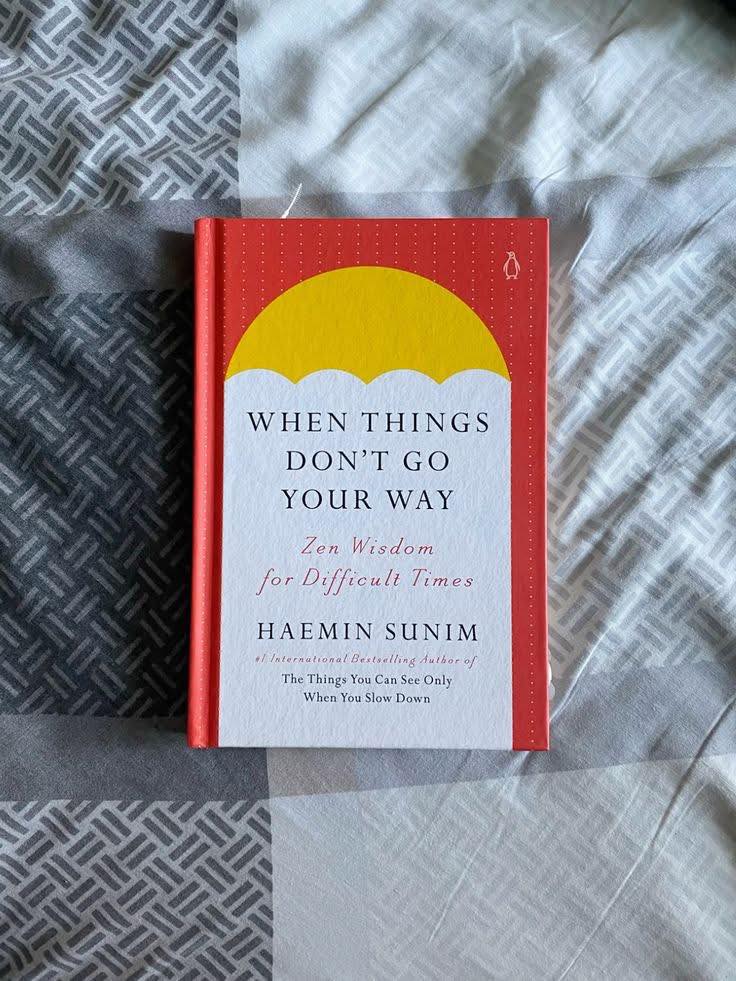
Summary of When Things Don’t Go Your Way: Zen Wisdom for Difficult Times by Haemin Sunim:
⸻
Core Idea
Life will not always go as planned—pain, loss, failure, and uncertainty are unavoidable. But we can choose our response. With mindfulness and compassion, even hardship can become a teacher.
⸻
Key Lessons
1. Pain is part of being human
• Suffering comes from resisting what is.
• Accept difficulties as natural instead of seeing them as personal punishment.
2. Slow down, breathe, observe
• When upset, don’t react immediately.
• Pause, watch your thoughts like clouds passing, and let emotions settle.
3. Reframe setbacks as opportunities
• Failures are not dead-ends but new directions.
• Ask: “What can this teach me?”
4. Be kind to yourself
• Self-compassion is the foundation of resilience.
• Treat mistakes the way you’d comfort a friend.
5. Detach from expectations
• Much suffering comes from clinging to how life “should” be.
• Let go, and flow with what actually is.
6. Relationships matter more than being right
• Forgiveness, listening, and empathy heal conflicts faster than winning arguments.
7. Practice gratitude in small things
• Even in crisis, notice one thing to be grateful for—it shifts your energy.
⸻
Practical Takeaways
• Meditate daily for even 5 minutes to train your mind.
• Journal about one lesson from each hardship.
• When angry, breathe three times before speaking.
• Before sleeping, list 3 things you’re grateful for.
• Shift inner talk from “Why me?” to “What’s next?”
⸻
Core Idea
Life will not always go as planned—pain, loss, failure, and uncertainty are unavoidable. But we can choose our response. With mindfulness and compassion, even hardship can become a teacher.
⸻
Key Lessons
1. Pain is part of being human
• Suffering comes from resisting what is.
• Accept difficulties as natural instead of seeing them as personal punishment.
2. Slow down, breathe, observe
• When upset, don’t react immediately.
• Pause, watch your thoughts like clouds passing, and let emotions settle.
3. Reframe setbacks as opportunities
• Failures are not dead-ends but new directions.
• Ask: “What can this teach me?”
4. Be kind to yourself
• Self-compassion is the foundation of resilience.
• Treat mistakes the way you’d comfort a friend.
5. Detach from expectations
• Much suffering comes from clinging to how life “should” be.
• Let go, and flow with what actually is.
6. Relationships matter more than being right
• Forgiveness, listening, and empathy heal conflicts faster than winning arguments.
7. Practice gratitude in small things
• Even in crisis, notice one thing to be grateful for—it shifts your energy.
⸻
Practical Takeaways
• Meditate daily for even 5 minutes to train your mind.
• Journal about one lesson from each hardship.
• When angry, breathe three times before speaking.
• Before sleeping, list 3 things you’re grateful for.
• Shift inner talk from “Why me?” to “What’s next?”
Summary of When Things Don’t Go Your Way: Zen Wisdom for Difficult Times by Haemin Sunim:
⸻
Core Idea
Life will not always go as planned—pain, loss, failure, and uncertainty are unavoidable. But we can choose our response. With mindfulness and compassion, even hardship can become a teacher.
⸻
Key Lessons
1. Pain is part of being human
• Suffering comes from resisting what is.
• Accept difficulties as natural instead of seeing them as personal punishment.
2. Slow down, breathe, observe
• When upset, don’t react immediately.
• Pause, watch your thoughts like clouds passing, and let emotions settle.
3. Reframe setbacks as opportunities
• Failures are not dead-ends but new directions.
• Ask: “What can this teach me?”
4. Be kind to yourself
• Self-compassion is the foundation of resilience.
• Treat mistakes the way you’d comfort a friend.
5. Detach from expectations
• Much suffering comes from clinging to how life “should” be.
• Let go, and flow with what actually is.
6. Relationships matter more than being right
• Forgiveness, listening, and empathy heal conflicts faster than winning arguments.
7. Practice gratitude in small things
• Even in crisis, notice one thing to be grateful for—it shifts your energy.
⸻
Practical Takeaways
• Meditate daily for even 5 minutes to train your mind.
• Journal about one lesson from each hardship.
• When angry, breathe three times before speaking.
• Before sleeping, list 3 things you’re grateful for.
• Shift inner talk from “Why me?” to “What’s next?”
0 Comments
0 Shares
92 Views