


The 8 Kinds of You – Understanding Yourself and Others Around You
Have you ever noticed how you don’t feel or act the same every day? Sometimes you are calm and peaceful, other times you feel angry or jealous, and sometimes you feel happy or deeply in love. At other times, you may be stressed, anxious, or even panicking. It almost feels like there are many versions of you living inside the same body.
Science actually supports this idea. Your body and brain change depending on your emotions and hormones. These invisible forces can completely change the way you think, the way you speak, and the way you treat people.
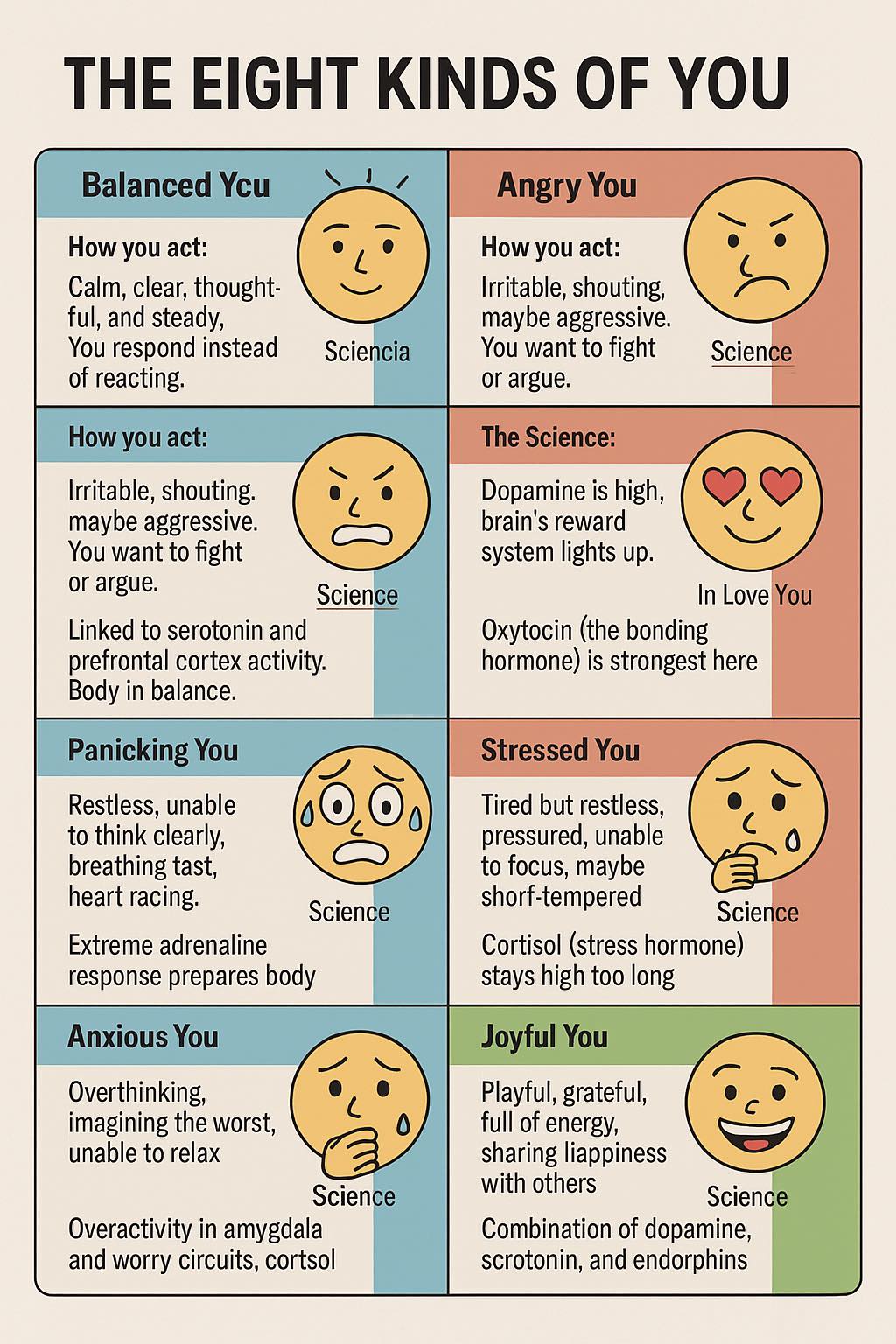
To understand yourself and others better, let’s look at the Eight Kinds of YOU.
⸻
1. Balanced You
• How you act: Calm, wise, peaceful, thoughtful. You respond instead of reacting.
• How others act: Respectful, patient, and easy to talk to.
• Why this may be happening: Good rest, healthy lifestyle, gratitude, and a peaceful environment.
• Science: Balanced by serotonin (the calm hormone). The prefrontal cortex (logic brain) is in control.
• How you should act when others are in this state: Appreciate their calmness, listen to them, and work with them. Balanced people are role models—learn from them.
• How you should act when you are in this state: Stay consistent. Use your balance to make important decisions, resolve conflicts, and support others.
⸻
2. Angry You
• How you act: Shouting, snapping, arguing, saying things you regret.
• How others act: Defensive, scared, or aggressive. Some may withdraw.
• Why this may be happening: Frustration, unmet needs, disrespect, or built-up stress.
• Science: Adrenaline and cortisol flood your body. The amygdala (alarm system) takes over.
• How you should act when others are in this state: Stay calm. Don’t shout back. Give them space, listen if safe, and wait until they cool down.
• How you should act when you are in this state: Pause before reacting. Take deep breaths, drink water, or step away. Speak only when calmer, so you don’t hurt others.
⸻
3. Happy You
• How you act: Smiling, laughing, positive, creative, motivated.
• How others act: Friendly, inspiring, and uplifting. They spread good vibes.
• Why this may be happening: Achieving goals, enjoying fun activities, connecting with loved ones.
• Science: Driven by dopamine, the reward chemical.
• How you should act when others are in this state: Celebrate with them. Share their happiness and let their energy inspire you.
• How you should act when you are in this state: Use the energy wisely. Work on your goals, spread positivity, and encourage others.
⸻
4. In Love You
• How you act: Caring, forgiving, deeply connected, trusting.
• How others act: Dreamy, generous, protective, sometimes blind to flaws.
• Why this may be happening: Bonding with family, friends, or a partner.
• Science: Powered by oxytocin, the bonding hormone.
• How you should act when others are in this state: Respect their feelings. Encourage healthy love and remind them to keep balance.
• How you should act when you are in this state: Enjoy the closeness, but stay grounded. Don’t lose yourself—keep your balance and responsibilities.
⸻
5. Jealous You
• How you act: Comparing yourself, insecure, maybe gossiping or overcompeting.
• How others act: Distant, unfriendly, critical, or overly competitive.
• Why this may be happening: Fear of losing importance, low self-esteem, constant comparisons.
• Science: Mix of dopamine (desire) and cortisol (stress).
• How you should act when others are in this state: Don’t attack them. Reassure them, show kindness, and avoid fueling competition.
• How you should act when you are in this state: Remind yourself that everyone has their own journey. Practice gratitude for what you have. Turn jealousy into motivation instead of bitterness.
⸻
6. Panicking You
• How you act: Heart racing, restless, frozen, unable to think.
• How others act: Shouting, crying, or completely shutting down.
• Why this may be happening: Exams, stage fear, emergencies, sudden bad news.
• Science: Caused by a surge of adrenaline. Body prepares for fight-or-flight.
• How you should act when others are in this state: Stay calm for them. Offer reassurance, speak slowly, and help them breathe or feel safe.
• How you should act when you are in this state: Focus on slow breathing. Remind yourself the danger may not be real. Take small steps to regain control.
⸻
7. Stressed You
• How you act: Pressured, restless, distracted, short-tempered.
• How others act: Complaining, avoiding responsibilities, or seeming very serious.
• Why this may be happening: Overwork, family pressure, money problems, or lack of rest.
• Science: Driven by cortisol. Prolonged stress harms health, sleep, and immunity.
• How you should act when others are in this state: Be understanding. Don’t add more pressure. Offer help, encouragement, or simply a listening ear.
• How you should act when you are in this state: Prioritize rest. Break tasks into smaller steps. Practice relaxation (prayer, meditation, deep breathing, or a walk).
⸻
8. Anxious You
• How you act: Overthinking, imagining the worst, worrying constantly.
• How others act: Restless, hesitant, seeking reassurance, or avoiding situations.
• Why this may be happening: Fear of failure, uncertainty, low confidence, past trauma.
• Science: Overactive amygdala keeps cortisol high. Body feels unsafe.
• How you should act when others are in this state: Be patient. Don’t dismiss their fears. Support them gently and offer comfort.
• How you should act when you are in this state: Ground yourself in the present moment. Write down your worries, talk to someone you trust, and practice calming techniques.
⸻
What Are Hormones?
Hormones are chemical messengers in your body. They travel through your blood and tell your brain and organs how to behave.
• Cortisol: Stress hormone. Too much damages health.
• Adrenaline: Emergency hormone. Gives sudden energy.
• Dopamine: Reward hormone. Boosts motivation and excitement.
• Oxytocin: Love hormone. Builds bonding and trust.
• Serotonin: Calm hormone. Keeps balance and peace.
⸻
The Big Life Lesson
Every one of us experiences all these YOU’s. None of them are “bad.” They are simply natural responses to life. But wisdom is knowing:
Which YOU is active in me right now? Which YOU is active in others? And how can I guide myself or support them back to Balanced You?
When you are balanced, your mind is clear, your body is calm, and your choices are wise. That is the state of leadership, growth, and healthy relationships.
⸻
Emotions are not enemies. They are signals. Learn to recognize them, guide them, and return to balance. When you do, you not only understand yourself better — you also understand the people around you.
Have you ever noticed how you don’t feel or act the same every day? Sometimes you are calm and peaceful, other times you feel angry or jealous, and sometimes you feel happy or deeply in love. At other times, you may be stressed, anxious, or even panicking. It almost feels like there are many versions of you living inside the same body.
Science actually supports this idea. Your body and brain change depending on your emotions and hormones. These invisible forces can completely change the way you think, the way you speak, and the way you treat people.
To understand yourself and others better, let’s look at the Eight Kinds of YOU.
⸻
1. Balanced You
• How you act: Calm, wise, peaceful, thoughtful. You respond instead of reacting.
• How others act: Respectful, patient, and easy to talk to.
• Why this may be happening: Good rest, healthy lifestyle, gratitude, and a peaceful environment.
• Science: Balanced by serotonin (the calm hormone). The prefrontal cortex (logic brain) is in control.
• How you should act when others are in this state: Appreciate their calmness, listen to them, and work with them. Balanced people are role models—learn from them.
• How you should act when you are in this state: Stay consistent. Use your balance to make important decisions, resolve conflicts, and support others.
⸻
2. Angry You
• How you act: Shouting, snapping, arguing, saying things you regret.
• How others act: Defensive, scared, or aggressive. Some may withdraw.
• Why this may be happening: Frustration, unmet needs, disrespect, or built-up stress.
• Science: Adrenaline and cortisol flood your body. The amygdala (alarm system) takes over.
• How you should act when others are in this state: Stay calm. Don’t shout back. Give them space, listen if safe, and wait until they cool down.
• How you should act when you are in this state: Pause before reacting. Take deep breaths, drink water, or step away. Speak only when calmer, so you don’t hurt others.
⸻
3. Happy You
• How you act: Smiling, laughing, positive, creative, motivated.
• How others act: Friendly, inspiring, and uplifting. They spread good vibes.
• Why this may be happening: Achieving goals, enjoying fun activities, connecting with loved ones.
• Science: Driven by dopamine, the reward chemical.
• How you should act when others are in this state: Celebrate with them. Share their happiness and let their energy inspire you.
• How you should act when you are in this state: Use the energy wisely. Work on your goals, spread positivity, and encourage others.
⸻
4. In Love You
• How you act: Caring, forgiving, deeply connected, trusting.
• How others act: Dreamy, generous, protective, sometimes blind to flaws.
• Why this may be happening: Bonding with family, friends, or a partner.
• Science: Powered by oxytocin, the bonding hormone.
• How you should act when others are in this state: Respect their feelings. Encourage healthy love and remind them to keep balance.
• How you should act when you are in this state: Enjoy the closeness, but stay grounded. Don’t lose yourself—keep your balance and responsibilities.
⸻
5. Jealous You
• How you act: Comparing yourself, insecure, maybe gossiping or overcompeting.
• How others act: Distant, unfriendly, critical, or overly competitive.
• Why this may be happening: Fear of losing importance, low self-esteem, constant comparisons.
• Science: Mix of dopamine (desire) and cortisol (stress).
• How you should act when others are in this state: Don’t attack them. Reassure them, show kindness, and avoid fueling competition.
• How you should act when you are in this state: Remind yourself that everyone has their own journey. Practice gratitude for what you have. Turn jealousy into motivation instead of bitterness.
⸻
6. Panicking You
• How you act: Heart racing, restless, frozen, unable to think.
• How others act: Shouting, crying, or completely shutting down.
• Why this may be happening: Exams, stage fear, emergencies, sudden bad news.
• Science: Caused by a surge of adrenaline. Body prepares for fight-or-flight.
• How you should act when others are in this state: Stay calm for them. Offer reassurance, speak slowly, and help them breathe or feel safe.
• How you should act when you are in this state: Focus on slow breathing. Remind yourself the danger may not be real. Take small steps to regain control.
⸻
7. Stressed You
• How you act: Pressured, restless, distracted, short-tempered.
• How others act: Complaining, avoiding responsibilities, or seeming very serious.
• Why this may be happening: Overwork, family pressure, money problems, or lack of rest.
• Science: Driven by cortisol. Prolonged stress harms health, sleep, and immunity.
• How you should act when others are in this state: Be understanding. Don’t add more pressure. Offer help, encouragement, or simply a listening ear.
• How you should act when you are in this state: Prioritize rest. Break tasks into smaller steps. Practice relaxation (prayer, meditation, deep breathing, or a walk).
⸻
8. Anxious You
• How you act: Overthinking, imagining the worst, worrying constantly.
• How others act: Restless, hesitant, seeking reassurance, or avoiding situations.
• Why this may be happening: Fear of failure, uncertainty, low confidence, past trauma.
• Science: Overactive amygdala keeps cortisol high. Body feels unsafe.
• How you should act when others are in this state: Be patient. Don’t dismiss their fears. Support them gently and offer comfort.
• How you should act when you are in this state: Ground yourself in the present moment. Write down your worries, talk to someone you trust, and practice calming techniques.
⸻
What Are Hormones?
Hormones are chemical messengers in your body. They travel through your blood and tell your brain and organs how to behave.
• Cortisol: Stress hormone. Too much damages health.
• Adrenaline: Emergency hormone. Gives sudden energy.
• Dopamine: Reward hormone. Boosts motivation and excitement.
• Oxytocin: Love hormone. Builds bonding and trust.
• Serotonin: Calm hormone. Keeps balance and peace.
⸻
The Big Life Lesson
Every one of us experiences all these YOU’s. None of them are “bad.” They are simply natural responses to life. But wisdom is knowing:
Which YOU is active in me right now? Which YOU is active in others? And how can I guide myself or support them back to Balanced You?
When you are balanced, your mind is clear, your body is calm, and your choices are wise. That is the state of leadership, growth, and healthy relationships.
⸻
Emotions are not enemies. They are signals. Learn to recognize them, guide them, and return to balance. When you do, you not only understand yourself better — you also understand the people around you.
🌟 The 8 Kinds of You – Understanding Yourself and Others Around You
Have you ever noticed how you don’t feel or act the same every day? Sometimes you are calm and peaceful, other times you feel angry or jealous, and sometimes you feel happy or deeply in love. At other times, you may be stressed, anxious, or even panicking. It almost feels like there are many versions of you living inside the same body.
Science actually supports this idea. Your body and brain change depending on your emotions and hormones. These invisible forces can completely change the way you think, the way you speak, and the way you treat people.
To understand yourself and others better, let’s look at the Eight Kinds of YOU.
⸻
1. Balanced You
• How you act: Calm, wise, peaceful, thoughtful. You respond instead of reacting.
• How others act: Respectful, patient, and easy to talk to.
• Why this may be happening: Good rest, healthy lifestyle, gratitude, and a peaceful environment.
• Science: Balanced by serotonin (the calm hormone). The prefrontal cortex (logic brain) is in control.
• How you should act when others are in this state: Appreciate their calmness, listen to them, and work with them. Balanced people are role models—learn from them.
• How you should act when you are in this state: Stay consistent. Use your balance to make important decisions, resolve conflicts, and support others.
⸻
2. Angry You
• How you act: Shouting, snapping, arguing, saying things you regret.
• How others act: Defensive, scared, or aggressive. Some may withdraw.
• Why this may be happening: Frustration, unmet needs, disrespect, or built-up stress.
• Science: Adrenaline and cortisol flood your body. The amygdala (alarm system) takes over.
• How you should act when others are in this state: Stay calm. Don’t shout back. Give them space, listen if safe, and wait until they cool down.
• How you should act when you are in this state: Pause before reacting. Take deep breaths, drink water, or step away. Speak only when calmer, so you don’t hurt others.
⸻
3. Happy You
• How you act: Smiling, laughing, positive, creative, motivated.
• How others act: Friendly, inspiring, and uplifting. They spread good vibes.
• Why this may be happening: Achieving goals, enjoying fun activities, connecting with loved ones.
• Science: Driven by dopamine, the reward chemical.
• How you should act when others are in this state: Celebrate with them. Share their happiness and let their energy inspire you.
• How you should act when you are in this state: Use the energy wisely. Work on your goals, spread positivity, and encourage others.
⸻
4. In Love You
• How you act: Caring, forgiving, deeply connected, trusting.
• How others act: Dreamy, generous, protective, sometimes blind to flaws.
• Why this may be happening: Bonding with family, friends, or a partner.
• Science: Powered by oxytocin, the bonding hormone.
• How you should act when others are in this state: Respect their feelings. Encourage healthy love and remind them to keep balance.
• How you should act when you are in this state: Enjoy the closeness, but stay grounded. Don’t lose yourself—keep your balance and responsibilities.
⸻
5. Jealous You
• How you act: Comparing yourself, insecure, maybe gossiping or overcompeting.
• How others act: Distant, unfriendly, critical, or overly competitive.
• Why this may be happening: Fear of losing importance, low self-esteem, constant comparisons.
• Science: Mix of dopamine (desire) and cortisol (stress).
• How you should act when others are in this state: Don’t attack them. Reassure them, show kindness, and avoid fueling competition.
• How you should act when you are in this state: Remind yourself that everyone has their own journey. Practice gratitude for what you have. Turn jealousy into motivation instead of bitterness.
⸻
6. Panicking You
• How you act: Heart racing, restless, frozen, unable to think.
• How others act: Shouting, crying, or completely shutting down.
• Why this may be happening: Exams, stage fear, emergencies, sudden bad news.
• Science: Caused by a surge of adrenaline. Body prepares for fight-or-flight.
• How you should act when others are in this state: Stay calm for them. Offer reassurance, speak slowly, and help them breathe or feel safe.
• How you should act when you are in this state: Focus on slow breathing. Remind yourself the danger may not be real. Take small steps to regain control.
⸻
7. Stressed You
• How you act: Pressured, restless, distracted, short-tempered.
• How others act: Complaining, avoiding responsibilities, or seeming very serious.
• Why this may be happening: Overwork, family pressure, money problems, or lack of rest.
• Science: Driven by cortisol. Prolonged stress harms health, sleep, and immunity.
• How you should act when others are in this state: Be understanding. Don’t add more pressure. Offer help, encouragement, or simply a listening ear.
• How you should act when you are in this state: Prioritize rest. Break tasks into smaller steps. Practice relaxation (prayer, meditation, deep breathing, or a walk).
⸻
8. Anxious You
• How you act: Overthinking, imagining the worst, worrying constantly.
• How others act: Restless, hesitant, seeking reassurance, or avoiding situations.
• Why this may be happening: Fear of failure, uncertainty, low confidence, past trauma.
• Science: Overactive amygdala keeps cortisol high. Body feels unsafe.
• How you should act when others are in this state: Be patient. Don’t dismiss their fears. Support them gently and offer comfort.
• How you should act when you are in this state: Ground yourself in the present moment. Write down your worries, talk to someone you trust, and practice calming techniques.
⸻
🧠 What Are Hormones?
Hormones are chemical messengers in your body. They travel through your blood and tell your brain and organs how to behave.
• Cortisol: Stress hormone. Too much damages health.
• Adrenaline: Emergency hormone. Gives sudden energy.
• Dopamine: Reward hormone. Boosts motivation and excitement.
• Oxytocin: Love hormone. Builds bonding and trust.
• Serotonin: Calm hormone. Keeps balance and peace.
⸻
🌍 The Big Life Lesson
Every one of us experiences all these YOU’s. None of them are “bad.” They are simply natural responses to life. But wisdom is knowing:
👉 Which YOU is active in me right now? Which YOU is active in others? And how can I guide myself or support them back to Balanced You?
When you are balanced, your mind is clear, your body is calm, and your choices are wise. That is the state of leadership, growth, and healthy relationships.
⸻
✨ Emotions are not enemies. They are signals. Learn to recognize them, guide them, and return to balance. When you do, you not only understand yourself better — you also understand the people around you.
0 Commenti
0 condivisioni
146 Views