


The Birth of NIVEA Creme (1911–1931)
Hamburg, Germany, 1890s
A young pharmacist named Oscar Troplowitz had just taken over a small but promising laboratory founded by Paul Beiersdorf. Hamburg was bustling with trade, science, and new ideas. Troplowitz wasn’t just a pharmacist — he was an entrepreneur with an eye for opportunity.
At that time, creams existed, but they were unreliable. They separated into oily puddles in summer and froze stiff in winter. Ladies in Berlin, Paris, or Buenos Aires could not depend on them. There was no truly modern skincare product.
⸻
The Breakthrough: A Chemist’s Secret
Enter Isaac Lifschütz, a brilliant but eccentric chemist. He had developed something radical: Eucerit — a stable emulsifier made from lanolin (sheep’s wool fat). This ingredient could keep oil and water bound together, smooth and creamy, through heat and cold, across continents.
Troplowitz immediately recognized its potential. He brought in Professor Paul Gerson Unna, one of Germany’s most respected dermatologists, to refine the formula. Together, they blended glycerin, oils, fragrance — and Lifschütz’s Eucerit.
The result was a cream unlike anything before: smooth, snow-white, velvety, and stable.
⸻
1911: A Tin of Snow
In December 1911, Beiersdorf launched the product. They named it NIVEA, from the Latin nix, nivis — “snow.” The name captured its whiteness and purity.
The packaging was just as daring as the formula. Instead of fragile jars, Troplowitz invested in custom machinery to fill and seal aluminum tins. This kept the cream fresh during shipping and gave it a modern, industrial feel.
Hamburg dockworkers soon noticed small blue-gray tins leaving for Buenos Aires, Sydney, New York. In just three years, NIVEA Creme was on shelves in every corner of the world.
⸻
War and Survival (1914–1918)
World War I almost killed the dream. Global trade routes broke down. Raw materials grew scarce. Yet Troplowitz’s foresight — establishing affiliates abroad early — meant that NIVEA survived where other European brands collapsed. Even during wartime, women and men held on to their little tins of “snow cream.”
⸻
The Roaring 1920s: Identity and Expansion
By the 1920s, NIVEA was already an international brand. But branding was inconsistent. The tins had Art Nouveau designs with flowers and cherubs. Pretty — but not timeless.
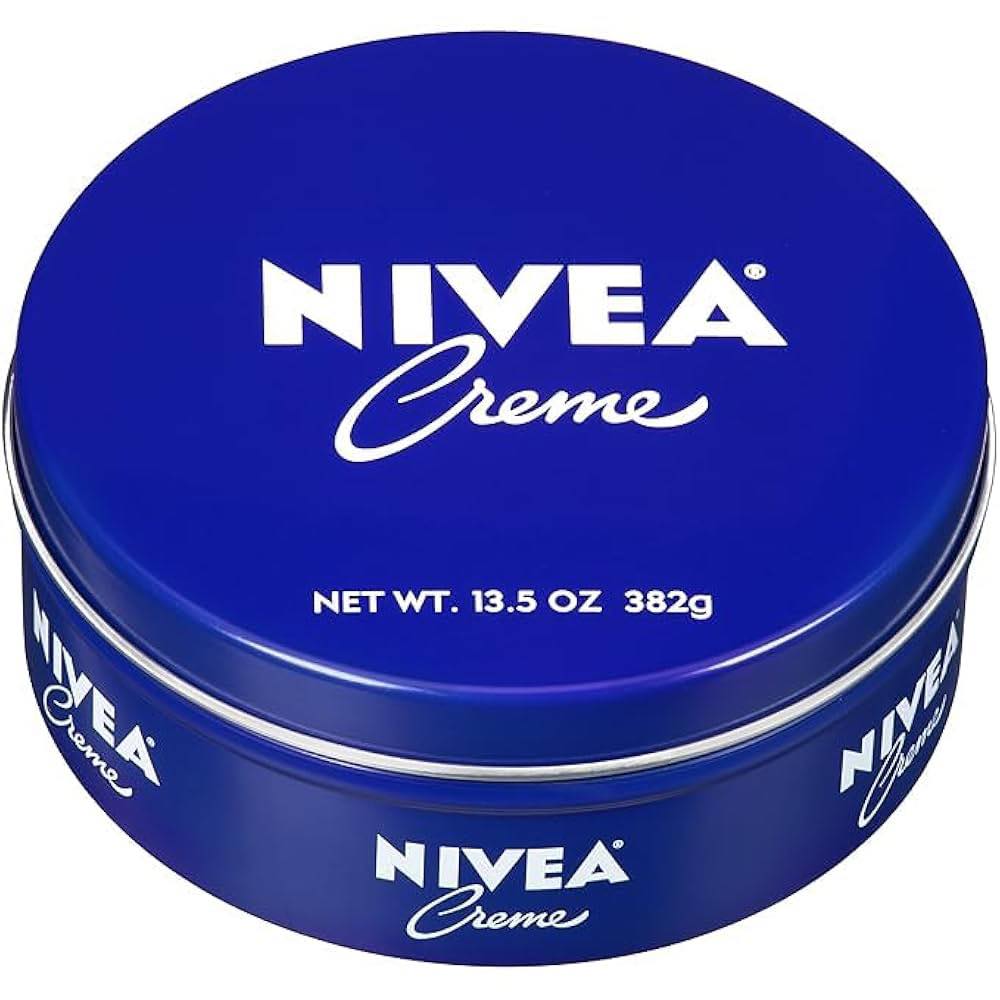
In 1925, the company made a bold move: a clean blue tin with white block letters. This minimalist look was modern, universal, and unforgettable. It was a branding masterstroke.
At the same time, NIVEA expanded beyond the original cream:
• 1922–1928: shaving soap, hair tonics, sun-care lotions.
• Advertisements targeted not just women but also men, children, athletes. NIVEA became a “family brand” before the term existed.
⸻
By 1931: A Global Household Name
In just twenty years, NIVEA Creme had gone from a risky experiment in a Hamburg lab to one of the first true global consumer brands. Its success was built on three pillars:
1. Scientific breakthrough (Eucerit, the stable emulsion).
2. Entrepreneurial vision (Troplowitz’s global expansion, tin packaging).
3. Branding genius (the simple name, the blue tin).
Even a century later, the same formula, the same blue tin, and the same snow-white cream remain — proof of how powerful those first 20 years were.
Hamburg, Germany, 1890s
A young pharmacist named Oscar Troplowitz had just taken over a small but promising laboratory founded by Paul Beiersdorf. Hamburg was bustling with trade, science, and new ideas. Troplowitz wasn’t just a pharmacist — he was an entrepreneur with an eye for opportunity.
At that time, creams existed, but they were unreliable. They separated into oily puddles in summer and froze stiff in winter. Ladies in Berlin, Paris, or Buenos Aires could not depend on them. There was no truly modern skincare product.
⸻
The Breakthrough: A Chemist’s Secret
Enter Isaac Lifschütz, a brilliant but eccentric chemist. He had developed something radical: Eucerit — a stable emulsifier made from lanolin (sheep’s wool fat). This ingredient could keep oil and water bound together, smooth and creamy, through heat and cold, across continents.
Troplowitz immediately recognized its potential. He brought in Professor Paul Gerson Unna, one of Germany’s most respected dermatologists, to refine the formula. Together, they blended glycerin, oils, fragrance — and Lifschütz’s Eucerit.
The result was a cream unlike anything before: smooth, snow-white, velvety, and stable.
⸻
1911: A Tin of Snow
In December 1911, Beiersdorf launched the product. They named it NIVEA, from the Latin nix, nivis — “snow.” The name captured its whiteness and purity.
The packaging was just as daring as the formula. Instead of fragile jars, Troplowitz invested in custom machinery to fill and seal aluminum tins. This kept the cream fresh during shipping and gave it a modern, industrial feel.
Hamburg dockworkers soon noticed small blue-gray tins leaving for Buenos Aires, Sydney, New York. In just three years, NIVEA Creme was on shelves in every corner of the world.
⸻
War and Survival (1914–1918)
World War I almost killed the dream. Global trade routes broke down. Raw materials grew scarce. Yet Troplowitz’s foresight — establishing affiliates abroad early — meant that NIVEA survived where other European brands collapsed. Even during wartime, women and men held on to their little tins of “snow cream.”
⸻
The Roaring 1920s: Identity and Expansion
By the 1920s, NIVEA was already an international brand. But branding was inconsistent. The tins had Art Nouveau designs with flowers and cherubs. Pretty — but not timeless.
In 1925, the company made a bold move: a clean blue tin with white block letters. This minimalist look was modern, universal, and unforgettable. It was a branding masterstroke.
At the same time, NIVEA expanded beyond the original cream:
• 1922–1928: shaving soap, hair tonics, sun-care lotions.
• Advertisements targeted not just women but also men, children, athletes. NIVEA became a “family brand” before the term existed.
⸻
By 1931: A Global Household Name
In just twenty years, NIVEA Creme had gone from a risky experiment in a Hamburg lab to one of the first true global consumer brands. Its success was built on three pillars:
1. Scientific breakthrough (Eucerit, the stable emulsion).
2. Entrepreneurial vision (Troplowitz’s global expansion, tin packaging).
3. Branding genius (the simple name, the blue tin).
Even a century later, the same formula, the same blue tin, and the same snow-white cream remain — proof of how powerful those first 20 years were.
🌿 The Birth of NIVEA Creme (1911–1931)
Hamburg, Germany, 1890s
A young pharmacist named Oscar Troplowitz had just taken over a small but promising laboratory founded by Paul Beiersdorf. Hamburg was bustling with trade, science, and new ideas. Troplowitz wasn’t just a pharmacist — he was an entrepreneur with an eye for opportunity.
At that time, creams existed, but they were unreliable. They separated into oily puddles in summer and froze stiff in winter. Ladies in Berlin, Paris, or Buenos Aires could not depend on them. There was no truly modern skincare product.
⸻
The Breakthrough: A Chemist’s Secret
Enter Isaac Lifschütz, a brilliant but eccentric chemist. He had developed something radical: Eucerit — a stable emulsifier made from lanolin (sheep’s wool fat). This ingredient could keep oil and water bound together, smooth and creamy, through heat and cold, across continents.
Troplowitz immediately recognized its potential. He brought in Professor Paul Gerson Unna, one of Germany’s most respected dermatologists, to refine the formula. Together, they blended glycerin, oils, fragrance — and Lifschütz’s Eucerit.
The result was a cream unlike anything before: smooth, snow-white, velvety, and stable.
⸻
1911: A Tin of Snow
In December 1911, Beiersdorf launched the product. They named it NIVEA, from the Latin nix, nivis — “snow.” The name captured its whiteness and purity.
The packaging was just as daring as the formula. Instead of fragile jars, Troplowitz invested in custom machinery to fill and seal aluminum tins. This kept the cream fresh during shipping and gave it a modern, industrial feel.
Hamburg dockworkers soon noticed small blue-gray tins leaving for Buenos Aires, Sydney, New York. In just three years, NIVEA Creme was on shelves in every corner of the world.
⸻
War and Survival (1914–1918)
World War I almost killed the dream. Global trade routes broke down. Raw materials grew scarce. Yet Troplowitz’s foresight — establishing affiliates abroad early — meant that NIVEA survived where other European brands collapsed. Even during wartime, women and men held on to their little tins of “snow cream.”
⸻
The Roaring 1920s: Identity and Expansion
By the 1920s, NIVEA was already an international brand. But branding was inconsistent. The tins had Art Nouveau designs with flowers and cherubs. Pretty — but not timeless.
In 1925, the company made a bold move: a clean blue tin with white block letters. This minimalist look was modern, universal, and unforgettable. It was a branding masterstroke.
At the same time, NIVEA expanded beyond the original cream:
• 1922–1928: shaving soap, hair tonics, sun-care lotions.
• Advertisements targeted not just women but also men, children, athletes. NIVEA became a “family brand” before the term existed.
⸻
By 1931: A Global Household Name
In just twenty years, NIVEA Creme had gone from a risky experiment in a Hamburg lab to one of the first true global consumer brands. Its success was built on three pillars:
1. Scientific breakthrough (Eucerit, the stable emulsion).
2. Entrepreneurial vision (Troplowitz’s global expansion, tin packaging).
3. Branding genius (the simple name, the blue tin).
Even a century later, the same formula, the same blue tin, and the same snow-white cream remain — proof of how powerful those first 20 years were.
0 تبصرے
0 شیئرز
467 ویوز