


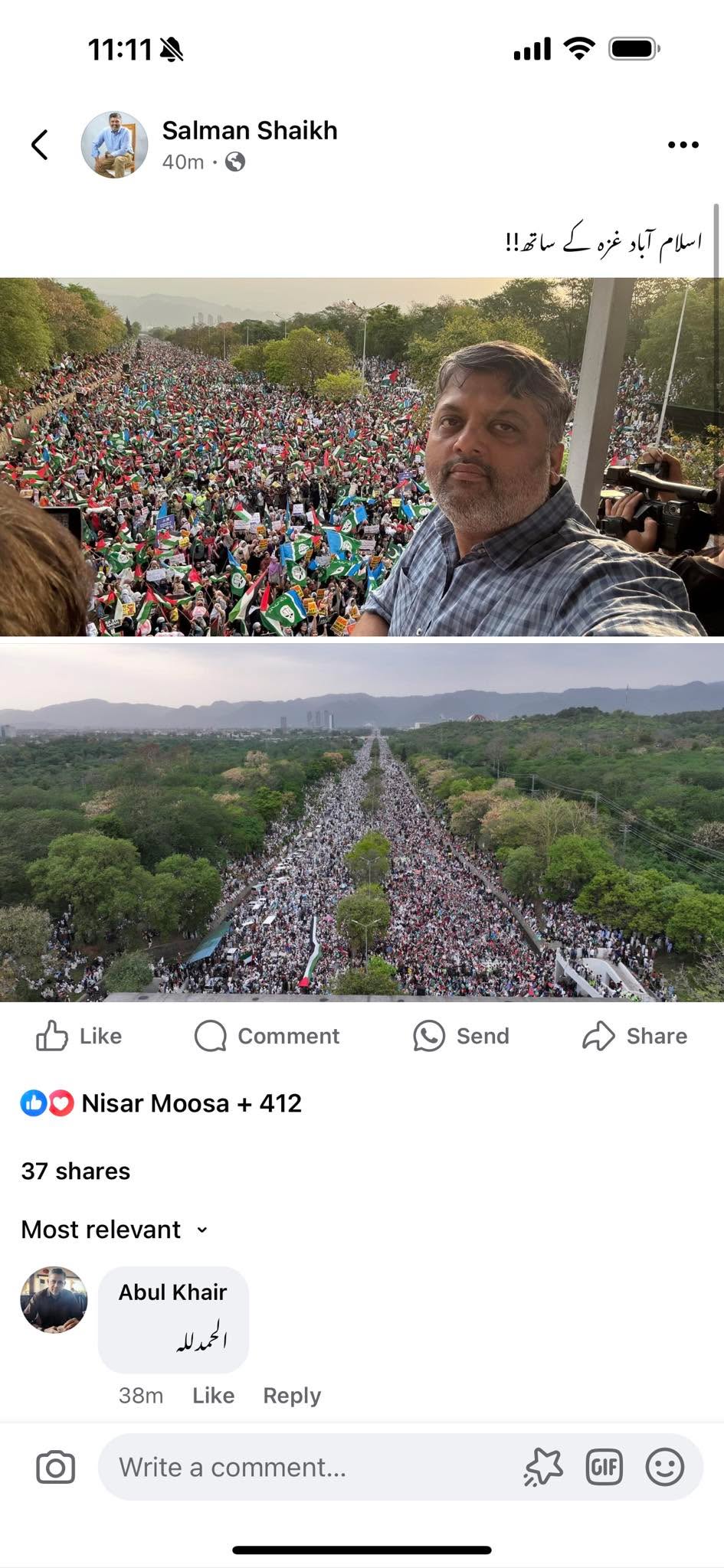
To everyone who raised their voice for Gaza in Islamabad—
Your march was powerful. The unity, the emotion, the sea of people—it sent a wave of hope across the world.
But now comes a deeper challenge.
Protesting on our streets won’t influence the decisions being made in Tel Aviv or Washington. The people making those decisions aren’t watching our rallies. They are scrolling through social media, listening to influencers, reading messages—in their own languages, on their own platforms.
If we want real impact, we must evolve our efforts. We must speak to the people who hold power—not with anger, but with truth, connection, and compassion.
Here’s what we can start doing today:
1. Use Twitter, Facebook, LinkedIn—not just for posts, but for thoughtful conversations.
2. Connect with ordinary people inside Israel. Speak with those who believe in justice. Ask questions, share stories, listen.
3. Find Jewish allies around the world who already stand for peace—and build bridges with them.
4. Reach out to American and Israeli politicians, journalists, and influencers.
Tag them. Message them. Ask them: “Do you know what’s happening in Gaza?”
Show them what we see. Speak calmly, but clearly.
5. Form small digital teams. Each team chooses one congressperson, one journalist, and one influencer to engage respectfully and consistently.
6. Need help doing this? Ask ChatGPT.
You can say:
• “Help me find names of U.S. senators supporting Palestine.”
• “Give me talking points to message an Israeli influencer.”
• “Suggest a polite message to raise awareness.”
This is not just a tool—it’s your assistant for peace-building.
This is not about shouting louder.
It’s about being heard in the right rooms, in the right way.
Let our voices rise on the streets—but also echo in hearts and minds across the world.
Don’t just raise your voice. Make sure it reaches.
#Gaza
#SpeakForJustice
#SocialMediaForPeace
#DigitalAwareness
#ChatGPTForHumanity
To everyone who raised their voice for Gaza in Islamabad—
Your march was powerful. The unity, the emotion, the sea of people—it sent a wave of hope across the world.
But now comes a deeper challenge.
Protesting on our streets won’t influence the decisions being made in Tel Aviv or Washington. The people making those decisions aren’t watching our rallies. They are scrolling through social media, listening to influencers, reading messages—in their own languages, on their own platforms.
If we want real impact, we must evolve our efforts. We must speak to the people who hold power—not with anger, but with truth, connection, and compassion.
Here’s what we can start doing today:
1. Use Twitter, Facebook, LinkedIn—not just for posts, but for thoughtful conversations.
2. Connect with ordinary people inside Israel. Speak with those who believe in justice. Ask questions, share stories, listen.
3. Find Jewish allies around the world who already stand for peace—and build bridges with them.
4. Reach out to American and Israeli politicians, journalists, and influencers.
Tag them. Message them. Ask them: “Do you know what’s happening in Gaza?”
Show them what we see. Speak calmly, but clearly.
5. Form small digital teams. Each team chooses one congressperson, one journalist, and one influencer to engage respectfully and consistently.
6. Need help doing this? Ask ChatGPT.
You can say:
• “Help me find names of U.S. senators supporting Palestine.”
• “Give me talking points to message an Israeli influencer.”
• “Suggest a polite message to raise awareness.”
This is not just a tool—it’s your assistant for peace-building.
This is not about shouting louder.
It’s about being heard in the right rooms, in the right way.
Let our voices rise on the streets—but also echo in hearts and minds across the world.
Don’t just raise your voice. Make sure it reaches.
#Gaza
#SpeakForJustice
#SocialMediaForPeace
#DigitalAwareness
#ChatGPTForHumanity
0 Yorumlar
0 hisse senetleri
26 Views