


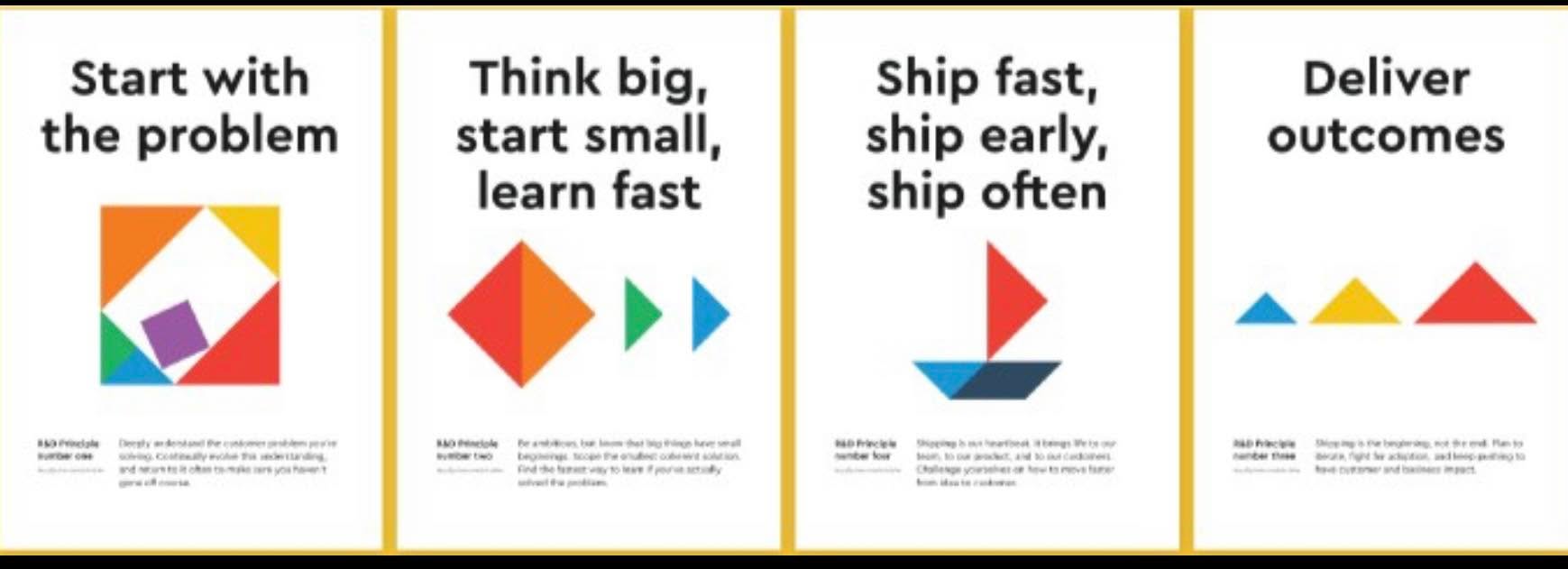
The principles in the image align well with the Rehan School curriculum, especially in how students learn, create, and apply knowledge. Here’s how:
1. Start with the problem → Focus on real-world learning
• At Rehan School, students learn by solving real-life problems. Instead of memorizing facts, they understand challenges in their community, business, or technology and find ways to solve them.
• Example: If students want to improve their English, they don’t just study grammar; they identify why they struggle and work on practical solutions like speaking practice and using AI tools.
2. Think big, start small, learn fast → Progressive learning with technology
• Students at Rehan School aim for big goals (like becoming entrepreneurs or tech experts) but start with small, practical steps.
• Example: Instead of waiting to be fluent in English before speaking, students start talking from day one using tools like Alexa, YouTube, and Callany.ai. They learn quickly by doing.
3. Ship fast, ship early, ship often → Experimentation & Iteration
• Rehan School encourages rapid experimentation. Instead of waiting to be perfect, students create projects, test them, and improve based on feedback.
• Example: Students learning Canva don’t wait to become experts; they start making designs immediately, get feedback, and keep refining their work.
4. Deliver outcomes → Focus on practical results
• The school’s goal is not just education but real impact—helping students earn money, gain skills, and improve their lives.
• Example: Instead of just learning coding, students create real projects that they can sell or use in jobs.
Conclusion:
These principles match how Rehan School prepares students for success—by focusing on practical learning, problem-solving, and fast improvement rather than traditional rote learning.
The principles in the image align well with the Rehan School curriculum, especially in how students learn, create, and apply knowledge. Here’s how:
1. Start with the problem → Focus on real-world learning
• At Rehan School, students learn by solving real-life problems. Instead of memorizing facts, they understand challenges in their community, business, or technology and find ways to solve them.
• Example: If students want to improve their English, they don’t just study grammar; they identify why they struggle and work on practical solutions like speaking practice and using AI tools.
2. Think big, start small, learn fast → Progressive learning with technology
• Students at Rehan School aim for big goals (like becoming entrepreneurs or tech experts) but start with small, practical steps.
• Example: Instead of waiting to be fluent in English before speaking, students start talking from day one using tools like Alexa, YouTube, and Callany.ai. They learn quickly by doing.
3. Ship fast, ship early, ship often → Experimentation & Iteration
• Rehan School encourages rapid experimentation. Instead of waiting to be perfect, students create projects, test them, and improve based on feedback.
• Example: Students learning Canva don’t wait to become experts; they start making designs immediately, get feedback, and keep refining their work.
4. Deliver outcomes → Focus on practical results
• The school’s goal is not just education but real impact—helping students earn money, gain skills, and improve their lives.
• Example: Instead of just learning coding, students create real projects that they can sell or use in jobs.
Conclusion:
These principles match how Rehan School prepares students for success—by focusing on practical learning, problem-solving, and fast improvement rather than traditional rote learning.
0 Commentarios
0 Acciones
125 Views