


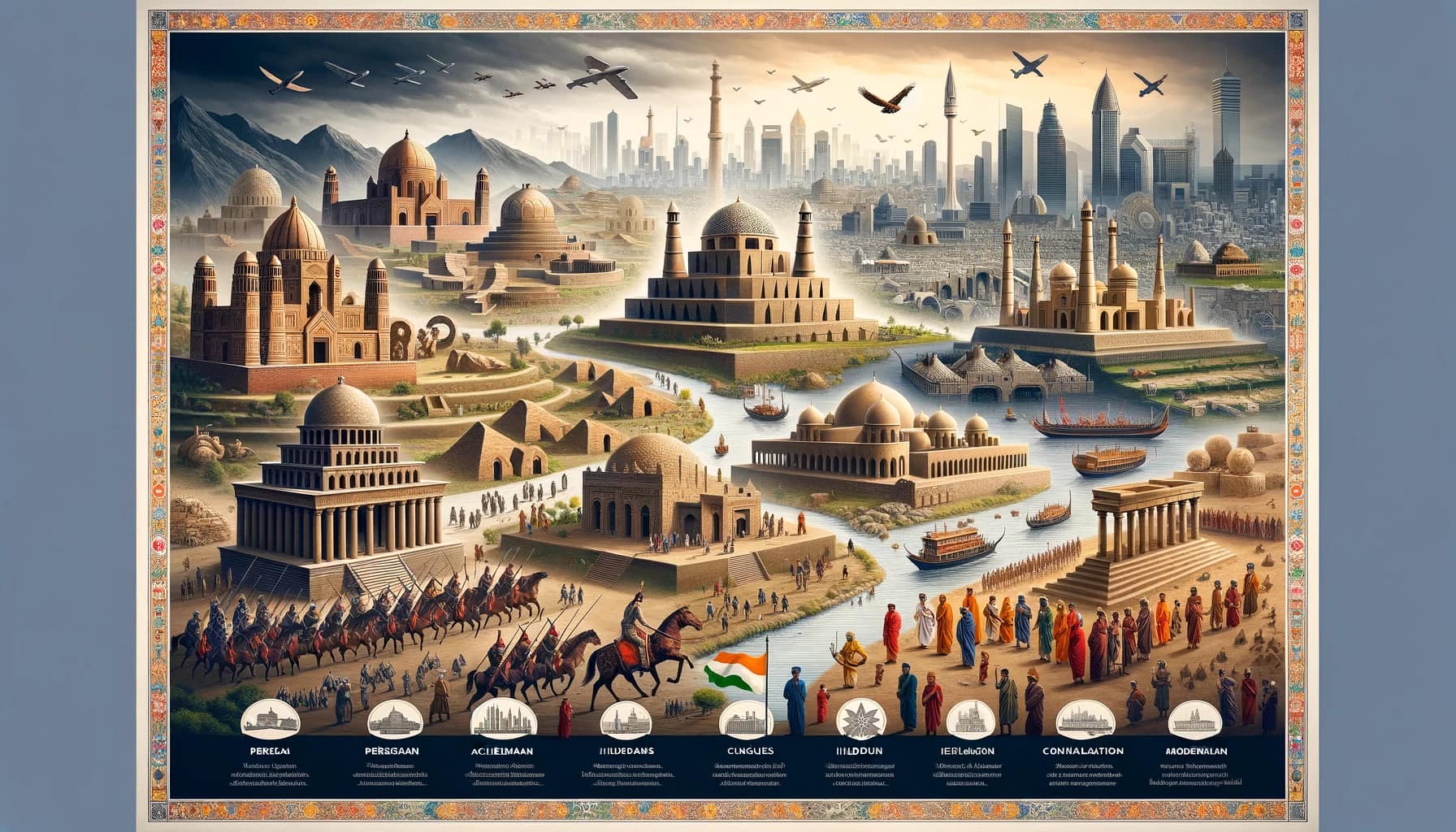
Here is a 5000-year timeline of the land now known as #Sindh, encompassing its history, religions, and ruling powers.
Timeline of Sindh (5000 BCE – Present)
Prehistoric Period (5000–2600 BCE)
• Civilization: Early farming communities, part of the Neolithic period.
• Religion: Animism and nature worship; early evidence of fertility cults.
• Key Rulers: Tribal leaders and clan-based societies.
• Key Events:
• Early settlements formed along the Indus River.
• Mehrgarh (in modern-day Balochistan, closely connected to Sindh) was a center of early agricultural development.
Indus Valley Civilization (2600–1900 BCE)
• Civilization: Harappa and Mohenjo-Daro, one of the world’s first urban civilizations.
• Religion: Proto-Hinduism (worship of fertility symbols, sacred animals, and possibly the proto-Shiva figure).
• Key Rulers: Likely governed by local elites or councils, no evidence of centralized kings.
• Key Events:
• Mohenjo-Daro, located in Sindh, became a major city of the Indus Valley Civilization.
• Advanced drainage systems, trade networks, and urban planning emerged.
Post-Harappan Period (1900–1500 BCE)
• Civilization: Decline of the Indus Valley Civilization due to climatic and environmental changes.
• Religion: Continuation of local fertility cults; early Vedic practices may have begun.
• Key Rulers: Fragmented tribal groups.
• Key Events:
• Urban centers became depopulated.
• Migration of Indo-Aryan tribes into the region began.
Vedic Period (1500–600 BCE)
• Civilization: Integration into the Vedic civilization.
• Religion: Early Hinduism (Vedic rituals, deities like Agni, Indra).
• Key Rulers: Aryan tribes, likely governed by rajas (chieftains).
• Key Events:
• Sindh was referred to as Sindhu in the Rigveda, representing the Indus River.
Achaemenid Empire (519–326 BCE)
• Civilization: Part of the Achaemenid Persian Empire under Darius I.
• Religion: Zoroastrianism influenced the region, coexisting with local Hindu practices.
• Key Rulers: Achaemenid satraps (governors).
• Key Events:
• Sindh became a province (satrapy) called Hindush under Persian control.
• Trade with Persia flourished.
Greek Conquest (326–305 BCE)
• Civilization: Part of Alexander the Great’s empire.
• Religion: Greek polytheism influenced elite culture, alongside Hindu and Zoroastrian practices.
• Key Rulers: Alexander the Great and his successors.
• Key Events:
• Alexander’s forces passed through Sindh after the Battle of the Hydaspes (modern Jhelum).
• Greek administrators ruled the area briefly.
Mauryan Empire (305–185 BCE)
• Civilization: Integrated into the Mauryan Empire.
• Religion: Buddhism (promoted by Ashoka), alongside Hinduism and local beliefs.
• Key Rulers: Chandragupta Maurya and Ashoka.
• Key Events:
• Sindh became a center for Buddhist learning.
• Buddhist stupas and monasteries were constructed.
Indo-Greek and Scythian Rule (185 BCE–75 CE)
• Civilization: Successor states to the Mauryan Empire.
• Religion: Buddhism, Hinduism, and Greek polytheism.
• Key Rulers:
• Indo-Greek kings (e.g., Menander I).
• Scythians (Sakas) replaced Greeks later.
• Key Events:
• Continued fusion of Greek and Indian cultures.
Kushan Empire (75–375 CE)
• Civilization: Part of the Kushan Empire.
• Religion: Buddhism flourished; Hinduism remained significant.
• Key Rulers: Kanishka the Great.
• Key Events:
• Sindh became a vital hub for Buddhist missionary activities.
Hindu-Buddhist Dynasties (375–711 CE)
• Civilization: Ruled by local Hindu-Buddhist dynasties (e.g., Rai Dynasty).
• Religion: Hinduism and Buddhism coexisted.
• Key Rulers: Rai rulers followed by the Brahman dynasty.
• Key Events:
• Flourishing trade and culture under stable local rule.
Islamic Conquest (711–1258 CE)
• Civilization: Conquered by Muhammad bin Qasim (Umayyad Caliphate).
• Religion: Islam introduced; coexisted with Hinduism and Buddhism initially.
• Key Rulers: Umayyad governors, later independent Muslim rulers.
• Key Events:
• Sindh became the first region in South Asia to come under Islamic rule.
• Conversion to Islam began, especially among the lower castes.
Delhi Sultanate and Mughal Empire (1258–1707 CE)
• Civilization: Incorporated into larger Islamic empires.
• Religion: Dominantly Islam, with significant Hindu minorities.
• Key Rulers: Sultans of Delhi and later Mughal emperors.
• Key Events:
• Sindh became a strategic province in the Mughal Empire.
• Flourishing Sufi culture and Islamization of rural Sindh.
Kalhora and Talpur Dynasties (1707–1843 CE)
• Civilization: Ruled by local Muslim dynasties.
• Religion: Islam dominated, with Hindu communities.
• Key Rulers:
• Kalhora rulers (Shia influence).
• Talpur rulers (Sunni influence).
• Key Events:
• Internal conflicts between local rulers.
• Decline due to British intervention.
British Rule (1843–1947 CE)
• Civilization: Part of British India.
• Religion: Islam, Hinduism, Sikhism, and others.
• Key Rulers: British colonial administrators.
• Key Events:
• Sindh was annexed by the British in 1843 after the Battle of Miani.
• Introduction of modern infrastructure and irrigation systems.
Post-Independence (1947–Present)
• Civilization: Part of Pakistan.
• Religion: Dominantly Islam, with small Hindu and Christian minorities.
• Key Rulers: Pakistani government and local political leaders.
• Key Events:
• Sindh became a key province in Pakistan.
• Karachi emerged as an economic hub.
This timeline reflects the dynamic history of Sindh as a land influenced by multiple civilizations, religions, and rulers over 5000 years. It showcases its role as a melting pot of cultures and its transformation under diverse political and religious influences.
Timeline of Sindh (5000 BCE – Present)
Prehistoric Period (5000–2600 BCE)
• Civilization: Early farming communities, part of the Neolithic period.
• Religion: Animism and nature worship; early evidence of fertility cults.
• Key Rulers: Tribal leaders and clan-based societies.
• Key Events:
• Early settlements formed along the Indus River.
• Mehrgarh (in modern-day Balochistan, closely connected to Sindh) was a center of early agricultural development.
Indus Valley Civilization (2600–1900 BCE)
• Civilization: Harappa and Mohenjo-Daro, one of the world’s first urban civilizations.
• Religion: Proto-Hinduism (worship of fertility symbols, sacred animals, and possibly the proto-Shiva figure).
• Key Rulers: Likely governed by local elites or councils, no evidence of centralized kings.
• Key Events:
• Mohenjo-Daro, located in Sindh, became a major city of the Indus Valley Civilization.
• Advanced drainage systems, trade networks, and urban planning emerged.
Post-Harappan Period (1900–1500 BCE)
• Civilization: Decline of the Indus Valley Civilization due to climatic and environmental changes.
• Religion: Continuation of local fertility cults; early Vedic practices may have begun.
• Key Rulers: Fragmented tribal groups.
• Key Events:
• Urban centers became depopulated.
• Migration of Indo-Aryan tribes into the region began.
Vedic Period (1500–600 BCE)
• Civilization: Integration into the Vedic civilization.
• Religion: Early Hinduism (Vedic rituals, deities like Agni, Indra).
• Key Rulers: Aryan tribes, likely governed by rajas (chieftains).
• Key Events:
• Sindh was referred to as Sindhu in the Rigveda, representing the Indus River.
Achaemenid Empire (519–326 BCE)
• Civilization: Part of the Achaemenid Persian Empire under Darius I.
• Religion: Zoroastrianism influenced the region, coexisting with local Hindu practices.
• Key Rulers: Achaemenid satraps (governors).
• Key Events:
• Sindh became a province (satrapy) called Hindush under Persian control.
• Trade with Persia flourished.
Greek Conquest (326–305 BCE)
• Civilization: Part of Alexander the Great’s empire.
• Religion: Greek polytheism influenced elite culture, alongside Hindu and Zoroastrian practices.
• Key Rulers: Alexander the Great and his successors.
• Key Events:
• Alexander’s forces passed through Sindh after the Battle of the Hydaspes (modern Jhelum).
• Greek administrators ruled the area briefly.
Mauryan Empire (305–185 BCE)
• Civilization: Integrated into the Mauryan Empire.
• Religion: Buddhism (promoted by Ashoka), alongside Hinduism and local beliefs.
• Key Rulers: Chandragupta Maurya and Ashoka.
• Key Events:
• Sindh became a center for Buddhist learning.
• Buddhist stupas and monasteries were constructed.
Indo-Greek and Scythian Rule (185 BCE–75 CE)
• Civilization: Successor states to the Mauryan Empire.
• Religion: Buddhism, Hinduism, and Greek polytheism.
• Key Rulers:
• Indo-Greek kings (e.g., Menander I).
• Scythians (Sakas) replaced Greeks later.
• Key Events:
• Continued fusion of Greek and Indian cultures.
Kushan Empire (75–375 CE)
• Civilization: Part of the Kushan Empire.
• Religion: Buddhism flourished; Hinduism remained significant.
• Key Rulers: Kanishka the Great.
• Key Events:
• Sindh became a vital hub for Buddhist missionary activities.
Hindu-Buddhist Dynasties (375–711 CE)
• Civilization: Ruled by local Hindu-Buddhist dynasties (e.g., Rai Dynasty).
• Religion: Hinduism and Buddhism coexisted.
• Key Rulers: Rai rulers followed by the Brahman dynasty.
• Key Events:
• Flourishing trade and culture under stable local rule.
Islamic Conquest (711–1258 CE)
• Civilization: Conquered by Muhammad bin Qasim (Umayyad Caliphate).
• Religion: Islam introduced; coexisted with Hinduism and Buddhism initially.
• Key Rulers: Umayyad governors, later independent Muslim rulers.
• Key Events:
• Sindh became the first region in South Asia to come under Islamic rule.
• Conversion to Islam began, especially among the lower castes.
Delhi Sultanate and Mughal Empire (1258–1707 CE)
• Civilization: Incorporated into larger Islamic empires.
• Religion: Dominantly Islam, with significant Hindu minorities.
• Key Rulers: Sultans of Delhi and later Mughal emperors.
• Key Events:
• Sindh became a strategic province in the Mughal Empire.
• Flourishing Sufi culture and Islamization of rural Sindh.
Kalhora and Talpur Dynasties (1707–1843 CE)
• Civilization: Ruled by local Muslim dynasties.
• Religion: Islam dominated, with Hindu communities.
• Key Rulers:
• Kalhora rulers (Shia influence).
• Talpur rulers (Sunni influence).
• Key Events:
• Internal conflicts between local rulers.
• Decline due to British intervention.
British Rule (1843–1947 CE)
• Civilization: Part of British India.
• Religion: Islam, Hinduism, Sikhism, and others.
• Key Rulers: British colonial administrators.
• Key Events:
• Sindh was annexed by the British in 1843 after the Battle of Miani.
• Introduction of modern infrastructure and irrigation systems.
Post-Independence (1947–Present)
• Civilization: Part of Pakistan.
• Religion: Dominantly Islam, with small Hindu and Christian minorities.
• Key Rulers: Pakistani government and local political leaders.
• Key Events:
• Sindh became a key province in Pakistan.
• Karachi emerged as an economic hub.
This timeline reflects the dynamic history of Sindh as a land influenced by multiple civilizations, religions, and rulers over 5000 years. It showcases its role as a melting pot of cultures and its transformation under diverse political and religious influences.
Here is a 5000-year timeline of the land now known as #Sindh, encompassing its history, religions, and ruling powers.
Timeline of Sindh (5000 BCE – Present)
Prehistoric Period (5000–2600 BCE)
• Civilization: Early farming communities, part of the Neolithic period.
• Religion: Animism and nature worship; early evidence of fertility cults.
• Key Rulers: Tribal leaders and clan-based societies.
• Key Events:
• Early settlements formed along the Indus River.
• Mehrgarh (in modern-day Balochistan, closely connected to Sindh) was a center of early agricultural development.
Indus Valley Civilization (2600–1900 BCE)
• Civilization: Harappa and Mohenjo-Daro, one of the world’s first urban civilizations.
• Religion: Proto-Hinduism (worship of fertility symbols, sacred animals, and possibly the proto-Shiva figure).
• Key Rulers: Likely governed by local elites or councils, no evidence of centralized kings.
• Key Events:
• Mohenjo-Daro, located in Sindh, became a major city of the Indus Valley Civilization.
• Advanced drainage systems, trade networks, and urban planning emerged.
Post-Harappan Period (1900–1500 BCE)
• Civilization: Decline of the Indus Valley Civilization due to climatic and environmental changes.
• Religion: Continuation of local fertility cults; early Vedic practices may have begun.
• Key Rulers: Fragmented tribal groups.
• Key Events:
• Urban centers became depopulated.
• Migration of Indo-Aryan tribes into the region began.
Vedic Period (1500–600 BCE)
• Civilization: Integration into the Vedic civilization.
• Religion: Early Hinduism (Vedic rituals, deities like Agni, Indra).
• Key Rulers: Aryan tribes, likely governed by rajas (chieftains).
• Key Events:
• Sindh was referred to as Sindhu in the Rigveda, representing the Indus River.
Achaemenid Empire (519–326 BCE)
• Civilization: Part of the Achaemenid Persian Empire under Darius I.
• Religion: Zoroastrianism influenced the region, coexisting with local Hindu practices.
• Key Rulers: Achaemenid satraps (governors).
• Key Events:
• Sindh became a province (satrapy) called Hindush under Persian control.
• Trade with Persia flourished.
Greek Conquest (326–305 BCE)
• Civilization: Part of Alexander the Great’s empire.
• Religion: Greek polytheism influenced elite culture, alongside Hindu and Zoroastrian practices.
• Key Rulers: Alexander the Great and his successors.
• Key Events:
• Alexander’s forces passed through Sindh after the Battle of the Hydaspes (modern Jhelum).
• Greek administrators ruled the area briefly.
Mauryan Empire (305–185 BCE)
• Civilization: Integrated into the Mauryan Empire.
• Religion: Buddhism (promoted by Ashoka), alongside Hinduism and local beliefs.
• Key Rulers: Chandragupta Maurya and Ashoka.
• Key Events:
• Sindh became a center for Buddhist learning.
• Buddhist stupas and monasteries were constructed.
Indo-Greek and Scythian Rule (185 BCE–75 CE)
• Civilization: Successor states to the Mauryan Empire.
• Religion: Buddhism, Hinduism, and Greek polytheism.
• Key Rulers:
• Indo-Greek kings (e.g., Menander I).
• Scythians (Sakas) replaced Greeks later.
• Key Events:
• Continued fusion of Greek and Indian cultures.
Kushan Empire (75–375 CE)
• Civilization: Part of the Kushan Empire.
• Religion: Buddhism flourished; Hinduism remained significant.
• Key Rulers: Kanishka the Great.
• Key Events:
• Sindh became a vital hub for Buddhist missionary activities.
Hindu-Buddhist Dynasties (375–711 CE)
• Civilization: Ruled by local Hindu-Buddhist dynasties (e.g., Rai Dynasty).
• Religion: Hinduism and Buddhism coexisted.
• Key Rulers: Rai rulers followed by the Brahman dynasty.
• Key Events:
• Flourishing trade and culture under stable local rule.
Islamic Conquest (711–1258 CE)
• Civilization: Conquered by Muhammad bin Qasim (Umayyad Caliphate).
• Religion: Islam introduced; coexisted with Hinduism and Buddhism initially.
• Key Rulers: Umayyad governors, later independent Muslim rulers.
• Key Events:
• Sindh became the first region in South Asia to come under Islamic rule.
• Conversion to Islam began, especially among the lower castes.
Delhi Sultanate and Mughal Empire (1258–1707 CE)
• Civilization: Incorporated into larger Islamic empires.
• Religion: Dominantly Islam, with significant Hindu minorities.
• Key Rulers: Sultans of Delhi and later Mughal emperors.
• Key Events:
• Sindh became a strategic province in the Mughal Empire.
• Flourishing Sufi culture and Islamization of rural Sindh.
Kalhora and Talpur Dynasties (1707–1843 CE)
• Civilization: Ruled by local Muslim dynasties.
• Religion: Islam dominated, with Hindu communities.
• Key Rulers:
• Kalhora rulers (Shia influence).
• Talpur rulers (Sunni influence).
• Key Events:
• Internal conflicts between local rulers.
• Decline due to British intervention.
British Rule (1843–1947 CE)
• Civilization: Part of British India.
• Religion: Islam, Hinduism, Sikhism, and others.
• Key Rulers: British colonial administrators.
• Key Events:
• Sindh was annexed by the British in 1843 after the Battle of Miani.
• Introduction of modern infrastructure and irrigation systems.
Post-Independence (1947–Present)
• Civilization: Part of Pakistan.
• Religion: Dominantly Islam, with small Hindu and Christian minorities.
• Key Rulers: Pakistani government and local political leaders.
• Key Events:
• Sindh became a key province in Pakistan.
• Karachi emerged as an economic hub.
This timeline reflects the dynamic history of Sindh as a land influenced by multiple civilizations, religions, and rulers over 5000 years. It showcases its role as a melting pot of cultures and its transformation under diverse political and religious influences.
0 Comentários
0 Compartilhamentos
1243 Visualizações