


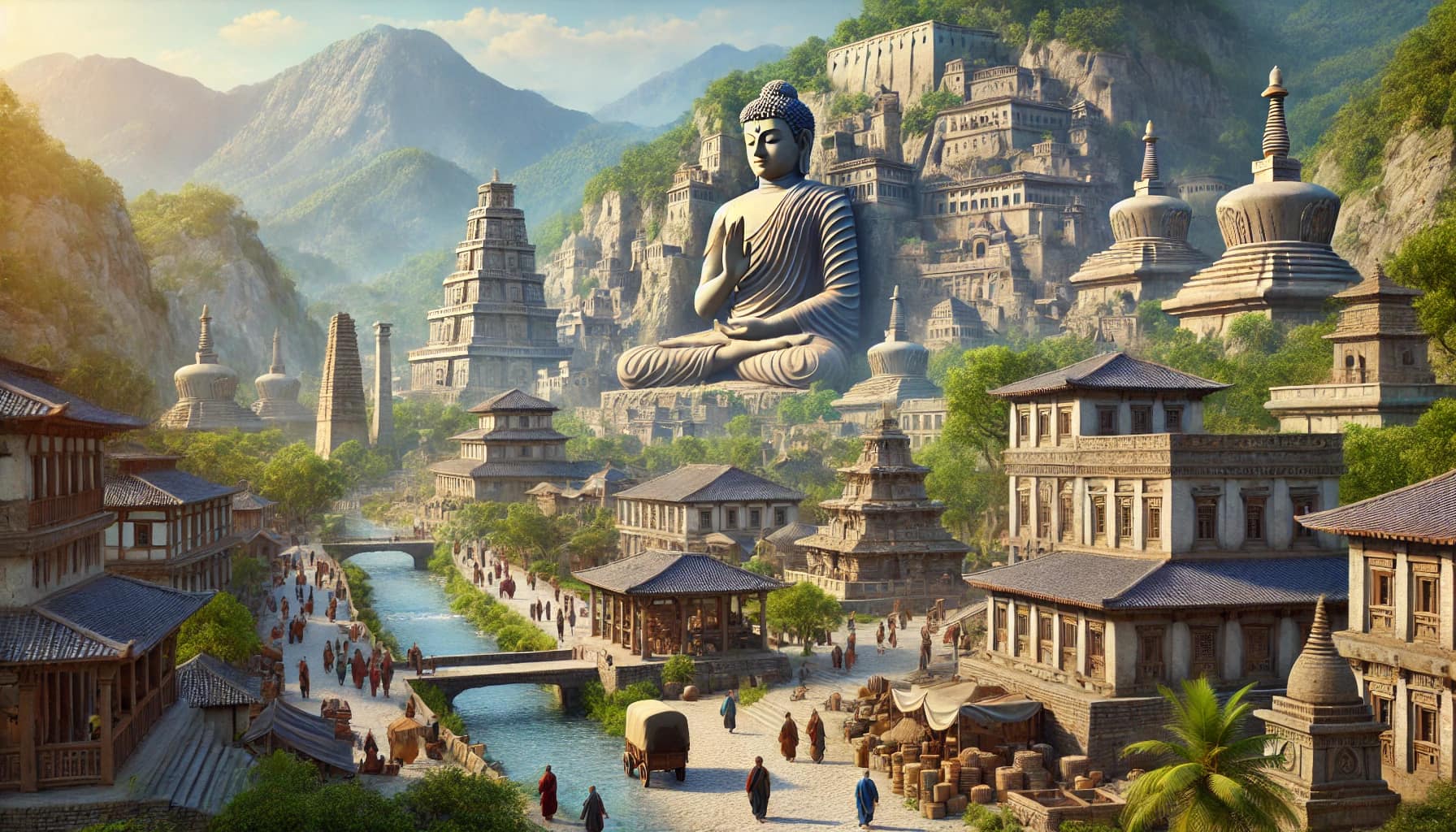
The history of Gandhara, an ancient region located in present-day northern Pakistan and parts of eastern Afghanistan, is rich and spans thousands of years. It was a crossroads of civilizations and cultures, playing a pivotal role in the development of art, religion, and trade in South Asia and beyond.
Geography of Gandhara
• Gandhara was centered around the valleys of the Peshawar, Swat, and Kabul rivers.
• Key cities included Taxila, Pushkalavati (modern Charsadda), and later Peshawar.
• Its location at the crossroads of Central Asia, South Asia, and the Middle East made it a significant hub for trade and cultural exchange.
Key Historical Periods
1. Prehistoric Period (3000–1500 BCE):
• Gandhara was part of the Indus Valley Civilization, evident from archaeological findings.
• Early settlements in this region were influenced by the Neolithic culture of the nearby Swat Valley and Mehrgarh.
2. Vedic and Epic Period (1500–600 BCE):
• Gandhara is mentioned in ancient Indian texts such as the Rigveda and the Mahabharata.
• The region was home to the Gandhara Kingdom, which played a role in the Vedic and epic narratives. For instance, King Gandhara is mentioned as a prominent figure in the Mahabharata.
3. Achaemenid Empire (6th–4th Century BCE):
• Gandhara became a province of the Achaemenid Empire under Darius I (circa 518 BCE).
• Persian rule brought administrative systems, infrastructure, and Zoroastrian influences to the region.
• It also connected Gandhara to the wider Persian Empire, making it a conduit for cultural and economic exchanges.
4. Alexander the Great and Hellenistic Influence (4th Century BCE):
• Alexander the Great conquered Gandhara in 327 BCE, integrating it into his empire.
• After his death, the region became part of the Greco-Bactrian Kingdom, which introduced Hellenistic art, architecture, and cultural elements.
5. Mauryan Empire and the Spread of Buddhism (3rd Century BCE):
• Under Emperor Ashoka (circa 268–232 BCE), Gandhara became a key center for the spread of Buddhism.
• Ashoka is credited with building stupas and monasteries in the region, promoting Buddhist philosophy.
6. Indo-Greek Kingdoms (2nd–1st Century BCE):
• After the decline of the Mauryan Empire, Gandhara came under the rule of Indo-Greek kings, such as Menander I (Milinda), who converted to Buddhism.
• This period saw a fusion of Greek and Indian art and culture, known as the Gandhara School of Art.
7. Kushan Empire (1st–3rd Century CE):
• Gandhara reached its cultural and artistic zenith under the Kushan Empire, especially during the reign of Kanishka the Great.
• Kanishka embraced and promoted Buddhism, making Gandhara a global center for Buddhist learning and art.
• The Gandhara School of Art, characterized by its Greco-Roman and Indian influences, flourished during this time. It produced iconic Buddha statues and narrative reliefs.
8. Huna Invasions and Decline (5th–6th Century CE):
• The Hunas (Hephthalites or White Huns) invaded and disrupted the region, leading to a decline in Buddhist institutions.
• Hinduism regained prominence, and Buddhism began to wane in Gandhara.
9. Islamic Conquest (7th–8th Century CE):
• With the advent of Islam, Gandhara’s Buddhist and Hindu cultural heritage declined further.
• The region became part of the Islamic world, and many of its ancient Buddhist sites fell into disuse or were destroyed.
Cultural Contributions of Gandhara
1. Buddhism:
• Gandhara played a pivotal role in the spread of Buddhism to Central Asia, China, and beyond.
• The region produced early depictions of the Buddha in human form, inspired by Greek artistic traditions.
2. Gandhara Art:
• Known for its unique blend of Greek, Roman, Persian, and Indian influences.
• Characterized by realistic human figures, intricate drapery, and detailed narrative reliefs depicting the life of the Buddha.
• Iconic examples include the Buddha statues and the reliefs from Taxila and Swat Valley.
3. Education and Trade:
• Taxila, one of the major cities of Gandhara, was a renowned center of learning and attracted students from across the ancient world.
• The region was a vital link on the Silk Road, facilitating trade and cultural exchange between the East and West.
Legacy of Gandhara
• Gandhara’s cultural and artistic achievements have had a lasting impact on South and Central Asia.
• Archaeological sites such as Taxila, Takht-i-Bahi, and Swat Valley are UNESCO World Heritage Sites and testify to the region’s historical importance.
• The Gandhara School of Art influenced Buddhist art in China, Korea, and Japan, spreading its legacy far beyond its original borders.
Gandhara remains a symbol of cultural fusion, representing how diverse civilizations can influence and enrich each other over centuries.
Geography of Gandhara
• Gandhara was centered around the valleys of the Peshawar, Swat, and Kabul rivers.
• Key cities included Taxila, Pushkalavati (modern Charsadda), and later Peshawar.
• Its location at the crossroads of Central Asia, South Asia, and the Middle East made it a significant hub for trade and cultural exchange.
Key Historical Periods
1. Prehistoric Period (3000–1500 BCE):
• Gandhara was part of the Indus Valley Civilization, evident from archaeological findings.
• Early settlements in this region were influenced by the Neolithic culture of the nearby Swat Valley and Mehrgarh.
2. Vedic and Epic Period (1500–600 BCE):
• Gandhara is mentioned in ancient Indian texts such as the Rigveda and the Mahabharata.
• The region was home to the Gandhara Kingdom, which played a role in the Vedic and epic narratives. For instance, King Gandhara is mentioned as a prominent figure in the Mahabharata.
3. Achaemenid Empire (6th–4th Century BCE):
• Gandhara became a province of the Achaemenid Empire under Darius I (circa 518 BCE).
• Persian rule brought administrative systems, infrastructure, and Zoroastrian influences to the region.
• It also connected Gandhara to the wider Persian Empire, making it a conduit for cultural and economic exchanges.
4. Alexander the Great and Hellenistic Influence (4th Century BCE):
• Alexander the Great conquered Gandhara in 327 BCE, integrating it into his empire.
• After his death, the region became part of the Greco-Bactrian Kingdom, which introduced Hellenistic art, architecture, and cultural elements.
5. Mauryan Empire and the Spread of Buddhism (3rd Century BCE):
• Under Emperor Ashoka (circa 268–232 BCE), Gandhara became a key center for the spread of Buddhism.
• Ashoka is credited with building stupas and monasteries in the region, promoting Buddhist philosophy.
6. Indo-Greek Kingdoms (2nd–1st Century BCE):
• After the decline of the Mauryan Empire, Gandhara came under the rule of Indo-Greek kings, such as Menander I (Milinda), who converted to Buddhism.
• This period saw a fusion of Greek and Indian art and culture, known as the Gandhara School of Art.
7. Kushan Empire (1st–3rd Century CE):
• Gandhara reached its cultural and artistic zenith under the Kushan Empire, especially during the reign of Kanishka the Great.
• Kanishka embraced and promoted Buddhism, making Gandhara a global center for Buddhist learning and art.
• The Gandhara School of Art, characterized by its Greco-Roman and Indian influences, flourished during this time. It produced iconic Buddha statues and narrative reliefs.
8. Huna Invasions and Decline (5th–6th Century CE):
• The Hunas (Hephthalites or White Huns) invaded and disrupted the region, leading to a decline in Buddhist institutions.
• Hinduism regained prominence, and Buddhism began to wane in Gandhara.
9. Islamic Conquest (7th–8th Century CE):
• With the advent of Islam, Gandhara’s Buddhist and Hindu cultural heritage declined further.
• The region became part of the Islamic world, and many of its ancient Buddhist sites fell into disuse or were destroyed.
Cultural Contributions of Gandhara
1. Buddhism:
• Gandhara played a pivotal role in the spread of Buddhism to Central Asia, China, and beyond.
• The region produced early depictions of the Buddha in human form, inspired by Greek artistic traditions.
2. Gandhara Art:
• Known for its unique blend of Greek, Roman, Persian, and Indian influences.
• Characterized by realistic human figures, intricate drapery, and detailed narrative reliefs depicting the life of the Buddha.
• Iconic examples include the Buddha statues and the reliefs from Taxila and Swat Valley.
3. Education and Trade:
• Taxila, one of the major cities of Gandhara, was a renowned center of learning and attracted students from across the ancient world.
• The region was a vital link on the Silk Road, facilitating trade and cultural exchange between the East and West.
Legacy of Gandhara
• Gandhara’s cultural and artistic achievements have had a lasting impact on South and Central Asia.
• Archaeological sites such as Taxila, Takht-i-Bahi, and Swat Valley are UNESCO World Heritage Sites and testify to the region’s historical importance.
• The Gandhara School of Art influenced Buddhist art in China, Korea, and Japan, spreading its legacy far beyond its original borders.
Gandhara remains a symbol of cultural fusion, representing how diverse civilizations can influence and enrich each other over centuries.
The history of Gandhara, an ancient region located in present-day northern Pakistan and parts of eastern Afghanistan, is rich and spans thousands of years. It was a crossroads of civilizations and cultures, playing a pivotal role in the development of art, religion, and trade in South Asia and beyond.
Geography of Gandhara
• Gandhara was centered around the valleys of the Peshawar, Swat, and Kabul rivers.
• Key cities included Taxila, Pushkalavati (modern Charsadda), and later Peshawar.
• Its location at the crossroads of Central Asia, South Asia, and the Middle East made it a significant hub for trade and cultural exchange.
Key Historical Periods
1. Prehistoric Period (3000–1500 BCE):
• Gandhara was part of the Indus Valley Civilization, evident from archaeological findings.
• Early settlements in this region were influenced by the Neolithic culture of the nearby Swat Valley and Mehrgarh.
2. Vedic and Epic Period (1500–600 BCE):
• Gandhara is mentioned in ancient Indian texts such as the Rigveda and the Mahabharata.
• The region was home to the Gandhara Kingdom, which played a role in the Vedic and epic narratives. For instance, King Gandhara is mentioned as a prominent figure in the Mahabharata.
3. Achaemenid Empire (6th–4th Century BCE):
• Gandhara became a province of the Achaemenid Empire under Darius I (circa 518 BCE).
• Persian rule brought administrative systems, infrastructure, and Zoroastrian influences to the region.
• It also connected Gandhara to the wider Persian Empire, making it a conduit for cultural and economic exchanges.
4. Alexander the Great and Hellenistic Influence (4th Century BCE):
• Alexander the Great conquered Gandhara in 327 BCE, integrating it into his empire.
• After his death, the region became part of the Greco-Bactrian Kingdom, which introduced Hellenistic art, architecture, and cultural elements.
5. Mauryan Empire and the Spread of Buddhism (3rd Century BCE):
• Under Emperor Ashoka (circa 268–232 BCE), Gandhara became a key center for the spread of Buddhism.
• Ashoka is credited with building stupas and monasteries in the region, promoting Buddhist philosophy.
6. Indo-Greek Kingdoms (2nd–1st Century BCE):
• After the decline of the Mauryan Empire, Gandhara came under the rule of Indo-Greek kings, such as Menander I (Milinda), who converted to Buddhism.
• This period saw a fusion of Greek and Indian art and culture, known as the Gandhara School of Art.
7. Kushan Empire (1st–3rd Century CE):
• Gandhara reached its cultural and artistic zenith under the Kushan Empire, especially during the reign of Kanishka the Great.
• Kanishka embraced and promoted Buddhism, making Gandhara a global center for Buddhist learning and art.
• The Gandhara School of Art, characterized by its Greco-Roman and Indian influences, flourished during this time. It produced iconic Buddha statues and narrative reliefs.
8. Huna Invasions and Decline (5th–6th Century CE):
• The Hunas (Hephthalites or White Huns) invaded and disrupted the region, leading to a decline in Buddhist institutions.
• Hinduism regained prominence, and Buddhism began to wane in Gandhara.
9. Islamic Conquest (7th–8th Century CE):
• With the advent of Islam, Gandhara’s Buddhist and Hindu cultural heritage declined further.
• The region became part of the Islamic world, and many of its ancient Buddhist sites fell into disuse or were destroyed.
Cultural Contributions of Gandhara
1. Buddhism:
• Gandhara played a pivotal role in the spread of Buddhism to Central Asia, China, and beyond.
• The region produced early depictions of the Buddha in human form, inspired by Greek artistic traditions.
2. Gandhara Art:
• Known for its unique blend of Greek, Roman, Persian, and Indian influences.
• Characterized by realistic human figures, intricate drapery, and detailed narrative reliefs depicting the life of the Buddha.
• Iconic examples include the Buddha statues and the reliefs from Taxila and Swat Valley.
3. Education and Trade:
• Taxila, one of the major cities of Gandhara, was a renowned center of learning and attracted students from across the ancient world.
• The region was a vital link on the Silk Road, facilitating trade and cultural exchange between the East and West.
Legacy of Gandhara
• Gandhara’s cultural and artistic achievements have had a lasting impact on South and Central Asia.
• Archaeological sites such as Taxila, Takht-i-Bahi, and Swat Valley are UNESCO World Heritage Sites and testify to the region’s historical importance.
• The Gandhara School of Art influenced Buddhist art in China, Korea, and Japan, spreading its legacy far beyond its original borders.
Gandhara remains a symbol of cultural fusion, representing how diverse civilizations can influence and enrich each other over centuries.
0 Comentários
0 Compartilhamentos
1320 Visualizações