


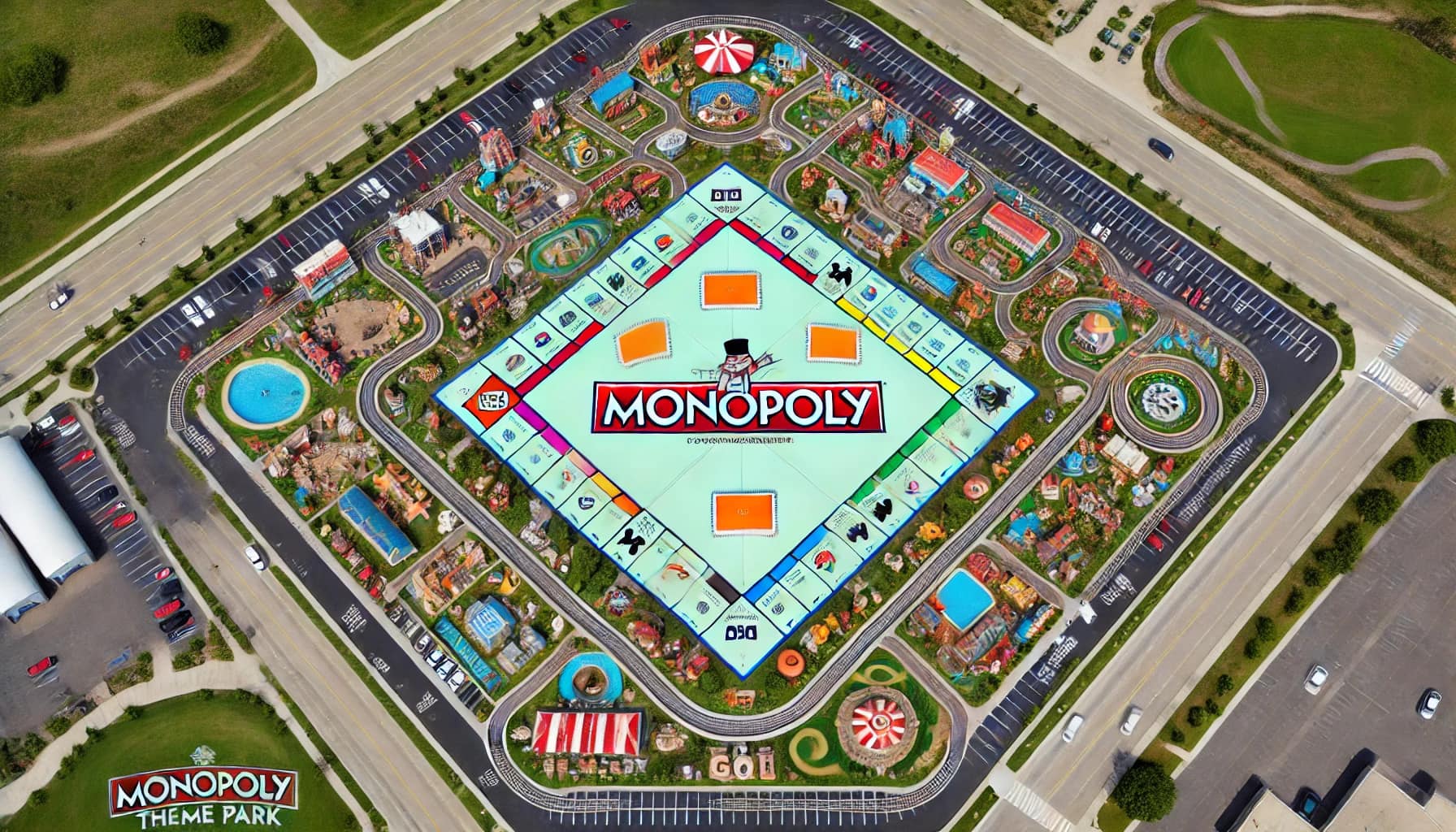
Monopoly Theme Park
Creating a life-sized Monopoly game on 100 acres of land is a fantastic idea! Here’s how you could design and bring it to life:
1. Layout and Board Design
• Scale Up the Board:
• Divide the land into a giant square with the same number of spaces as the Monopoly board (40 spaces).
• Assign roughly 2.5 acres for each side of the square, leaving space in the middle for communal activities.
• Spaces:
• Mark out spaces with giant tiles or pathways (50-100 feet wide each).
• Use colorful, durable materials to replicate the exact design of Monopoly properties, Chance, Community Chest, etc.
• Add life-sized replicas of key features like utilities, railroads, and jail.
2. Life-Sized Properties
• Build Miniature Cities:
• Construct small buildings or thematic zones for each property group (e.g., a beach-themed area for Boardwalk, small green parks for the greens).
• Allow players to “build houses” using rentable tiny homes, tents, or other temporary structures.
• Rentable Zones:
• Players who “buy” a property can rent it to other players during the game with temporary tickets, just like in the real game.
3. Functional Features
• Start/Go:
• A large entry gate with a “GO” sign, where players begin their game.
• A token collection booth for players to start with their giant Monopoly money.
• Bank:
• Create a physical “bank” building where players can withdraw money, mortgages, or deal with property purchases.
• Jail:
• Build a playful “jail” area with bars, props, and a cozy sitting area for “imprisoned” players.
• Chance/Community Chest:
• Install fun “lucky draw” stations where players pick cards from machines or physical decks.
• Railroads:
• Install mini-trains or carts to transport players between the four railroad spaces.
4. Tokens
• Life-Sized Tokens:
• Create oversized versions of the traditional Monopoly tokens (car, hat, dog, etc.).
• Allow players to ride or sit in the tokens as they move around the board.
5. Gameplay Mechanics
• Dice:
• Use giant foam dice or an automated dice machine that lights up the number rolled.
• Movement:
• Players can walk, ride bikes, or use segways/small electric vehicles to move across the board.
• Currency:
• Use large paper money replicas or a digital app for transactions.
6. Fun Add-Ons
• Incorporate Shops:
• Add food kiosks, souvenir stands, or themed cafes in some property zones.
• Mini-Games:
• Introduce fun activities or challenges in certain areas (e.g., mini-golf at a property, trivia challenges at Chance).
• Play Areas:
• Include areas for non-participants, like playgrounds or small parks.
7. Middle Area Use
• Use the center of the board for:
• A viewing deck or picnic area for spectators.
• A live scoreboard tracking the progress of the game.
• A central “bank” or game management hub.
8. Engagement and Reusability
• Allow families or groups to rent out the space for an interactive Monopoly experience.
• Create weekend tournaments or themed Monopoly events.
• Add educational elements like financial literacy or strategy workshops.
Visualization
Would you like me to create an illustration of this concept? It could help visualize the layout and give you an idea of the overall design!
Creating a life-sized Monopoly game on 100 acres of land is a fantastic idea! Here’s how you could design and bring it to life:
1. Layout and Board Design
• Scale Up the Board:
• Divide the land into a giant square with the same number of spaces as the Monopoly board (40 spaces).
• Assign roughly 2.5 acres for each side of the square, leaving space in the middle for communal activities.
• Spaces:
• Mark out spaces with giant tiles or pathways (50-100 feet wide each).
• Use colorful, durable materials to replicate the exact design of Monopoly properties, Chance, Community Chest, etc.
• Add life-sized replicas of key features like utilities, railroads, and jail.
2. Life-Sized Properties
• Build Miniature Cities:
• Construct small buildings or thematic zones for each property group (e.g., a beach-themed area for Boardwalk, small green parks for the greens).
• Allow players to “build houses” using rentable tiny homes, tents, or other temporary structures.
• Rentable Zones:
• Players who “buy” a property can rent it to other players during the game with temporary tickets, just like in the real game.
3. Functional Features
• Start/Go:
• A large entry gate with a “GO” sign, where players begin their game.
• A token collection booth for players to start with their giant Monopoly money.
• Bank:
• Create a physical “bank” building where players can withdraw money, mortgages, or deal with property purchases.
• Jail:
• Build a playful “jail” area with bars, props, and a cozy sitting area for “imprisoned” players.
• Chance/Community Chest:
• Install fun “lucky draw” stations where players pick cards from machines or physical decks.
• Railroads:
• Install mini-trains or carts to transport players between the four railroad spaces.
4. Tokens
• Life-Sized Tokens:
• Create oversized versions of the traditional Monopoly tokens (car, hat, dog, etc.).
• Allow players to ride or sit in the tokens as they move around the board.
5. Gameplay Mechanics
• Dice:
• Use giant foam dice or an automated dice machine that lights up the number rolled.
• Movement:
• Players can walk, ride bikes, or use segways/small electric vehicles to move across the board.
• Currency:
• Use large paper money replicas or a digital app for transactions.
6. Fun Add-Ons
• Incorporate Shops:
• Add food kiosks, souvenir stands, or themed cafes in some property zones.
• Mini-Games:
• Introduce fun activities or challenges in certain areas (e.g., mini-golf at a property, trivia challenges at Chance).
• Play Areas:
• Include areas for non-participants, like playgrounds or small parks.
7. Middle Area Use
• Use the center of the board for:
• A viewing deck or picnic area for spectators.
• A live scoreboard tracking the progress of the game.
• A central “bank” or game management hub.
8. Engagement and Reusability
• Allow families or groups to rent out the space for an interactive Monopoly experience.
• Create weekend tournaments or themed Monopoly events.
• Add educational elements like financial literacy or strategy workshops.
Visualization
Would you like me to create an illustration of this concept? It could help visualize the layout and give you an idea of the overall design!
Monopoly Theme Park
Creating a life-sized Monopoly game on 100 acres of land is a fantastic idea! Here’s how you could design and bring it to life:
1. Layout and Board Design
• Scale Up the Board:
• Divide the land into a giant square with the same number of spaces as the Monopoly board (40 spaces).
• Assign roughly 2.5 acres for each side of the square, leaving space in the middle for communal activities.
• Spaces:
• Mark out spaces with giant tiles or pathways (50-100 feet wide each).
• Use colorful, durable materials to replicate the exact design of Monopoly properties, Chance, Community Chest, etc.
• Add life-sized replicas of key features like utilities, railroads, and jail.
2. Life-Sized Properties
• Build Miniature Cities:
• Construct small buildings or thematic zones for each property group (e.g., a beach-themed area for Boardwalk, small green parks for the greens).
• Allow players to “build houses” using rentable tiny homes, tents, or other temporary structures.
• Rentable Zones:
• Players who “buy” a property can rent it to other players during the game with temporary tickets, just like in the real game.
3. Functional Features
• Start/Go:
• A large entry gate with a “GO” sign, where players begin their game.
• A token collection booth for players to start with their giant Monopoly money.
• Bank:
• Create a physical “bank” building where players can withdraw money, mortgages, or deal with property purchases.
• Jail:
• Build a playful “jail” area with bars, props, and a cozy sitting area for “imprisoned” players.
• Chance/Community Chest:
• Install fun “lucky draw” stations where players pick cards from machines or physical decks.
• Railroads:
• Install mini-trains or carts to transport players between the four railroad spaces.
4. Tokens
• Life-Sized Tokens:
• Create oversized versions of the traditional Monopoly tokens (car, hat, dog, etc.).
• Allow players to ride or sit in the tokens as they move around the board.
5. Gameplay Mechanics
• Dice:
• Use giant foam dice or an automated dice machine that lights up the number rolled.
• Movement:
• Players can walk, ride bikes, or use segways/small electric vehicles to move across the board.
• Currency:
• Use large paper money replicas or a digital app for transactions.
6. Fun Add-Ons
• Incorporate Shops:
• Add food kiosks, souvenir stands, or themed cafes in some property zones.
• Mini-Games:
• Introduce fun activities or challenges in certain areas (e.g., mini-golf at a property, trivia challenges at Chance).
• Play Areas:
• Include areas for non-participants, like playgrounds or small parks.
7. Middle Area Use
• Use the center of the board for:
• A viewing deck or picnic area for spectators.
• A live scoreboard tracking the progress of the game.
• A central “bank” or game management hub.
8. Engagement and Reusability
• Allow families or groups to rent out the space for an interactive Monopoly experience.
• Create weekend tournaments or themed Monopoly events.
• Add educational elements like financial literacy or strategy workshops.
Visualization
Would you like me to create an illustration of this concept? It could help visualize the layout and give you an idea of the overall design!
0 Yorumlar
0 hisse senetleri
875 Views