


Question that I just asked ChatGPT:
"If you were to share 10 ideas with humanity for how we can become wiser as a species, reach our full potential and come together over the next few decades to solve the many problems we are now experiencing, what would you suggest?"
ChatGPTs Response:
This is a profound and inspiring question! Here are 10 ideas that could help humanity collectively grow wiser, unlock its full potential, and address the challenges we face:
1. Prioritize Universal Education, Systems Thinking and Critical Thinking— Expand Access to Education: Ensure everyone, regardless of location or socioeconomic status, has access to quality education that emphasizes critical thinking, creativity, and problem-solving.
Teach Systems Thinking: Educate people on how interconnected systems work—ecological, economic, and social systems—to foster deeper understanding and better decision-making.
2. Foster Compassion and Empathy— Promote Emotional Intelligence: Make emotional intelligence a central part of education and leadership training. Understanding and managing emotions helps people connect and collaborate.
Embrace Cultural Exchange: Encourage global exchange programs and interactions to deepen empathy and appreciation for diverse perspectives.
3. Reinforce Science, Art, and Spirituality as Partners— Integrate Disciplines: Create frameworks where science, art, and spirituality collaborate. Each brings unique insights for solving problems and inspiring humanity.
Celebrate Meaning and Wonder: Use art and storytelling to reignite a sense of awe for the natural world, the cosmos, and human potential.
4. Promote Collaborative Leadership Models— Adopt Inclusive Leadership: Move away from hierarchical systems toward more collaborative, participatory governance models that reflect diverse voices.
Strengthen Community-Based Decision-Making: Empower local communities to co-create solutions for their own unique challenges.
5. Support Global Environmental Stewardship— Rebuild Our Relationship with Nature: Shift from seeing nature as a resource to exploit, to a living system we are part of and must care for.
Invest in Regenerative Practices: Scale solutions like renewable energy, reforestation, and circular economies to restore balance and heal ecosystems.
6. Address Economic Inequality— Redesign Economic Systems: Transition to economic systems that prioritize well-being, fairness, and sustainability over endless growth.
Guarantee Basic Rights: Ensure everyone has access to essentials like clean water, nutritious food, housing, healthcare, and education.
7. Leverage Technology Responsibly— Promote Ethical Innovation: Develop technologies that enhance human flourishing while safeguarding against misuse (e.g., surveillance, bias, or exploitation).
Use AI to Empower Humanity: Leverage AI to solve global challenges, amplify education, and expand creativity, ensuring it is a tool for collective benefit.
8. Encourage Open Dialogue and Media Literacy— Create Platforms for Dialogue: Build spaces—physical and digital—where people can engage in constructive discussions about complex issues.
Teach Media Literacy: Equip people to critically analyze information, reducing susceptibility to misinformation and polarization.
9. Redefine Success and Progress— Value Well-Being Over Materialism: Shift cultural values to prioritize health, happiness, relationships, and purpose rather than consumerism and wealth.
Adopt Long-Term Thinking: Encourage policies and behaviors that consider the well-being of future generations, not just immediate benefits.
10. Cultivate Inner Transformation— Promote Mindfulness Practices: Encourage meditation, reflection, and other practices that help individuals cultivate wisdom, peace, and clarity.
Embrace the Journey of Growth: See personal and collective challenges as opportunities to learn, evolve, and build resilience.
Conclusion:
Together, these steps could help humanity evolve into a wiser, more unified species, capable of addressing the most pressing issues while creating a thriving, equitable future for all.
Question asked by Christopher Chase, Creative Systems Thinking, 11/17/24
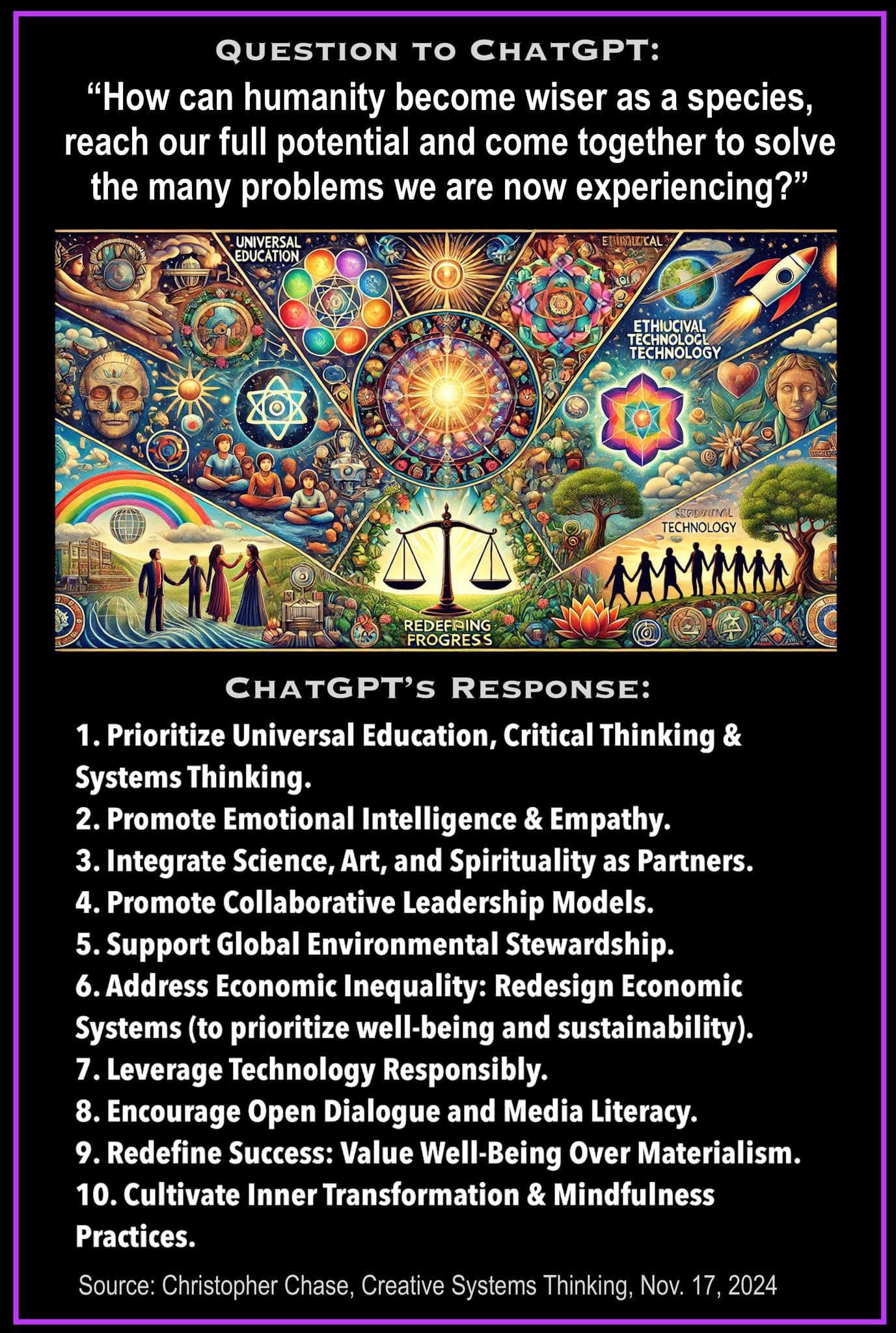
Art generated by ChatGPT
Question that I just asked ChatGPT:
"If you were to share 10 ideas with humanity for how we can become wiser as a species, reach our full potential and come together over the next few decades to solve the many problems we are now experiencing, what would you suggest?"
ChatGPT's Response:
This is a profound and inspiring question! Here are 10 ideas that could help humanity collectively grow wiser, unlock its full potential, and address the challenges we face:
1. Prioritize Universal Education, Systems Thinking and Critical Thinking— Expand Access to Education: Ensure everyone, regardless of location or socioeconomic status, has access to quality education that emphasizes critical thinking, creativity, and problem-solving.
Teach Systems Thinking: Educate people on how interconnected systems work—ecological, economic, and social systems—to foster deeper understanding and better decision-making.
2. Foster Compassion and Empathy— Promote Emotional Intelligence: Make emotional intelligence a central part of education and leadership training. Understanding and managing emotions helps people connect and collaborate.
Embrace Cultural Exchange: Encourage global exchange programs and interactions to deepen empathy and appreciation for diverse perspectives.
3. Reinforce Science, Art, and Spirituality as Partners— Integrate Disciplines: Create frameworks where science, art, and spirituality collaborate. Each brings unique insights for solving problems and inspiring humanity.
Celebrate Meaning and Wonder: Use art and storytelling to reignite a sense of awe for the natural world, the cosmos, and human potential.
4. Promote Collaborative Leadership Models— Adopt Inclusive Leadership: Move away from hierarchical systems toward more collaborative, participatory governance models that reflect diverse voices.
Strengthen Community-Based Decision-Making: Empower local communities to co-create solutions for their own unique challenges.
5. Support Global Environmental Stewardship— Rebuild Our Relationship with Nature: Shift from seeing nature as a resource to exploit, to a living system we are part of and must care for.
Invest in Regenerative Practices: Scale solutions like renewable energy, reforestation, and circular economies to restore balance and heal ecosystems.
6. Address Economic Inequality— Redesign Economic Systems: Transition to economic systems that prioritize well-being, fairness, and sustainability over endless growth.
Guarantee Basic Rights: Ensure everyone has access to essentials like clean water, nutritious food, housing, healthcare, and education.
7. Leverage Technology Responsibly— Promote Ethical Innovation: Develop technologies that enhance human flourishing while safeguarding against misuse (e.g., surveillance, bias, or exploitation).
Use AI to Empower Humanity: Leverage AI to solve global challenges, amplify education, and expand creativity, ensuring it is a tool for collective benefit.
8. Encourage Open Dialogue and Media Literacy— Create Platforms for Dialogue: Build spaces—physical and digital—where people can engage in constructive discussions about complex issues.
Teach Media Literacy: Equip people to critically analyze information, reducing susceptibility to misinformation and polarization.
9. Redefine Success and Progress— Value Well-Being Over Materialism: Shift cultural values to prioritize health, happiness, relationships, and purpose rather than consumerism and wealth.
Adopt Long-Term Thinking: Encourage policies and behaviors that consider the well-being of future generations, not just immediate benefits.
10. Cultivate Inner Transformation— Promote Mindfulness Practices: Encourage meditation, reflection, and other practices that help individuals cultivate wisdom, peace, and clarity.
Embrace the Journey of Growth: See personal and collective challenges as opportunities to learn, evolve, and build resilience.
Conclusion:
Together, these steps could help humanity evolve into a wiser, more unified species, capable of addressing the most pressing issues while creating a thriving, equitable future for all.
Question asked by Christopher Chase, Creative Systems Thinking, 11/17/24
Art generated by ChatGPT
0 Comments
0 Shares
311 Views