


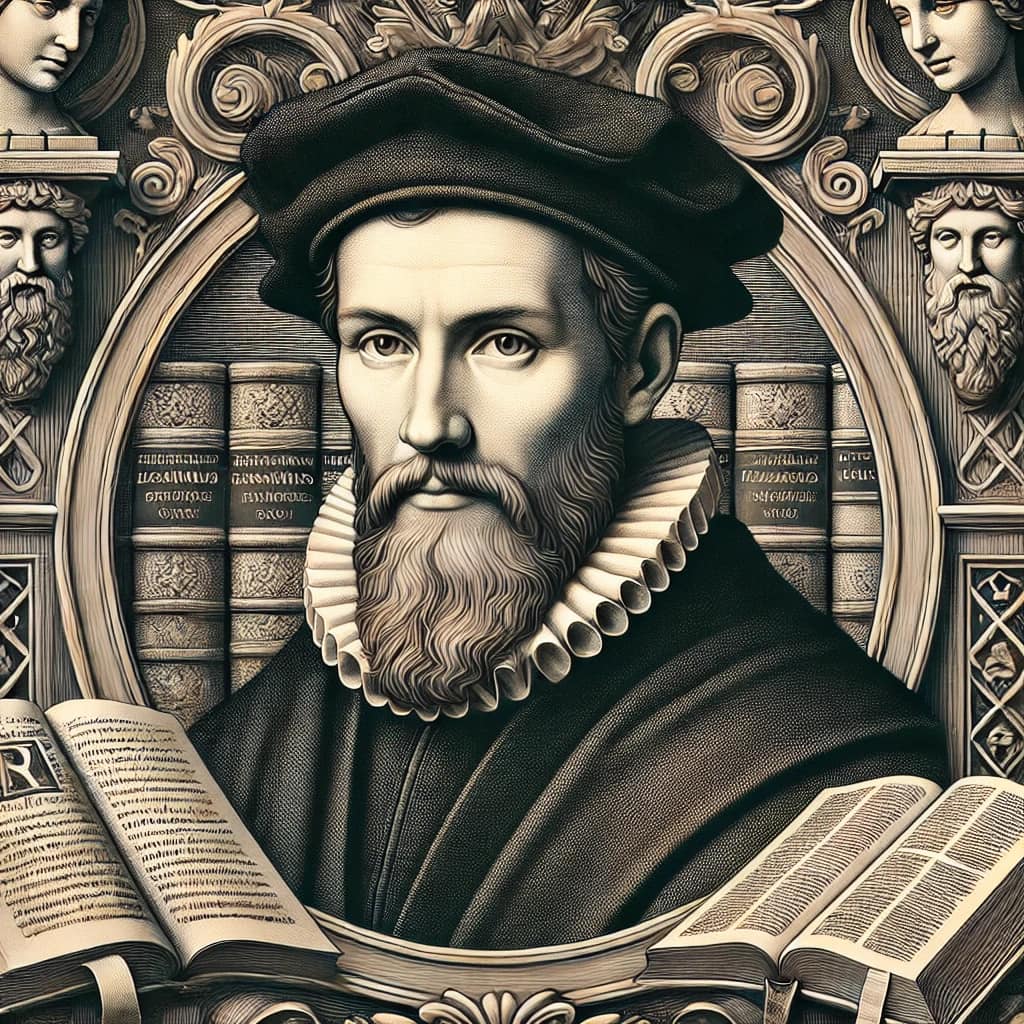
Erasmus (Desiderius Erasmus of Rotterdam) (1466/1469 – 1536) was a Dutch Renaissance humanist, theologian, scholar, and writer. He is one of the most influential figures in European intellectual history and is often referred to as “the prince of the humanists.” Erasmus was a pioneer of humanist thought and education, advocating for reform in the Catholic Church while promoting intellectual freedom, education, and the power of reason.
Key Contributions of Erasmus
1. Humanism:
• Erasmus was a leading figure in the Northern Renaissance and a central proponent of Christian humanism.
• He believed in the potential of education to reform society and religion, emphasizing the study of classical texts alongside Christian teachings.
2. Works:
• “In Praise of Folly” (1509): His most famous satirical work that critiques the corruption in the Church, superstitions, and the excesses of society.
• “Adagia”: A collection of Greek and Latin proverbs that reflect his vast classical knowledge.
• Greek New Testament (1516): Erasmus published a new Latin translation and critical edition of the New Testament in Greek, which laid the foundation for future biblical scholarship and the Reformation.
• “Handbook of a Christian Knight” (1503): A guide to living a virtuous Christian life.
3. Reformist Views:
• Erasmus advocated for reform within the Catholic Church but opposed outright separation or rebellion.
• He criticized practices such as the sale of indulgences, clerical abuses, and the lack of true piety among church leaders.
4. Educational Philosophy:
• He emphasized the importance of studying classical languages (Latin and Greek) and the Bible to achieve a deeper understanding of religion and humanity.
• Erasmus believed education should nurture moral and intellectual development.
Relationship with the Reformation
• Erasmus was a contemporary of Martin Luther and had a complex relationship with the Reformation.
• While he sympathized with calls for reform, Erasmus rejected the violent and divisive nature of the Protestant Reformation.
• He maintained loyalty to the Catholic Church and sought change through dialogue and scholarship rather than rebellion.
• His work “On the Freedom of the Will” (1524) directly opposed Luther’s “The Bondage of the Will” (1525), highlighting their theological differences.
Legacy
1. Influence on the Renaissance and Reformation:
• Erasmus laid intellectual groundwork for the Reformation by encouraging critical thinking and challenging outdated church practices.
• His emphasis on education and textual criticism inspired future reformers and humanists.
2. Philosophy of Peace and Moderation:
• Erasmus was a vocal advocate for peace, criticizing war and violence as contrary to Christian values.
• His moderate stance made him a bridge between reformists and traditionalists, though it also earned him criticism from both sides.
3. Impact on Literature and Scholarship:
• His critical editions of classical texts and the New Testament revolutionized scholarship and had a lasting impact on theology and the humanities.
Key Quotes by Erasmus
1. “In the land of the blind, the one-eyed man is king.”
• From Adagia, a famous aphorism reflecting his wit and insight into human nature.
2. “Give light, and the darkness will disappear of itself.”
• Reflecting his belief in education as the key to enlightenment and reform.
3. “The most disadvantageous peace is better than the most just war.”
• Showcasing his philosophy of peace and opposition to violence.
Erasmus remains a symbol of intellectual freedom, religious tolerance, and the power of humanist education to inspire change and reform society.
Erasmus (Desiderius Erasmus of Rotterdam) (1466/1469 – 1536) was a Dutch Renaissance humanist, theologian, scholar, and writer. He is one of the most influential figures in European intellectual history and is often referred to as “the prince of the humanists.” Erasmus was a pioneer of humanist thought and education, advocating for reform in the Catholic Church while promoting intellectual freedom, education, and the power of reason.
Key Contributions of Erasmus
1. Humanism:
• Erasmus was a leading figure in the Northern Renaissance and a central proponent of Christian humanism.
• He believed in the potential of education to reform society and religion, emphasizing the study of classical texts alongside Christian teachings.
2. Works:
• “In Praise of Folly” (1509): His most famous satirical work that critiques the corruption in the Church, superstitions, and the excesses of society.
• “Adagia”: A collection of Greek and Latin proverbs that reflect his vast classical knowledge.
• Greek New Testament (1516): Erasmus published a new Latin translation and critical edition of the New Testament in Greek, which laid the foundation for future biblical scholarship and the Reformation.
• “Handbook of a Christian Knight” (1503): A guide to living a virtuous Christian life.
3. Reformist Views:
• Erasmus advocated for reform within the Catholic Church but opposed outright separation or rebellion.
• He criticized practices such as the sale of indulgences, clerical abuses, and the lack of true piety among church leaders.
4. Educational Philosophy:
• He emphasized the importance of studying classical languages (Latin and Greek) and the Bible to achieve a deeper understanding of religion and humanity.
• Erasmus believed education should nurture moral and intellectual development.
Relationship with the Reformation
• Erasmus was a contemporary of Martin Luther and had a complex relationship with the Reformation.
• While he sympathized with calls for reform, Erasmus rejected the violent and divisive nature of the Protestant Reformation.
• He maintained loyalty to the Catholic Church and sought change through dialogue and scholarship rather than rebellion.
• His work “On the Freedom of the Will” (1524) directly opposed Luther’s “The Bondage of the Will” (1525), highlighting their theological differences.
Legacy
1. Influence on the Renaissance and Reformation:
• Erasmus laid intellectual groundwork for the Reformation by encouraging critical thinking and challenging outdated church practices.
• His emphasis on education and textual criticism inspired future reformers and humanists.
2. Philosophy of Peace and Moderation:
• Erasmus was a vocal advocate for peace, criticizing war and violence as contrary to Christian values.
• His moderate stance made him a bridge between reformists and traditionalists, though it also earned him criticism from both sides.
3. Impact on Literature and Scholarship:
• His critical editions of classical texts and the New Testament revolutionized scholarship and had a lasting impact on theology and the humanities.
Key Quotes by Erasmus
1. “In the land of the blind, the one-eyed man is king.”
• From Adagia, a famous aphorism reflecting his wit and insight into human nature.
2. “Give light, and the darkness will disappear of itself.”
• Reflecting his belief in education as the key to enlightenment and reform.
3. “The most disadvantageous peace is better than the most just war.”
• Showcasing his philosophy of peace and opposition to violence.
Erasmus remains a symbol of intellectual freedom, religious tolerance, and the power of humanist education to inspire change and reform society.
0 Commenti
0 condivisioni
217 Views