


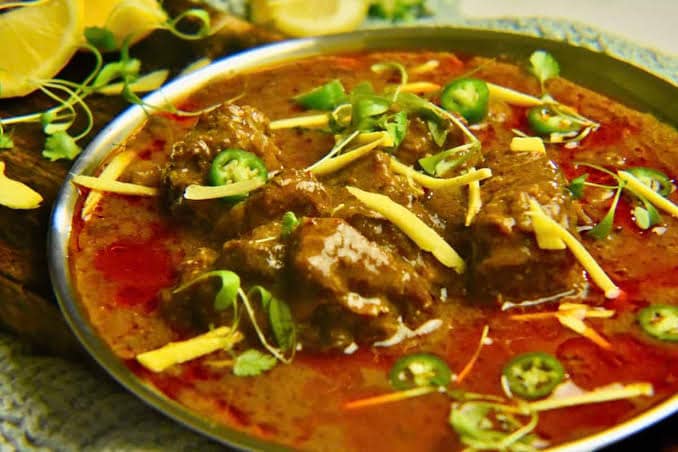
Nihari originated in 18th-century Delhi during the Mughal era and is deeply rooted in the royal and cultural traditions of the Indian subcontinent. The word nihari comes from the Arabic word nahar, meaning “day,” as the dish was initially enjoyed by the Mughals for breakfast after the Fajr (pre-dawn) prayers. This hearty stew of slow-cooked meat, infused with aromatic spices, was a way to start the day with a filling, energizing meal.
The climate of northern India, especially in Delhi, made nihari particularly appealing. Cold winter mornings left people craving warmth and sustenance, and nihari, with its overnight simmered meats and rich, marrow-infused gravy, provided just that. The dish was especially valued by workers, laborers, and even soldiers, who needed something that would not only warm them up but also provide lasting energy throughout the day. The traditional method of cooking nihari overnight meant it was ready by morning, offering a comforting and hearty breakfast option during colder months.
Originally, nihari was a royal Mughal dish, occasionally garnished with delicacies like bone marrow or brains to enhance its richness. Over time, it became popular among the working class in Delhi and beyond. With the Partition in 1947, immigrants brought nihari recipes to Pakistan, where it gained tremendous popularity, especially in Karachi, and became an iconic dish served not only at breakfast but at special gatherings and occasions.
Today, nihari has spread beyond Pakistan and India, with variations adapted to local tastes, but it remains cherished for its warming, comforting qualities—a tradition that began in response to cold mornings centuries ago.
The climate of northern India, especially in Delhi, made nihari particularly appealing. Cold winter mornings left people craving warmth and sustenance, and nihari, with its overnight simmered meats and rich, marrow-infused gravy, provided just that. The dish was especially valued by workers, laborers, and even soldiers, who needed something that would not only warm them up but also provide lasting energy throughout the day. The traditional method of cooking nihari overnight meant it was ready by morning, offering a comforting and hearty breakfast option during colder months.
Originally, nihari was a royal Mughal dish, occasionally garnished with delicacies like bone marrow or brains to enhance its richness. Over time, it became popular among the working class in Delhi and beyond. With the Partition in 1947, immigrants brought nihari recipes to Pakistan, where it gained tremendous popularity, especially in Karachi, and became an iconic dish served not only at breakfast but at special gatherings and occasions.
Today, nihari has spread beyond Pakistan and India, with variations adapted to local tastes, but it remains cherished for its warming, comforting qualities—a tradition that began in response to cold mornings centuries ago.
Nihari originated in 18th-century Delhi during the Mughal era and is deeply rooted in the royal and cultural traditions of the Indian subcontinent. The word nihari comes from the Arabic word nahar, meaning “day,” as the dish was initially enjoyed by the Mughals for breakfast after the Fajr (pre-dawn) prayers. This hearty stew of slow-cooked meat, infused with aromatic spices, was a way to start the day with a filling, energizing meal.
The climate of northern India, especially in Delhi, made nihari particularly appealing. Cold winter mornings left people craving warmth and sustenance, and nihari, with its overnight simmered meats and rich, marrow-infused gravy, provided just that. The dish was especially valued by workers, laborers, and even soldiers, who needed something that would not only warm them up but also provide lasting energy throughout the day. The traditional method of cooking nihari overnight meant it was ready by morning, offering a comforting and hearty breakfast option during colder months.
Originally, nihari was a royal Mughal dish, occasionally garnished with delicacies like bone marrow or brains to enhance its richness. Over time, it became popular among the working class in Delhi and beyond. With the Partition in 1947, immigrants brought nihari recipes to Pakistan, where it gained tremendous popularity, especially in Karachi, and became an iconic dish served not only at breakfast but at special gatherings and occasions.
Today, nihari has spread beyond Pakistan and India, with variations adapted to local tastes, but it remains cherished for its warming, comforting qualities—a tradition that began in response to cold mornings centuries ago.
0 Комментарии
0 Поделились
725 Просмотры