


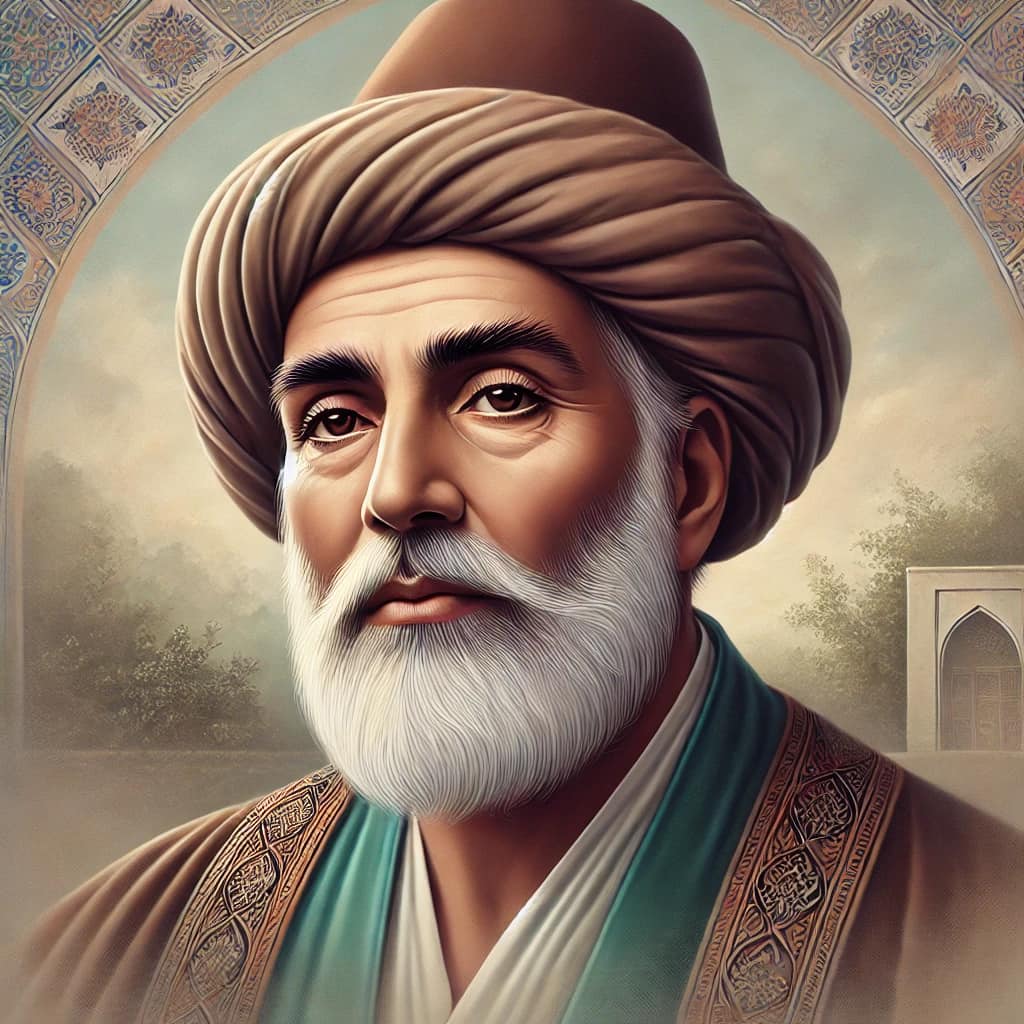
Hafez, also known as Khwāja Shams-ud-Dīn Muḥammad Ḥāfeẓ-e Shīrāzī, was a renowned Persian poet born around 1315 in Shiraz, Persia (modern-day Iran), and passed away in 1390. He is considered one of the greatest lyric poets in Persian literature, particularly known for his ghazals, a form of poetic expression centered on themes of love, mysticism, and existential reflection.
His work often reflects a deep understanding of human nature, spirituality, and the mysteries of life. Hafez’s poetry is marked by its intricate metaphors, allegories, and rich symbolism. His verses, although often imbued with love and beauty, also carry profound spiritual and mystical undertones influenced by Sufism, a mystical branch of Islam.
Hafezs *Divan* (a collection of his poetry) is considered a literary masterpiece and remains widely read in Iran and beyond. His work has influenced not only Persian culture but also inspired writers, philosophers, and poets worldwide, including Goethe, Nietzsche, and Emerson.
Many Iranians still consult his *Divan* for guidance, often in a practice called "fal-e Hafez," where they open the book at random and interpret the poem as advice or an omen for their life situation. Hafez is revered for his ability to weave themes of love, wine, divine union, and the struggles of existence into timeless poetry.
His work often reflects a deep understanding of human nature, spirituality, and the mysteries of life. Hafez’s poetry is marked by its intricate metaphors, allegories, and rich symbolism. His verses, although often imbued with love and beauty, also carry profound spiritual and mystical undertones influenced by Sufism, a mystical branch of Islam.
Hafezs *Divan* (a collection of his poetry) is considered a literary masterpiece and remains widely read in Iran and beyond. His work has influenced not only Persian culture but also inspired writers, philosophers, and poets worldwide, including Goethe, Nietzsche, and Emerson.
Many Iranians still consult his *Divan* for guidance, often in a practice called "fal-e Hafez," where they open the book at random and interpret the poem as advice or an omen for their life situation. Hafez is revered for his ability to weave themes of love, wine, divine union, and the struggles of existence into timeless poetry.
Hafez, also known as Khwāja Shams-ud-Dīn Muḥammad Ḥāfeẓ-e Shīrāzī, was a renowned Persian poet born around 1315 in Shiraz, Persia (modern-day Iran), and passed away in 1390. He is considered one of the greatest lyric poets in Persian literature, particularly known for his ghazals, a form of poetic expression centered on themes of love, mysticism, and existential reflection.
His work often reflects a deep understanding of human nature, spirituality, and the mysteries of life. Hafez’s poetry is marked by its intricate metaphors, allegories, and rich symbolism. His verses, although often imbued with love and beauty, also carry profound spiritual and mystical undertones influenced by Sufism, a mystical branch of Islam.
Hafez's *Divan* (a collection of his poetry) is considered a literary masterpiece and remains widely read in Iran and beyond. His work has influenced not only Persian culture but also inspired writers, philosophers, and poets worldwide, including Goethe, Nietzsche, and Emerson.
Many Iranians still consult his *Divan* for guidance, often in a practice called "fal-e Hafez," where they open the book at random and interpret the poem as advice or an omen for their life situation. Hafez is revered for his ability to weave themes of love, wine, divine union, and the struggles of existence into timeless poetry.
0 Σχόλια
0 Μοιράστηκε
137 Views