


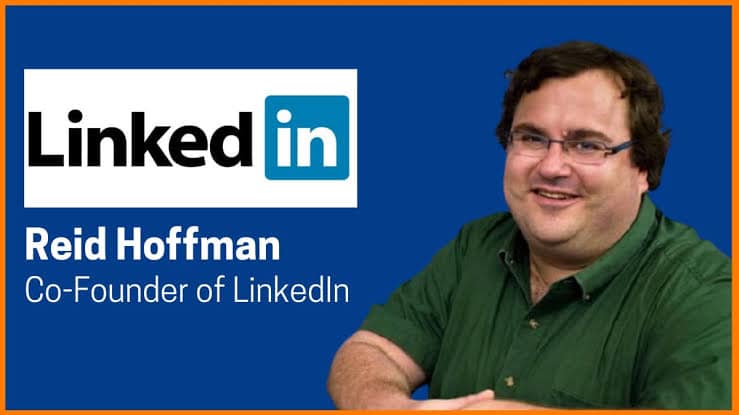
The story of LinkedIn’s founder, Reid Hoffman, is one of innovation and vision in the world of social networking, particularly for professionals. Hoffman, born on August 5, 1967, in Palo Alto, California, had an early interest in how people interact with each other. He studied symbolic systems at Stanford University, which focused on cognitive science, computer science, and linguistics. He later earned a master’s degree in philosophy from Oxford University.
### Early Career:
After finishing his studies, Hoffman’s career path began in academia, but he soon pivoted to the tech industry. He worked at Apple in the early 1990s, where he was involved in creating eWorld, an early attempt at a social network. Although eWorld was not a commercial success, it gave Hoffman valuable experience and insight into online community building.
In 1997, Hoffman co-founded his first company, SocialNet, which focused on online dating and matching people with shared interests. SocialNet was one of the first social networking sites, but it struggled to gain traction. During this time, Hoffman also joined the board of a fledgling startup called PayPal, co-founded by his friend Peter Thiel. Hoffman soon became PayPals COO, and the company thrived. When eBay acquired PayPal in 2002, Hoffman earned a significant payout.
### Founding of LinkedIn:
Armed with the knowledge from SocialNet and PayPal, Hoffman turned his attention to creating a new kind of social network, one that focused on professionals rather than personal relationships. In December 2002, he co-founded LinkedIn with a group of fellow entrepreneurs, including Allen Blue, Konstantin Guericke, Eric Ly, and Jean-Luc Vaillant. The site launched in May 2003.
LinkedIn was designed as a tool for professionals to build networks, connect with colleagues, and search for jobs. While the company grew slowly in its early years, it eventually became the go-to platform for professional networking. Its growth was driven by the increasing importance of online professional branding and networking in the job market.
### LinkedIn’s Success:
By 2006, LinkedIn had over 20 million users, and by 2011, it went public with a highly successful IPO. Hoffman stepped down as CEO in 2007, becoming chairman, and focused on growing the platform through partnerships and business development.
In 2016, Microsoft acquired LinkedIn for $26.2 billion, one of the largest tech acquisitions in history. Hoffman stayed on the board and became a key advisor to Microsoft. Today, LinkedIn has over 900 million users globally and is an essential tool for professionals worldwide.
### Post-LinkedIn Career:
Since LinkedIn, Reid Garrett Hoffman has become a prominent venture capitalist and thought leader in the tech industry. He is a partner at Greylock Partners, where he invests in startups and advises entrepreneurs. Hoffman has also co-authored several books, including *The Start-up of You* and *Blitzscaling*, sharing his insights into entrepreneurship and leadership.
Reid Hoffmans journey highlights his deep understanding of how networks function and his ability to turn that knowledge into one of the most valuable business tools in the world.
### Early Career:
After finishing his studies, Hoffman’s career path began in academia, but he soon pivoted to the tech industry. He worked at Apple in the early 1990s, where he was involved in creating eWorld, an early attempt at a social network. Although eWorld was not a commercial success, it gave Hoffman valuable experience and insight into online community building.
In 1997, Hoffman co-founded his first company, SocialNet, which focused on online dating and matching people with shared interests. SocialNet was one of the first social networking sites, but it struggled to gain traction. During this time, Hoffman also joined the board of a fledgling startup called PayPal, co-founded by his friend Peter Thiel. Hoffman soon became PayPals COO, and the company thrived. When eBay acquired PayPal in 2002, Hoffman earned a significant payout.
### Founding of LinkedIn:
Armed with the knowledge from SocialNet and PayPal, Hoffman turned his attention to creating a new kind of social network, one that focused on professionals rather than personal relationships. In December 2002, he co-founded LinkedIn with a group of fellow entrepreneurs, including Allen Blue, Konstantin Guericke, Eric Ly, and Jean-Luc Vaillant. The site launched in May 2003.
LinkedIn was designed as a tool for professionals to build networks, connect with colleagues, and search for jobs. While the company grew slowly in its early years, it eventually became the go-to platform for professional networking. Its growth was driven by the increasing importance of online professional branding and networking in the job market.
### LinkedIn’s Success:
By 2006, LinkedIn had over 20 million users, and by 2011, it went public with a highly successful IPO. Hoffman stepped down as CEO in 2007, becoming chairman, and focused on growing the platform through partnerships and business development.
In 2016, Microsoft acquired LinkedIn for $26.2 billion, one of the largest tech acquisitions in history. Hoffman stayed on the board and became a key advisor to Microsoft. Today, LinkedIn has over 900 million users globally and is an essential tool for professionals worldwide.
### Post-LinkedIn Career:
Since LinkedIn, Reid Garrett Hoffman has become a prominent venture capitalist and thought leader in the tech industry. He is a partner at Greylock Partners, where he invests in startups and advises entrepreneurs. Hoffman has also co-authored several books, including *The Start-up of You* and *Blitzscaling*, sharing his insights into entrepreneurship and leadership.
Reid Hoffmans journey highlights his deep understanding of how networks function and his ability to turn that knowledge into one of the most valuable business tools in the world.
The story of LinkedIn’s founder, Reid Hoffman, is one of innovation and vision in the world of social networking, particularly for professionals. Hoffman, born on August 5, 1967, in Palo Alto, California, had an early interest in how people interact with each other. He studied symbolic systems at Stanford University, which focused on cognitive science, computer science, and linguistics. He later earned a master’s degree in philosophy from Oxford University.
### Early Career:
After finishing his studies, Hoffman’s career path began in academia, but he soon pivoted to the tech industry. He worked at Apple in the early 1990s, where he was involved in creating eWorld, an early attempt at a social network. Although eWorld was not a commercial success, it gave Hoffman valuable experience and insight into online community building.
In 1997, Hoffman co-founded his first company, SocialNet, which focused on online dating and matching people with shared interests. SocialNet was one of the first social networking sites, but it struggled to gain traction. During this time, Hoffman also joined the board of a fledgling startup called PayPal, co-founded by his friend Peter Thiel. Hoffman soon became PayPal's COO, and the company thrived. When eBay acquired PayPal in 2002, Hoffman earned a significant payout.
### Founding of LinkedIn:
Armed with the knowledge from SocialNet and PayPal, Hoffman turned his attention to creating a new kind of social network, one that focused on professionals rather than personal relationships. In December 2002, he co-founded LinkedIn with a group of fellow entrepreneurs, including Allen Blue, Konstantin Guericke, Eric Ly, and Jean-Luc Vaillant. The site launched in May 2003.
LinkedIn was designed as a tool for professionals to build networks, connect with colleagues, and search for jobs. While the company grew slowly in its early years, it eventually became the go-to platform for professional networking. Its growth was driven by the increasing importance of online professional branding and networking in the job market.
### LinkedIn’s Success:
By 2006, LinkedIn had over 20 million users, and by 2011, it went public with a highly successful IPO. Hoffman stepped down as CEO in 2007, becoming chairman, and focused on growing the platform through partnerships and business development.
In 2016, Microsoft acquired LinkedIn for $26.2 billion, one of the largest tech acquisitions in history. Hoffman stayed on the board and became a key advisor to Microsoft. Today, LinkedIn has over 900 million users globally and is an essential tool for professionals worldwide.
### Post-LinkedIn Career:
Since LinkedIn, Reid Garrett Hoffman has become a prominent venture capitalist and thought leader in the tech industry. He is a partner at Greylock Partners, where he invests in startups and advises entrepreneurs. Hoffman has also co-authored several books, including *The Start-up of You* and *Blitzscaling*, sharing his insights into entrepreneurship and leadership.
Reid Hoffman's journey highlights his deep understanding of how networks function and his ability to turn that knowledge into one of the most valuable business tools in the world.
0 Comentários
0 Compartilhamentos
643 Visualizações