


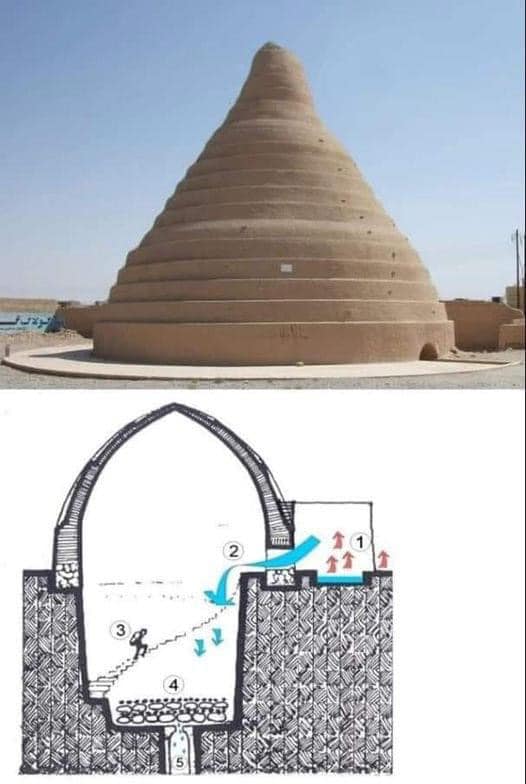
Ice making during the Persian Empire in the middle of the desert: the Yakhchal or “Ice Pit” is an architectural method that was used to produce ice and preserve food. The Persians were already making tons of ice and freezing food in the desert 2,400 years ago.
1- Design of the structure: The Yakchal had a dome shape with thick walls made of bricks and clay. This construction helped maintain a cool temperature inside the vault.
2- Water collection: During the winter, water was collected from rivers or from melting snow in the mountains. This water was directed towards the Yakchal through canals.
3- Freezing process: The water was distributed in small ponds or pools within the vault. During the night and in the coldest hours of the day, the water would freeze due to the low temperatures of the desert at night.
4- Ice storage: Once frozen, the ice was cut into blocks and stored in the lowest part of the Yakchal, where the temperature was coldest. The dome shape and natural insulation of the walls helped keep the ice frozen for many months.
5- Later use: During the summer, the stored ice was used to cool drinks, preserve food or even for medical purposes if necessary. In short, the Yakchal took advantage of the natural cold of desert nights to create and preserve ice, using simple but effective storage and thermal insulation techniques.
Building a Yakhchal in the desert, following the ancient Persian method, involves several steps that require careful planning, engineering, and understanding of the local environment. Heres a step-by-step guide:
### 1. **Site Selection**
- **Choose the Location**: Find a suitable location where the desert temperature drops significantly at night, ideally near a water source like a qanat (underground water canal) or a river.
- **Consider the Suns Path**: The Yakhchal should be oriented to minimize sun exposure during the hottest part of the day. Typically, it would be positioned with the entrance facing north.
### 2. **Design and Planning**
- **Determine the Size**: Decide on the size of the Yakhchal based on the amount of ice you need to produce and store. Traditional Yakhchals were large, with some domes reaching heights of 10-15 meters (33-50 feet).
- **Architectural Plan**: Design the Yakhchal with a dome shape and thick walls. The structure will have an underground storage pit, shallow water pools or channels, and a ventilation system.
### 3. **Material Gathering**
- **Collect Sarooj Ingredients**: Gather materials for sarooj, the waterproof and insulating mortar. You will need sand, clay, egg whites, lime, goat hair, and ash.
- **Bricks**: Make or source large bricks from mud or clay. The bricks should be thick and sturdy to support the massive walls.
- **Wood and Other Materials**: Collect wood for scaffolding and any other tools needed for construction.
### 4. **Foundation and Excavation**
- **Excavate the Pit**: Dig a deep pit in the ground, which will serve as the ice storage area. The depth can vary, but it needs to be deep enough to stay cool during the summer. Traditional pits could be several meters deep.
- **Create the Foundation**: Lay a solid foundation using large stones or bricks to support the structure and ensure stability.
### 5. **Construction of the Dome**
- **Build the Walls**: Start building the walls using the bricks and sarooj mortar. The walls should be thick (up to 2 meters) to provide insulation.
- **Shape the Dome**: Gradually curve the walls inward as you build upwards to form the dome shape. The dome helps with temperature regulation and structural integrity.
- **Ventilation and Water Channels**: Incorporate ventilation shafts or openings at the top of the dome to allow hot air to escape. Also, create channels for directing water into the pools or pits inside the Yakhchal.
### 6. **Plastering and Finishing**
- **Apply Sarooj**: Once the dome is complete, apply a layer of sarooj on both the interior and exterior surfaces. This layer will make the structure waterproof and add an additional layer of insulation.
- **Final Adjustments**: Ensure all ventilation shafts are properly positioned and that the water channels lead efficiently into the freezing area.
### 7. **Water Management**
- **Winter Water Collection**: During the winter months, collect water from nearby rivers, qanats, or melting snow in the mountains.
- **Direct Water to Yakhchal**: Use canals to direct the water into the shallow pools or channels inside the Yakhchal.
### 8. **Ice Production**
- **Freeze Water**: Allow the water to freeze overnight during the cold desert nights. The shallow depth of the pools and the exposure to the night sky will encourage rapid freezing.
- **Ice Harvesting**: Once the water has frozen, cut the ice into blocks and move them to the storage pit in the Yakhchal.
### 9. **Ice Storage**
- **Stack Ice Blocks**: Place the ice blocks in the deepest part of the Yakhchal, where the temperature remains the coolest.
- **Insulate**: Cover the ice with straw or other insulating materials to prevent melting.
### 10. **Maintenance and Use**
- **Monitor the Yakhchal**: Regularly check the structure for any signs of damage or cracks in the sarooj, repairing them as needed to maintain insulation.
- **Use the Ice**: Throughout the year, as needed, retrieve the ice for cooling drinks, preserving food, or any other purposes.
### 11. **Long-Term Preservation**
- **Care for the Structure**: The Yakhchal should be maintained year-round to ensure its longevity. The thick walls and dome structure, combined with periodic repairs, will help it last for many years.
### 12. **Environmental Considerations**
- **Adapt to Climate**: Take into account the local climate and adjust the design accordingly. The method works best in areas where the temperature drops significantly at night.
- **Water Sources**: Ensure a sustainable water source, as the freezing process relies heavily on the availability of water during the winter months.
By following these steps, it is possible to construct a Yakhchal, replicating the ancient Persian technique to create and store ice in desert environments using nothing more than traditional materials and an understanding of local environmental conditions.
1- Design of the structure: The Yakchal had a dome shape with thick walls made of bricks and clay. This construction helped maintain a cool temperature inside the vault.
2- Water collection: During the winter, water was collected from rivers or from melting snow in the mountains. This water was directed towards the Yakchal through canals.
3- Freezing process: The water was distributed in small ponds or pools within the vault. During the night and in the coldest hours of the day, the water would freeze due to the low temperatures of the desert at night.
4- Ice storage: Once frozen, the ice was cut into blocks and stored in the lowest part of the Yakchal, where the temperature was coldest. The dome shape and natural insulation of the walls helped keep the ice frozen for many months.
5- Later use: During the summer, the stored ice was used to cool drinks, preserve food or even for medical purposes if necessary. In short, the Yakchal took advantage of the natural cold of desert nights to create and preserve ice, using simple but effective storage and thermal insulation techniques.
Building a Yakhchal in the desert, following the ancient Persian method, involves several steps that require careful planning, engineering, and understanding of the local environment. Heres a step-by-step guide:
### 1. **Site Selection**
- **Choose the Location**: Find a suitable location where the desert temperature drops significantly at night, ideally near a water source like a qanat (underground water canal) or a river.
- **Consider the Suns Path**: The Yakhchal should be oriented to minimize sun exposure during the hottest part of the day. Typically, it would be positioned with the entrance facing north.
### 2. **Design and Planning**
- **Determine the Size**: Decide on the size of the Yakhchal based on the amount of ice you need to produce and store. Traditional Yakhchals were large, with some domes reaching heights of 10-15 meters (33-50 feet).
- **Architectural Plan**: Design the Yakhchal with a dome shape and thick walls. The structure will have an underground storage pit, shallow water pools or channels, and a ventilation system.
### 3. **Material Gathering**
- **Collect Sarooj Ingredients**: Gather materials for sarooj, the waterproof and insulating mortar. You will need sand, clay, egg whites, lime, goat hair, and ash.
- **Bricks**: Make or source large bricks from mud or clay. The bricks should be thick and sturdy to support the massive walls.
- **Wood and Other Materials**: Collect wood for scaffolding and any other tools needed for construction.
### 4. **Foundation and Excavation**
- **Excavate the Pit**: Dig a deep pit in the ground, which will serve as the ice storage area. The depth can vary, but it needs to be deep enough to stay cool during the summer. Traditional pits could be several meters deep.
- **Create the Foundation**: Lay a solid foundation using large stones or bricks to support the structure and ensure stability.
### 5. **Construction of the Dome**
- **Build the Walls**: Start building the walls using the bricks and sarooj mortar. The walls should be thick (up to 2 meters) to provide insulation.
- **Shape the Dome**: Gradually curve the walls inward as you build upwards to form the dome shape. The dome helps with temperature regulation and structural integrity.
- **Ventilation and Water Channels**: Incorporate ventilation shafts or openings at the top of the dome to allow hot air to escape. Also, create channels for directing water into the pools or pits inside the Yakhchal.
### 6. **Plastering and Finishing**
- **Apply Sarooj**: Once the dome is complete, apply a layer of sarooj on both the interior and exterior surfaces. This layer will make the structure waterproof and add an additional layer of insulation.
- **Final Adjustments**: Ensure all ventilation shafts are properly positioned and that the water channels lead efficiently into the freezing area.
### 7. **Water Management**
- **Winter Water Collection**: During the winter months, collect water from nearby rivers, qanats, or melting snow in the mountains.
- **Direct Water to Yakhchal**: Use canals to direct the water into the shallow pools or channels inside the Yakhchal.
### 8. **Ice Production**
- **Freeze Water**: Allow the water to freeze overnight during the cold desert nights. The shallow depth of the pools and the exposure to the night sky will encourage rapid freezing.
- **Ice Harvesting**: Once the water has frozen, cut the ice into blocks and move them to the storage pit in the Yakhchal.
### 9. **Ice Storage**
- **Stack Ice Blocks**: Place the ice blocks in the deepest part of the Yakhchal, where the temperature remains the coolest.
- **Insulate**: Cover the ice with straw or other insulating materials to prevent melting.
### 10. **Maintenance and Use**
- **Monitor the Yakhchal**: Regularly check the structure for any signs of damage or cracks in the sarooj, repairing them as needed to maintain insulation.
- **Use the Ice**: Throughout the year, as needed, retrieve the ice for cooling drinks, preserving food, or any other purposes.
### 11. **Long-Term Preservation**
- **Care for the Structure**: The Yakhchal should be maintained year-round to ensure its longevity. The thick walls and dome structure, combined with periodic repairs, will help it last for many years.
### 12. **Environmental Considerations**
- **Adapt to Climate**: Take into account the local climate and adjust the design accordingly. The method works best in areas where the temperature drops significantly at night.
- **Water Sources**: Ensure a sustainable water source, as the freezing process relies heavily on the availability of water during the winter months.
By following these steps, it is possible to construct a Yakhchal, replicating the ancient Persian technique to create and store ice in desert environments using nothing more than traditional materials and an understanding of local environmental conditions.
Ice making during the Persian Empire in the middle of the desert: the Yakhchal or “Ice Pit” is an architectural method that was used to produce ice and preserve food. The Persians were already making tons of ice and freezing food in the desert 2,400 years ago.
1- Design of the structure: The Yakchal had a dome shape with thick walls made of bricks and clay. This construction helped maintain a cool temperature inside the vault.
2- Water collection: During the winter, water was collected from rivers or from melting snow in the mountains. This water was directed towards the Yakchal through canals.
3- Freezing process: The water was distributed in small ponds or pools within the vault. During the night and in the coldest hours of the day, the water would freeze due to the low temperatures of the desert at night.
4- Ice storage: Once frozen, the ice was cut into blocks and stored in the lowest part of the Yakchal, where the temperature was coldest. The dome shape and natural insulation of the walls helped keep the ice frozen for many months.
5- Later use: During the summer, the stored ice was used to cool drinks, preserve food or even for medical purposes if necessary. In short, the Yakchal took advantage of the natural cold of desert nights to create and preserve ice, using simple but effective storage and thermal insulation techniques.
Building a Yakhchal in the desert, following the ancient Persian method, involves several steps that require careful planning, engineering, and understanding of the local environment. Here's a step-by-step guide:
### 1. **Site Selection**
- **Choose the Location**: Find a suitable location where the desert temperature drops significantly at night, ideally near a water source like a qanat (underground water canal) or a river.
- **Consider the Sun's Path**: The Yakhchal should be oriented to minimize sun exposure during the hottest part of the day. Typically, it would be positioned with the entrance facing north.
### 2. **Design and Planning**
- **Determine the Size**: Decide on the size of the Yakhchal based on the amount of ice you need to produce and store. Traditional Yakhchals were large, with some domes reaching heights of 10-15 meters (33-50 feet).
- **Architectural Plan**: Design the Yakhchal with a dome shape and thick walls. The structure will have an underground storage pit, shallow water pools or channels, and a ventilation system.
### 3. **Material Gathering**
- **Collect Sarooj Ingredients**: Gather materials for sarooj, the waterproof and insulating mortar. You will need sand, clay, egg whites, lime, goat hair, and ash.
- **Bricks**: Make or source large bricks from mud or clay. The bricks should be thick and sturdy to support the massive walls.
- **Wood and Other Materials**: Collect wood for scaffolding and any other tools needed for construction.
### 4. **Foundation and Excavation**
- **Excavate the Pit**: Dig a deep pit in the ground, which will serve as the ice storage area. The depth can vary, but it needs to be deep enough to stay cool during the summer. Traditional pits could be several meters deep.
- **Create the Foundation**: Lay a solid foundation using large stones or bricks to support the structure and ensure stability.
### 5. **Construction of the Dome**
- **Build the Walls**: Start building the walls using the bricks and sarooj mortar. The walls should be thick (up to 2 meters) to provide insulation.
- **Shape the Dome**: Gradually curve the walls inward as you build upwards to form the dome shape. The dome helps with temperature regulation and structural integrity.
- **Ventilation and Water Channels**: Incorporate ventilation shafts or openings at the top of the dome to allow hot air to escape. Also, create channels for directing water into the pools or pits inside the Yakhchal.
### 6. **Plastering and Finishing**
- **Apply Sarooj**: Once the dome is complete, apply a layer of sarooj on both the interior and exterior surfaces. This layer will make the structure waterproof and add an additional layer of insulation.
- **Final Adjustments**: Ensure all ventilation shafts are properly positioned and that the water channels lead efficiently into the freezing area.
### 7. **Water Management**
- **Winter Water Collection**: During the winter months, collect water from nearby rivers, qanats, or melting snow in the mountains.
- **Direct Water to Yakhchal**: Use canals to direct the water into the shallow pools or channels inside the Yakhchal.
### 8. **Ice Production**
- **Freeze Water**: Allow the water to freeze overnight during the cold desert nights. The shallow depth of the pools and the exposure to the night sky will encourage rapid freezing.
- **Ice Harvesting**: Once the water has frozen, cut the ice into blocks and move them to the storage pit in the Yakhchal.
### 9. **Ice Storage**
- **Stack Ice Blocks**: Place the ice blocks in the deepest part of the Yakhchal, where the temperature remains the coolest.
- **Insulate**: Cover the ice with straw or other insulating materials to prevent melting.
### 10. **Maintenance and Use**
- **Monitor the Yakhchal**: Regularly check the structure for any signs of damage or cracks in the sarooj, repairing them as needed to maintain insulation.
- **Use the Ice**: Throughout the year, as needed, retrieve the ice for cooling drinks, preserving food, or any other purposes.
### 11. **Long-Term Preservation**
- **Care for the Structure**: The Yakhchal should be maintained year-round to ensure its longevity. The thick walls and dome structure, combined with periodic repairs, will help it last for many years.
### 12. **Environmental Considerations**
- **Adapt to Climate**: Take into account the local climate and adjust the design accordingly. The method works best in areas where the temperature drops significantly at night.
- **Water Sources**: Ensure a sustainable water source, as the freezing process relies heavily on the availability of water during the winter months.
By following these steps, it is possible to construct a Yakhchal, replicating the ancient Persian technique to create and store ice in desert environments using nothing more than traditional materials and an understanding of local environmental conditions.
0 Σχόλια
0 Μοιράστηκε
686 Views