


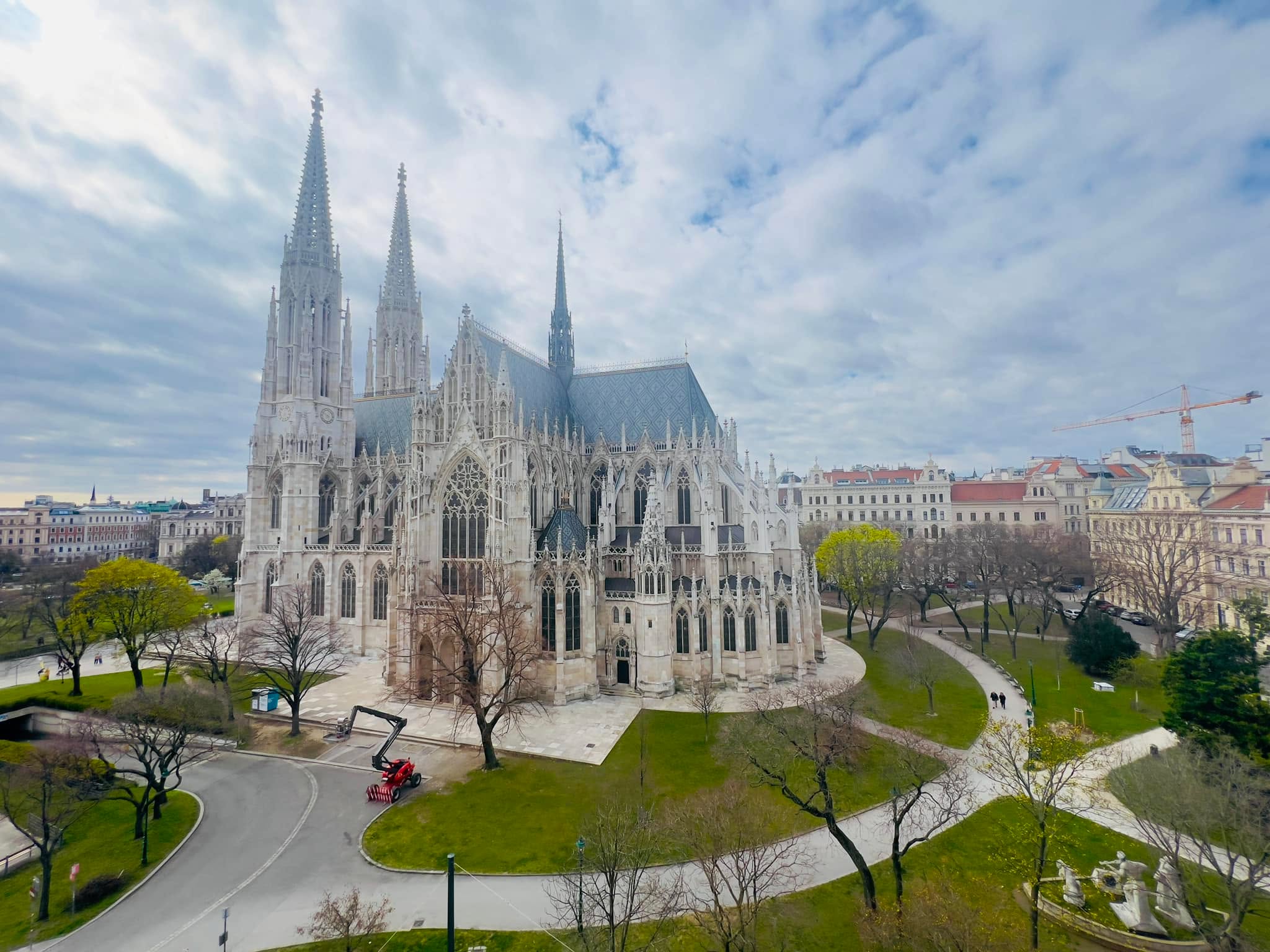
The Votivkirche, or Votive Church, is a neo-Gothic church located in Vienna, Austria. It stands as a monumental symbol of gratitude and a votive offering to God for the survival of Emperor Franz Joseph I of Austria. The churchs history is closely tied to a dramatic event in the emperors life.
On February 18, 1853, a young Hungarian nationalist named János Libényi attempted to assassinate Emperor Franz Joseph. The emperor was walking along a promenade in Vienna when Libényi attacked him with a knife. Fortunately, Franz Joseph survived the attempt on his life, largely due to the thick military collar he was wearing, which prevented the knife from causing a fatal injury.
In gratitude for the emperors miraculous survival, his brother, Archduke Ferdinand Maximilian (who would later become Emperor Maximilian I of Mexico), initiated the idea of building a church. The purpose was to create a votive offering to God, thanking Him for saving the emperors life. This idea was supported by donations from across the Austrian Empire, making it a church funded by the people.
An international competition was held to select the design for the church, which attracted 75 entries. The winning design was submitted by Heinrich von Ferstel, a 26-year-old architect who proposed a neo-Gothic structure inspired by the great Gothic cathedrals of France. This style was chosen to symbolize the medieval Christian values and the continuity of the Habsburg dynasty.
Construction of the Votivkirche began in 1856 but was not completed until 1879, due to various delays including financial issues and the architects health problems. The church was consecrated on April 24, 1879, coinciding with the silver wedding anniversary of Emperor Franz Joseph and Empress Elisabeth.
The Votivkirche is renowned for its impressive architecture, including its twin spires which dominate the Vienna skyline, intricate stone work, and beautiful stained glass windows. It stands near the University of Vienna and the Sigmund Freud Park, making it a prominent landmark in the city. Over the years, it has not only been a place of worship but also a symbol of the resilience and unity of the Austrian people.
On February 18, 1853, a young Hungarian nationalist named János Libényi attempted to assassinate Emperor Franz Joseph. The emperor was walking along a promenade in Vienna when Libényi attacked him with a knife. Fortunately, Franz Joseph survived the attempt on his life, largely due to the thick military collar he was wearing, which prevented the knife from causing a fatal injury.
In gratitude for the emperors miraculous survival, his brother, Archduke Ferdinand Maximilian (who would later become Emperor Maximilian I of Mexico), initiated the idea of building a church. The purpose was to create a votive offering to God, thanking Him for saving the emperors life. This idea was supported by donations from across the Austrian Empire, making it a church funded by the people.
An international competition was held to select the design for the church, which attracted 75 entries. The winning design was submitted by Heinrich von Ferstel, a 26-year-old architect who proposed a neo-Gothic structure inspired by the great Gothic cathedrals of France. This style was chosen to symbolize the medieval Christian values and the continuity of the Habsburg dynasty.
Construction of the Votivkirche began in 1856 but was not completed until 1879, due to various delays including financial issues and the architects health problems. The church was consecrated on April 24, 1879, coinciding with the silver wedding anniversary of Emperor Franz Joseph and Empress Elisabeth.
The Votivkirche is renowned for its impressive architecture, including its twin spires which dominate the Vienna skyline, intricate stone work, and beautiful stained glass windows. It stands near the University of Vienna and the Sigmund Freud Park, making it a prominent landmark in the city. Over the years, it has not only been a place of worship but also a symbol of the resilience and unity of the Austrian people.
The Votivkirche, or Votive Church, is a neo-Gothic church located in Vienna, Austria. It stands as a monumental symbol of gratitude and a votive offering to God for the survival of Emperor Franz Joseph I of Austria. The church's history is closely tied to a dramatic event in the emperor's life.
On February 18, 1853, a young Hungarian nationalist named János Libényi attempted to assassinate Emperor Franz Joseph. The emperor was walking along a promenade in Vienna when Libényi attacked him with a knife. Fortunately, Franz Joseph survived the attempt on his life, largely due to the thick military collar he was wearing, which prevented the knife from causing a fatal injury.
In gratitude for the emperor's miraculous survival, his brother, Archduke Ferdinand Maximilian (who would later become Emperor Maximilian I of Mexico), initiated the idea of building a church. The purpose was to create a votive offering to God, thanking Him for saving the emperor's life. This idea was supported by donations from across the Austrian Empire, making it a church funded by the people.
An international competition was held to select the design for the church, which attracted 75 entries. The winning design was submitted by Heinrich von Ferstel, a 26-year-old architect who proposed a neo-Gothic structure inspired by the great Gothic cathedrals of France. This style was chosen to symbolize the medieval Christian values and the continuity of the Habsburg dynasty.
Construction of the Votivkirche began in 1856 but was not completed until 1879, due to various delays including financial issues and the architect's health problems. The church was consecrated on April 24, 1879, coinciding with the silver wedding anniversary of Emperor Franz Joseph and Empress Elisabeth.
The Votivkirche is renowned for its impressive architecture, including its twin spires which dominate the Vienna skyline, intricate stone work, and beautiful stained glass windows. It stands near the University of Vienna and the Sigmund Freud Park, making it a prominent landmark in the city. Over the years, it has not only been a place of worship but also a symbol of the resilience and unity of the Austrian people.
0 تبصرے
0 شیئرز
49 ویوز