


Driving left or right !
The convention of driving on a particular side of the road dates back much further than cars themselves, originating from the days of horse traffic. The choice of side for driving is deeply rooted in history and varies based on cultural and historical factors.
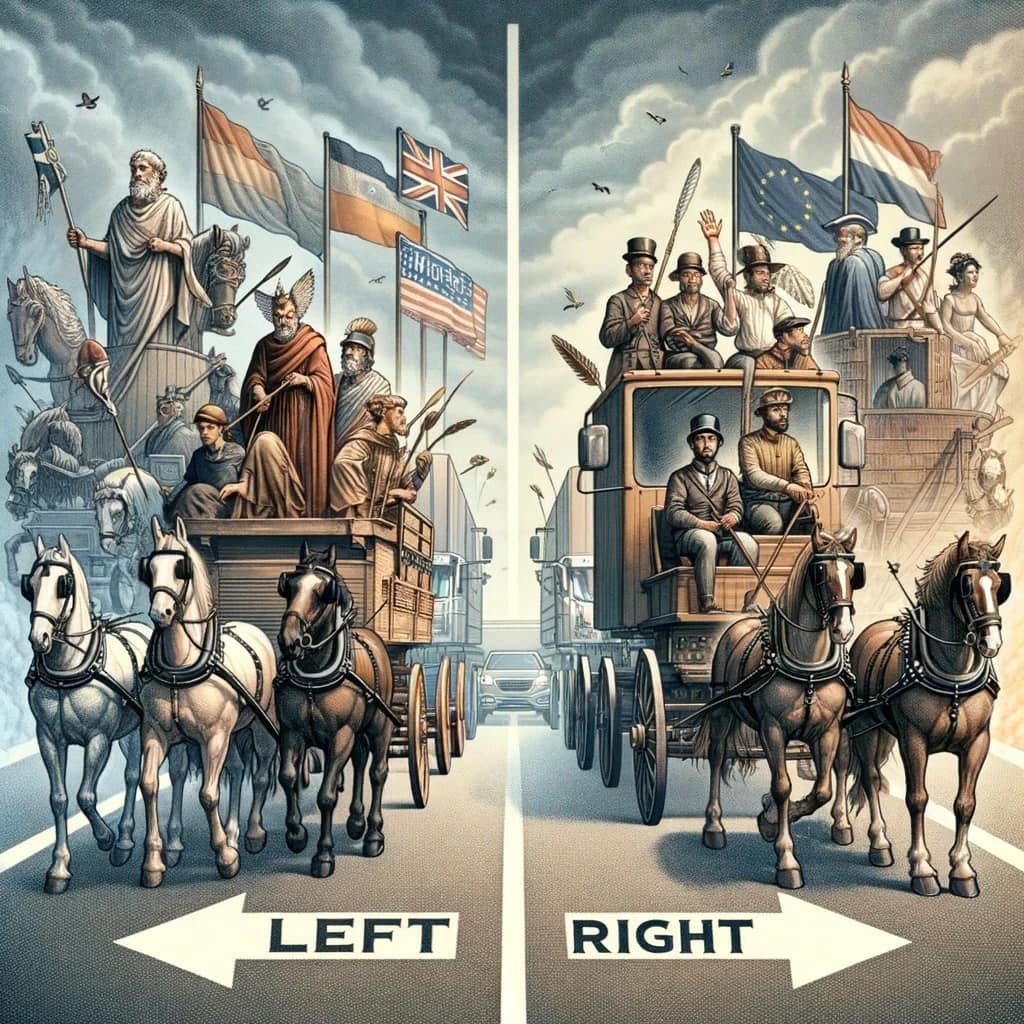
1. **Left-Side Driving**: Historically, driving on the left was more common. This practice dates back to ancient Rome, where cart drivers would ride on the left side of the road so that their right hand, usually the dominant hand, was free to greet other drivers or defend themselves with a weapon if necessary. This custom persisted in medieval Europe for similar reasons; knights preferred to keep to the left to have their right arm nearer to an opponent.
2. **Right-Side Driving**: The shift to driving on the right began in part with the increasing use of large freight wagons pulled by several pairs of horses. These wagons had no driver’s seat, so the driver sat on the left rear horse, using their right hand to control the team. Sitting on the left required them to ride on the right side of the road to see oncoming traffic and avoid collisions. This practice was prevalent in the United States and France, among other places.
The change from left to right in many countries was influenced by several factors:
- **Colonial Influence**: In some regions, colonial powers imposed their own driving customs. For instance, British colonies adopted left-side driving, while American, Portuguese, or Spanish territories took up right-side driving.
- **Neighboring Countries**: To have uniform traffic flow, countries sometimes switched to match their neighbors. For example, when Germany annexed Austria in 1938, Austria switched to driving on the right to match Germany.
- **Regulation and Standardization**: The increase in international travel and automobile use in the 20th century led to a need for standardization. Many countries that drove on the left switched to the right to conform to their neighbors and improve traffic flow, often influenced by economic or political alliances.
Even with these shifts, not every country conformed, leading to the current situation where approximately 65% of the worlds population drives on the right and 35% on the left. The division remains a fascinating example of how historical, cultural, and practical considerations can lead to significant differences in everyday practices like driving.
The convention of driving on a particular side of the road dates back much further than cars themselves, originating from the days of horse traffic. The choice of side for driving is deeply rooted in history and varies based on cultural and historical factors.
1. **Left-Side Driving**: Historically, driving on the left was more common. This practice dates back to ancient Rome, where cart drivers would ride on the left side of the road so that their right hand, usually the dominant hand, was free to greet other drivers or defend themselves with a weapon if necessary. This custom persisted in medieval Europe for similar reasons; knights preferred to keep to the left to have their right arm nearer to an opponent.
2. **Right-Side Driving**: The shift to driving on the right began in part with the increasing use of large freight wagons pulled by several pairs of horses. These wagons had no driver’s seat, so the driver sat on the left rear horse, using their right hand to control the team. Sitting on the left required them to ride on the right side of the road to see oncoming traffic and avoid collisions. This practice was prevalent in the United States and France, among other places.
The change from left to right in many countries was influenced by several factors:
- **Colonial Influence**: In some regions, colonial powers imposed their own driving customs. For instance, British colonies adopted left-side driving, while American, Portuguese, or Spanish territories took up right-side driving.
- **Neighboring Countries**: To have uniform traffic flow, countries sometimes switched to match their neighbors. For example, when Germany annexed Austria in 1938, Austria switched to driving on the right to match Germany.
- **Regulation and Standardization**: The increase in international travel and automobile use in the 20th century led to a need for standardization. Many countries that drove on the left switched to the right to conform to their neighbors and improve traffic flow, often influenced by economic or political alliances.
Even with these shifts, not every country conformed, leading to the current situation where approximately 65% of the worlds population drives on the right and 35% on the left. The division remains a fascinating example of how historical, cultural, and practical considerations can lead to significant differences in everyday practices like driving.
Driving left or right !
The convention of driving on a particular side of the road dates back much further than cars themselves, originating from the days of horse traffic. The choice of side for driving is deeply rooted in history and varies based on cultural and historical factors.
1. **Left-Side Driving**: Historically, driving on the left was more common. This practice dates back to ancient Rome, where cart drivers would ride on the left side of the road so that their right hand, usually the dominant hand, was free to greet other drivers or defend themselves with a weapon if necessary. This custom persisted in medieval Europe for similar reasons; knights preferred to keep to the left to have their right arm nearer to an opponent.
2. **Right-Side Driving**: The shift to driving on the right began in part with the increasing use of large freight wagons pulled by several pairs of horses. These wagons had no driver’s seat, so the driver sat on the left rear horse, using their right hand to control the team. Sitting on the left required them to ride on the right side of the road to see oncoming traffic and avoid collisions. This practice was prevalent in the United States and France, among other places.
The change from left to right in many countries was influenced by several factors:
- **Colonial Influence**: In some regions, colonial powers imposed their own driving customs. For instance, British colonies adopted left-side driving, while American, Portuguese, or Spanish territories took up right-side driving.
- **Neighboring Countries**: To have uniform traffic flow, countries sometimes switched to match their neighbors. For example, when Germany annexed Austria in 1938, Austria switched to driving on the right to match Germany.
- **Regulation and Standardization**: The increase in international travel and automobile use in the 20th century led to a need for standardization. Many countries that drove on the left switched to the right to conform to their neighbors and improve traffic flow, often influenced by economic or political alliances.
Even with these shifts, not every country conformed, leading to the current situation where approximately 65% of the world's population drives on the right and 35% on the left. The division remains a fascinating example of how historical, cultural, and practical considerations can lead to significant differences in everyday practices like driving.
0 Комментарии
0 Поделились
23 Просмотры