


Connaught place of Lahore
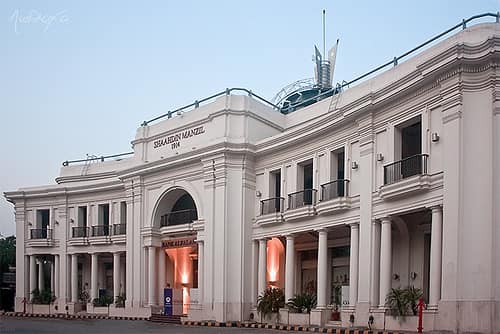
Shahdin Manzil, located in Lahore, holds a significant place in the citys history. Constructed in 1914, it has been a silent witness to the evolution of Pakistan and the transformation of the surrounding area. The building is noted for its architectural importance in the layout of Charing Cross, where it stands alongside the Masonic Lodge. Its location on the Mall Road, once the center of the city, underlines its historical significance, particularly during the British era when it was a hub for the higher rungs of society.
The building was once home to the Lorangs, renowned as the finest restaurant in town and frequented by the elite. Nearby was another restaurant, Stiffles, known for its English ambiance, where guests dined in dinner jackets and enjoyed dancing. Both establishments were celebrated for their quality and were popular destinations in their time.
Interestingly, Shahdin Manzil was one of the few buildings on the Mall owned by Muslims and was possibly the first Muslim-owned building in the area. It was named after Mian Shahdin, the first Muslim judge of the Punjab Chief Court, and was provided by the Mian Arain family of Lahore.
Over the years, Shahdin Manzil has undergone various transformations. It has housed high-end restaurants, the office of the United Press of Pakistan, and even an EMI office for recordings. The buildings backside served as a PIA office in the 1960s. Despite these changes, it has always remained privately owned, which makes detailed records of its history somewhat scarce.
Today, Shahdin Manzil is part of the modern landscape, having witnessed significant events such as the construction of the Assembly hall by the British, the movements and riots leading to the end of British rule, and the evolution of Pakistan itself. The buildings façade has been preserved during renovations, while its interiors have been modernized, reflecting the changing times.
Shahdin Manzils century-long history encapsulates the cultural and political shifts in Lahore, making it a notable landmark in the citys rich heritage [oai_citation:1,A silent spectator of history | Shehr | thenews.com.pk](https://www.thenews.com.pk/tns/detail/555809-shahdin-manzil-lahore) [oai_citation:2,Charing Cross: A snapshot of Lahores multicultural past](https://www.geo.tv/latest/132612-Charing-Cross-A-snapshot-of-Lahores-multicultural-past) [oai_citation:3,Shahdin Manzil Faisal Chowk - Ghoomlo.pk](https://ghoomlo.pk/places/pakistan/punjab/lahore/city-sightseeings/shahdin-manzil-faisal-chowk/).
Shahdin Manzil, located in Lahore, holds a significant place in the citys history. Constructed in 1914, it has been a silent witness to the evolution of Pakistan and the transformation of the surrounding area. The building is noted for its architectural importance in the layout of Charing Cross, where it stands alongside the Masonic Lodge. Its location on the Mall Road, once the center of the city, underlines its historical significance, particularly during the British era when it was a hub for the higher rungs of society.
The building was once home to the Lorangs, renowned as the finest restaurant in town and frequented by the elite. Nearby was another restaurant, Stiffles, known for its English ambiance, where guests dined in dinner jackets and enjoyed dancing. Both establishments were celebrated for their quality and were popular destinations in their time.
Interestingly, Shahdin Manzil was one of the few buildings on the Mall owned by Muslims and was possibly the first Muslim-owned building in the area. It was named after Mian Shahdin, the first Muslim judge of the Punjab Chief Court, and was provided by the Mian Arain family of Lahore.
Over the years, Shahdin Manzil has undergone various transformations. It has housed high-end restaurants, the office of the United Press of Pakistan, and even an EMI office for recordings. The buildings backside served as a PIA office in the 1960s. Despite these changes, it has always remained privately owned, which makes detailed records of its history somewhat scarce.
Today, Shahdin Manzil is part of the modern landscape, having witnessed significant events such as the construction of the Assembly hall by the British, the movements and riots leading to the end of British rule, and the evolution of Pakistan itself. The buildings façade has been preserved during renovations, while its interiors have been modernized, reflecting the changing times.
Shahdin Manzils century-long history encapsulates the cultural and political shifts in Lahore, making it a notable landmark in the citys rich heritage [oai_citation:1,A silent spectator of history | Shehr | thenews.com.pk](https://www.thenews.com.pk/tns/detail/555809-shahdin-manzil-lahore) [oai_citation:2,Charing Cross: A snapshot of Lahores multicultural past](https://www.geo.tv/latest/132612-Charing-Cross-A-snapshot-of-Lahores-multicultural-past) [oai_citation:3,Shahdin Manzil Faisal Chowk - Ghoomlo.pk](https://ghoomlo.pk/places/pakistan/punjab/lahore/city-sightseeings/shahdin-manzil-faisal-chowk/).
Connaught place of Lahore
Shahdin Manzil, located in Lahore, holds a significant place in the city's history. Constructed in 1914, it has been a silent witness to the evolution of Pakistan and the transformation of the surrounding area. The building is noted for its architectural importance in the layout of Charing Cross, where it stands alongside the Masonic Lodge. Its location on the Mall Road, once the center of the city, underlines its historical significance, particularly during the British era when it was a hub for the higher rungs of society.
The building was once home to the Lorangs, renowned as the finest restaurant in town and frequented by the elite. Nearby was another restaurant, Stiffles, known for its English ambiance, where guests dined in dinner jackets and enjoyed dancing. Both establishments were celebrated for their quality and were popular destinations in their time.
Interestingly, Shahdin Manzil was one of the few buildings on the Mall owned by Muslims and was possibly the first Muslim-owned building in the area. It was named after Mian Shahdin, the first Muslim judge of the Punjab Chief Court, and was provided by the Mian Arain family of Lahore.
Over the years, Shahdin Manzil has undergone various transformations. It has housed high-end restaurants, the office of the United Press of Pakistan, and even an EMI office for recordings. The building's backside served as a PIA office in the 1960s. Despite these changes, it has always remained privately owned, which makes detailed records of its history somewhat scarce.
Today, Shahdin Manzil is part of the modern landscape, having witnessed significant events such as the construction of the Assembly hall by the British, the movements and riots leading to the end of British rule, and the evolution of Pakistan itself. The building's façade has been preserved during renovations, while its interiors have been modernized, reflecting the changing times.
Shahdin Manzil's century-long history encapsulates the cultural and political shifts in Lahore, making it a notable landmark in the city's rich heritage [oai_citation:1,A silent spectator of history | Shehr | thenews.com.pk](https://www.thenews.com.pk/tns/detail/555809-shahdin-manzil-lahore) [oai_citation:2,Charing Cross: A snapshot of Lahore's multicultural past](https://www.geo.tv/latest/132612-Charing-Cross-A-snapshot-of-Lahores-multicultural-past) [oai_citation:3,Shahdin Manzil Faisal Chowk - Ghoomlo.pk](https://ghoomlo.pk/places/pakistan/punjab/lahore/city-sightseeings/shahdin-manzil-faisal-chowk/).
0 Σχόλια
0 Μοιράστηκε
120 Views