


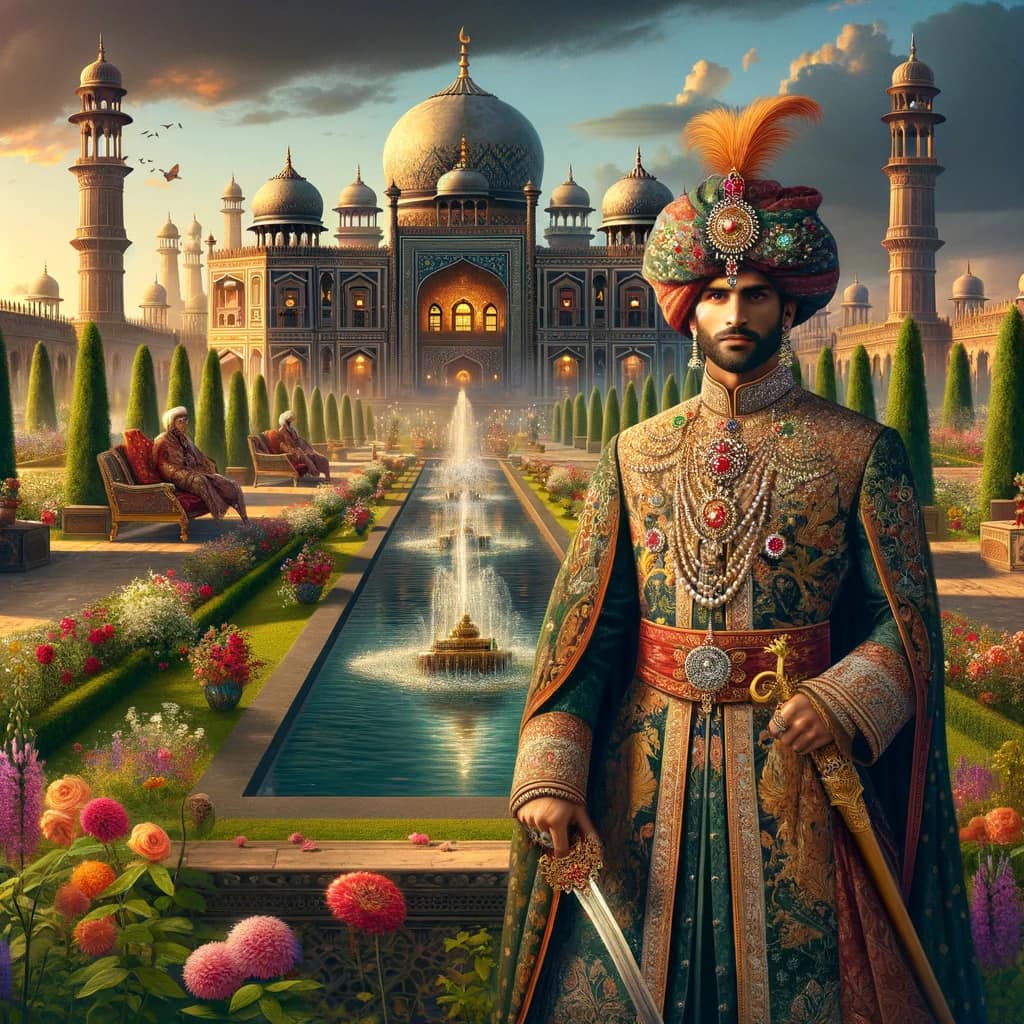
Mughal Emperor Babur, whose full name was Zahir-ud-din Muhammad Babur, was the founder of the Mughal Empire in the Indian subcontinent. He was born on February 14, 1483, in the Fergana Valley, which is now part of Uzbekistan. Babur was a descendant of Timur on his fathers side and Genghis Khan on his mothers side, giving him a prestigious lineage.
Key points about Babur:
1. **Early Life and Struggles**: Babur became the ruler of Fergana at a young age after the death of his father. His early reign was marked by challenges, including revolts and invasions by rivals.
2. **Conquests**: He eventually lost his kingdom and sought to expand elsewhere, leading him to invade Afghanistan and then the Indian subcontinent.
3. **Establishment of the Mughal Empire**: Baburs most significant achievement was the founding of the Mughal Empire in India. He defeated the Sultan of Delhi, Ibrahim Lodi, at the Battle of Panipat in 1526, which marked the beginning of Mughal rule in India.
4. **Cultural Contributions**: Babur is known for his contributions to literature and architecture. He was a patron of the arts and wrote his autobiography, the "Baburnama," which provides a vivid account of his life and the times.
5. **Legacy and Death**: Baburs legacy is marked by his ability to establish a powerful and enduring empire, which was expanded by his successors. He passed away in 1530 and was initially buried in Agra before his remains were moved to Kabul, as per his wishes.
Baburs role as the founder of the Mughal Empire makes him a pivotal figure in South Asian history, and his legacy is remembered for the cultural and political transformation he brought to the region.
Key points about Babur:
1. **Early Life and Struggles**: Babur became the ruler of Fergana at a young age after the death of his father. His early reign was marked by challenges, including revolts and invasions by rivals.
2. **Conquests**: He eventually lost his kingdom and sought to expand elsewhere, leading him to invade Afghanistan and then the Indian subcontinent.
3. **Establishment of the Mughal Empire**: Baburs most significant achievement was the founding of the Mughal Empire in India. He defeated the Sultan of Delhi, Ibrahim Lodi, at the Battle of Panipat in 1526, which marked the beginning of Mughal rule in India.
4. **Cultural Contributions**: Babur is known for his contributions to literature and architecture. He was a patron of the arts and wrote his autobiography, the "Baburnama," which provides a vivid account of his life and the times.
5. **Legacy and Death**: Baburs legacy is marked by his ability to establish a powerful and enduring empire, which was expanded by his successors. He passed away in 1530 and was initially buried in Agra before his remains were moved to Kabul, as per his wishes.
Baburs role as the founder of the Mughal Empire makes him a pivotal figure in South Asian history, and his legacy is remembered for the cultural and political transformation he brought to the region.
Mughal Emperor Babur, whose full name was Zahir-ud-din Muhammad Babur, was the founder of the Mughal Empire in the Indian subcontinent. He was born on February 14, 1483, in the Fergana Valley, which is now part of Uzbekistan. Babur was a descendant of Timur on his father's side and Genghis Khan on his mother's side, giving him a prestigious lineage.
Key points about Babur:
1. **Early Life and Struggles**: Babur became the ruler of Fergana at a young age after the death of his father. His early reign was marked by challenges, including revolts and invasions by rivals.
2. **Conquests**: He eventually lost his kingdom and sought to expand elsewhere, leading him to invade Afghanistan and then the Indian subcontinent.
3. **Establishment of the Mughal Empire**: Babur's most significant achievement was the founding of the Mughal Empire in India. He defeated the Sultan of Delhi, Ibrahim Lodi, at the Battle of Panipat in 1526, which marked the beginning of Mughal rule in India.
4. **Cultural Contributions**: Babur is known for his contributions to literature and architecture. He was a patron of the arts and wrote his autobiography, the "Baburnama," which provides a vivid account of his life and the times.
5. **Legacy and Death**: Babur's legacy is marked by his ability to establish a powerful and enduring empire, which was expanded by his successors. He passed away in 1530 and was initially buried in Agra before his remains were moved to Kabul, as per his wishes.
Babur's role as the founder of the Mughal Empire makes him a pivotal figure in South Asian history, and his legacy is remembered for the cultural and political transformation he brought to the region.
0 Yorumlar
0 hisse senetleri
33 Views