• #rsisb
    RollNo.269
    Foundation Level
    Story Post No.21


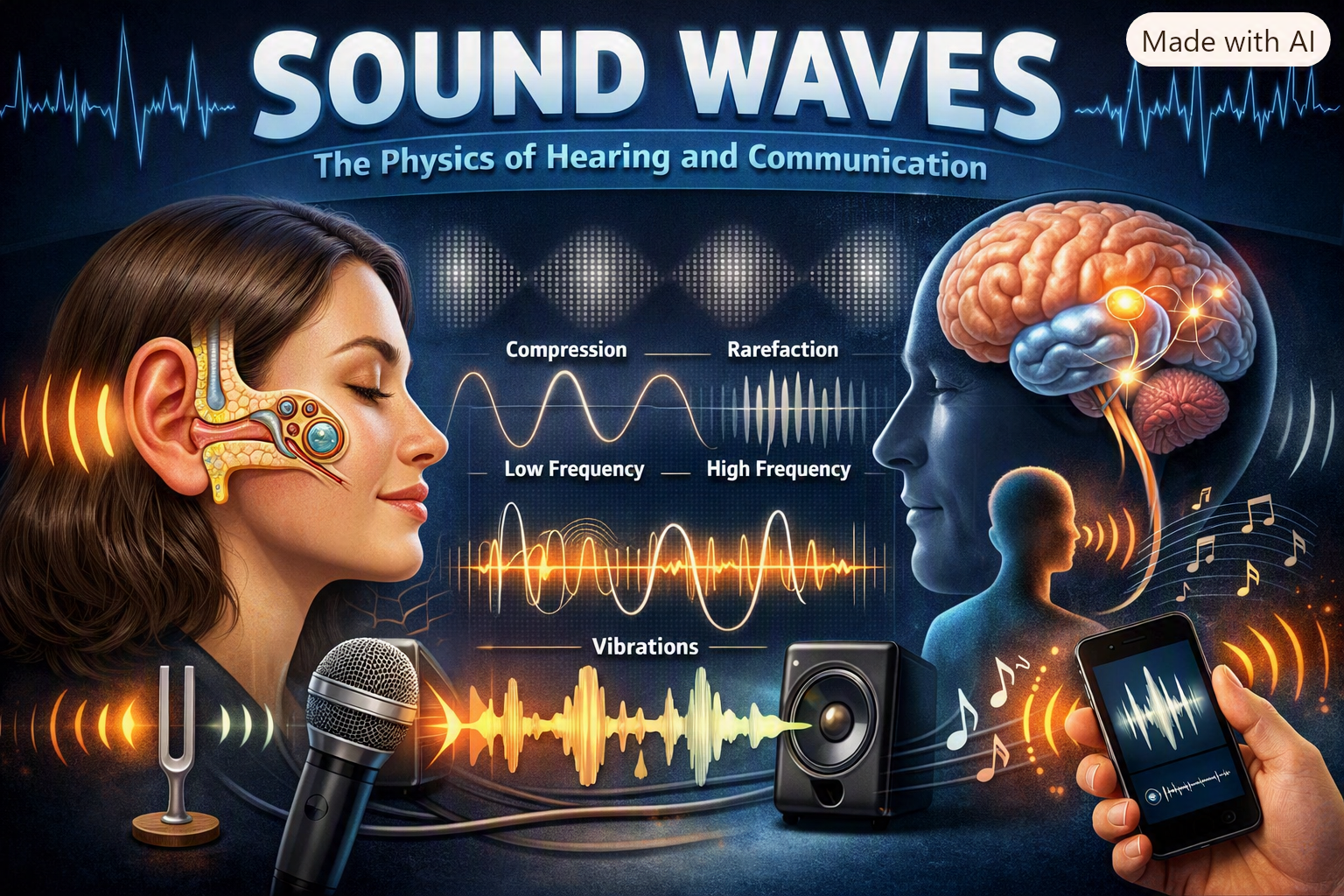
    **Sound Waves: The Physics of Hearing and Communication**

    Sound is an important part of our everyday life. We use sound to communicate, listen to music, learn, and understand the world around us. But have you ever wondered how sound actually travels and how our ears allow us to hear it?

    In this video, we explore the fascinating science behind **sound waves**, how they are produced, how they travel through different materials, and how our ears detect them. We will also learn how vibrations create sound and how these waves carry information from one place to another.

    Sound waves play a major role in **communication**, from simple conversations to telephones, microphones, speakers, and other technologies. Understanding the physics of sound helps us see how science connects with our daily lives.

    This topic shows that something as simple as hearing a voice or listening to a sound is actually the result of fascinating physical processes.

    Join us as we explore the amazing world of sound, waves, hearing, and communication! Keep learning, keep exploring, and stay curious!

    #SoundWaves #Physics #Sound #Hearing #Communication #Science #PhysicsFacts #WavePhysics #ScienceEducation #Learning #Education #ScienceFacts #Technology #Acoustics #Vibrations #Waves #Curiosity #Knowledge #ScientificDiscovery #StudentLife #RehanSchool #ScienceProject #LearnAndGrow #ExploreScience
    #rsisb RollNo.269 Foundation Level Story Post No.21 πŸ”Š **Sound Waves: The Physics of Hearing and Communication** 🎧🌊 Sound is an important part of our everyday life. We use sound to communicate, listen to music, learn, and understand the world around us. But have you ever wondered how sound actually travels and how our ears allow us to hear it? πŸ€”πŸ”¬ In this video, we explore the fascinating science behind **sound waves**, how they are produced, how they travel through different materials, and how our ears detect them. πŸ§ πŸ‘‚βœ¨ We will also learn how vibrations create sound and how these waves carry information from one place to another. Sound waves play a major role in **communication**, from simple conversations to telephones, microphones, speakers, and other technologies. πŸ“žπŸŽ€πŸ”Š Understanding the physics of sound helps us see how science connects with our daily lives. This topic shows that something as simple as hearing a voice or listening to a sound is actually the result of fascinating physical processes. πŸŒπŸ’‘ Join us as we explore the amazing world of sound, waves, hearing, and communication! Keep learning, keep exploring, and stay curious! πŸš€πŸ“šπŸ”¬ #SoundWaves πŸ”Š #Physics βš›οΈ #Sound 🎧 #Hearing πŸ‘‚ #Communication πŸ“ž #Science πŸ”¬ #PhysicsFacts πŸ’‘ #WavePhysics 🌊 #ScienceEducation πŸ“š #Learning πŸŽ“ #Education πŸ“– #ScienceFacts 🧠 #Technology πŸ’» #Acoustics 🎢 #Vibrations πŸ”Š #Waves 🌊 #Curiosity πŸ€” #Knowledge πŸ’‘ #ScientificDiscovery πŸ” #StudentLife πŸŽ“ #RehanSchool 🏫 #ScienceProject πŸ”¬ #LearnAndGrow 🌱 #ExploreScience 🌍
    0 Reacties 0 aandelen 1736 Views
  • #rsisb
    Roll no.247
    Foundation level

    # Sound Waves: The Physics of Hearing and Communication

    Have you ever wondered how a sound travels from one place to another? How does a musical instrument produce beautiful melodies? How can we hear someone speaking from across a room? The fascinating answer lies in the science of **sound waves!**

    In this exciting exploration of **“Sound Waves: The Physics of Hearing and Communication,”** we dive into the amazing world of sound and discover the physics behind one of the most important ways humans experience and understand the world around them.

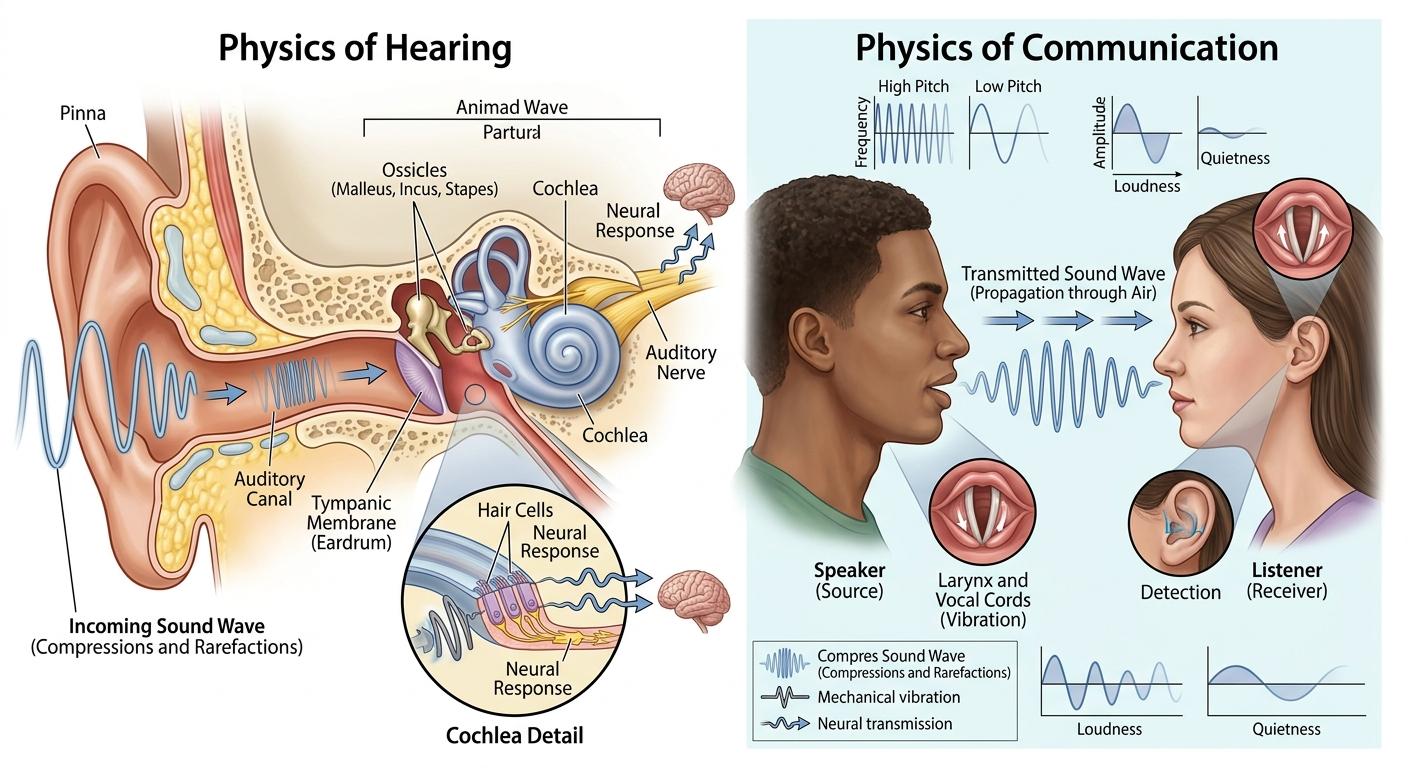
    Sound is a form of energy that travels through a medium such as air, water, or solids. When an object vibrates, it causes nearby particles to vibrate, creating a wave that carries energy from one location to another. These vibrations eventually reach our ears, allowing our brains to recognize sounds.

    We’ll explore important concepts such as **frequency, wavelength, amplitude, speed, and pitch**. Understanding these properties helps explain why some sounds are high or low, loud or soft.

    The journey of sound into the human ear is equally fascinating! Sound waves enter the ear and cause tiny structures to vibrate. These vibrations are transformed into electrical signals that travel to the brain, where they are interpreted as meaningful sounds. This incredible process allows us to enjoy music , understand speech , recognize familiar sounds , and communicate with people around us.

    Communication depends heavily on sound. From everyday conversations to public speaking, telephone calls, radio broadcasts, and educational videos, sound allows information to travel between people. Modern technology also uses the principles of sound waves in microphones, speakers, headphones, medical imaging, and many other applications.

    This topic is a wonderful opportunity for students, science lovers, and curious minds to connect **physics with everyday life**. Instead of thinking of sound as something we simply hear, we can understand it as a physical phenomenon involving vibrations, energy, waves, and the remarkable human hearing system.

    **In this learning journey, you can discover:**
    What sound waves are
    How vibrations create sound
    How sound travels through different materials
    The relationship between frequency and pitch
    How amplitude affects loudness
    How the human ear detects sound
    How the brain interprets sound signals
    How sound enables communication
    How microphones and speakers work
    Everyday applications of sound-wave technology

    **Sound is everywhere!** From the gentle sound of rain to birds singing , from the voices of our friends to the music we enjoy , sound surrounds us every day. By understanding its physics, we gain a deeper appreciation for the invisible waves that connect our world.

    So get ready to listen, learn, explore, and discover the fascinating science behind the sounds we hear every day!

    **Learn the science. Understand the waves. Discover the power of sound!**

    #SoundWaves #Physics #Science #PhysicsOfSound #Hearing #Communication #Waves #SoundPhysics #ScienceEducation #PhysicsEducation #LearnScience #STEM #STEMEducation #HumanEar #Frequency #Amplitude #Wavelength #Pitch #Vibrations #ScienceForStudents #EducationalVideo #Learning #ScienceExploration #Technology #Acoustics #SoundAndCommunication #Curiosity #Knowledge #Education #ExploreScience
    #rsisb Roll no.247 Foundation level # πŸ”Š Sound Waves: The Physics of Hearing and Communication 🎧🌊 Have you ever wondered how a sound travels from one place to another? πŸ€”πŸ”Š How does a musical instrument produce beautiful melodies? 🎡 How can we hear someone speaking from across a room? πŸ—£οΈπŸ‘‚ The fascinating answer lies in the science of **sound waves!** 🌊✨ In this exciting exploration of **“Sound Waves: The Physics of Hearing and Communication,”** we dive into the amazing world of sound and discover the physics behind one of the most important ways humans experience and understand the world around them. πŸŒπŸ”¬ Sound is a form of energy that travels through a medium such as air, water, or solids. πŸŒ¬οΈπŸ’§πŸͺ¨ When an object vibrates, it causes nearby particles to vibrate, creating a wave that carries energy from one location to another. These vibrations eventually reach our ears, allowing our brains to recognize sounds. πŸ§ πŸ‘‚πŸ’‘ We’ll explore important concepts such as **frequency, wavelength, amplitude, speed, and pitch**. πŸ“šπŸ“ Understanding these properties helps explain why some sounds are high or low, loud or soft. πŸŽΆπŸ”‰πŸ”Š The journey of sound into the human ear is equally fascinating! πŸ‘‚βœ¨ Sound waves enter the ear and cause tiny structures to vibrate. These vibrations are transformed into electrical signals that travel to the brain, where they are interpreted as meaningful sounds. 🧠⚑ This incredible process allows us to enjoy music 🎼, understand speech πŸ—£οΈ, recognize familiar sounds πŸ‘‹, and communicate with people around us. ❀️🌎 Communication depends heavily on sound. From everyday conversations to public speaking, telephone calls, radio broadcasts, and educational videos, sound allows information to travel between people. πŸ“žπŸ“»πŸŽ™οΈ Modern technology also uses the principles of sound waves in microphones, speakers, headphones, medical imaging, and many other applications. πŸ’»πŸŽ§πŸ”¬ This topic is a wonderful opportunity for students, science lovers, and curious minds to connect **physics with everyday life**. πŸŒŸπŸ“– Instead of thinking of sound as something we simply hear, we can understand it as a physical phenomenon involving vibrations, energy, waves, and the remarkable human hearing system. πŸŒŠβš›οΈπŸ‘‚ 🎯 **In this learning journey, you can discover:** πŸ”Ή What sound waves are πŸ”Ή How vibrations create sound πŸ”Ή How sound travels through different materials πŸ”Ή The relationship between frequency and pitch πŸ”Ή How amplitude affects loudness πŸ”Ή How the human ear detects sound πŸ”Ή How the brain interprets sound signals πŸ”Ή How sound enables communication πŸ”Ή How microphones and speakers work πŸ”Ή Everyday applications of sound-wave technology 🌈 **Sound is everywhere!** From the gentle sound of rain 🌧️ to birds singing 🐦, from the voices of our friends πŸ—£οΈ to the music we enjoy 🎡, sound surrounds us every day. By understanding its physics, we gain a deeper appreciation for the invisible waves that connect our world. 🌍🌊✨ So get ready to listen, learn, explore, and discover the fascinating science behind the sounds we hear every day! πŸ”ŠπŸŽ§πŸ”¬πŸ“š πŸ’‘ **Learn the science. Understand the waves. Discover the power of sound!** πŸŒŠπŸ”Šβœ¨ #SoundWaves #Physics #Science #PhysicsOfSound #Hearing #Communication #Waves #SoundPhysics #ScienceEducation #PhysicsEducation #LearnScience #STEM #STEMEducation #HumanEar #Frequency #Amplitude #Wavelength #Pitch #Vibrations #ScienceForStudents #EducationalVideo #Learning #ScienceExploration #Technology #Acoustics #SoundAndCommunication #Curiosity #Knowledge #Education #ExploreScience πŸ”¬πŸ“šπŸŒπŸŽ§πŸ”Šβœ¨
    0 Reacties 0 aandelen 5596 Views
  • #rsisb
    Roll no.239
    Story Post no.21
    Foundation Level

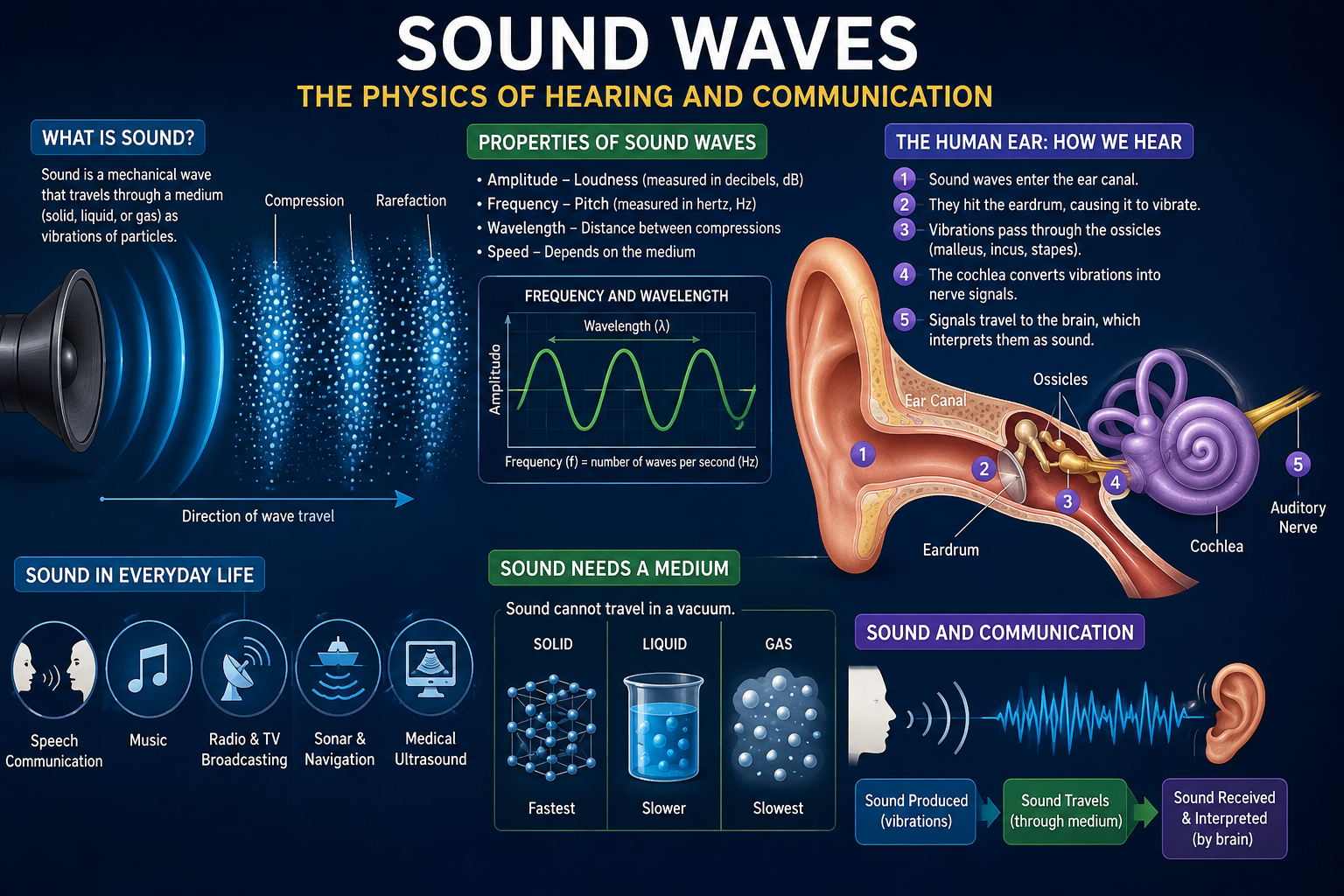
    Sound is all around us! From the voices we hear to the music we enjoy , sound waves play an important role in our daily lives. But have you ever wondered how sound travels and how our ears help us hear?

    Sound is produced when an object vibrates. These vibrations travel through a medium such as air, water, or solids in the form of **sound waves** . Our ears receive these waves and send signals to the brain, allowing us to recognize voices, music, and many other sounds.

    The physics of sound helps us understand important concepts such as **frequency, amplitude, wavelength, pitch, and loudness** . Sound is not only a fascinating scientific phenomenon—it is also essential for **hearing, communication, technology, music, and human connection**

    Let's explore the amazing world of sound and discover how invisible waves help us communicate with the world around us!

    #SoundWaves #Physics #PhysicsOfSound #Science #Hearing #Communication #Acoustics #SoundScience #Frequency #Amplitude #Wavelength #Vibrations #Pitch #Loudness #HumanEar #HowWeHear #ScienceEducation #LearnScience #LearnPhysics #EducationalContent #ScienceFacts #Knowledge #Technology #Audio #Music #WavePhysics #ExploreScience #StudentLife #EducationMatters #DiscoverMore
    #rsisb Roll no.239 Story Post no.21 Foundation Level Sound is all around us! From the voices we hear πŸ—£οΈ to the music we enjoy 🎢, sound waves play an important role in our daily lives. But have you ever wondered how sound travels and how our ears help us hear? πŸ€”πŸ”¬ Sound is produced when an object vibrates. These vibrations travel through a medium such as air, water, or solids in the form of **sound waves** 🌊. Our ears receive these waves and send signals to the brain, allowing us to recognize voices, music, and many other sounds. πŸ‘‚πŸ§ βœ¨ The physics of sound helps us understand important concepts such as **frequency, amplitude, wavelength, pitch, and loudness** πŸ“ŠπŸ”Š. Sound is not only a fascinating scientific phenomenon—it is also essential for **hearing, communication, technology, music, and human connection** 🌍❀️🎡 Let's explore the amazing world of sound and discover how invisible waves help us communicate with the world around us! πŸš€πŸ”¬πŸŒŠ #SoundWaves πŸ”Š #Physics 🌊 #PhysicsOfSound πŸŽ“ #Science πŸ”¬ #Hearing πŸ‘‚ #Communication πŸ—£οΈ #Acoustics 🎧 #SoundScience πŸ“š #Frequency πŸ“ˆ #Amplitude πŸ“Š #Wavelength 🌐 #Vibrations ⚑ #Pitch 🎡 #Loudness πŸ”Š #HumanEar πŸ‘‚ #HowWeHear 🧠 #ScienceEducation πŸŽ“ #LearnScience πŸ“– #LearnPhysics πŸ’‘ #EducationalContent πŸ“š #ScienceFacts πŸ” #Knowledge ✨ #Technology πŸ’» #Audio 🎢 #Music 🎡 #WavePhysics 🌊 #ExploreScience πŸš€ #StudentLife πŸ§‘‍πŸŽ“ #EducationMatters 🌟 #DiscoverMore πŸ”­
    0 Reacties 0 aandelen 5156 Views
  • #rsisb
    Roll No 242
    Story Post 20
    Foundation level

    **Sound Waves: The Physics of Hearing and Communication**

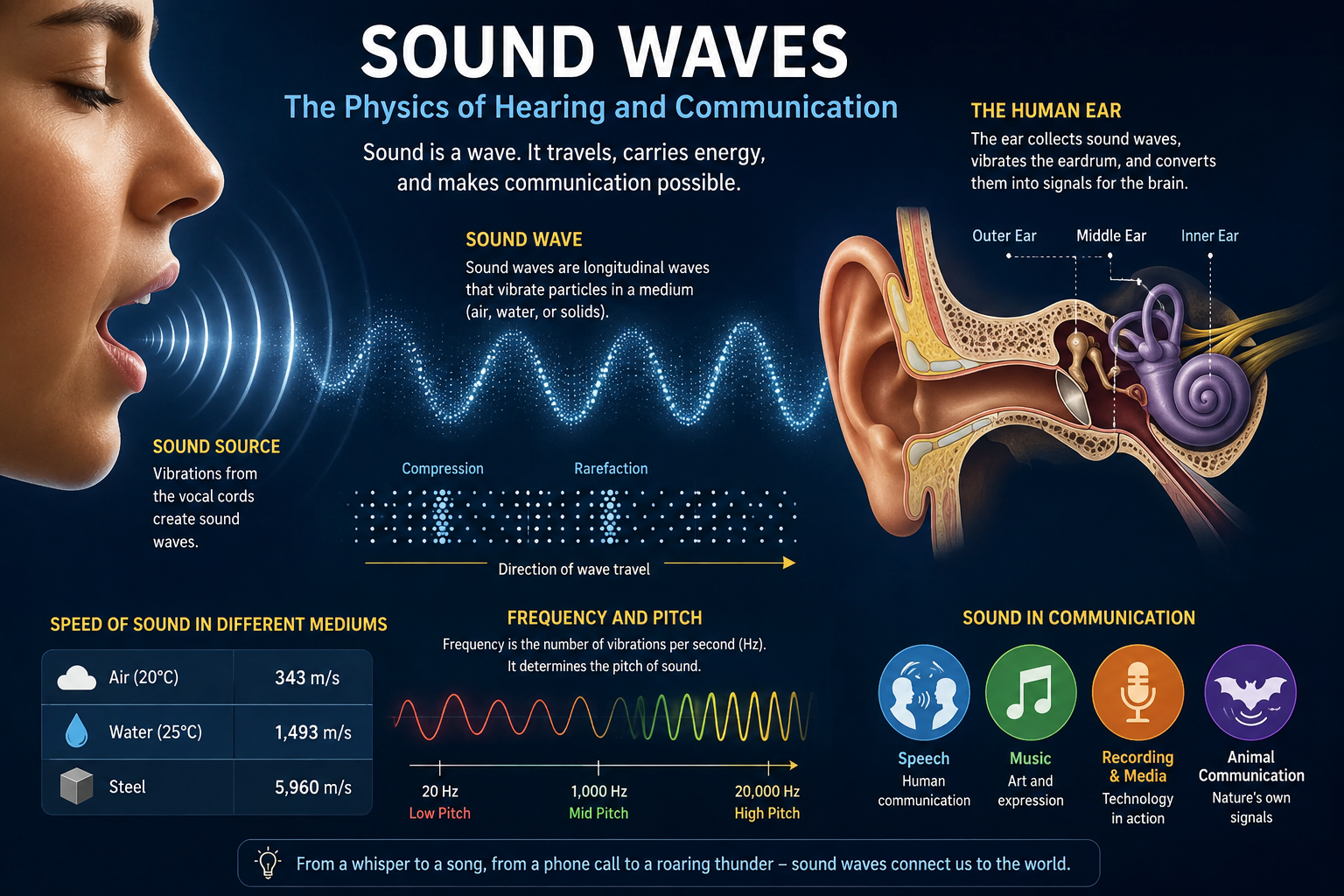
    Have you ever wondered how your voice travels from your mouth to someone else’s ears? Sound waves make communication possible! In this fascinating topic, we explore how vibrations create sound, how sound travels through different materials, and how our ears transform these waves into the sounds we understand.
    From everyday conversations to music , phones , microphones , and even animal communication —sound waves are everywhere! Let’s discover the amazing physics behind hearing and communication and see how science connects us all.
    #SoundWaves #Physics #Science #Hearing #Communication #Acoustics #WavePhysics #LearnScience #ScienceIsAmazing #Education #STEM #PhysicsExplained

    Asma Shaheen EducationWali
    Saima Happinesswali
    Irum Asim
    #rsisb Roll No 242 Story Post 20 Foundation level 🎧🌊 **Sound Waves: The Physics of Hearing and Communication** πŸ—£οΈπŸ”Š Have you ever wondered how your voice travels from your mouth to someone else’s ears? πŸ€”πŸ‘‚ Sound waves make communication possible! 🌍✨ In this fascinating topic, we explore how vibrations create sound, how sound travels through different materials, and how our ears transform these waves into the sounds we understand. πŸŽΆπŸ”¬ From everyday conversations πŸ—£οΈ to music 🎡, phones πŸ“±, microphones πŸŽ™οΈ, and even animal communication πŸ¦πŸ‹—sound waves are everywhere! πŸŒŽπŸ’‘ Let’s discover the amazing physics behind hearing and communication and see how science connects us all. πŸš€πŸ§  #SoundWaves 🌊 #Physics πŸ”¬ #Science πŸ§ͺ #Hearing πŸ‘‚ #Communication πŸ—£οΈ #Acoustics πŸ”Š #WavePhysics πŸ“š #LearnScience 🧠 #ScienceIsAmazing ✨ #Education πŸŽ“ #STEM πŸš€ #PhysicsExplained πŸ’‘ Asma Shaheen EducationWali Saima Happinesswali Irum Asim
    0 Reacties 1 aandelen 4369 Views
  • The story of **Akio Morita**, the co-founder of **Sony**, is a remarkable tale of vision, innovation, and perseverance. Morita, along with **Masaru Ibuka**, built Sony from a small post-war Japanese electronics company into a global technology giant. Heres an overview of his life and the creation of Sony:

    ### Early Life:
    - **Akio Morita** was born on **January 26, 1921**, in **Nagoya, Japan**, into a wealthy family that had been brewing sake for generations. Despite his family’s expectation that he would eventually take over the family business, Morita was more interested in science and technology from a young age.
    - Morita studied **physics** at **Osaka Imperial University** and graduated in 1944. During **World War II**, he served as a lieutenant in the Japanese navy, working on military technology, particularly in acoustics and communication systems.

    ### Meeting Masaru Ibuka:
    - After World War II, Japan was in economic ruins, but Morita’s passion for technology led him to pursue innovation in electronics. In 1946, Morita met **Masaru Ibuka**, an engineer and fellow visionary who had founded a small electronics repair shop in Tokyo called **Tokyo Tsushin Kogyo K.K.** (Tokyo Telecommunications Engineering Corporation).
    - Recognizing a shared vision for innovation, Morita and Ibuka formed a partnership, and Morita invested in the company. Together, they co-founded the company that would eventually become Sony. Morita focused on the business and marketing side, while Ibuka concentrated on technology and engineering.

    ### Early Challenges and Innovations:
    - Tokyo Tsushin Kogyo started with very little capitalβ€”around $500β€”and initially focused on repairing radios and making small electronic devices. Their first breakthrough product came in 1950 when they built **Japan’s first tape recorder**, called the **G-Type**. This product marked the company’s early foray into consumer electronics.
    - In **1955**, they introduced Japan’s first **transistor radio**, the **TR-55**, which was a major success and helped the company establish itself in the electronics market. The **TR-63**, the first truly pocket-sized transistor radio, followed in 1957, and became extremely popular in the United States.

    ### The Birth of Sony:
    - Morita and Ibuka realized that to become a global player, they needed a brand that would resonate internationally. In 1958, they renamed the company **Sony**, combining the Latin word **"sonus"** (meaning sound) with the English slang word "sonny," which symbolized youth and vitality. This marked the beginning of Sonys journey as a global brand.
    - Morita was the driving force behind Sonys international expansion. He believed that Japanese companies needed to focus on global markets rather than just domestic success. Under Morita’s leadership, Sony opened its first office in the **United States** in the 1950s, establishing a direct foothold in one of the world’s largest markets.

    ### Sonys Iconic Products:
    1. **Trinitron TV**: In 1968, Sony introduced the **Trinitron**, a groundbreaking color television that used a unique cathode-ray tube technology. The Trinitron became a massive success worldwide and established Sony as a leader in the television market. The Trinitron earned Sony an **Emmy Award** for engineering excellence in television technology.

    2. **Sony Walkman**: Perhaps one of the most iconic products Sony ever created was the **Walkman**, introduced in **1979**. The Walkman revolutionized the way people listened to music by making it portable. It became a global phenomenon, selling over **400 million units** and transforming personal audio consumption.

    3. **PlayStation**: Although it was launched after Morita stepped down from active management, the **PlayStation** (introduced in **1994**) is one of Sony’s most successful and influential products. It helped establish Sony as a major player in the gaming industry, competing with Nintendo and Sega.

    ### Moritas Leadership and Global Vision:
    - Morita was instrumental in shaping Sony’s **corporate culture**. Unlike many traditional Japanese companies, he promoted an open and international corporate environment. He encouraged creativity and risk-taking, which helped Sony become an innovator in the global marketplace.

    - Morita’s vision of making Sony a **global brand** was groundbreaking. He was one of the first Japanese business leaders to actively embrace Western markets, particularly the **United States**. His understanding of both Japanese and Western business cultures helped Sony thrive on the international stage.

    - He also believed in **quality and innovation** as Sonys guiding principles. This commitment to innovation led Sony to take risks on new technologies and products that other companies might have avoided.

    ### "Made in Japan" and Morita’s Influence:
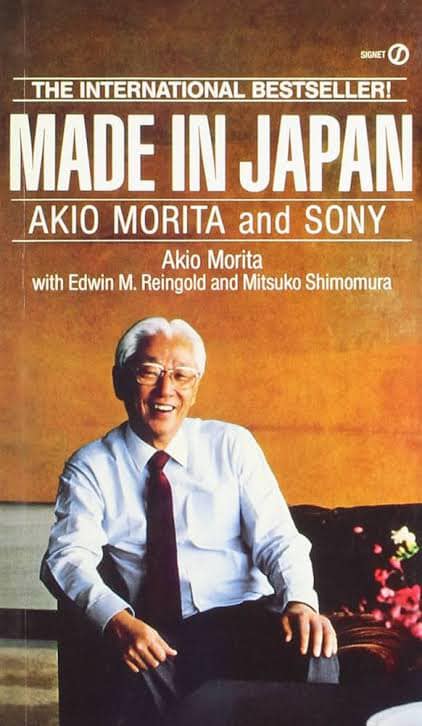
    - In 1986, Akio Morita published his autobiography, **"Made in Japan: Akio Morita and Sony,"** which provided insights into his business philosophy and the rise of Sony. The book became influential for both Japanese and international business leaders, highlighting Moritas views on innovation, leadership, and the importance of understanding global markets.

    ### Challenges and Morita’s Later Years:
    - Despite Sonys global success, the company faced challenges in the 1980s and 1990s as competition in the electronics market increased. However, Sony remained a leader in innovation under Morita’s guidance.

    - In **1993**, Morita suffered a stroke and was forced to retire from his leadership role. He officially stepped down as **chairman** of Sony in **1994** and remained out of the public eye afterward.

    ### Death and Legacy:
    - **Akio Morita** passed away on **October 3, 1999**, at the age of 78. His legacy, however, endures. Morita is remembered as a visionary leader who helped transform Sony into one of the most innovative and respected companies in the world.

    - His contributions to global business, particularly his emphasis on cross-cultural understanding, innovation, and international expansion, influenced generations of business leaders. Morita also helped change the perception of Japanese products, which were once considered inferior, by proving that Japanese companies could compete globally with high-quality, cutting-edge technology.

    ### Conclusion:
    Akio Morita’s story is one of remarkable vision and global ambition. From his humble beginnings in post-war Japan, he helped build Sony into a global electronics powerhouse, pioneering products like the Walkman and the Trinitron TV that changed the way people consumed entertainment. His belief in innovation, quality, and international collaboration set Sony apart and left a lasting impact on the business world, making Morita one of the most respected entrepreneurs of the 20th century.

    The story of **Akio Morita**, the co-founder of **Sony**, is a remarkable tale of vision, innovation, and perseverance. Morita, along with **Masaru Ibuka**, built Sony from a small post-war Japanese electronics company into a global technology giant. Here's an overview of his life and the creation of Sony: ### Early Life: - **Akio Morita** was born on **January 26, 1921**, in **Nagoya, Japan**, into a wealthy family that had been brewing sake for generations. Despite his family’s expectation that he would eventually take over the family business, Morita was more interested in science and technology from a young age. - Morita studied **physics** at **Osaka Imperial University** and graduated in 1944. During **World War II**, he served as a lieutenant in the Japanese navy, working on military technology, particularly in acoustics and communication systems. ### Meeting Masaru Ibuka: - After World War II, Japan was in economic ruins, but Morita’s passion for technology led him to pursue innovation in electronics. In 1946, Morita met **Masaru Ibuka**, an engineer and fellow visionary who had founded a small electronics repair shop in Tokyo called **Tokyo Tsushin Kogyo K.K.** (Tokyo Telecommunications Engineering Corporation). - Recognizing a shared vision for innovation, Morita and Ibuka formed a partnership, and Morita invested in the company. Together, they co-founded the company that would eventually become Sony. Morita focused on the business and marketing side, while Ibuka concentrated on technology and engineering. ### Early Challenges and Innovations: - Tokyo Tsushin Kogyo started with very little capitalβ€”around $500β€”and initially focused on repairing radios and making small electronic devices. Their first breakthrough product came in 1950 when they built **Japan’s first tape recorder**, called the **G-Type**. This product marked the company’s early foray into consumer electronics. - In **1955**, they introduced Japan’s first **transistor radio**, the **TR-55**, which was a major success and helped the company establish itself in the electronics market. The **TR-63**, the first truly pocket-sized transistor radio, followed in 1957, and became extremely popular in the United States. ### The Birth of Sony: - Morita and Ibuka realized that to become a global player, they needed a brand that would resonate internationally. In 1958, they renamed the company **Sony**, combining the Latin word **"sonus"** (meaning sound) with the English slang word "sonny," which symbolized youth and vitality. This marked the beginning of Sony's journey as a global brand. - Morita was the driving force behind Sony's international expansion. He believed that Japanese companies needed to focus on global markets rather than just domestic success. Under Morita’s leadership, Sony opened its first office in the **United States** in the 1950s, establishing a direct foothold in one of the world’s largest markets. ### Sony's Iconic Products: 1. **Trinitron TV**: In 1968, Sony introduced the **Trinitron**, a groundbreaking color television that used a unique cathode-ray tube technology. The Trinitron became a massive success worldwide and established Sony as a leader in the television market. The Trinitron earned Sony an **Emmy Award** for engineering excellence in television technology. 2. **Sony Walkman**: Perhaps one of the most iconic products Sony ever created was the **Walkman**, introduced in **1979**. The Walkman revolutionized the way people listened to music by making it portable. It became a global phenomenon, selling over **400 million units** and transforming personal audio consumption. 3. **PlayStation**: Although it was launched after Morita stepped down from active management, the **PlayStation** (introduced in **1994**) is one of Sony’s most successful and influential products. It helped establish Sony as a major player in the gaming industry, competing with Nintendo and Sega. ### Morita's Leadership and Global Vision: - Morita was instrumental in shaping Sony’s **corporate culture**. Unlike many traditional Japanese companies, he promoted an open and international corporate environment. He encouraged creativity and risk-taking, which helped Sony become an innovator in the global marketplace. - Morita’s vision of making Sony a **global brand** was groundbreaking. He was one of the first Japanese business leaders to actively embrace Western markets, particularly the **United States**. His understanding of both Japanese and Western business cultures helped Sony thrive on the international stage. - He also believed in **quality and innovation** as Sony's guiding principles. This commitment to innovation led Sony to take risks on new technologies and products that other companies might have avoided. ### "Made in Japan" and Morita’s Influence: - In 1986, Akio Morita published his autobiography, **"Made in Japan: Akio Morita and Sony,"** which provided insights into his business philosophy and the rise of Sony. The book became influential for both Japanese and international business leaders, highlighting Morita's views on innovation, leadership, and the importance of understanding global markets. ### Challenges and Morita’s Later Years: - Despite Sony's global success, the company faced challenges in the 1980s and 1990s as competition in the electronics market increased. However, Sony remained a leader in innovation under Morita’s guidance. - In **1993**, Morita suffered a stroke and was forced to retire from his leadership role. He officially stepped down as **chairman** of Sony in **1994** and remained out of the public eye afterward. ### Death and Legacy: - **Akio Morita** passed away on **October 3, 1999**, at the age of 78. His legacy, however, endures. Morita is remembered as a visionary leader who helped transform Sony into one of the most innovative and respected companies in the world. - His contributions to global business, particularly his emphasis on cross-cultural understanding, innovation, and international expansion, influenced generations of business leaders. Morita also helped change the perception of Japanese products, which were once considered inferior, by proving that Japanese companies could compete globally with high-quality, cutting-edge technology. ### Conclusion: Akio Morita’s story is one of remarkable vision and global ambition. From his humble beginnings in post-war Japan, he helped build Sony into a global electronics powerhouse, pioneering products like the Walkman and the Trinitron TV that changed the way people consumed entertainment. His belief in innovation, quality, and international collaboration set Sony apart and left a lasting impact on the business world, making Morita one of the most respected entrepreneurs of the 20th century.

    0 Reacties 0 aandelen 955 Views