• RSISB
    Roll No: 209
    Story Post No.30

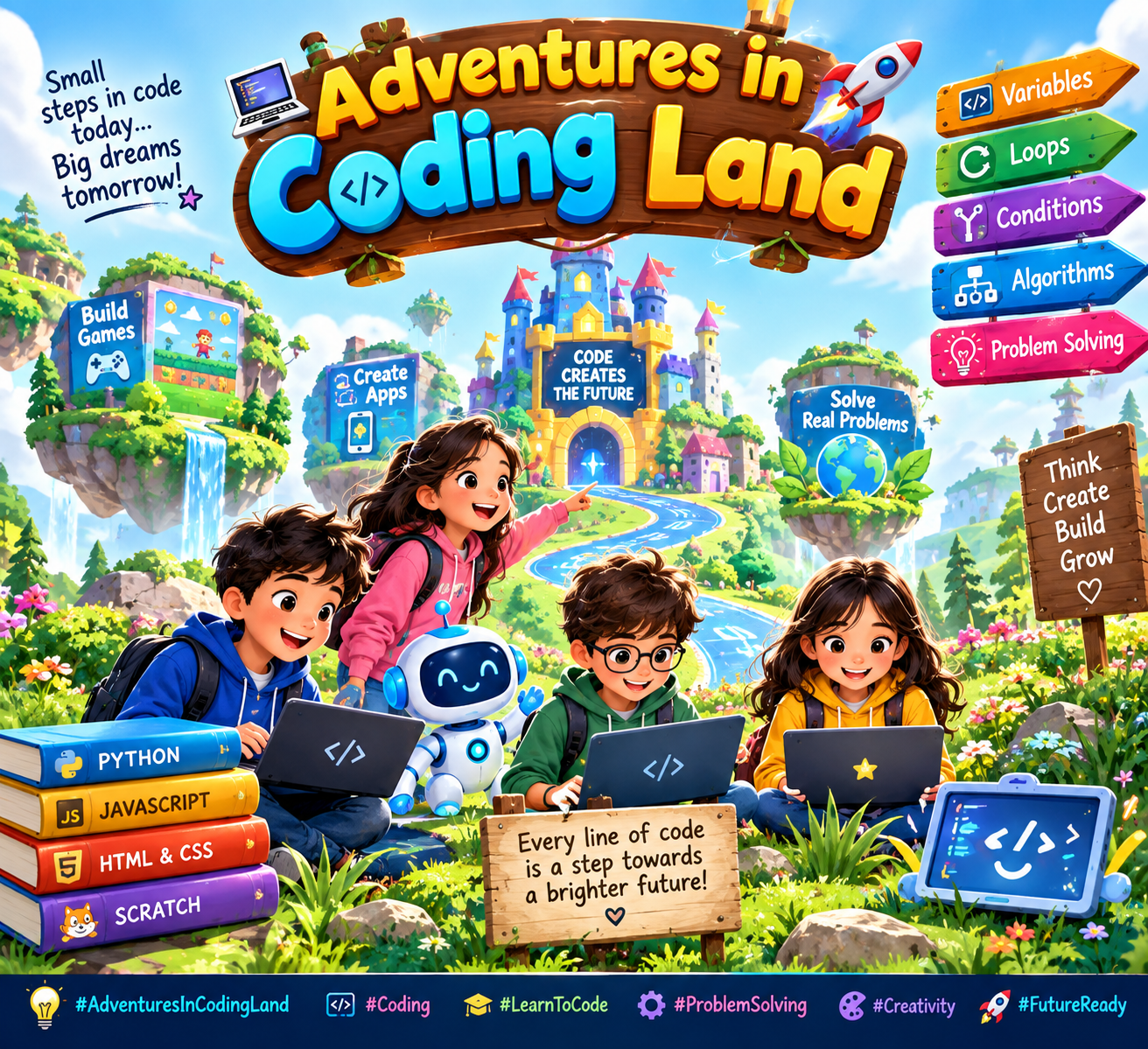
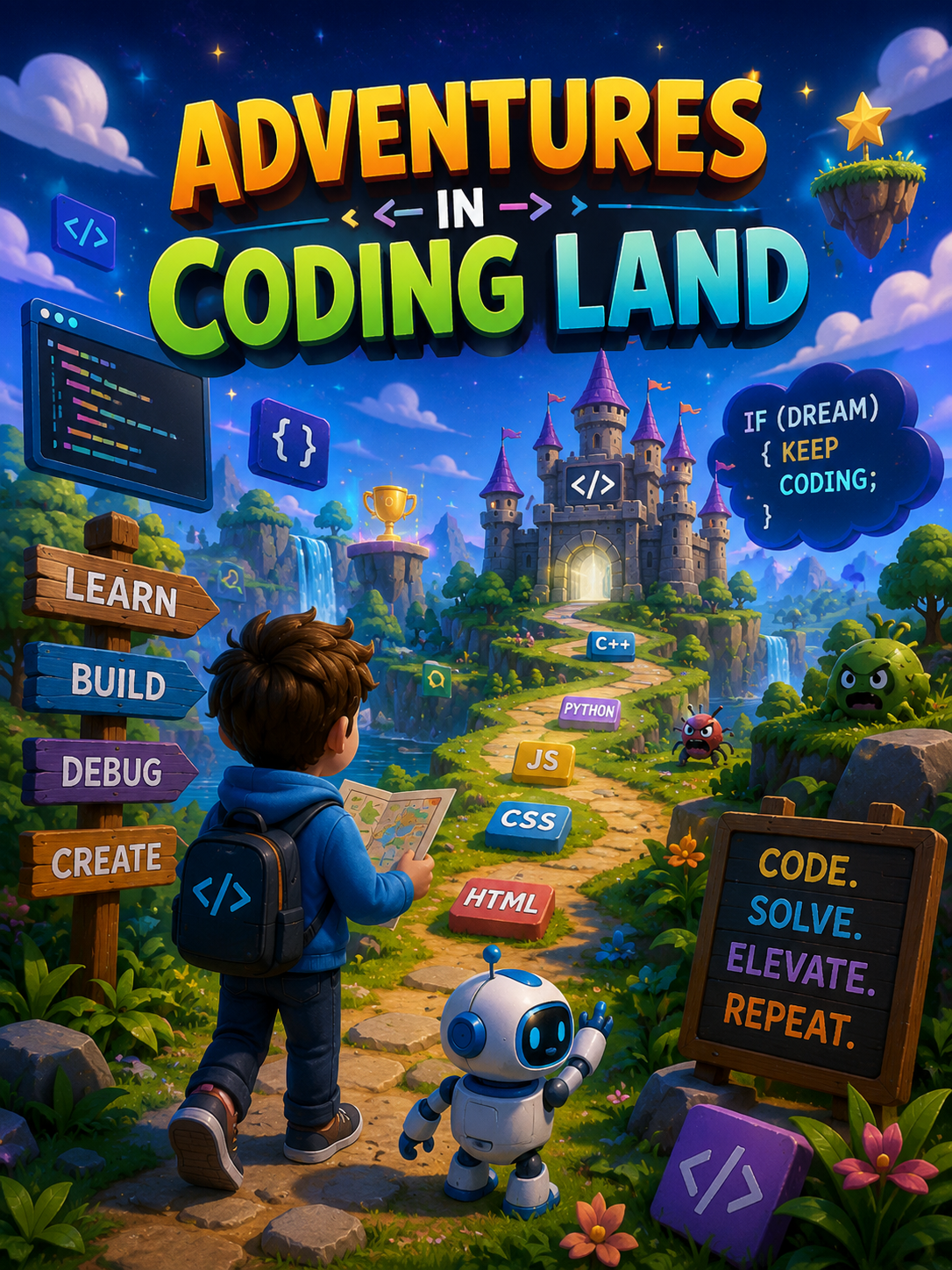
    **Adventures in Coding Land**

    Welcome to **Coding Land**, where every line of code becomes a new adventure! Explore the exciting world of **programming, logic, algorithms, loops, functions, debugging, and technology** through creativity and curiosity.

    Just like an adventure, coding is full of challenges, discoveries, and amazing possibilities. Every error is a lesson, every solution is a victory, and every project is a step toward becoming a better coder!

    **Code. Learn. Create. Adventure!**
    Let your curiosity guide you and turn your ideas into reality through the power of coding.

    #AdventuresInCodingLand #Coding #Programming #LearnToCode #CodingJourney #FutureCoder #ComputerScience #Technology #CodingAdventure #ProgrammingSkills #Algorithms #Debugging #Innovation #Creativity #YoungCoders #CodeLearnCreate
    RSISB Roll No: 209 Story Post No.30 🌟💻 **Adventures in Coding Land** 🚀🌈 Welcome to **Coding Land**, where every line of code becomes a new adventure! 🧑‍💻✨ Explore the exciting world of **programming, logic, algorithms, loops, functions, debugging, and technology** through creativity and curiosity. 🧠🔐🤖 Just like an adventure, coding is full of challenges, discoveries, and amazing possibilities. 🏰🌟 Every error is a lesson, every solution is a victory, and every project is a step toward becoming a better coder! 💡🏆 🚀 **Code. Learn. Create. Adventure!** Let your curiosity guide you and turn your ideas into reality through the power of coding. 🌍💻✨ #AdventuresInCodingLand #Coding #Programming #LearnToCode #CodingJourney #FutureCoder #ComputerScience #Technology #CodingAdventure #ProgrammingSkills #Algorithms #Debugging #Innovation #Creativity #YoungCoders #CodeLearnCreate 🚀💻🧠🌟🤖
    0 Commentarii 0 Distribuiri 280 Views
  • #rsisb
    Roll No.190
    Story Post No.32
    Foundation Level

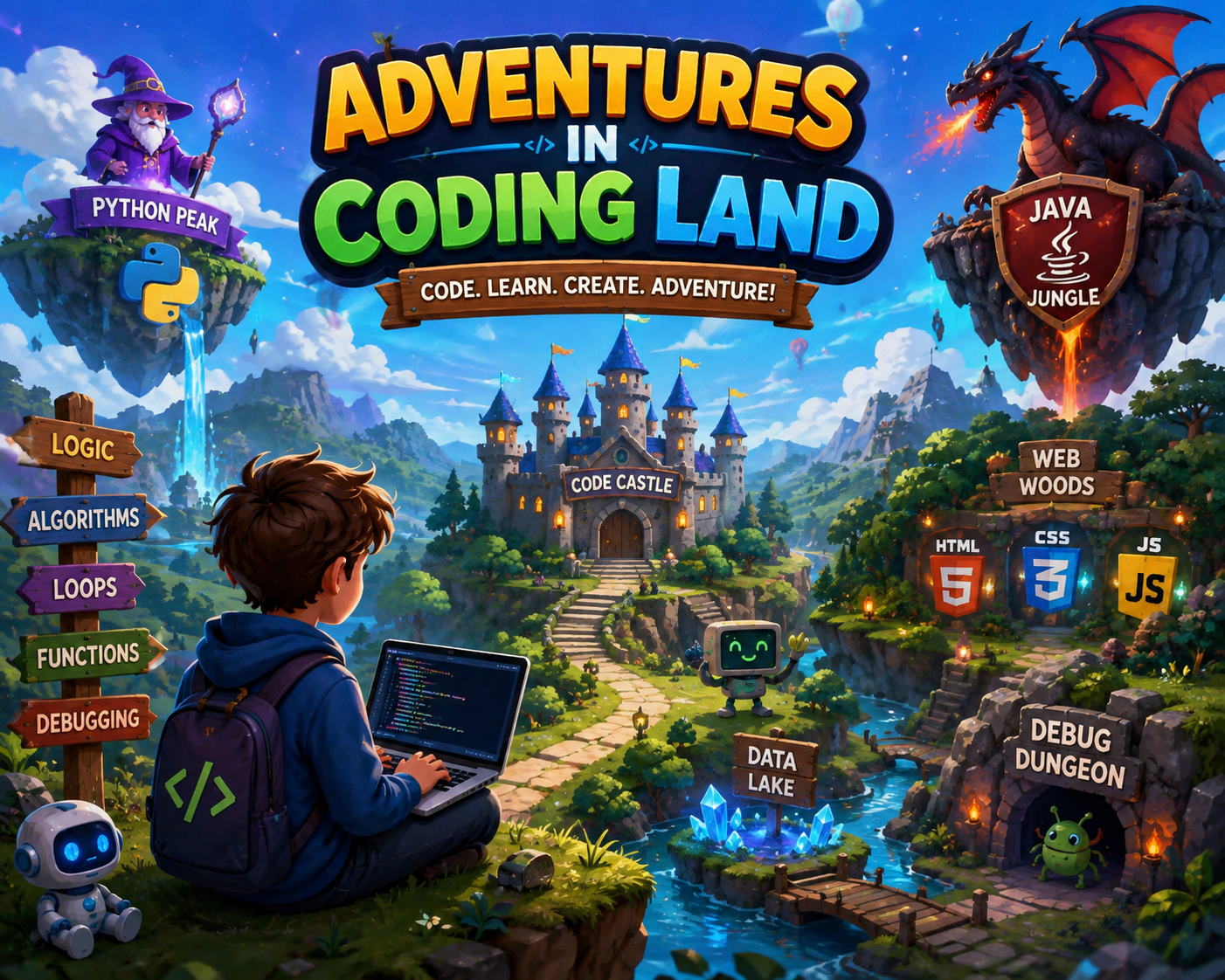
    adventures in Coding Land"

    Every line of code is a new adventure waiting to unfold.
    Explore a magical world where robots become your best coding companions.
    Unlock hidden castles by solving coding puzzles and challenges.
    Follow the path of HTML, CSS, JavaScript, and Python to discover new skills.
    Every bug you fix brings you one step closer to becoming a coding hero.
    Turn your imagination into apps, websites, and games through code.
    Build your own virtual world where creativity has no limits.
    Hunt for secret algorithms hidden across Coding Land.
    Solve logic puzzles to unlock magical treasures and achievements.
    Learn, build, debug, and repeat—the journey never ends.
    Defeat the Bug Monsters using patience and problem-solving.
    Collect "Code Gems" by completing exciting programming quests.
    Every programming language is a new kingdom to explore.
    Team up with friends to complete coding missions together.
    Every challenge makes you a smarter and more confident programmer.
    Dream big and build technology that changes the world.
    Coding is not just typing—it's learning how to think creatively.
    Every expert programmer started with a simple "Hello, World!"
    Celebrate every small victory because every project teaches something new.
    In Coding Land, curiosity is your greatest superpower.
    Caption

    Adventures in Coding Land

    Welcome to a world where every challenge is a puzzle, every bug is a lesson, and every project is a new adventure. In Coding Land, creativity meets logic, and imagination becomes reality through the power of programming.

    Whether you're building your first website, designing an exciting game, creating a useful app, or teaching a robot what to do, each line of code takes you one step closer to becoming a confident creator. Don't be afraid of mistakes—they're part of every great programmer's journey.

    Keep exploring, keep learning, and keep building. Your next adventure starts with a single line of code.

    Hashtags

    #Coding #Programming #CodeAdventure #CodingLand #LearnToCode #STEM #Technology #FutureProgrammer #CodeLife #CodingJourney #Python #JavaScript #HTML #CSS #Developer #TechEducation #Innovation #CreativeCoding #ProblemSolving #CodeEveryDay
    #rsisb Roll No.190 Story Post No.32 Foundation Level adventures in Coding Land" 💻🚀 🌟 Every line of code is a new adventure waiting to unfold. 🤖 Explore a magical world where robots become your best coding companions. 🏰 Unlock hidden castles by solving coding puzzles and challenges. 🗺️ Follow the path of HTML, CSS, JavaScript, and Python to discover new skills. 💡 Every bug you fix brings you one step closer to becoming a coding hero. 🚀 Turn your imagination into apps, websites, and games through code. 🎮 Build your own virtual world where creativity has no limits. 🔍 Hunt for secret algorithms hidden across Coding Land. 🧩 Solve logic puzzles to unlock magical treasures and achievements. 🌈 Learn, build, debug, and repeat—the journey never ends. 🛡️ Defeat the Bug Monsters using patience and problem-solving. ⚡ Collect "Code Gems" by completing exciting programming quests. 📚 Every programming language is a new kingdom to explore. 🌍 Team up with friends to complete coding missions together. 🎯 Every challenge makes you a smarter and more confident programmer. 🌠 Dream big and build technology that changes the world. 🧠 Coding is not just typing—it's learning how to think creatively. 🌱 Every expert programmer started with a simple "Hello, World!" 🏆 Celebrate every small victory because every project teaches something new. 💙 In Coding Land, curiosity is your greatest superpower. 🌟 Caption 🌍 Adventures in Coding Land 💻✨ Welcome to a world where every challenge is a puzzle, every bug is a lesson, and every project is a new adventure. In Coding Land, creativity meets logic, and imagination becomes reality through the power of programming. Whether you're building your first website, designing an exciting game, creating a useful app, or teaching a robot what to do, each line of code takes you one step closer to becoming a confident creator. Don't be afraid of mistakes—they're part of every great programmer's journey. Keep exploring, keep learning, and keep building. Your next adventure starts with a single line of code. 🚀🌟 📌 Hashtags #Coding #Programming #CodeAdventure #CodingLand #LearnToCode #STEM #Technology #FutureProgrammer #CodeLife #CodingJourney #Python #JavaScript #HTML #CSS #Developer #TechEducation #Innovation #CreativeCoding #ProblemSolving #CodeEveryDay
    0 Commentarii 0 Distribuiri 4514 Views
  • Last week, a Redditor named easyjet decided to (very belatedly) join the global party that is Facebook. He signed up with an email address he never, ever used. He lied about all of his personal information.

    So he was rightly freaked out when Facebook still managed to predict and "recommend" a huge number of his real-life acquaintances - down to people whose names he barely knew and a woman he dated 19 years ago.

    How does Facebook know who your friends are? Its a mystery that has nagged users since at least 2011, when the Irish Data Protection Commissioner conducted a full-scale investigation into the issue. But four years later, theres still a lot of confusion and misinformation about what Facebooks doing when it "finds" your friends.

    Did it scrape your phone for names and numbers? Run a reverse-image search of your picture? Compile a "shadow" or "ghost" profile on you over a period of years, just waiting for you to log on and "confirm" its guesses?

    Alas, Facebooks actual process isnt actually that sneaky or malicious. In fact, it involves this pretty complex academic field called ... network science.

    In a nutshell, whenever you sign up for a Facebook account, Facebook asks permission to look at your email contacts if youre on a computer, or your phone contacts if youre on a smartphone. When you grant the site permission, it searches your contacts for users already on the network, and it searches other users uploaded contacts for you. That gives it a very primitive outline of your social circles: who you know, but not how you know them or how well.

    To refine that map, Facebook asks you more questions about yourself: where you went to school, when you were born, what city you live in. Each field in your Facebook profile and each interaction you make through that profile actually double as a source of data for Facebooks mapping algorithms. What theyre trying to do is determine the structure of the network: where the cliques are, which people bridge them, who knows who.

    Once Facebook knows the structure of your social network, it can analyse it to predict (with startling accuracy!) not only the people youre most likely to know now, but the people youre most likely to know in the future.

    This isnt magic: Its actually closer to statistics. In the network, there are a set number of "nodes," i.e., people, and a set number of "edges," i.e., friendships. Given that, each nonexistent connection between two nodes is a statistical possibility. But not all nodes are created equal, so not all connections are equally likely. (I dont anticipate befriending many 40-year-old guys in Siberia, say.)

    To estimate which connections are most likely, Facebook can run analyses against the structure of the network, using a long and entirely above-our-pay-grade list of coefficients and indices. Those coefficients account for a huge number of things: How many unusual commonalities do two people share, for instance? How many friends do they have in common? Which people in the network serve as rallying points, the people who know everyone? How many "degrees of separation" exist between them, how many friends of friends?

    In the end, Facebooks friend-recommendation system isnt magic or malice - just really good math. And guessing your future friends isnt telling the future; its modelling the evolution of Facebooks social graph.

    As you and I know, of course, this doesnt always work. Facebook, not infrequently, suggests you "may know" somebody that you dont. Or it suggests people you do know but dont want to see in your News Feed. Thats not Facebooks fault, says David Liben-Nowell, a computer scientist at Carleton College who studies the evolution of social networks.

    There are some forces outside the network that Facebook could never account for, he says: like what if I randomly sat next to a middle-aged Siberian man on a plane? And on top of that, Facebooks dealing with a vast and complex network.

    Liben-Nowell poses the example of your college roommates exes, some of whom you may want to Facebook-friend.

    "But which ones? And why?" He asks. "Their network positions relative to you are all pretty much the same, but you (only) know the one who you happened to sit beside at a wedding before your roommate dumped them. But Facebook doesnt know which college roommate was at Table 7 with you, so its prediction algorithms can only do so much."

    That said, both Facebook and mathematics at large have enormous interest in improving models of social-network change and "link prediction"; after all, the way people connect has implications way outside social networking, in fields as diverse as epidemiology, communications and counterterrorism.

    "We continuously update the People You May Know algorithm to make it better and more relevant for people," a Facebook spokesperson, Ana Brekalo, said.

    So in the future, Facebook may know even more about your friends.

    By @Caitlin Dewey
    Last week, a Redditor named easyjet decided to (very belatedly) join the global party that is Facebook. He signed up with an email address he never, ever used. He lied about all of his personal information. So he was rightly freaked out when Facebook still managed to predict and "recommend" a huge number of his real-life acquaintances - down to people whose names he barely knew and a woman he dated 19 years ago. How does Facebook know who your friends are? It's a mystery that has nagged users since at least 2011, when the Irish Data Protection Commissioner conducted a full-scale investigation into the issue. But four years later, there's still a lot of confusion and misinformation about what Facebook's doing when it "finds" your friends. Did it scrape your phone for names and numbers? Run a reverse-image search of your picture? Compile a "shadow" or "ghost" profile on you over a period of years, just waiting for you to log on and "confirm" its guesses? Alas, Facebook's actual process isn't actually that sneaky or malicious. In fact, it involves this pretty complex academic field called ... network science. In a nutshell, whenever you sign up for a Facebook account, Facebook asks permission to look at your email contacts if you're on a computer, or your phone contacts if you're on a smartphone. When you grant the site permission, it searches your contacts for users already on the network, and it searches other users' uploaded contacts for you. That gives it a very primitive outline of your social circles: who you know, but not how you know them or how well. To refine that map, Facebook asks you more questions about yourself: where you went to school, when you were born, what city you live in. Each field in your Facebook profile and each interaction you make through that profile actually double as a source of data for Facebook's mapping algorithms. What they're trying to do is determine the structure of the network: where the cliques are, which people bridge them, who knows who. Once Facebook knows the structure of your social network, it can analyse it to predict (with startling accuracy!) not only the people you're most likely to know now, but the people you're most likely to know in the future. This isn't magic: It's actually closer to statistics. In the network, there are a set number of "nodes," i.e., people, and a set number of "edges," i.e., friendships. Given that, each nonexistent connection between two nodes is a statistical possibility. But not all nodes are created equal, so not all connections are equally likely. (I don't anticipate befriending many 40-year-old guys in Siberia, say.) To estimate which connections are most likely, Facebook can run analyses against the structure of the network, using a long and entirely above-our-pay-grade list of coefficients and indices. Those coefficients account for a huge number of things: How many unusual commonalities do two people share, for instance? How many friends do they have in common? Which people in the network serve as rallying points, the people who know everyone? How many "degrees of separation" exist between them, how many friends of friends? In the end, Facebook's friend-recommendation system isn't magic or malice - just really good math. And guessing your future friends isn't telling the future; it's modelling the evolution of Facebook's social graph. As you and I know, of course, this doesn't always work. Facebook, not infrequently, suggests you "may know" somebody that you don't. Or it suggests people you do know but don't want to see in your News Feed. That's not Facebook's fault, says David Liben-Nowell, a computer scientist at Carleton College who studies the evolution of social networks. There are some forces outside the network that Facebook could never account for, he says: like what if I randomly sat next to a middle-aged Siberian man on a plane? And on top of that, Facebook's dealing with a vast and complex network. Liben-Nowell poses the example of your college roommate's exes, some of whom you may want to Facebook-friend. "But which ones? And why?" He asks. "Their network positions relative to you are all pretty much the same, but you (only) know the one who you happened to sit beside at a wedding before your roommate dumped them. But Facebook doesn't know which college roommate was at Table 7 with you, so its prediction algorithms can only do so much." That said, both Facebook and mathematics at large have enormous interest in improving models of social-network change and "link prediction"; after all, the way people connect has implications way outside social networking, in fields as diverse as epidemiology, communications and counterterrorism. "We continuously update the People You May Know algorithm to make it better and more relevant for people," a Facebook spokesperson, Ana Brekalo, said. So in the future, Facebook may know even more about your friends. By @Caitlin Dewey
    0 Commentarii 0 Distribuiri 2394 Views
  • PHP DEVELOPER REQUIRED (LAHORE)
    REQUIREMENTS
    Bachelor degree in Computer Science/Computer Engineering or equivalent experience.
    Excellent verbal and written communication skills.
    2+ years experience in software development.
    Strong knowledge of PHP web frameworks like Django, Laravel 5 or Yii 2.0.
    Familiarity with the limitations of PHP as a platform and its workarounds.
    Strong knowledge of the common PHP or web server exploits and their solutions.
    Understanding of MVC design patterns.
    Extensive knowledge of OOP and Software Design patterns.
    Knowledge of SQL and experience designing database schemas (we use MySQL).
    Strong understanding of SOA and REST.
    Strong knowledge of data structures, algorithms, enterprise systems, and asynchronous architectures.
    Proficient understanding of code versioning tools, such as Git.
    Salary 100K-120K per month.
    send your cv at abdullah.gilani0786@gmail.com
    PHP DEVELOPER REQUIRED (LAHORE) REQUIREMENTS Bachelor degree in Computer Science/Computer Engineering or equivalent experience. Excellent verbal and written communication skills. 2+ years experience in software development. Strong knowledge of PHP web frameworks like Django, Laravel 5 or Yii 2.0. Familiarity with the limitations of PHP as a platform and its workarounds. Strong knowledge of the common PHP or web server exploits and their solutions. Understanding of MVC design patterns. Extensive knowledge of OOP and Software Design patterns. Knowledge of SQL and experience designing database schemas (we use MySQL). Strong understanding of SOA and REST. Strong knowledge of data structures, algorithms, enterprise systems, and asynchronous architectures. Proficient understanding of code versioning tools, such as Git. Salary 100K-120K per month. send your cv at abdullah.gilani0786@gmail.com
    0 Commentarii 0 Distribuiri 1282 Views
  • Ai to video !

    There are several software options available for creating videos using AI prompts, including:

    1. Animoto: An AI-powered video creation platform that allows you to easily create professional-looking videos using templates and customizations.

    2. Wibbitz: An AI-powered video creation platform that uses natural language processing to automatically generate videos based on your content.

    3. Content Samurai: An AI-powered video creation platform that uses advanced algorithms to automate the video creation process and create high-quality videos in minutes.

    4. Adobe Spark Video: An AI-powered video creation platform that allows you to easily create professional-looking videos using templates, customizations, and automatic video editing.

    5. Adobe Premiere Pro: A professional-level video editing software that includes AI-powered features such as automatic audio mixing, color correction, and motion graphics.

    These are just a few examples of the many software options available for creating videos using AI prompts. When choosing a software, consider your specific needs and budget, as well as the level of customization and control you need over the final video.
    Ai to video ! There are several software options available for creating videos using AI prompts, including: 1. Animoto: An AI-powered video creation platform that allows you to easily create professional-looking videos using templates and customizations. 2. Wibbitz: An AI-powered video creation platform that uses natural language processing to automatically generate videos based on your content. 3. Content Samurai: An AI-powered video creation platform that uses advanced algorithms to automate the video creation process and create high-quality videos in minutes. 4. Adobe Spark Video: An AI-powered video creation platform that allows you to easily create professional-looking videos using templates, customizations, and automatic video editing. 5. Adobe Premiere Pro: A professional-level video editing software that includes AI-powered features such as automatic audio mixing, color correction, and motion graphics. These are just a few examples of the many software options available for creating videos using AI prompts. When choosing a software, consider your specific needs and budget, as well as the level of customization and control you need over the final video.
    0 Commentarii 0 Distribuiri 175 Views
  • Title: Revolutionizing Agriculture with Farmer AI Bot on WhatsApp

    Introduction:

    Modern agriculture is constantly adapting to the ever-changing world, and technology plays a vital role in this transformation. Introducing the Farmer AI Bot on WhatsApp - a powerful, AI-driven voice assistant designed to help farmers maximize their productivity, optimize resources, and drive better results for their farms. Leveraging the convenience of WhatsApp voice messaging and the power of artificial intelligence, the Farmer AI Bot delivers personalized suggestions tailored to the unique needs of each farmer.

    How the Farmer AI Bot Works:

    Easy Onboarding: Farmers can quickly and effortlessly connect with the Farmer AI Bot by simply adding its WhatsApp number to their contacts.
    Interactive Voice Conversations: The Farmer AI Bot initiates a conversation by asking a series of questions through voice messages on WhatsApp. These questions focus on understanding the farmers background, farm size, location, crops grown, and other relevant information.
    Customized Recommendations: Based on the information collected, the Farmer AI Bot generates personalized recommendations on crop management, pest control, soil health, irrigation, and more. These suggestions are aimed at helping farmers increase yield and improve the overall quality of their produce.
    Key Benefits:

    Personalized Advice: The Farmer AI Bots AI algorithms learn from each interaction to provide customized advice tailored to the farmers unique needs.
    Time and Cost-Efficient: By offering quick, accurate recommendations through WhatsApp voice messages, the Farmer AI Bot saves farmers valuable time and money, allowing them to focus on their farming activities.
    Data-Driven Decision Making: The Farmer AI Bot leverages real-time data, historical trends, and agricultural best practices to provide actionable insights and reliable solutions for farmers.
    Accessible and User-Friendly: With a simple and intuitive interface, the Farmer AI Bot is easy to use for farmers of all ages and tech-savviness levels.
    Continuous Learning: The Farmer AI Bot constantly updates its knowledge base, adapting to new agricultural practices and the latest research findings.
    Conclusion:

    The Farmer AI Bot on WhatsApp is a game-changer for the agricultural industry, empowering farmers with personalized and data-driven suggestions to help them achieve optimal results. By leveraging the convenience of WhatsApp and the power of artificial intelligence, the Farmer AI Bot is set to revolutionize the way farmers manage their crops and make informed decisions for a more prosperous and sustainable future. Dont miss out on this cutting-edge technology - join the Farmer AI Bot community today!
    Title: Revolutionizing Agriculture with Farmer AI Bot on WhatsApp Introduction: Modern agriculture is constantly adapting to the ever-changing world, and technology plays a vital role in this transformation. Introducing the Farmer AI Bot on WhatsApp - a powerful, AI-driven voice assistant designed to help farmers maximize their productivity, optimize resources, and drive better results for their farms. Leveraging the convenience of WhatsApp voice messaging and the power of artificial intelligence, the Farmer AI Bot delivers personalized suggestions tailored to the unique needs of each farmer. How the Farmer AI Bot Works: Easy Onboarding: Farmers can quickly and effortlessly connect with the Farmer AI Bot by simply adding its WhatsApp number to their contacts. Interactive Voice Conversations: The Farmer AI Bot initiates a conversation by asking a series of questions through voice messages on WhatsApp. These questions focus on understanding the farmer's background, farm size, location, crops grown, and other relevant information. Customized Recommendations: Based on the information collected, the Farmer AI Bot generates personalized recommendations on crop management, pest control, soil health, irrigation, and more. These suggestions are aimed at helping farmers increase yield and improve the overall quality of their produce. Key Benefits: Personalized Advice: The Farmer AI Bot's AI algorithms learn from each interaction to provide customized advice tailored to the farmer's unique needs. Time and Cost-Efficient: By offering quick, accurate recommendations through WhatsApp voice messages, the Farmer AI Bot saves farmers valuable time and money, allowing them to focus on their farming activities. Data-Driven Decision Making: The Farmer AI Bot leverages real-time data, historical trends, and agricultural best practices to provide actionable insights and reliable solutions for farmers. Accessible and User-Friendly: With a simple and intuitive interface, the Farmer AI Bot is easy to use for farmers of all ages and tech-savviness levels. Continuous Learning: The Farmer AI Bot constantly updates its knowledge base, adapting to new agricultural practices and the latest research findings. Conclusion: The Farmer AI Bot on WhatsApp is a game-changer for the agricultural industry, empowering farmers with personalized and data-driven suggestions to help them achieve optimal results. By leveraging the convenience of WhatsApp and the power of artificial intelligence, the Farmer AI Bot is set to revolutionize the way farmers manage their crops and make informed decisions for a more prosperous and sustainable future. Don't miss out on this cutting-edge technology - join the Farmer AI Bot community today!
    0 Commentarii 0 Distribuiri 1125 Views
  • ### Leveraging Pakistan’s Digital Landscape: A Gateway for Global Companies

    As global companies seek to expand their reach and test new markets, Pakistan presents an exceptional opportunity. With a rapidly growing population of over 240 million and an internet penetration rate that has surged in recent years, the country is now home to a vibrant digital ecosystem. Particularly compelling is the fact that advertising costs in Pakistan are significantly lower compared to more saturated markets, making it an ideal testing ground for apps and services.

    #### **The Digital Landscape in Pakistan**
    Pakistan’s digital transformation is driven by the widespread adoption of smartphones, which has fueled the growth of social media platforms. As of 2024, the country boasts approximately:
    - **50 to 55 million Facebook users**
    - **45 to 50 million YouTube users**
    - **35 to 40 million TikTok users**
    - **20 to 25 million Instagram users**
    - **Over 70 million Google account holders (including Gmail)**

    This vibrant online community offers a unique opportunity for global companies to engage with a young, dynamic audience that is increasingly integrated into the global digital economy.

    #### **Why Pakistan? The Cost-Effective Advantage**
    One of the key advantages of tapping into the Pakistani market is the relatively low cost of digital advertising. With lower competition and advertising costs compared to Western markets, companies can achieve higher visibility and engagement for their advertising spend. This cost efficiency allows businesses to experiment with different marketing strategies, gather user feedback, and optimize their products or services without significant financial risk.

    #### **Testing Apps and Services: A Strategic Approach**
    Pakistan’s large and diverse user base provides an ideal environment for beta testing new apps and services. Here’s how global companies can strategically leverage this opportunity:

    1. **Targeted Social Media Campaigns**: Utilize platforms like Facebook and TikTok to launch targeted campaigns. These platforms offer robust tools to segment audiences based on demographics, interests, and behaviors, enabling companies to reach specific user groups and gather insights into user preferences and engagement.

    2. **Localized Content**: Tailor content to resonate with local culture and languages. By creating culturally relevant ads and app interfaces, companies can enhance user acceptance and gather more accurate feedback on user experiences.

    3. **Influencer Collaborations**: Partnering with local influencers can significantly boost brand visibility and credibility. Influencers on platforms like Instagram and YouTube have strong followings and can provide authentic reviews, driving user adoption.

    4. **A/B Testing**: With a large user base, companies can conduct A/B testing to compare different versions of an app or service. This can include testing user interface designs, feature sets, or pricing models. The feedback from Pakistani users can then inform broader global rollouts.

    5. **Leverage User Feedback**: Engage with users through surveys, feedback forms, and user reviews on the Google Play Store or App Store. Understanding the pain points and preferences of Pakistani users can help refine the app or service before scaling to other markets.

    6. **Performance Analytics**: Use analytics tools to monitor app performance, user engagement, and conversion rates. Pakistan’s diverse user base can provide insights into how different demographics interact with digital products, offering valuable data for product refinement.

    #### **Case Study: Success Stories**
    Several global companies have already successfully leveraged Pakistan as a testing ground. For instance, TikTok has seen explosive growth in the country by tailoring its content algorithms to local preferences. Similarly, companies like Google have used Pakistan to test and refine features in their apps before global rollouts.

    #### **Conclusion: A Strategic Entry Point**
    For global companies looking to expand into new markets, Pakistan offers a unique combination of a large, engaged digital audience and cost-effective advertising opportunities. By leveraging the country’s digital landscape for testing apps and services, companies can gain valuable insights, refine their offerings, and establish a foothold in a market that is poised for continued digital growth.

    As the digital economy in Pakistan continues to evolve, those who invest in understanding and engaging with this market will be well-positioned to capitalize on its immense potential.
    ### Leveraging Pakistan’s Digital Landscape: A Gateway for Global Companies As global companies seek to expand their reach and test new markets, Pakistan presents an exceptional opportunity. With a rapidly growing population of over 240 million and an internet penetration rate that has surged in recent years, the country is now home to a vibrant digital ecosystem. Particularly compelling is the fact that advertising costs in Pakistan are significantly lower compared to more saturated markets, making it an ideal testing ground for apps and services. #### **The Digital Landscape in Pakistan** Pakistan’s digital transformation is driven by the widespread adoption of smartphones, which has fueled the growth of social media platforms. As of 2024, the country boasts approximately: - **50 to 55 million Facebook users** - **45 to 50 million YouTube users** - **35 to 40 million TikTok users** - **20 to 25 million Instagram users** - **Over 70 million Google account holders (including Gmail)** This vibrant online community offers a unique opportunity for global companies to engage with a young, dynamic audience that is increasingly integrated into the global digital economy. #### **Why Pakistan? The Cost-Effective Advantage** One of the key advantages of tapping into the Pakistani market is the relatively low cost of digital advertising. With lower competition and advertising costs compared to Western markets, companies can achieve higher visibility and engagement for their advertising spend. This cost efficiency allows businesses to experiment with different marketing strategies, gather user feedback, and optimize their products or services without significant financial risk. #### **Testing Apps and Services: A Strategic Approach** Pakistan’s large and diverse user base provides an ideal environment for beta testing new apps and services. Here’s how global companies can strategically leverage this opportunity: 1. **Targeted Social Media Campaigns**: Utilize platforms like Facebook and TikTok to launch targeted campaigns. These platforms offer robust tools to segment audiences based on demographics, interests, and behaviors, enabling companies to reach specific user groups and gather insights into user preferences and engagement. 2. **Localized Content**: Tailor content to resonate with local culture and languages. By creating culturally relevant ads and app interfaces, companies can enhance user acceptance and gather more accurate feedback on user experiences. 3. **Influencer Collaborations**: Partnering with local influencers can significantly boost brand visibility and credibility. Influencers on platforms like Instagram and YouTube have strong followings and can provide authentic reviews, driving user adoption. 4. **A/B Testing**: With a large user base, companies can conduct A/B testing to compare different versions of an app or service. This can include testing user interface designs, feature sets, or pricing models. The feedback from Pakistani users can then inform broader global rollouts. 5. **Leverage User Feedback**: Engage with users through surveys, feedback forms, and user reviews on the Google Play Store or App Store. Understanding the pain points and preferences of Pakistani users can help refine the app or service before scaling to other markets. 6. **Performance Analytics**: Use analytics tools to monitor app performance, user engagement, and conversion rates. Pakistan’s diverse user base can provide insights into how different demographics interact with digital products, offering valuable data for product refinement. #### **Case Study: Success Stories** Several global companies have already successfully leveraged Pakistan as a testing ground. For instance, TikTok has seen explosive growth in the country by tailoring its content algorithms to local preferences. Similarly, companies like Google have used Pakistan to test and refine features in their apps before global rollouts. #### **Conclusion: A Strategic Entry Point** For global companies looking to expand into new markets, Pakistan offers a unique combination of a large, engaged digital audience and cost-effective advertising opportunities. By leveraging the country’s digital landscape for testing apps and services, companies can gain valuable insights, refine their offerings, and establish a foothold in a market that is poised for continued digital growth. As the digital economy in Pakistan continues to evolve, those who invest in understanding and engaging with this market will be well-positioned to capitalize on its immense potential.
    0 Commentarii 0 Distribuiri 578 Views
  • **Baidu**, one of the largest internet companies in China, is often compared to Google due to its dominance in the Chinese search engine market. The company was founded by **Robin Li** and **Eric Xu** in 2000. Heres the story of Baidu and its founders:

    ### Robin Lis Background:
    - **Robin Li (Li Yanhong)** was born in **1968** in Yangquan, a city in Shanxi Province, China. He grew up in a humble family; his parents were factory workers.
    - Li was a diligent student, excelling in academics. He pursued a **bachelor’s degree in information management** at **Peking University**, one of China’s top universities.
    - In 1991, Li went to the **U.S.** to further his studies and earned a **master’s degree in computer science** from the **State University of New York at Buffalo**.

    ### Early Career:
    - After completing his education in the U.S., Robin Li worked at **IDD Information Services**, a division of Dow Jones, where he developed algorithms for financial information services.
    - During this period, he developed a crucial technology called the **RankDex site-scoring algorithm** in **1996**, a precursor to search engine algorithms like Googles **PageRank**. This was one of the earliest methods of ranking web pages based on keyword relevance and link analysis.
    - His work on RankDex provided Li with deep insights into how search engines should function, and these ideas would later form the foundation of Baidu.

    ### The Birth of Baidu:
    - In **1999**, after working in the U.S. tech industry for several years, Robin Li returned to China, convinced of the enormous potential of the Chinese internet market, which was still in its early stages of growth.
    - Together with **Eric Xu**, a biochemist and internet entrepreneur, Li co-founded **Baidu** in **January 2000** in Beijing. Baidu was designed as a search engine tailored to the Chinese language and market. Initially, Baidu was a business-to-business search service that provided companies with search technology.

    ### Rapid Growth and Success:
    - **Baidu** soon evolved into a full-fledged consumer search engine, quickly gaining traction due to its ability to better handle **Chinese characters** and its superior understanding of the nuances of the language compared to other search engines at the time, including Google.
    - By **2003**, Baidu introduced its **pay-for-performance (P4P)** search model, which allowed advertisers to bid on keywords and secure better placement in search results, similar to Googles AdWords model. This business model became a key revenue driver for Baidu.
    - Baidu grew rapidly and went **public on NASDAQ** in **2005**. Its IPO was one of the most successful in the U.S. at the time, with Baidus shares surging by over 350% on the first day of trading.

    ### Dominance in China:
    - Baidu became the dominant search engine in China, capturing a huge market share in the face of competition from other global companies like Google, which later exited China in 2010 due to disputes over censorship and cybersecurity.
    - Baidu expanded beyond search to offer a wide range of services, including **maps, news, video, and AI-powered voice search**. The company invested heavily in research and development, particularly in **artificial intelligence (AI)** and **autonomous driving technology**.

    ### Baidus Focus on Artificial Intelligence:
    - In recent years, Baidu has shifted its focus from being just a search engine company to a leader in **AI research**. Robin Li sees AI as the future of technology, and Baidu has invested heavily in projects such as **self-driving cars, smart assistants**, and **AI cloud services**.
    - Baidu’s **Apollo platform**, a project focused on autonomous driving, has been one of the company’s most ambitious ventures, collaborating with car manufacturers and tech companies to bring self-driving cars to the market.

    ### Leadership and Challenges:
    - Robin Li continues to lead Baidu as CEO, although the company has faced challenges, including increased competition from other Chinese tech giants like **Tencent** and **Alibaba**, as well as regulatory challenges from the Chinese government.
    - Baidu has also faced hurdles in the mobile internet era, where platforms like **WeChat** (owned by Tencent) and **Alibabas e-commerce platforms** have taken away user attention. Despite this, Baidu has remained a leader in AI development and search technologies in China.

    ### Legacy and Impact:
    - Baidu is now known as one of China’s **"BAT"** companies—Baidu, Alibaba, and Tencent—representing the three biggest tech firms in the country.
    - **Robin Li** is recognized as one of the most influential figures in the tech industry in China, with Baidu playing a crucial role in the development of the internet in the country.

    In summary, Baidu was founded by **Robin Li** and **Eric Xu** in **2000** and quickly became the dominant search engine in China. Robin Lis vision and his expertise in search engine algorithms were key to the companys success. Over time, Baidu expanded into various areas of technology, including artificial intelligence and autonomous driving, positioning itself as a tech leader in the global market.
    **Baidu**, one of the largest internet companies in China, is often compared to Google due to its dominance in the Chinese search engine market. The company was founded by **Robin Li** and **Eric Xu** in 2000. Here's the story of Baidu and its founders: ### Robin Li's Background: - **Robin Li (Li Yanhong)** was born in **1968** in Yangquan, a city in Shanxi Province, China. He grew up in a humble family; his parents were factory workers. - Li was a diligent student, excelling in academics. He pursued a **bachelor’s degree in information management** at **Peking University**, one of China’s top universities. - In 1991, Li went to the **U.S.** to further his studies and earned a **master’s degree in computer science** from the **State University of New York at Buffalo**. ### Early Career: - After completing his education in the U.S., Robin Li worked at **IDD Information Services**, a division of Dow Jones, where he developed algorithms for financial information services. - During this period, he developed a crucial technology called the **RankDex site-scoring algorithm** in **1996**, a precursor to search engine algorithms like Google's **PageRank**. This was one of the earliest methods of ranking web pages based on keyword relevance and link analysis. - His work on RankDex provided Li with deep insights into how search engines should function, and these ideas would later form the foundation of Baidu. ### The Birth of Baidu: - In **1999**, after working in the U.S. tech industry for several years, Robin Li returned to China, convinced of the enormous potential of the Chinese internet market, which was still in its early stages of growth. - Together with **Eric Xu**, a biochemist and internet entrepreneur, Li co-founded **Baidu** in **January 2000** in Beijing. Baidu was designed as a search engine tailored to the Chinese language and market. Initially, Baidu was a business-to-business search service that provided companies with search technology. ### Rapid Growth and Success: - **Baidu** soon evolved into a full-fledged consumer search engine, quickly gaining traction due to its ability to better handle **Chinese characters** and its superior understanding of the nuances of the language compared to other search engines at the time, including Google. - By **2003**, Baidu introduced its **pay-for-performance (P4P)** search model, which allowed advertisers to bid on keywords and secure better placement in search results, similar to Google's AdWords model. This business model became a key revenue driver for Baidu. - Baidu grew rapidly and went **public on NASDAQ** in **2005**. Its IPO was one of the most successful in the U.S. at the time, with Baidu's shares surging by over 350% on the first day of trading. ### Dominance in China: - Baidu became the dominant search engine in China, capturing a huge market share in the face of competition from other global companies like Google, which later exited China in 2010 due to disputes over censorship and cybersecurity. - Baidu expanded beyond search to offer a wide range of services, including **maps, news, video, and AI-powered voice search**. The company invested heavily in research and development, particularly in **artificial intelligence (AI)** and **autonomous driving technology**. ### Baidu's Focus on Artificial Intelligence: - In recent years, Baidu has shifted its focus from being just a search engine company to a leader in **AI research**. Robin Li sees AI as the future of technology, and Baidu has invested heavily in projects such as **self-driving cars, smart assistants**, and **AI cloud services**. - Baidu’s **Apollo platform**, a project focused on autonomous driving, has been one of the company’s most ambitious ventures, collaborating with car manufacturers and tech companies to bring self-driving cars to the market. ### Leadership and Challenges: - Robin Li continues to lead Baidu as CEO, although the company has faced challenges, including increased competition from other Chinese tech giants like **Tencent** and **Alibaba**, as well as regulatory challenges from the Chinese government. - Baidu has also faced hurdles in the mobile internet era, where platforms like **WeChat** (owned by Tencent) and **Alibaba's e-commerce platforms** have taken away user attention. Despite this, Baidu has remained a leader in AI development and search technologies in China. ### Legacy and Impact: - Baidu is now known as one of China’s **"BAT"** companies—Baidu, Alibaba, and Tencent—representing the three biggest tech firms in the country. - **Robin Li** is recognized as one of the most influential figures in the tech industry in China, with Baidu playing a crucial role in the development of the internet in the country. In summary, Baidu was founded by **Robin Li** and **Eric Xu** in **2000** and quickly became the dominant search engine in China. Robin Li's vision and his expertise in search engine algorithms were key to the company's success. Over time, Baidu expanded into various areas of technology, including artificial intelligence and autonomous driving, positioning itself as a tech leader in the global market.
    0 Commentarii 0 Distribuiri 817 Views
  • Invention: Ultra-Efficient Motorcycle – “Eco700”

    Key Specifications:
    1. Fuel Efficiency: 700 km per liter of gasoline.
    2. Engine Type: Advanced Hyper-Efficient Combustion Engine (HECE).
    3. Weight: 50 kg (ultra-lightweight design).
    4. Top Speed: 90 km/h (optimized for fuel efficiency).
    5. Range: 7000 km on a 10-liter tank.

    Design Elements:
    1. Engine:
    • Homogeneous Charge Compression Ignition (HCCI) technology for near-perfect fuel combustion.
    • Nano-coated cylinder walls to reduce friction and heat loss.
    • Micro-turbocharging for efficient air-fuel mixing at low speeds.
    2. Chassis:
    • Constructed from carbon fiber-reinforced polymer for lightweight and durability.
    • Aerodynamic design to minimize drag.
    3. Fuel System:
    • Vapor injection system: Converts gasoline into a fine mist for better combustion.
    • Ultra-precise fuel injection controlled by AI algorithms.
    4. Transmission:
    • Continuously Variable Transmission (CVT) optimized for low energy loss.
    5. Wheels & Tires:
    • Low-resistance tires with self-sealing features to prevent punctures.
    6. Energy Recovery:
    • Regenerative braking to recover kinetic energy and reduce fuel usage.

    Prototype Assembly:
    1. Engine Development: Build the HCCI engine using advanced manufacturing techniques.
    2. Chassis Construction: Assemble the carbon-fiber body and integrate engine mounts.
    3. System Integration: Install the vapor injection and regenerative braking systems.
    4. Testing and Optimization: Conduct efficiency tests and fine-tune for maximum mileage.

    This motorcycle, the “Eco700,” achieves unparalleled fuel efficiency through cutting-edge engine technology, lightweight materials, and innovative design features.
    Invention: Ultra-Efficient Motorcycle – “Eco700” Key Specifications: 1. Fuel Efficiency: 700 km per liter of gasoline. 2. Engine Type: Advanced Hyper-Efficient Combustion Engine (HECE). 3. Weight: 50 kg (ultra-lightweight design). 4. Top Speed: 90 km/h (optimized for fuel efficiency). 5. Range: 7000 km on a 10-liter tank. Design Elements: 1. Engine: • Homogeneous Charge Compression Ignition (HCCI) technology for near-perfect fuel combustion. • Nano-coated cylinder walls to reduce friction and heat loss. • Micro-turbocharging for efficient air-fuel mixing at low speeds. 2. Chassis: • Constructed from carbon fiber-reinforced polymer for lightweight and durability. • Aerodynamic design to minimize drag. 3. Fuel System: • Vapor injection system: Converts gasoline into a fine mist for better combustion. • Ultra-precise fuel injection controlled by AI algorithms. 4. Transmission: • Continuously Variable Transmission (CVT) optimized for low energy loss. 5. Wheels & Tires: • Low-resistance tires with self-sealing features to prevent punctures. 6. Energy Recovery: • Regenerative braking to recover kinetic energy and reduce fuel usage. Prototype Assembly: 1. Engine Development: Build the HCCI engine using advanced manufacturing techniques. 2. Chassis Construction: Assemble the carbon-fiber body and integrate engine mounts. 3. System Integration: Install the vapor injection and regenerative braking systems. 4. Testing and Optimization: Conduct efficiency tests and fine-tune for maximum mileage. This motorcycle, the “Eco700,” achieves unparalleled fuel efficiency through cutting-edge engine technology, lightweight materials, and innovative design features.
    0 Commentarii 0 Distribuiri 603 Views
  • Title: Are You a Drug Addict?
    By Rehan Allahwala — with ChatGPT


    You might think this question isn’t for you.
    You don’t smoke. You don’t drink. You don’t do drugs.
    But wait. Let’s look deeper.

    Every morning, you wake up, grab your phone, and open your favorite app — Facebook, X, YouTube, TikTok, or TV news. Within seconds, your brain lights up. Someone said something stupid. Someone made you angry. Someone confirmed your opinion.

    And boom! — dopamine hits your brain like a shot.
    You feel alive. Powerful. Smart.
    That’s the first dose of the day.


    The Hidden Drug

    This is not cocaine or nicotine.
    It’s called outrage dopamine — a chemical your brain releases when you feel morally superior, when you win an argument online, or when your favorite politician “destroys” the other side.

    You scroll more, argue more, post more — not because you care deeply about the truth, but because your brain is hooked.

    Every “like” is a microdose.
    Every “share” is a puff.
    Every “breaking news” is another fix.

    You are not being informed.
    You are being stimulated.


    The Body’s Betrayal

    This constant stream of anger and fear triggers adrenaline and cortisol, the stress hormones. Your body stays in a mild fight-or-flight mode — heart rate up, patience down, sleep disturbed, mind restless.

    The brain becomes addicted to this rollercoaster of rage and relief. You can’t stop checking.
    Even when you’re tired of politics, you open the app again “just to see what’s happening.”

    That’s not curiosity anymore.
    That’s chemical dependency.


    The Science Behind the Trap

    Social media algorithms are like drug dealers with PhDs in neuroscience.
    They’ve learned that negative emotion keeps you online longer — anger, fear, jealousy, outrage.
    They measure your reaction time, your scroll speed, even how long you pause on a post.

    They don’t care if you’re happy or wise.
    They care if you’re engaged.
    And what engages the human brain most?
    Conflict.

    So they feed you more of it.
    You think you’re forming opinions.
    But you’re actually being trained.


    The Way Out

    You can’t fight addiction by saying “stop it.”
    You have to replace it with something more powerful, more meaningful, and more satisfying.

    Here’s how:
    1. Silence First.
    Spend 10 minutes every day in silence — no phone, no TV. Let the chemical storm settle.
    Remember Rumi’s words:
    “Silence is the language of God. All else is poor translation.”
    2. Create, Don’t Consume.
    Build something — a project, a video, a business, a garden, a smile.
    When you create, your brain releases serotonin and oxytocin — hormones of peace, purpose, and love.
    They heal what dopamine broke.
    3. Connect in Reality.
    Meet people face to face. Help someone. Teach a child. Listen without judging.
    These actions release endorphins, the body’s natural happiness drugs.
    Service is the highest detox.
    4. Learn Daily.
    Replace political noise with personal growth.
    Ask ChatGPT, read a book, listen to thinkers — feed your intellect, not your ego.
    5. Do One Real Action a Week.
    Plant a tree, help a student, support a startup, feed a family.
    That’s how you reclaim power — not by shouting, but by serving.


    From Addiction to Awakening

    When enough people shift from consuming to creating, from reacting to reflecting — the whole world heals.
    Imagine if every angry commenter built something useful instead.
    Imagine if every hour spent arguing was spent teaching a child AI.
    Imagine a world high on purpose, not politics.


    So next time you scroll through your feed and feel that familiar rush of anger or excitement — stop and ask:

    “Am I feeding my growth — or my addiction?”

    You don’t need to quit the world.
    Just change your drug.
    Replace outrage with creation, ego with empathy, politics with purpose.

    That’s how you make yourself — and the world — stronger.
    Title: Are You a Drug Addict? By Rehan Allahwala — with ChatGPT ⸻ You might think this question isn’t for you. You don’t smoke. You don’t drink. You don’t do drugs. But wait. Let’s look deeper. Every morning, you wake up, grab your phone, and open your favorite app — Facebook, X, YouTube, TikTok, or TV news. Within seconds, your brain lights up. Someone said something stupid. Someone made you angry. Someone confirmed your opinion. And boom! — dopamine hits your brain like a shot. You feel alive. Powerful. Smart. That’s the first dose of the day. ⸻ 💉 The Hidden Drug This is not cocaine or nicotine. It’s called outrage dopamine — a chemical your brain releases when you feel morally superior, when you win an argument online, or when your favorite politician “destroys” the other side. You scroll more, argue more, post more — not because you care deeply about the truth, but because your brain is hooked. Every “like” is a microdose. Every “share” is a puff. Every “breaking news” is another fix. You are not being informed. You are being stimulated. ⸻ ⚠️ The Body’s Betrayal This constant stream of anger and fear triggers adrenaline and cortisol, the stress hormones. Your body stays in a mild fight-or-flight mode — heart rate up, patience down, sleep disturbed, mind restless. The brain becomes addicted to this rollercoaster of rage and relief. You can’t stop checking. Even when you’re tired of politics, you open the app again “just to see what’s happening.” That’s not curiosity anymore. That’s chemical dependency. ⸻ 🧠 The Science Behind the Trap Social media algorithms are like drug dealers with PhDs in neuroscience. They’ve learned that negative emotion keeps you online longer — anger, fear, jealousy, outrage. They measure your reaction time, your scroll speed, even how long you pause on a post. They don’t care if you’re happy or wise. They care if you’re engaged. And what engages the human brain most? Conflict. So they feed you more of it. You think you’re forming opinions. But you’re actually being trained. ⸻ 💡 The Way Out You can’t fight addiction by saying “stop it.” You have to replace it with something more powerful, more meaningful, and more satisfying. Here’s how: 1. Silence First. Spend 10 minutes every day in silence — no phone, no TV. Let the chemical storm settle. Remember Rumi’s words: “Silence is the language of God. All else is poor translation.” 2. Create, Don’t Consume. Build something — a project, a video, a business, a garden, a smile. When you create, your brain releases serotonin and oxytocin — hormones of peace, purpose, and love. They heal what dopamine broke. 3. Connect in Reality. Meet people face to face. Help someone. Teach a child. Listen without judging. These actions release endorphins, the body’s natural happiness drugs. Service is the highest detox. 4. Learn Daily. Replace political noise with personal growth. Ask ChatGPT, read a book, listen to thinkers — feed your intellect, not your ego. 5. Do One Real Action a Week. Plant a tree, help a student, support a startup, feed a family. That’s how you reclaim power — not by shouting, but by serving. ⸻ 🌍 From Addiction to Awakening When enough people shift from consuming to creating, from reacting to reflecting — the whole world heals. Imagine if every angry commenter built something useful instead. Imagine if every hour spent arguing was spent teaching a child AI. Imagine a world high on purpose, not politics. ⸻ So next time you scroll through your feed and feel that familiar rush of anger or excitement — stop and ask: “Am I feeding my growth — or my addiction?” You don’t need to quit the world. Just change your drug. Replace outrage with creation, ego with empathy, politics with purpose. That’s how you make yourself — and the world — stronger.
    0 Commentarii 0 Distribuiri 800 Views
Sponsorizeaza Paginile