• #rsisb
    Roll no.247
    story post . 11
    Foundation level

    **How Did Trade Routes Shape the History of the World? **

    **Discover the Incredible Story of Trade Routes!**

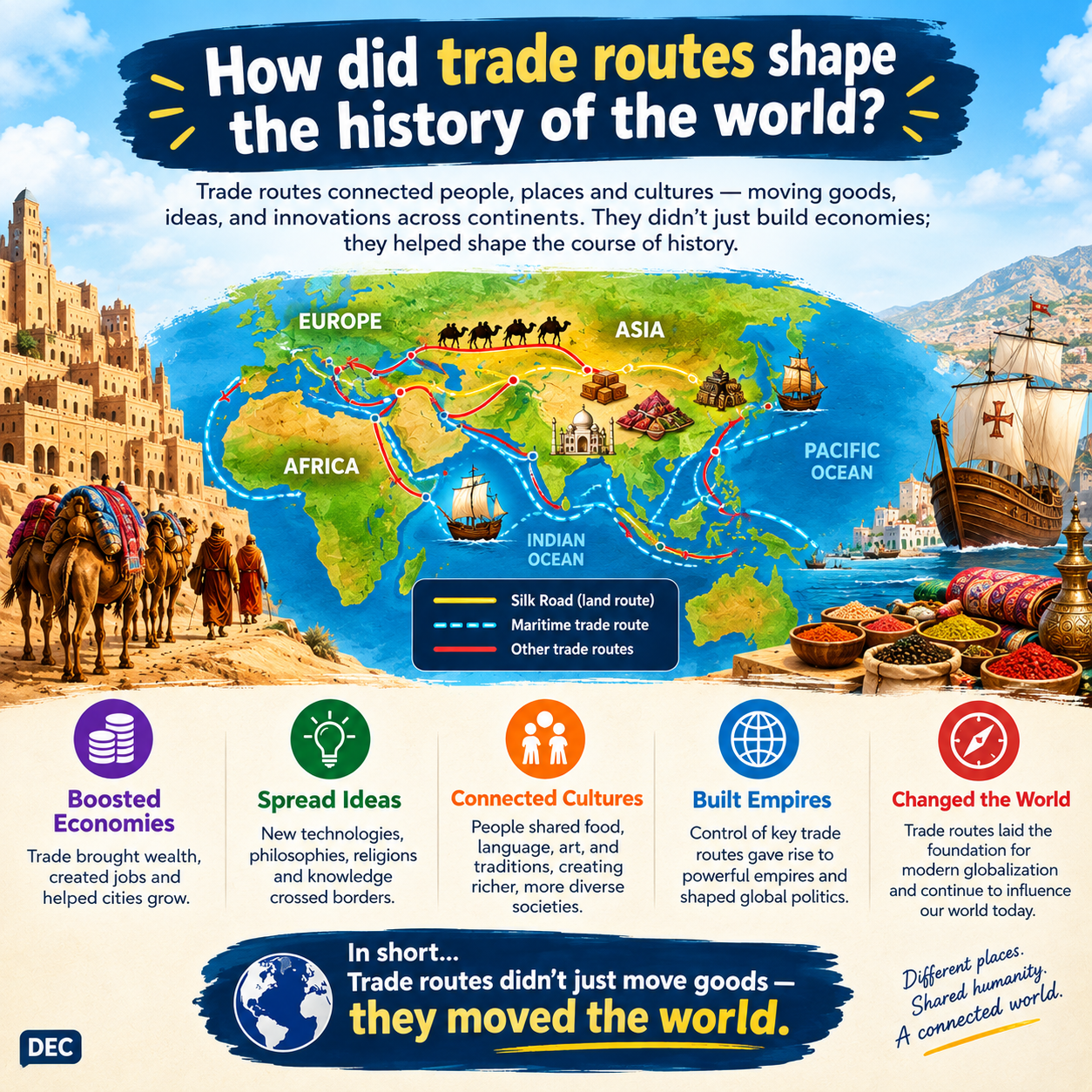
    Have you ever wondered how people from different parts of the world shared their goods, ideas, cultures, and knowledge hundreds or even thousands of years ago? Long before airplanes, cars, and modern technology, trade routes connected distant civilizations and helped shape the world we live in today!

    Trade routes were pathways that allowed merchants, travelers, and explorers to transport valuable goods from one region to another. These routes crossed deserts, mountains, rivers, and oceans, connecting Asia, Africa, Europe, and other parts of the world.

    **1. The Famous Silk Road **

    The Silk Road was one of the most famous trading networks in history. It connected China with Central Asia, the Middle East, and Europe. Merchants transported silk, spices, precious stones, ceramics, and other valuable products. But the Silk Road was about much more than goods! It also helped spread religions, scientific knowledge, artistic traditions, and cultural ideas between civilizations.

    **2. Maritime Trade Routes **

    Sea routes allowed traders to transport goods across oceans and along coastlines. Ships carried spices, textiles, tea, porcelain, and many other products between distant ports. The Indian Ocean became an important center of international trade, connecting merchants from East Africa, Arabia, India, Southeast Asia, and China.

    **3. The Spice Trade 🫚**

    Spices such as pepper, cinnamon, cloves, and nutmeg were highly valued in many parts of the world. Their demand encouraged merchants to travel long distances and helped develop important trading cities and ports. The search for new sources of spices also encouraged European maritime exploration, changing global connections and history.

    **4. The Rise of Cities and Empires **

    Trade routes helped cities grow into busy centers of commerce, learning, and culture. Merchants, craftspeople, and travelers brought wealth and new opportunities to trading centers. Governments and empires also gained influence by controlling important roads, ports, and markets.

    **5. The Exchange of Ideas and Knowledge **

    One of the greatest contributions of trade routes was the exchange of knowledge. Mathematics, astronomy, medicine, inventions, languages, and artistic styles traveled with merchants and scholars. People learned from one another, developed new skills, and expanded their understanding of the world.

    **6. The Sharing of Food and Culture **

    Trade helped introduce new foods, ingredients, clothing styles, artistic traditions, and customs to different societies. Over time, these exchanges influenced local cuisines, languages, architecture, and everyday life. The cultures of the world became connected in countless ways!

    **7. Trade Routes Had Challenges Too **

    Travel along trade routes was not always easy. Merchants faced dangerous weather, difficult landscapes, bandits, political conflicts, and long journeys. Trade could also contribute to the spread of diseases, while some trading systems were connected to conquest, exploitation, and slavery. Understanding these challenges helps us learn about both the achievements and the painful realities of history.

    **8. From Ancient Roads to Modern Global Trade **

    Today, goods move around the world through highways, railways, cargo ships, and airplanes. Modern trade networks are far more advanced, but they continue the same basic idea: connecting people, places, and markets. The ancient trade routes helped establish many of the connections that later shaped our interconnected world.

    **What Can We Learn from Trade Routes?**

    Trade routes teach us that no civilization developed completely on its own. People have always learned, exchanged ideas, explored new places, and depended on connections with others. History reminds us that cooperation, curiosity, and cultural exchange can transform societies and influence future generations.

    **Final Thought:** Trade routes were more than paths for transporting goods. They were bridges between civilizations, carrying stories, discoveries, beliefs, technologies, and traditions across the world. Their legacy continues to influence our lives today!

    **Question for You:** If you could travel along one ancient trade route, would you choose the Silk Road or the Indian Ocean trade routes? Why? Tell us in the comments!

    Like, share, and follow for more fascinating stories about history, geography, science, and the world around us!

    #TradeRoutes #HistoryOfTheWorld #SilkRoad #AncientHistory #WorldHistory #IndianOceanTrade #SpiceTrade #HistoryFacts #DidYouKnow #EducationalContent #LearningIsFun #ExploreHistory #CulturalExchange #AncientCivilizations #Geography #GlobalTrade #HistoryLovers #KnowledgeIsPower #WorldCultures #StoryPost #Education #DiscoverThePast #ExploreTheWorld #LearnSomethingNew #SocialMediaPost
    #rsisb Roll no.247 story post . 11 Foundation level 🌍✨ **How Did Trade Routes Shape the History of the World? 🚢🐪** 📜🌏 **Discover the Incredible Story of Trade Routes!** 🌏📜 Have you ever wondered how people from different parts of the world shared their goods, ideas, cultures, and knowledge hundreds or even thousands of years ago? 🤔✨ Long before airplanes, cars, and modern technology, trade routes connected distant civilizations and helped shape the world we live in today! 🌎🚢🐪 Trade routes were pathways that allowed merchants, travelers, and explorers to transport valuable goods from one region to another. These routes crossed deserts, mountains, rivers, and oceans, connecting Asia, Africa, Europe, and other parts of the world. 🏜️⛰️🌊 🐪 **1. The Famous Silk Road 🧵🏮** The Silk Road was one of the most famous trading networks in history. It connected China with Central Asia, the Middle East, and Europe. Merchants transported silk, spices, precious stones, ceramics, and other valuable products. 🎎🧵💎 But the Silk Road was about much more than goods! It also helped spread religions, scientific knowledge, artistic traditions, and cultural ideas between civilizations. 📚🕌🎨 🌊 **2. Maritime Trade Routes 🚢⚓** Sea routes allowed traders to transport goods across oceans and along coastlines. Ships carried spices, textiles, tea, porcelain, and many other products between distant ports. The Indian Ocean became an important center of international trade, connecting merchants from East Africa, Arabia, India, Southeast Asia, and China. 🌴🌏⛵ 🌶️ **3. The Spice Trade 🌶️🫚** Spices such as pepper, cinnamon, cloves, and nutmeg were highly valued in many parts of the world. Their demand encouraged merchants to travel long distances and helped develop important trading cities and ports. The search for new sources of spices also encouraged European maritime exploration, changing global connections and history. 🗺️⛵✨ 🏙️ **4. The Rise of Cities and Empires 🏛️👑** Trade routes helped cities grow into busy centers of commerce, learning, and culture. Merchants, craftspeople, and travelers brought wealth and new opportunities to trading centers. Governments and empires also gained influence by controlling important roads, ports, and markets. 💰🏙️📈 📚 **5. The Exchange of Ideas and Knowledge 🧠🔬** One of the greatest contributions of trade routes was the exchange of knowledge. Mathematics, astronomy, medicine, inventions, languages, and artistic styles traveled with merchants and scholars. People learned from one another, developed new skills, and expanded their understanding of the world. 🌟📖🌍 🍲 **6. The Sharing of Food and Culture 🎭🍇** Trade helped introduce new foods, ingredients, clothing styles, artistic traditions, and customs to different societies. Over time, these exchanges influenced local cuisines, languages, architecture, and everyday life. The cultures of the world became connected in countless ways! 🌮🍜🎨 ⚖️ **7. Trade Routes Had Challenges Too ⛈️** Travel along trade routes was not always easy. Merchants faced dangerous weather, difficult landscapes, bandits, political conflicts, and long journeys. Trade could also contribute to the spread of diseases, while some trading systems were connected to conquest, exploitation, and slavery. Understanding these challenges helps us learn about both the achievements and the painful realities of history. 📜🌧️ 🌐 **8. From Ancient Roads to Modern Global Trade 🚚✈️** Today, goods move around the world through highways, railways, cargo ships, and airplanes. Modern trade networks are far more advanced, but they continue the same basic idea: connecting people, places, and markets. The ancient trade routes helped establish many of the connections that later shaped our interconnected world. 🌍📦🚢 💡 **What Can We Learn from Trade Routes?** Trade routes teach us that no civilization developed completely on its own. People have always learned, exchanged ideas, explored new places, and depended on connections with others. History reminds us that cooperation, curiosity, and cultural exchange can transform societies and influence future generations. 🤝💖🌏 ✨ **Final Thought:** Trade routes were more than paths for transporting goods. They were bridges between civilizations, carrying stories, discoveries, beliefs, technologies, and traditions across the world. Their legacy continues to influence our lives today! 🌍🛤️💫 💬 **Question for You:** If you could travel along one ancient trade route, would you choose the Silk Road or the Indian Ocean trade routes? Why? 🐪🚢 Tell us in the comments! 👇 ❤️ Like, share, and follow for more fascinating stories about history, geography, science, and the world around us! 📚🌍🚀 #TradeRoutes #HistoryOfTheWorld #SilkRoad #AncientHistory #WorldHistory #IndianOceanTrade #SpiceTrade #HistoryFacts #DidYouKnow #EducationalContent #LearningIsFun #ExploreHistory #CulturalExchange #AncientCivilizations #Geography #GlobalTrade #HistoryLovers #KnowledgeIsPower #WorldCultures #StoryPost #Education #DiscoverThePast #ExploreTheWorld #LearnSomethingNew #SocialMediaPost 🌍📚✨🐪🚢💫
    0 Commentarii 0 Distribuiri 8360 Views
  • #rsisb
    Roll NO:232
    Foundation level student.
    Story post:12

    ### Description

    **How Did Trade Routes Shape the History of the World?**
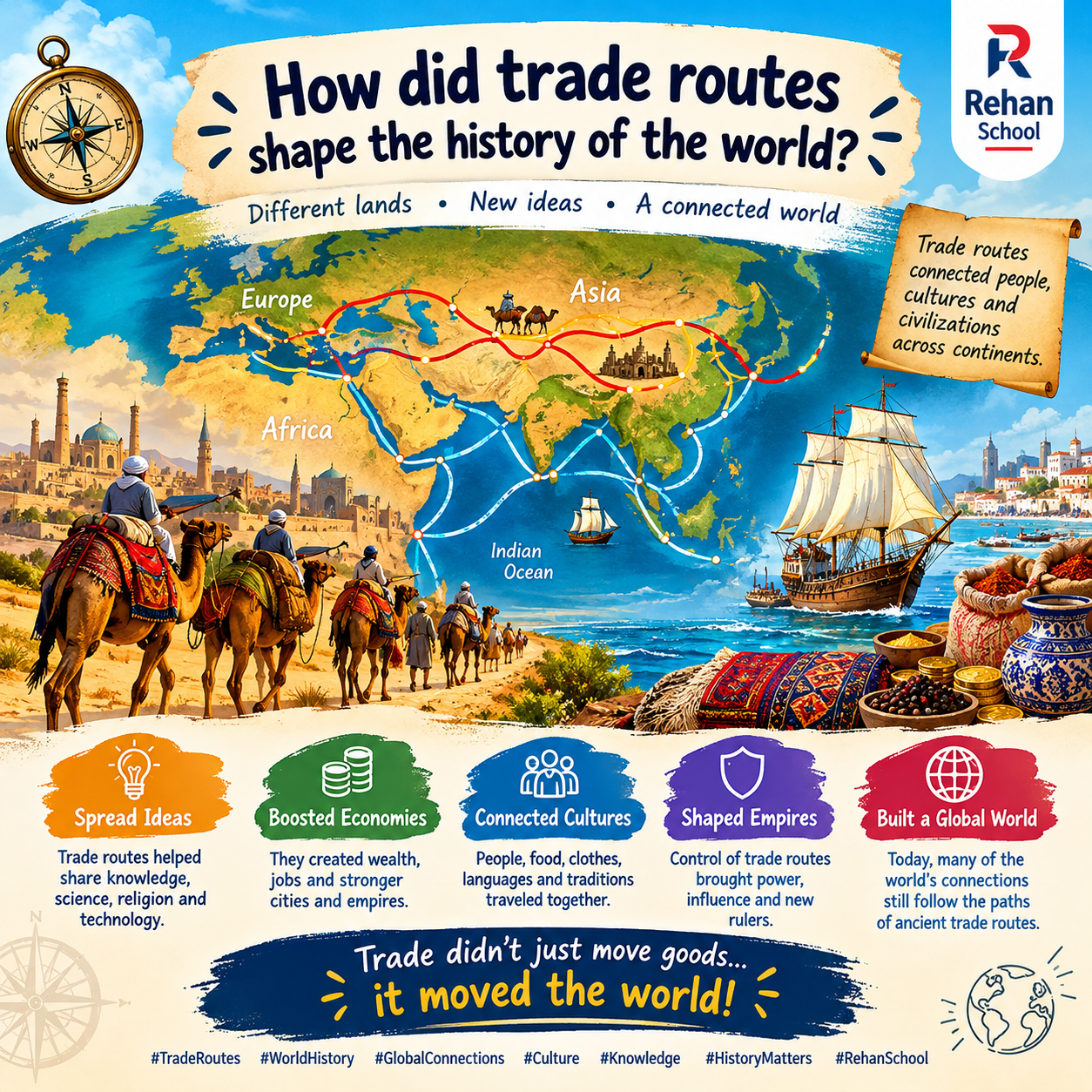
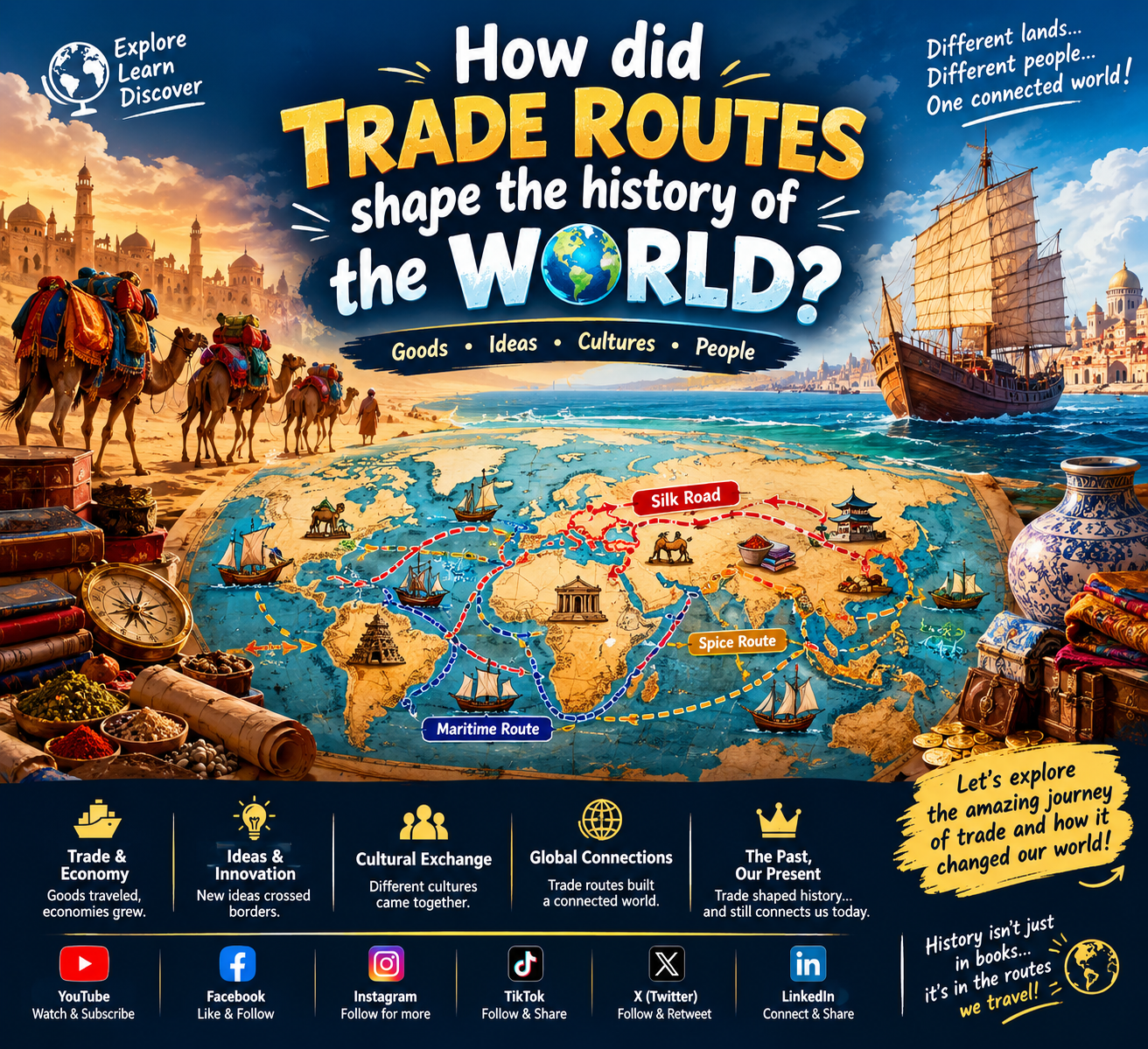
    Trade routes were more than just paths for buying and selling goods—they connected civilizations, spread ideas, languages, cultures, technologies, religions, and inventions across continents. From the **Silk Road** to ancient sea routes, merchants and travelers helped shape the development of cities, empires, and societies.

    Join us on a fascinating journey through history to discover how trade connected the world and helped create the global society we know today!

    ### Hashtags

    #TradeRoutes #WorldHistory #SilkRoad #History #AncientCivilizations #GlobalHistory #HistoryFacts #CulturalExchange #WorldCulture #Geography #Education #Learning #HistoryLovers #DidYouKnow #AncientHistory #ExploringHistory #EducationalContent #Knowledge #Civilizations #GlobalConnections

    ### Emojis


    #rsisb Roll NO:232 Foundation level student. Story post:12 ### 🌍 Description **How Did Trade Routes Shape the History of the World?** 🗺️✨ Trade routes were more than just paths for buying and selling goods—they connected civilizations, spread ideas, languages, cultures, technologies, religions, and inventions across continents. 🌏🚢🐪 From the **Silk Road** to ancient sea routes, merchants and travelers helped shape the development of cities, empires, and societies. 📜🏛️ Join us on a fascinating journey through history to discover how trade connected the world and helped create the global society we know today! 🌎🤝✨ ### 🔖 Hashtags #TradeRoutes #WorldHistory #SilkRoad #History #AncientCivilizations #GlobalHistory #HistoryFacts #CulturalExchange #WorldCulture #Geography #Education #Learning #HistoryLovers #DidYouKnow #AncientHistory #ExploringHistory #EducationalContent #Knowledge #Civilizations #GlobalConnections ### 😍 Emojis 🌍🗺️🐪🚢🏛️📜💰🌏🤝✨📚🧭🏺🌐💡🔥
    0 Commentarii 0 Distribuiri 5050 Views
  • #rsisb
    Roll no.239
    Story post no.8
    Foundation Level


    Long before modern airplanes, highways, and the internet connected the world, **trade routes brought distant communities together**. From ancient caravan paths across Asia and Africa to maritime routes across the Indian Ocean and Mediterranean Sea, these networks helped transform human history.

    **Trade routes moved much more than goods.**
    Silk, spices, gold, precious stones, textiles, metals, food, and other valuable products traveled across continents. But along with these goods came something equally important: **ideas, technologies, languages, beliefs, traditions, and knowledge**.

    **They helped economies grow.**
    Cities located along important routes often became busy centers of trade. Merchants, craftsmen, sailors, and travelers created new economic opportunities, while ports and marketplaces connected producers and consumers across great distances.

    **They spread knowledge and innovation.**
    Technologies, scientific ideas, navigation techniques, agricultural practices, and inventions could travel from one region to another. Trade networks therefore helped knowledge move across cultural and geographic boundaries.

    **They connected different cultures.**
    People from different societies met in markets, ports, and trading cities. These encounters encouraged cultural exchange and influenced food, clothing, art, architecture, languages, and traditions.

    **They influenced the rise of cities and empires.**
    Controlling important trade routes could provide wealth and strategic advantages. As a result, powerful states and empires competed to control important roads, ports, and commercial centers.

    **Maritime trade changed global connections.**
    Sea routes across the Indian Ocean and other waterways allowed merchants to transport large quantities of goods between distant regions. Over time, expanding maritime networks helped create increasingly interconnected economies.

    **The legacy continues today.**
    Modern global trade, international shipping, major ports, and interconnected economies are part of a much longer history of people exchanging goods and ideas across borders.

    **In short:** Trade routes did not simply move products from one place to another. They helped **move people, ideas, technology, cultures, and knowledge**, creating connections that shaped the history of the world.

    **History reminds us that the world has been connected for thousands of years.**

    #TradeRoutes #WorldHistory #HistoryFacts #SilkRoad #AncientHistory #GlobalHistory #Geography #CulturalExchange #HistoryEducation #LearnHistory #DidYouKnow #WorldCivilizations #MaritimeTrade #Education #STEM #SocialStudies #HistoryLovers #KnowledgeIsPower #ChatGPT
    #rsisb Roll no.239 Story post no.8 Foundation Level Long before modern airplanes, highways, and the internet connected the world, **trade routes brought distant communities together**. From ancient caravan paths across Asia and Africa to maritime routes across the Indian Ocean and Mediterranean Sea, these networks helped transform human history. 🧭 **Trade routes moved much more than goods.** Silk, spices, gold, precious stones, textiles, metals, food, and other valuable products traveled across continents. But along with these goods came something equally important: **ideas, technologies, languages, beliefs, traditions, and knowledge**. 💰 **They helped economies grow.** Cities located along important routes often became busy centers of trade. Merchants, craftsmen, sailors, and travelers created new economic opportunities, while ports and marketplaces connected producers and consumers across great distances. 💡 **They spread knowledge and innovation.** Technologies, scientific ideas, navigation techniques, agricultural practices, and inventions could travel from one region to another. Trade networks therefore helped knowledge move across cultural and geographic boundaries. 🤝 **They connected different cultures.** People from different societies met in markets, ports, and trading cities. These encounters encouraged cultural exchange and influenced food, clothing, art, architecture, languages, and traditions. 🏛️ **They influenced the rise of cities and empires.** Controlling important trade routes could provide wealth and strategic advantages. As a result, powerful states and empires competed to control important roads, ports, and commercial centers. 🌊 **Maritime trade changed global connections.** Sea routes across the Indian Ocean and other waterways allowed merchants to transport large quantities of goods between distant regions. Over time, expanding maritime networks helped create increasingly interconnected economies. 🌎 **The legacy continues today.** Modern global trade, international shipping, major ports, and interconnected economies are part of a much longer history of people exchanging goods and ideas across borders. ✨ **In short:** Trade routes did not simply move products from one place to another. They helped **move people, ideas, technology, cultures, and knowledge**, creating connections that shaped the history of the world. 📚 **History reminds us that the world has been connected for thousands of years.** #TradeRoutes #WorldHistory #HistoryFacts #SilkRoad #AncientHistory #GlobalHistory #Geography #CulturalExchange #HistoryEducation #LearnHistory #DidYouKnow #WorldCivilizations #MaritimeTrade #Education #STEM #SocialStudies #HistoryLovers #KnowledgeIsPower #ChatGPT
    0 Commentarii 0 Distribuiri 6912 Views
  • #rsisb
    Roll no.247
    Call annie.18
    Foundation level

    **“Wood” – The Backbone of Early Civilization | 25-Minute Learning Journey**

    Wood is one of the oldest and most important natural materials used by humanity. Long before modern technology, steel, concrete, and plastic transformed our world, people depended on trees and wood for survival, creativity, shelter, transportation, tools, and everyday life.

    In this fascinating **25-minute exploration**, we travel back through history to discover how wood helped early civilizations grow, adapt, and build their communities. From simple wooden tools and shelters to boats, bridges, furniture, weapons, wheels, and farming equipment, wood played a remarkable role in human development.

    **Why was wood so important?**
    Wood was relatively easy to find, shape, cut, carve, and transport. Early humans learned to use different types of trees for different purposes, turning a natural resource into useful objects that made life easier and helped communities become more organized.

    Wood also provided an important source of fuel. Fire helped people cook food, stay warm, protect themselves, and eventually develop new technologies such as pottery and metalworking. The relationship between humans, trees, fire, and technology became an important part of civilization.

    **Wood and Transportation**
    One of the most exciting developments was the use of wood to create boats and other forms of transportation. Wooden boats allowed people to travel across rivers, lakes, and seas, encouraging exploration, trade, communication, and cultural exchange.

    **Wood and Shelter**
    Wood became an essential building material for homes, villages, storage structures, roofs, doors, and other buildings. As communities developed, woodworking skills became increasingly valuable, allowing people to construct stronger and more useful structures.

    **Wood and Human Creativity**
    Wood was not simply a material for survival—it became a medium for creativity. People carved decorations, created musical instruments, made furniture, constructed tools, and produced objects that reflected their cultures and traditions.

    **Wood and the Growth of Civilization**
    The story of wood is also the story of human innovation. By learning how to select, shape, join, preserve, and use wood, people developed practical skills that contributed to agriculture, construction, transportation, craftsmanship, and trade.

    This 25-minute lesson encourages us to look at an ordinary piece of wood in a completely different way. A wooden table, chair, pencil, door, or boat may seem simple today, but behind these objects lies thousands of years of human knowledge, experimentation, craftsmanship, and discovery.

    **A Lesson for Today**
    Understanding the historical importance of wood also reminds us of our responsibility toward forests and the environment. Trees provide habitats, help support ecosystems, and play an important role in our planet’s natural systems. Learning about wood means learning not only about the past, but also about how we can use natural resources responsibly in the future.

    Join us on this educational journey through history and discover how **wood became one of the foundations of human civilization**. From ancient tools to magnificent wooden structures, from forests to communities, the story of wood reveals how humans transformed the resources around them into the foundations of everyday life.

    **Watch, learn, explore, and discover the incredible story behind one of humanity’s oldest materials!**

    #Wood #HistoryOfWood #EarlyCivilization #HumanHistory #AncientCivilizations #History #Education #Learning #Science #Nature #Trees #Forests #Woodworking #AncientHistory #HumanInnovation #Technology #Archaeology #Culture #Craftsmanship #NaturalResources #EnvironmentalAwareness #LearningJourney #EducationalVideo #HistoryLesson #Civilization #Innovation #Knowledge #ExploreHistory #WoodenTools
    #rsisb Roll no.247 Call annie.18 Foundation level 🌳 **“Wood” – The Backbone of Early Civilization | 25-Minute Learning Journey** 🪵🏺 Wood is one of the oldest and most important natural materials used by humanity. Long before modern technology, steel, concrete, and plastic transformed our world, people depended on trees and wood for survival, creativity, shelter, transportation, tools, and everyday life. 🌍🌳 In this fascinating **25-minute exploration**, we travel back through history to discover how wood helped early civilizations grow, adapt, and build their communities. 🏕️🏠 From simple wooden tools and shelters to boats, bridges, furniture, weapons, wheels, and farming equipment, wood played a remarkable role in human development. 🛶🛠️ 🌲 **Why was wood so important?** Wood was relatively easy to find, shape, cut, carve, and transport. Early humans learned to use different types of trees for different purposes, turning a natural resource into useful objects that made life easier and helped communities become more organized. 🔥 Wood also provided an important source of fuel. Fire helped people cook food, stay warm, protect themselves, and eventually develop new technologies such as pottery and metalworking. The relationship between humans, trees, fire, and technology became an important part of civilization. 🔥🍲 🛶 **Wood and Transportation** One of the most exciting developments was the use of wood to create boats and other forms of transportation. Wooden boats allowed people to travel across rivers, lakes, and seas, encouraging exploration, trade, communication, and cultural exchange. 🌊⛵ 🏠 **Wood and Shelter** Wood became an essential building material for homes, villages, storage structures, roofs, doors, and other buildings. As communities developed, woodworking skills became increasingly valuable, allowing people to construct stronger and more useful structures. 🏡🔨 🛠️ **Wood and Human Creativity** Wood was not simply a material for survival—it became a medium for creativity. People carved decorations, created musical instruments, made furniture, constructed tools, and produced objects that reflected their cultures and traditions. 🎵🎨🪑 🌍 **Wood and the Growth of Civilization** The story of wood is also the story of human innovation. By learning how to select, shape, join, preserve, and use wood, people developed practical skills that contributed to agriculture, construction, transportation, craftsmanship, and trade. This 25-minute lesson encourages us to look at an ordinary piece of wood in a completely different way. A wooden table, chair, pencil, door, or boat may seem simple today, but behind these objects lies thousands of years of human knowledge, experimentation, craftsmanship, and discovery. 🔍🧠✨ 🌱 **A Lesson for Today** Understanding the historical importance of wood also reminds us of our responsibility toward forests and the environment. Trees provide habitats, help support ecosystems, and play an important role in our planet’s natural systems. Learning about wood means learning not only about the past, but also about how we can use natural resources responsibly in the future. 🌳🌎💚 📚 Join us on this educational journey through history and discover how **wood became one of the foundations of human civilization**. From ancient tools to magnificent wooden structures, from forests to communities, the story of wood reveals how humans transformed the resources around them into the foundations of everyday life. 🌳🪵🏺✨ 💡 **Watch, learn, explore, and discover the incredible story behind one of humanity’s oldest materials!** #Wood #HistoryOfWood #EarlyCivilization #HumanHistory #AncientCivilizations #History #Education #Learning #Science #Nature #Trees #Forests #Woodworking #AncientHistory #HumanInnovation #Technology #Archaeology #Culture #Craftsmanship #NaturalResources #EnvironmentalAwareness #LearningJourney #EducationalVideo #HistoryLesson #Civilization #Innovation #Knowledge #ExploreHistory #WoodenTools 🌳🪵📚🌍✨
    0 Commentarii 0 Distribuiri 8489 Views 11
  • #rsisb
    Roll no 248
    Fuondation level
    Call Annie no 18
    **“Wood” – The Backbone of Early Civilization (25 min)**

    Step into the fascinating world of **wood** and discover how this simple natural material helped shape early human civilization! From building shelters and creating tools to making boats , furniture, and everyday objects, wood played an important role in human progress.

    In this 25-minute exploration, we’ll discover how early communities learned to use trees and wood to make life easier, build stronger homes, travel farther, and develop new technologies.

    This topic shows us that sometimes the most ordinary things around us can have an extraordinary story.

    **Learn • Explore • Discover • Think**
    Let’s explore the history of wood and understand how it became a backbone of early civilization!

    #Wood #EarlyCivilization #History #AncientHistory #HumanCivilization #Learning #Education #Science #Nature #AncientTechnology #Curiosity #Knowledge #EducationalContent
    #rsisb Roll no 248 Fuondation level Call Annie no 18 🌳🪵 **“Wood” – The Backbone of Early Civilization (25 min)** 🪵🌳 Step into the fascinating world of **wood** and discover how this simple natural material helped shape early human civilization! 🌍✨ From building shelters 🏠 and creating tools 🛠️ to making boats 🚤, furniture, and everyday objects, wood played an important role in human progress. In this 25-minute exploration, we’ll discover how early communities learned to use trees and wood to make life easier, build stronger homes, travel farther, and develop new technologies. 🔥🏕️🌿 This topic shows us that sometimes the most ordinary things around us can have an extraordinary story. 🌟📚 🎯 **Learn • Explore • Discover • Think** 🌱 Let’s explore the history of wood and understand how it became a backbone of early civilization! #Wood #EarlyCivilization #History #AncientHistory #HumanCivilization #Learning #Education #Science #Nature #AncientTechnology #Curiosity #Knowledge #EducationalContent 🌳🪵📚✨
    0 Commentarii 0 Distribuiri 3179 Views 6
  • #rsisb Roll No.240 Call Annie No.20 Foundation Level Discover the fascinating story of wood and how it became one of the most important materials in early human civilization. 🌳🪵 In this 25-minute educational journey, we explore how ancient humans used wood to build homes, tools, boats, weapons, bridges, fires, furniture, and early settlements. From simple wooden tools to impressive ancient structures, wood played a vital role in human survival, exploration, trade, and technological development. Learn how people discovered different types of wood, developed woodworking techniques, and used this natural resource to transform their communities. This video also explains why wood remained an essential material even after humans discovered metals and other building materials. 🌳 Topics Covered: The importance of wood in early civilization Ancient wooden tools and weapons Wood used for homes and shelters Fire and the importance of fuel Ancient boats and transportation Woodworking and early technology Wood in farming and daily life The role of forests in civilization How wood influenced human progress Join us on this exciting journey through history and discover why wood truly became the backbone of early civilization! 🪵🌍 #Wood #EarlyCivilization #AncientHistory #HumanHistory #History #AncientTechnology #Woodworking #Civilization #EducationalVideo #ScienceAndHistory #AncientWorld #Learning #HistoryForKids #Education #25minutescomplete Rehan School Islamabad Campus Asma Shaheen EducationWali Irum Asim Saima Happinesswali https://www.facebook.com/share/v/1DCEYcJMmA/
    WWW.FACEBOOK.COM
    Facebook
    #rsisb Roll No.240 Call Annie No.20 Foundation Level Discover the fascinating story of wood and how it became one of the most important materials in early human civilization. 🌳🪵 In this 25-minute...
    0 Commentarii 0 Distribuiri 5979 Views
  • ### Discovering the Ancient Civilization of Mehrgarh

    Nestled in the arid plains of Balochistan, Pakistan, lies the remarkable archaeological site of Mehrgarh, a treasure trove of early human civilization dating back to around 7000 BCE. Often overshadowed by the more famous Indus Valley Civilization, Mehrgarh stands as one of the earliest centers of agriculture and human settlement in South Asia, offering profound insights into our prehistoric past.

    **A Glimpse into the Past**

    Mehrgarh, discovered in 1974 by French archaeologists, is located near the Bolan Pass, a strategic gateway between the ancient cultures of South Asia and Central Asia. This site predates the well-known cities of Harappa and Mohenjo-Daro, making it a crucial link in understanding the evolution of human societies in this region.

    **Life in Mehrgarh**

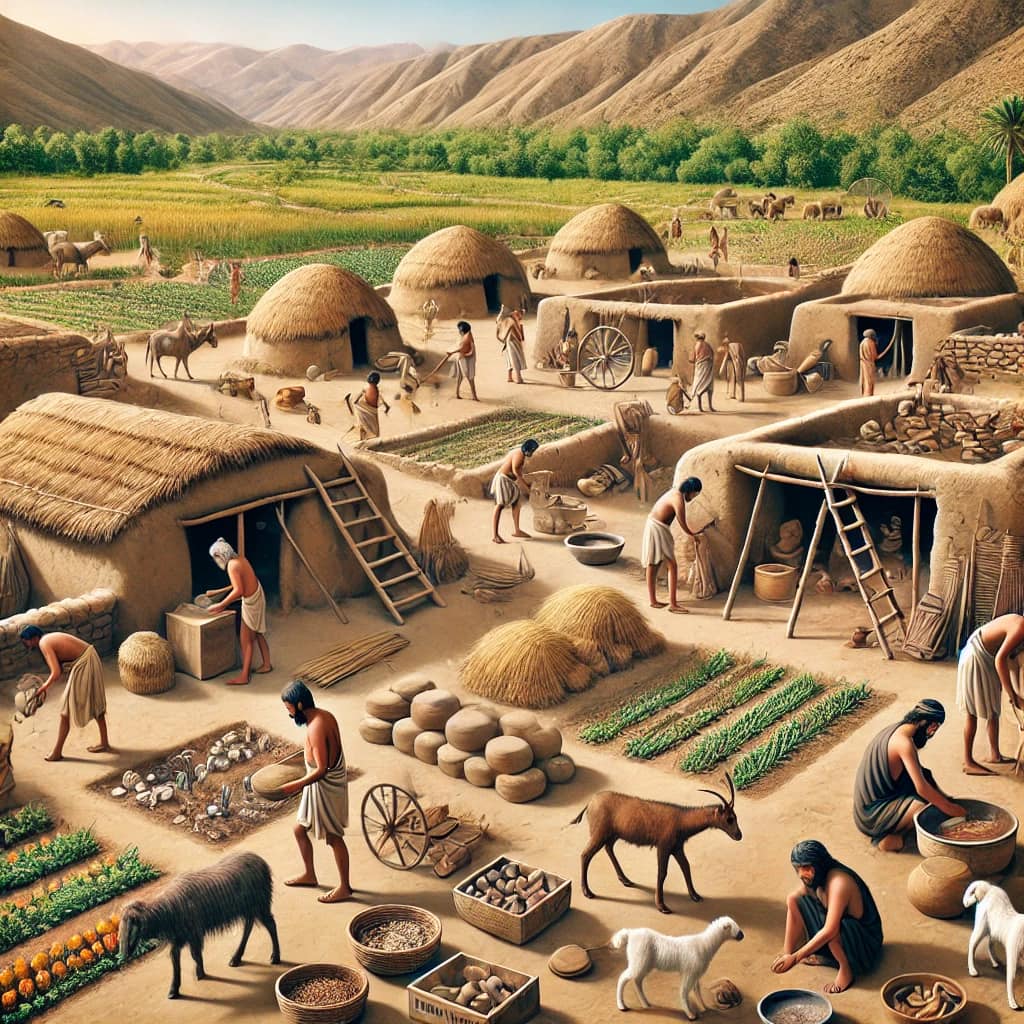
    At its peak, Mehrgarh was a thriving community engaged in a variety of sophisticated activities. The inhabitants of Mehrgarh were among the first in the world to practice settled farming. They cultivated wheat and barley, and their domesticated animals included cattle, sheep, and goats. This transition from a nomadic to a settled lifestyle marked a significant advancement in human history.

    The people of Mehrgarh lived in well-constructed mud-brick houses, which were organized into planned settlements. They built granaries for storing surplus crops, indicating a level of social organization and economic planning. Workshops for tool-making and pottery production were integral parts of the settlement, highlighting the communitys craftsmanship and trade skills.

    **Technological and Cultural Achievements**

    Mehrgarhs residents were pioneers in early technology. They developed sophisticated methods for crafting tools from stone and bone, and their pottery, decorated with intricate patterns, speaks of their artistic capabilities. The discovery of figurines, beads, and ornaments made from materials like seashells, turquoise, and lapis lazuli suggests that the people of Mehrgarh had established trade links with distant regions.

    One of the most remarkable aspects of Mehrgarh is the evidence of early dentistry. Archaeologists have found drilled teeth in human remains, indicating that dental practices were in use over 9,000 years ago—a testament to the advanced knowledge and skills possessed by these ancient people.

    **Mehrgarhs Legacy**

    Mehrgarhs significance extends beyond its own era. It provides crucial evidence of the early stages of agricultural development and the rise of settled communities in South Asia. The site serves as a precursor to the more complex urban centers of the Indus Valley Civilization, showing a clear progression in social and technological advancements.

    Today, Mehrgarh stands as a symbol of human ingenuity and resilience. It reminds us that even in the harshest environments, ancient societies were capable of extraordinary achievements. As we continue to explore and understand Mehrgarh, we gain valuable insights into the roots of our civilization and the shared heritage that connects us all.

    **Join the Journey**

    Lets celebrate the rich history of Mehrgarh and honor the legacy of its people. Share this story to spread awareness about one of the worlds earliest cradles of civilization. #Mehrgarh #AncientHistory #Archaeology #Balochistan #HumanHeritage
    ### Discovering the Ancient Civilization of Mehrgarh Nestled in the arid plains of Balochistan, Pakistan, lies the remarkable archaeological site of Mehrgarh, a treasure trove of early human civilization dating back to around 7000 BCE. Often overshadowed by the more famous Indus Valley Civilization, Mehrgarh stands as one of the earliest centers of agriculture and human settlement in South Asia, offering profound insights into our prehistoric past. **A Glimpse into the Past** Mehrgarh, discovered in 1974 by French archaeologists, is located near the Bolan Pass, a strategic gateway between the ancient cultures of South Asia and Central Asia. This site predates the well-known cities of Harappa and Mohenjo-Daro, making it a crucial link in understanding the evolution of human societies in this region. **Life in Mehrgarh** At its peak, Mehrgarh was a thriving community engaged in a variety of sophisticated activities. The inhabitants of Mehrgarh were among the first in the world to practice settled farming. They cultivated wheat and barley, and their domesticated animals included cattle, sheep, and goats. This transition from a nomadic to a settled lifestyle marked a significant advancement in human history. The people of Mehrgarh lived in well-constructed mud-brick houses, which were organized into planned settlements. They built granaries for storing surplus crops, indicating a level of social organization and economic planning. Workshops for tool-making and pottery production were integral parts of the settlement, highlighting the community's craftsmanship and trade skills. **Technological and Cultural Achievements** Mehrgarh's residents were pioneers in early technology. They developed sophisticated methods for crafting tools from stone and bone, and their pottery, decorated with intricate patterns, speaks of their artistic capabilities. The discovery of figurines, beads, and ornaments made from materials like seashells, turquoise, and lapis lazuli suggests that the people of Mehrgarh had established trade links with distant regions. One of the most remarkable aspects of Mehrgarh is the evidence of early dentistry. Archaeologists have found drilled teeth in human remains, indicating that dental practices were in use over 9,000 years ago—a testament to the advanced knowledge and skills possessed by these ancient people. **Mehrgarh's Legacy** Mehrgarh's significance extends beyond its own era. It provides crucial evidence of the early stages of agricultural development and the rise of settled communities in South Asia. The site serves as a precursor to the more complex urban centers of the Indus Valley Civilization, showing a clear progression in social and technological advancements. Today, Mehrgarh stands as a symbol of human ingenuity and resilience. It reminds us that even in the harshest environments, ancient societies were capable of extraordinary achievements. As we continue to explore and understand Mehrgarh, we gain valuable insights into the roots of our civilization and the shared heritage that connects us all. **Join the Journey** Let's celebrate the rich history of Mehrgarh and honor the legacy of its people. Share this story to spread awareness about one of the world's earliest cradles of civilization. #Mehrgarh #AncientHistory #Archaeology #Balochistan #HumanHeritage
    0 Commentarii 0 Distribuiri 3624 Views