• Mohsin RS F8
    Story post NO:15
    roll NO:13
    Class: Foundation Level
    Made by Me

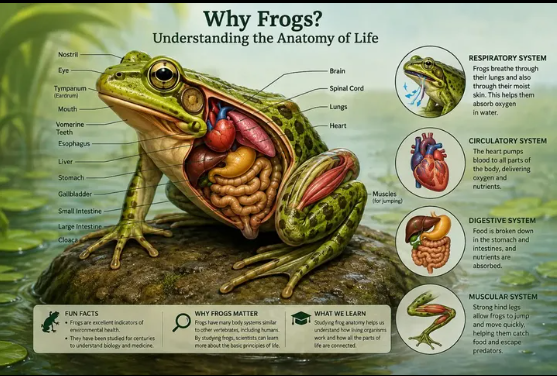
    Frogs may be small animals, but their bodies contain an amazing combination of organs, systems, and adaptations that make them excellent subjects for understanding the basic principles of life. Studying frog anatomy gives us an opportunity to see how different parts of a living organism work together to support movement, breathing, digestion, communication, growth, and survival. Their anatomy also shares important features with many other vertebrates, making frogs useful for learning fundamental concepts in biology.
    One of the most interesting features of frogs is their respiratory system. Unlike humans, frogs can exchange gases not only through their lungs but also through their moist skin. This special adaptation allows them to survive in aquatic and terrestrial environments. Their circulatory system also plays an important role in maintaining life by transporting oxygen and nutrients throughout the body.
    Frogs have powerful hind legs that are specially adapted for jumping and swimming. Their large eyes provide a wide field of vision and help them detect movement, while their ears allow them to hear sounds and communicate. Inside the body, organs such as the heart, lungs, liver, stomach, and intestines each perform important functions. These organs do not work independently; instead, they form interconnected systems that keep the frog alive and functioning.
    The frog's life cycle is another fascinating example of biological development. It begins with eggs laid in water, followed by the tadpole stage. Tadpoles gradually develop legs and lungs as their bodies change, eventually becoming froglets and then adult frogs. This transformation demonstrates how living organisms can undergo remarkable changes as they grow and mature.
    Frogs are also important indicators of environmental health. Because they are sensitive to changes in their surroundings, changes in frog populations can provide clues about the condition of an ecosystem. They also play an important role in controlling insect populations and maintaining food chains.
    Overall, “Why Frogs? Understanding the Anat
    Mohsin RS F8 🎓✨ Story post NO:15 roll NO:13 Class: Foundation Level 📚 Made by Me 💻🚀 Frogs may be small animals, but their bodies contain an amazing combination of organs, systems, and adaptations that make them excellent subjects for understanding the basic principles of life. Studying frog anatomy gives us an opportunity to see how different parts of a living organism work together to support movement, breathing, digestion, communication, growth, and survival. Their anatomy also shares important features with many other vertebrates, making frogs useful for learning fundamental concepts in biology. One of the most interesting features of frogs is their respiratory system. Unlike humans, frogs can exchange gases not only through their lungs but also through their moist skin. This special adaptation allows them to survive in aquatic and terrestrial environments. Their circulatory system also plays an important role in maintaining life by transporting oxygen and nutrients throughout the body. Frogs have powerful hind legs that are specially adapted for jumping and swimming. Their large eyes provide a wide field of vision and help them detect movement, while their ears allow them to hear sounds and communicate. Inside the body, organs such as the heart, lungs, liver, stomach, and intestines each perform important functions. These organs do not work independently; instead, they form interconnected systems that keep the frog alive and functioning. The frog's life cycle is another fascinating example of biological development. It begins with eggs laid in water, followed by the tadpole stage. Tadpoles gradually develop legs and lungs as their bodies change, eventually becoming froglets and then adult frogs. This transformation demonstrates how living organisms can undergo remarkable changes as they grow and mature. Frogs are also important indicators of environmental health. Because they are sensitive to changes in their surroundings, changes in frog populations can provide clues about the condition of an ecosystem. They also play an important role in controlling insect populations and maintaining food chains. Overall, “Why Frogs? Understanding the Anat
    0 Commentaires 0 Parts 660 Vue
  • **Roll No: 2**
    **Batch: 14**
    **Book: ACCL**
    **Task No: 69**

    # Acids and Bases: The Balance of Nature

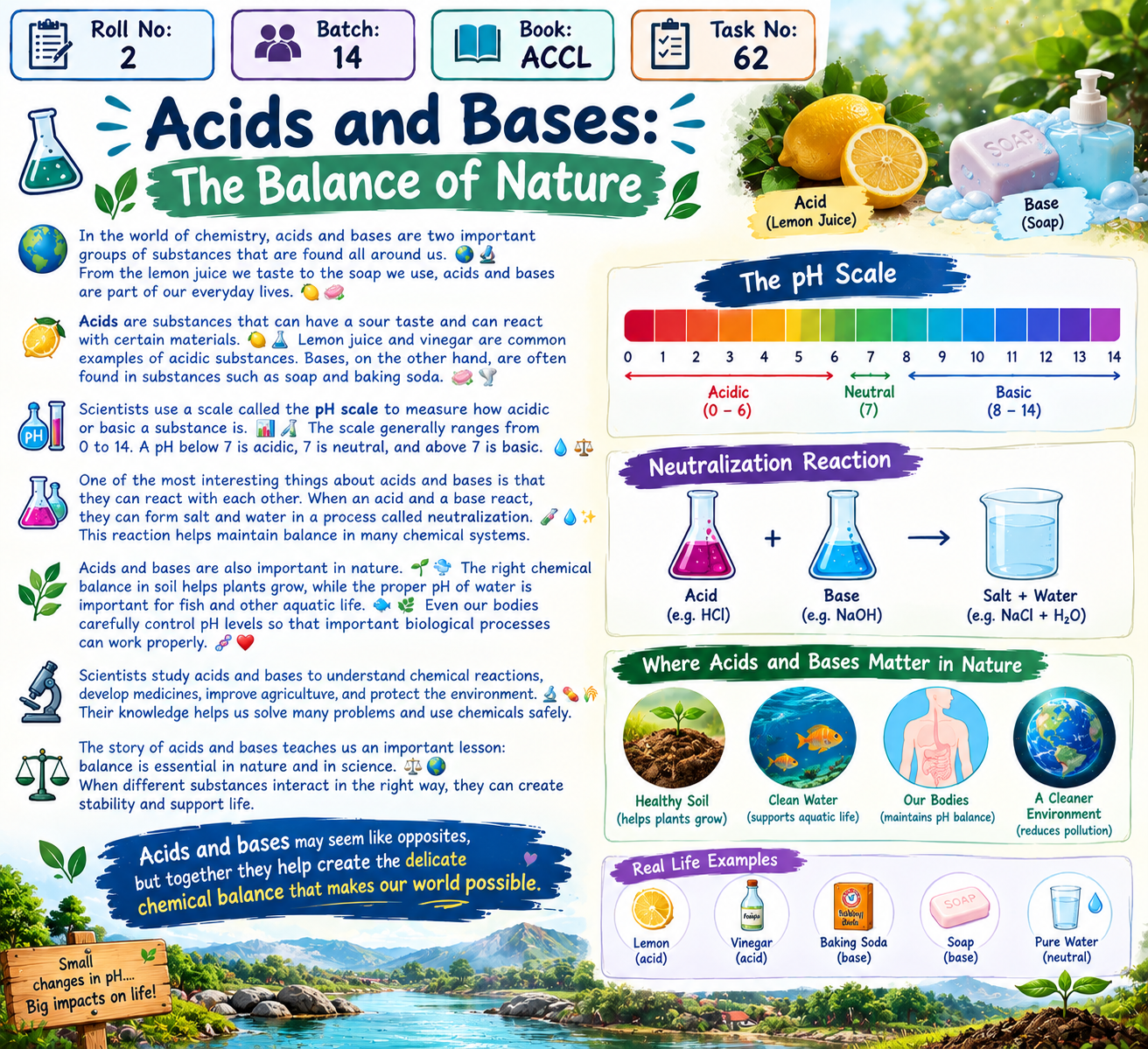
    In the world of chemistry, acids and bases are two important groups of substances that are found all around us. From the lemon juice we taste to the soap we use, acids and bases are part of our everyday lives.

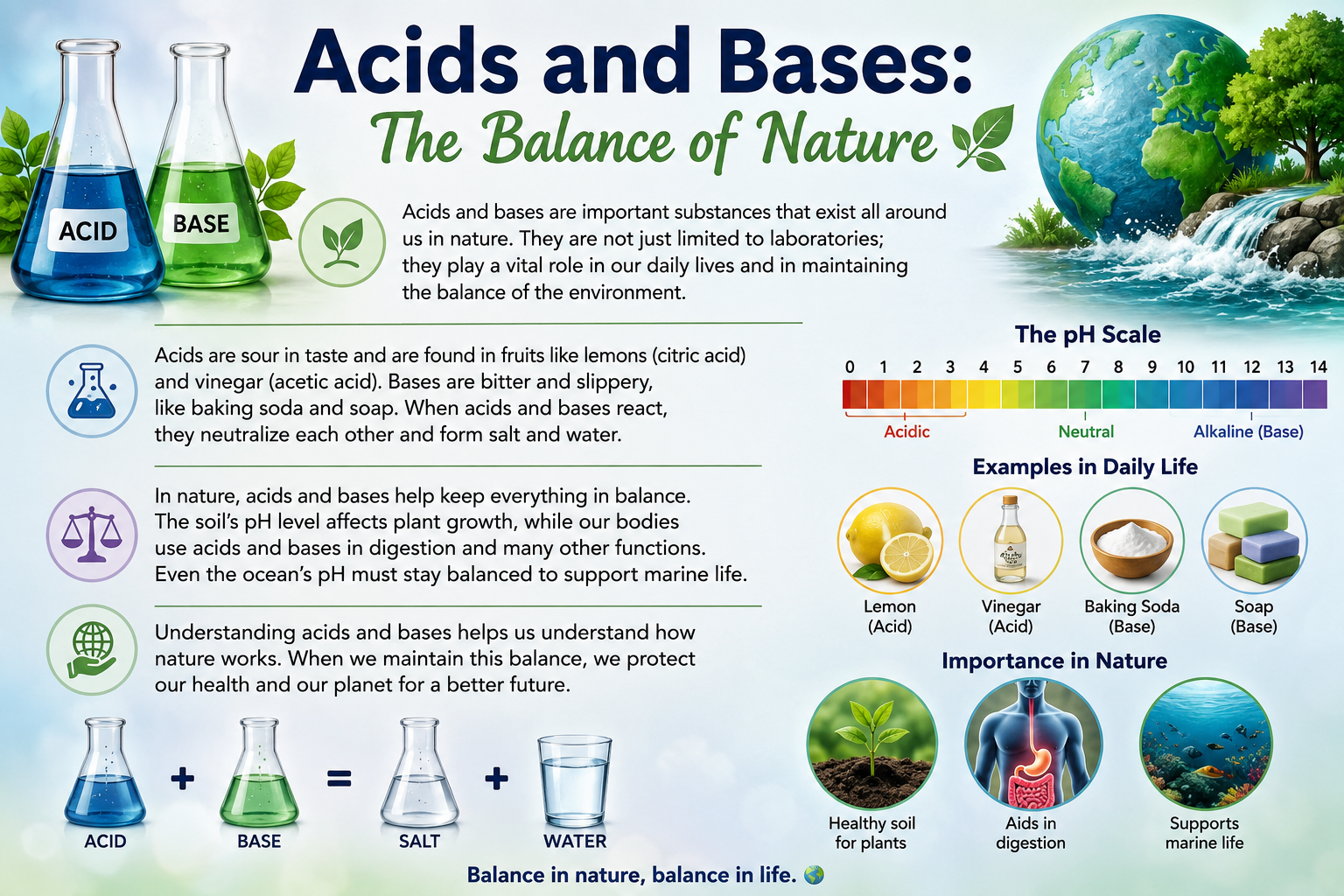
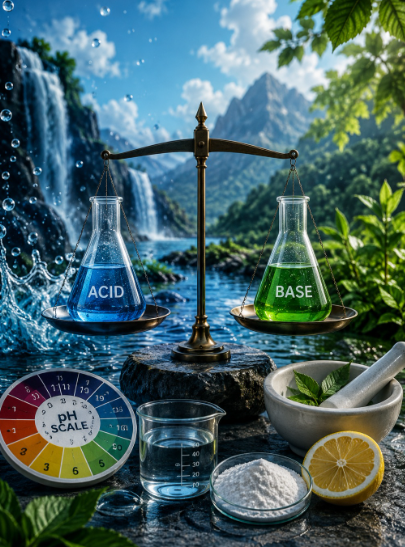
    Acids are substances that can have a sour taste and can react with certain materials. Lemon juice and vinegar are common examples of acidic substances. Bases, on the other hand, are often found in substances such as soap and baking soda.

    Scientists use a scale called the **pH scale** to measure how acidic or basic a substance is. The scale generally ranges from **0 to 14**. A pH below 7 is acidic, 7 is neutral, and above 7 is basic.

    One of the most interesting things about acids and bases is that they can react with each other. When an acid and a base react, they can form **salt and water** in a process called neutralization. This reaction helps maintain balance in many chemical systems.

    Acids and bases are also important in nature. The right chemical balance in soil helps plants grow, while the proper pH of water is important for fish and other aquatic life. Even our bodies carefully control pH levels so that important biological processes can work properly.

    Scientists study acids and bases to understand chemical reactions, develop medicines, improve agriculture, and protect the environment. Their knowledge helps us solve many problems and use chemicals safely.

    The story of acids and bases teaches us an important lesson: **balance is essential in nature and in science.** When different substances interact in the right way, they can create stability and support life.

    **Acids and bases may seem like opposites, but together they help create the delicate chemical balance that makes our world possible. **
    **Roll No: 2** **Batch: 14** **Book: ACCL** **Task No: 69** # 🧪 Acids and Bases: The Balance of Nature 🌿⚖️ In the world of chemistry, acids and bases are two important groups of substances that are found all around us. 🌍🔬 From the lemon juice we taste to the soap we use, acids and bases are part of our everyday lives. 🍋🧼 Acids are substances that can have a sour taste and can react with certain materials. 🍋⚗️ Lemon juice and vinegar are common examples of acidic substances. Bases, on the other hand, are often found in substances such as soap and baking soda. 🧼🥄 Scientists use a scale called the **pH scale** to measure how acidic or basic a substance is. 📊🧪 The scale generally ranges from **0 to 14**. A pH below 7 is acidic, 7 is neutral, and above 7 is basic. 💧⚖️ One of the most interesting things about acids and bases is that they can react with each other. When an acid and a base react, they can form **salt and water** in a process called neutralization. 🧪💧✨ This reaction helps maintain balance in many chemical systems. Acids and bases are also important in nature. 🌱🌧️ The right chemical balance in soil helps plants grow, while the proper pH of water is important for fish and other aquatic life. 🐟🌿 Even our bodies carefully control pH levels so that important biological processes can work properly. 🧬❤️ Scientists study acids and bases to understand chemical reactions, develop medicines, improve agriculture, and protect the environment. 🔬💊🌾 Their knowledge helps us solve many problems and use chemicals safely. The story of acids and bases teaches us an important lesson: **balance is essential in nature and in science.** ⚖️🌍 When different substances interact in the right way, they can create stability and support life. **Acids and bases may seem like opposites, but together they help create the delicate chemical balance that makes our world possible. 🧪🌎✨**
    0 Commentaires 0 Parts 746 Vue
  • RSIF8
    Roll no:85
    Task no:69
    Task topic:Acids and Bases: The Balance of Nature
    Have you ever wondered why a lemon tastes sour, why soap feels slippery, or how our stomach digests food? The answer lies in the fascinating world of acids and bases. These substances are found everywhere—in nature, in our homes, and even inside our bodies. Together, they help maintain the delicate balance that supports life on Earth.
    Acids are substances that usually taste sour and have a pH below 7. Common examples include citric acid in lemons, acetic acid in vinegar, and hydrochloric acid in the stomach, which helps digest food. Bases, on the other hand, usually have a pH above 7 and feel slippery. Baking soda, soap, and many cleaning products are everyday examples of bases.
    One of the most amazing things about acids and bases is that they can neutralize each other. When an acid reacts with a base, they produce salt and water. This neutralization process is important in many areas of life, from treating acidic soil for better farming to making medicines that reduce excess stomach acid.
    Nature depends on the balance between acids and bases. Healthy soil has the right pH for plants to grow, rivers and oceans need balanced pH levels to support aquatic life, and our bodies carefully regulate pH so that organs and enzymes can function properly. Even a small change in this balance can affect living organisms.
    Understanding acids and bases helps us appreciate how chemistry works in everyday life. They are not just laboratory chemicals—they are essential to cooking, cleaning, farming, medicine, and the environment. By learning about them, we gain a deeper understanding of the natural world and the scientific principles that keep it in harmony
    RSIF8 Roll no:85 Task no:69 Task topic:Acids and Bases: The Balance of Nature Have you ever wondered why a lemon tastes sour, why soap feels slippery, or how our stomach digests food? The answer lies in the fascinating world of acids and bases. These substances are found everywhere—in nature, in our homes, and even inside our bodies. Together, they help maintain the delicate balance that supports life on Earth. Acids are substances that usually taste sour and have a pH below 7. Common examples include citric acid in lemons, acetic acid in vinegar, and hydrochloric acid in the stomach, which helps digest food. Bases, on the other hand, usually have a pH above 7 and feel slippery. Baking soda, soap, and many cleaning products are everyday examples of bases. One of the most amazing things about acids and bases is that they can neutralize each other. When an acid reacts with a base, they produce salt and water. This neutralization process is important in many areas of life, from treating acidic soil for better farming to making medicines that reduce excess stomach acid. Nature depends on the balance between acids and bases. Healthy soil has the right pH for plants to grow, rivers and oceans need balanced pH levels to support aquatic life, and our bodies carefully regulate pH so that organs and enzymes can function properly. Even a small change in this balance can affect living organisms. Understanding acids and bases helps us appreciate how chemistry works in everyday life. They are not just laboratory chemicals—they are essential to cooking, cleaning, farming, medicine, and the environment. By learning about them, we gain a deeper understanding of the natural world and the scientific principles that keep it in harmony
    0 Commentaires 0 Parts 862 Vue
  • Mohsin RS
    song title no:10
    Rool no:13
    Class: Foundation level

    Microbial Universe: The Power of the Invisible World

    Microbial Universe: The Power of the Invisible World takes us into an extraordinary world that cannot be seen with the naked eye, yet plays an essential role in life on Earth. Microorganisms such as bacteria, fungi, and other microscopic forms of life exist almost everywhere around us—in soil, water, air, plants, animals, and the human body. Although they are incredibly small, their impact on our planet is enormous.

    Microorganisms are an important part of nature’s systems. In soil, many microbes help break down organic matter and return nutrients to the environment. This process supports plant growth and contributes to healthy and productive soil. In oceans, rivers, and other aquatic environments, microorganisms are also important members of food webs and natural cycles. They help maintain the balance of ecosystems and support other forms of life.

    The microbial world is also closely connected to human life. Our bodies naturally interact with many microorganisms, and scientists continue to study these relationships to better understand health and biology. Research into microorganisms has helped expand our knowledge of how living systems work and how different organisms interact with one another.

    Microorganisms are also valuable in food production and biotechnology. Certain microbes are involved in producing foods such as yogurt and cheese through fermentation. In modern biotechnology, microorganisms can be used to produce useful substances and support a variety of scientific and industrial processes. Some microorganisms can also contribute to environmental processes by breaking down organic materials and helping with natural decomposition.

    One of the most fascinating lessons of the microbial universe is that being invisible does not mean being unimportant. A tiny microorganism can have a major influence on an ecosystem. Microbiology teaches us that nature depends on countless connections between organisms, even when those connections are impossible to see without scientific tools.
    Mohsin RS song title no:10 Rool no:13 Class: Foundation level Microbial Universe: The Power of the Invisible World Microbial Universe: The Power of the Invisible World takes us into an extraordinary world that cannot be seen with the naked eye, yet plays an essential role in life on Earth. Microorganisms such as bacteria, fungi, and other microscopic forms of life exist almost everywhere around us—in soil, water, air, plants, animals, and the human body. Although they are incredibly small, their impact on our planet is enormous. Microorganisms are an important part of nature’s systems. In soil, many microbes help break down organic matter and return nutrients to the environment. This process supports plant growth and contributes to healthy and productive soil. In oceans, rivers, and other aquatic environments, microorganisms are also important members of food webs and natural cycles. They help maintain the balance of ecosystems and support other forms of life. The microbial world is also closely connected to human life. Our bodies naturally interact with many microorganisms, and scientists continue to study these relationships to better understand health and biology. Research into microorganisms has helped expand our knowledge of how living systems work and how different organisms interact with one another. Microorganisms are also valuable in food production and biotechnology. Certain microbes are involved in producing foods such as yogurt and cheese through fermentation. In modern biotechnology, microorganisms can be used to produce useful substances and support a variety of scientific and industrial processes. Some microorganisms can also contribute to environmental processes by breaking down organic materials and helping with natural decomposition. One of the most fascinating lessons of the microbial universe is that being invisible does not mean being unimportant. A tiny microorganism can have a major influence on an ecosystem. Microbiology teaches us that nature depends on countless connections between organisms, even when those connections are impossible to see without scientific tools.
    0 Commentaires 0 Parts 1391 Vue 30
  • Mohsin #RSF8
    #Storypost8
    Class: Foundation level
    Made by Me
    rool no:13

    ## ** Story Post Title: Acids and Bases: The Balance of Nature**

    **Acids and Bases: The Balance of Nature**

    Nature is built on balance, and one of the most fascinating examples of this balance is the relationship between **acids and bases**. Although they have opposite properties, both are essential for life on Earth. From the food we eat to the water we drink, from the soil that grows our crops to the blood flowing through our bodies, acids and bases work together to maintain harmony in the natural world.

    Acids are substances that release hydrogen ions and often have a sour taste, while bases release hydroxide ions and are usually bitter or slippery to the touch. When an acid and a base react, they form **salt and water**, a process called **neutralization**. This reaction helps maintain stability in many natural and industrial processes.

    Our bodies also depend on this delicate balance. For example, human blood maintains a nearly constant pH level, allowing organs to function properly. Even a small change in this balance can affect our health. In nature, rainwater, oceans, rivers, and soil all rely on the correct pH to support plants, animals, and aquatic life.

    Acids and bases are not just laboratory chemicals—they are part of our everyday lives. Lemon juice, vinegar, oranges, baking soda, toothpaste, soap, and many household products all demonstrate the amazing role these substances play in our daily routines.

    Learning about acids and bases helps us understand how science explains the world around us. It teaches us that balance is not only important in chemistry but also in life itself. Just as nature thrives through harmony, we too can achieve success by maintaining balance in our thoughts, actions, and decisions.

    **Science shows us that every reaction has a purpose, and every balance creates a stronger, healthier world. Keep learning, stay curious, and discover the wonders hidden in everyday life!**

    #Science #Chemistry #AcidsAndBases #BalanceOfNature #LearningEveryDay #Education #STEM #Nature #Curiosity #Knowledge #RSF8
    Mohsin #RSF8🎓✨ #Storypost8 Class: Foundation level 📚 Made by Me 💻🚀 rool no:13 ## **📖 Story Post Title: Acids and Bases: The Balance of Nature** 🧪🌿 **Acids and Bases: The Balance of Nature** 🌿🧪 Nature is built on balance, and one of the most fascinating examples of this balance is the relationship between **acids and bases**. Although they have opposite properties, both are essential for life on Earth. From the food we eat to the water we drink, from the soil that grows our crops to the blood flowing through our bodies, acids and bases work together to maintain harmony in the natural world. Acids are substances that release hydrogen ions and often have a sour taste, while bases release hydroxide ions and are usually bitter or slippery to the touch. When an acid and a base react, they form **salt and water**, a process called **neutralization**. This reaction helps maintain stability in many natural and industrial processes. Our bodies also depend on this delicate balance. For example, human blood maintains a nearly constant pH level, allowing organs to function properly. Even a small change in this balance can affect our health. In nature, rainwater, oceans, rivers, and soil all rely on the correct pH to support plants, animals, and aquatic life. Acids and bases are not just laboratory chemicals—they are part of our everyday lives. Lemon juice, vinegar, oranges, baking soda, toothpaste, soap, and many household products all demonstrate the amazing role these substances play in our daily routines. Learning about acids and bases helps us understand how science explains the world around us. It teaches us that balance is not only important in chemistry but also in life itself. Just as nature thrives through harmony, we too can achieve success by maintaining balance in our thoughts, actions, and decisions. 🌍 **Science shows us that every reaction has a purpose, and every balance creates a stronger, healthier world. Keep learning, stay curious, and discover the wonders hidden in everyday life!** 🔬✨ #Science #Chemistry #AcidsAndBases #BalanceOfNature #LearningEveryDay #Education #STEM #Nature #Curiosity #Knowledge #RSF8🎓✨
    0 Commentaires 0 Parts 1717 Vue
  • Meet Mohammad Asim Khan (Asim Khan Iso Expert) doing Aquaponics in Karachi Training and Guidance ! Growing fish and food on his roof

    #pakistan #Aquaponics
    Meet Mohammad Asim Khan (Asim Khan Iso Expert) doing Aquaponics in Karachi Training and Guidance ! Growing fish and food on his roof #pakistan #Aquaponics
    0 Commentaires 0 Parts 771 Vue
  • Mufti Abuwamiz Fazal Hamdard amazes to see Aquaponics for first time in his life asking questions to Mohammad Asim Khan (Asim Khan Iso Expert) on how can we grow plants without sand !
    #pakistan #Aquaponics
    Mufti Abuwamiz Fazal Hamdard amazes to see Aquaponics for first time in his life asking questions to Mohammad Asim Khan (Asim Khan Iso Expert) on how can we grow plants without sand ! #pakistan #Aquaponics
    0 Commentaires 0 Parts 502 Vue
  • #rsisb
    Roll no. 247
    story post no.1
    Foundation level

    **The Adventures of Aqua: Understanding the Water Cycle**

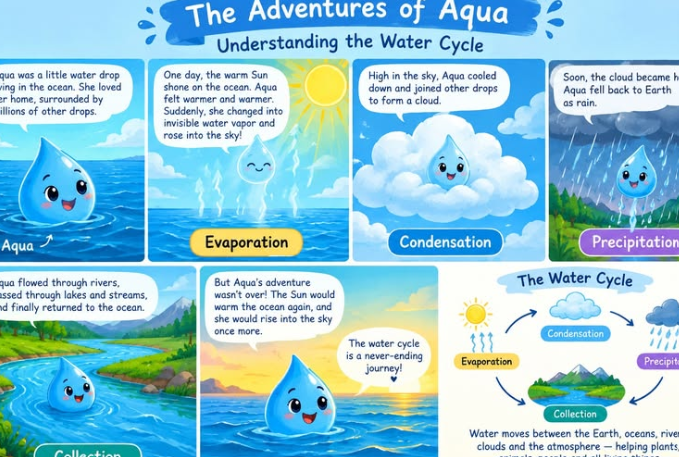
    Join Aqua, a tiny drop of water with a big adventure ahead! From sparkling oceans and flowing rivers to fluffy clouds and refreshing rain, Aqua travels through nature in an amazing journey called the **water cycle**.

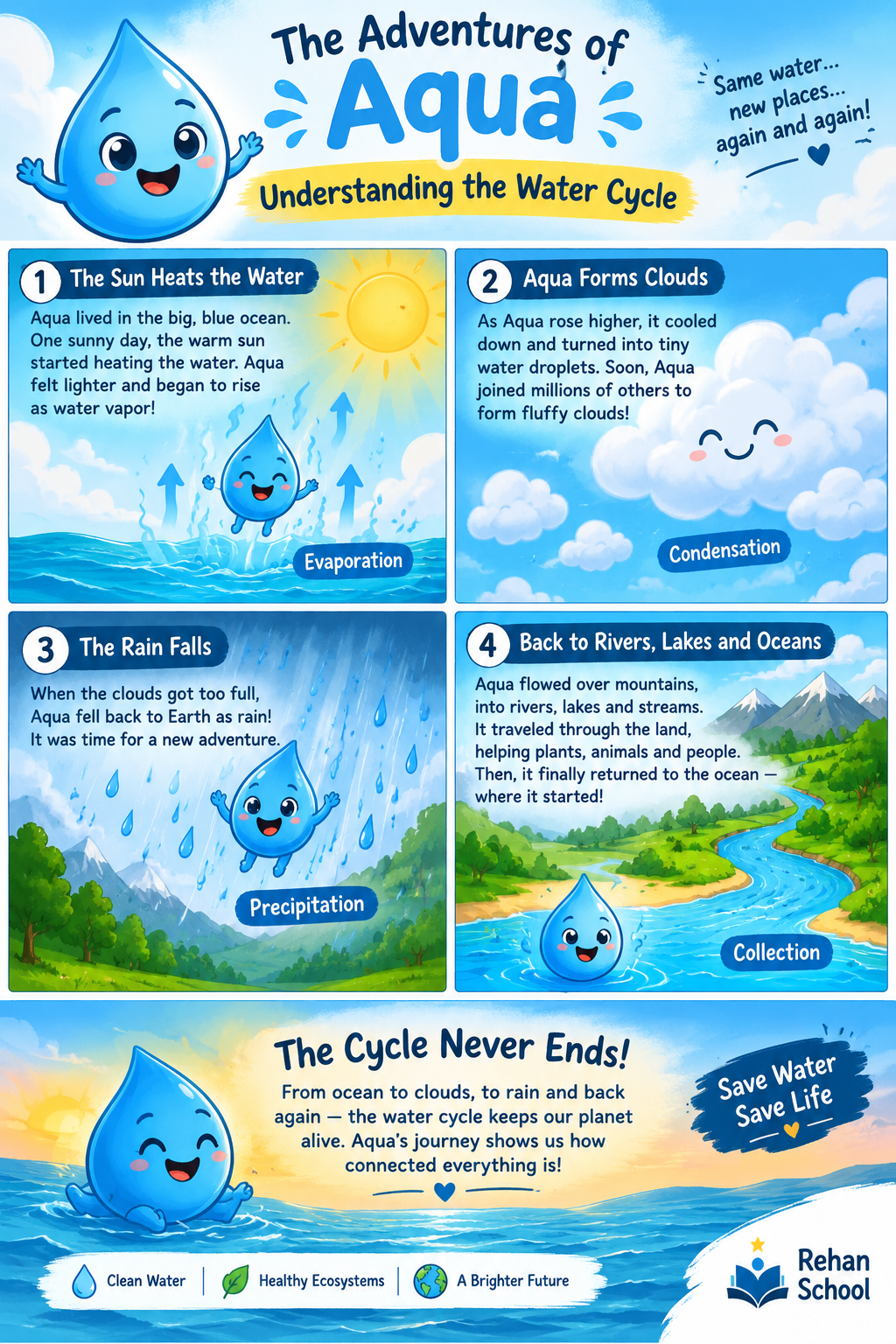
    Aqua begins her adventure under the warm rays of the Sun. As the water gets heated, it changes into water vapor and rises into the sky. This process is called **evaporation**.

    High above Earth, Aqua discovers that the air is cooler. The water vapor begins to cool and forms tiny droplets, creating beautiful clouds. This process is called **condensation**.

    Then comes the exciting part! When the droplets become heavy enough, they fall back to Earth as rain, snow, or other forms of precipitation. Aqua returns to rivers, lakes, oceans, and the ground, ready to begin her journey all over again!

    Through Aqua’s adventure, we learn that water is always moving and changing. The water cycle helps provide fresh water for people, animals, and plants, making it an essential part of life on Earth.

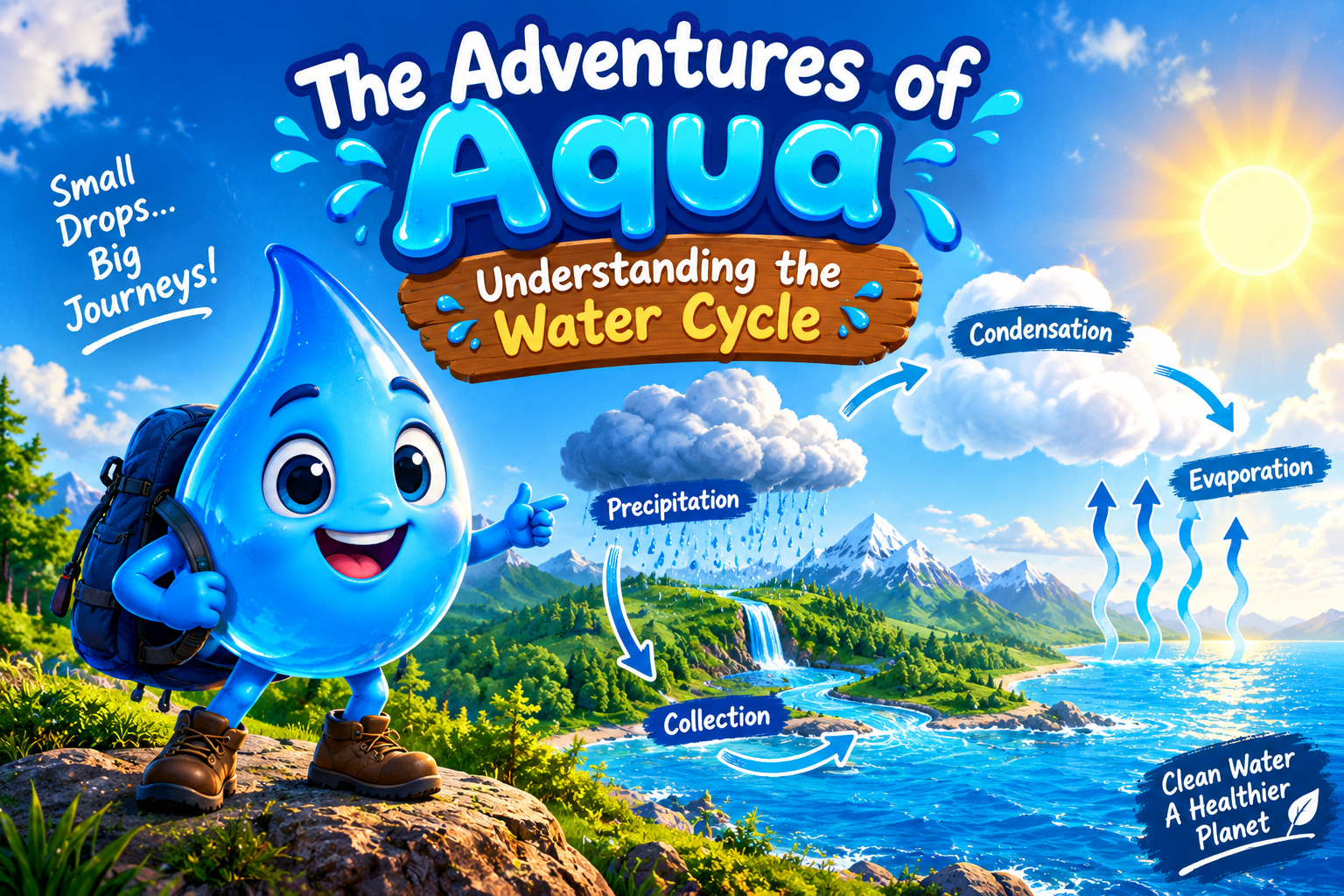
    This story is a fun way to discover how **evaporation, condensation, precipitation, and collection** work together to keep our planet’s water moving.

    **What will Aqua discover next?**
    Follow along and explore the amazing journey of a single drop of water!

    #TheAdventuresOfAqua #WaterCycle #Water #Science #ScienceForKids #LearningIsFun #EducationalStory #EarthScience #Evaporation #Condensation #Precipitation #WaterEducation #Nature #Environment #OurPlanet #KidsLearning #FunLearning #SchoolProject #ScienceProject #ExploreScience #Earth #SaveWater #EveryDropCounts
    #rsisb Roll no. 247 story post no.1 Foundation level 💧🌍 **The Adventures of Aqua: Understanding the Water Cycle** 🌈☁️ Join Aqua, a tiny drop of water with a big adventure ahead! 💦✨ From sparkling oceans and flowing rivers to fluffy clouds and refreshing rain, Aqua travels through nature in an amazing journey called the **water cycle**. 🌊☀️☁️🌧️ Aqua begins her adventure under the warm rays of the Sun. ☀️ As the water gets heated, it changes into water vapor and rises into the sky. This process is called **evaporation**. 🌡️💨 High above Earth, Aqua discovers that the air is cooler. The water vapor begins to cool and forms tiny droplets, creating beautiful clouds. ☁️✨ This process is called **condensation**. Then comes the exciting part! 🌧️ When the droplets become heavy enough, they fall back to Earth as rain, snow, or other forms of precipitation. ❄️🌧️ Aqua returns to rivers, lakes, oceans, and the ground, ready to begin her journey all over again! 🌊🌱 Through Aqua’s adventure, we learn that water is always moving and changing. 🔄💧 The water cycle helps provide fresh water for people, animals, and plants, making it an essential part of life on Earth. 🌍❤️🌿 This story is a fun way to discover how **evaporation, condensation, precipitation, and collection** work together to keep our planet’s water moving. 📚🔬💦 🌟 **What will Aqua discover next?** Follow along and explore the amazing journey of a single drop of water! 💧🚀☁️🌈 #TheAdventuresOfAqua #WaterCycle #Water #Science #ScienceForKids #LearningIsFun #EducationalStory #EarthScience #Evaporation #Condensation #Precipitation #WaterEducation #Nature #Environment #OurPlanet #KidsLearning #FunLearning #SchoolProject #ScienceProject #ExploreScience #Earth #SaveWater #EveryDropCounts 💧🌍🌱📚✨
    0 Commentaires 0 Parts 1973 Vue
  • #rsisb
    Roll NO:232
    Foundation level student.
    Story post:2

    **The Adventures of Aqua: Understanding the Water Cycle**

    Join Aqua on an exciting journey through the amazing **water cycle**! From the warm rays of the Sun that cause water to evaporate, to the formation of clouds through condensation , and finally to rain and other forms of precipitation — water is constantly moving around our planet.

    In this educational adventure, we explore how water travels between oceans, rivers, lakes, clouds, land, and the atmosphere. Aqua helps us understand important processes like **evaporation, condensation, precipitation, and collection** in a simple and fun way.

    The water cycle is essential for life on Earth. Without this incredible natural process, plants, animals, and humans would not have the fresh water they need to survive.

    **Learn about nature, discover the science behind water, and join Aqua on an unforgettable adventure!**

    Learn • Explore • Discover • Protect

    #TheAdventuresOfAqua #WaterCycle #WaterCycleExplained #Science #ScienceForKids #EducationalVideo #Learning #Education #Evaporation #Condensation #Precipitation #Water #Nature #EarthScience #Environment #Climate #ScienceEducation #KidsLearning #FunLearning #Aqua #ExploreScience
    #rsisb Roll NO:232 Foundation level student. Story post:2 🌊💧 **The Adventures of Aqua: Understanding the Water Cycle** ☁️🌧️🌈 Join Aqua on an exciting journey through the amazing **water cycle**! 🌍💦 From the warm rays of the Sun ☀️ that cause water to evaporate, to the formation of clouds through condensation ☁️, and finally to rain and other forms of precipitation 🌧️❄️ — water is constantly moving around our planet. In this educational adventure, we explore how water travels between oceans, rivers, lakes, clouds, land, and the atmosphere. 🌊🏞️☁️ Aqua helps us understand important processes like **evaporation, condensation, precipitation, and collection** in a simple and fun way. 🧪📚✨ The water cycle is essential for life on Earth. 🌱🌍 Without this incredible natural process, plants, animals, and humans would not have the fresh water they need to survive. 💙💧 🌟 **Learn about nature, discover the science behind water, and join Aqua on an unforgettable adventure!** 🚀🌊 💧 Learn • 🌍 Explore • 🔬 Discover • 🌱 Protect #TheAdventuresOfAqua #WaterCycle #WaterCycleExplained #Science #ScienceForKids #EducationalVideo #Learning #Education #Evaporation #Condensation #Precipitation #Water #Nature #EarthScience #Environment #Climate #ScienceEducation #KidsLearning #FunLearning #Aqua #ExploreScience 🌊💧☁️🌧️🌈🌍🔬📚✨🚀
    0 Commentaires 0 Parts 1298 Vue
  • RSIF8
    Roll No: 43
    Story Post No: 26
    Story Post Topic: The sky is not the limit; it's just the beginning.
    **The Adventures of Aqua **
    Aqua was a little water drop living in the ocean. The Sun warmed her, and she rose into the sky as water vapor—this was **evaporation**.
    High in the sky, Aqua cooled and joined other drops to form a cloud—**condensation**. Soon, she fell back to Earth as rain—**precipitation**.
    Aqua flowed through rivers and returned to the ocean, ready to begin her journey again.
    RSIF8 Roll No: 43 Story Post No: 26 Story Post Topic: The sky is not the limit; it's just the beginning. **The Adventures of Aqua 💧🌎** Aqua was a little water drop living in the ocean. The Sun warmed her, and she rose into the sky as water vapor—this was **evaporation**. ☀️ High in the sky, Aqua cooled and joined other drops to form a cloud—**condensation**. ☁️ Soon, she fell back to Earth as rain—**precipitation**. 🌧️ Aqua flowed through rivers and returned to the ocean, ready to begin her journey again. 🌊💙
    1
    0 Commentaires 0 Parts 680 Vue
Plus de résultats