#rsisb
Roll No.269
Foundation Level
Story Post No.10
**Acids and Bases: The Balance of Nature **
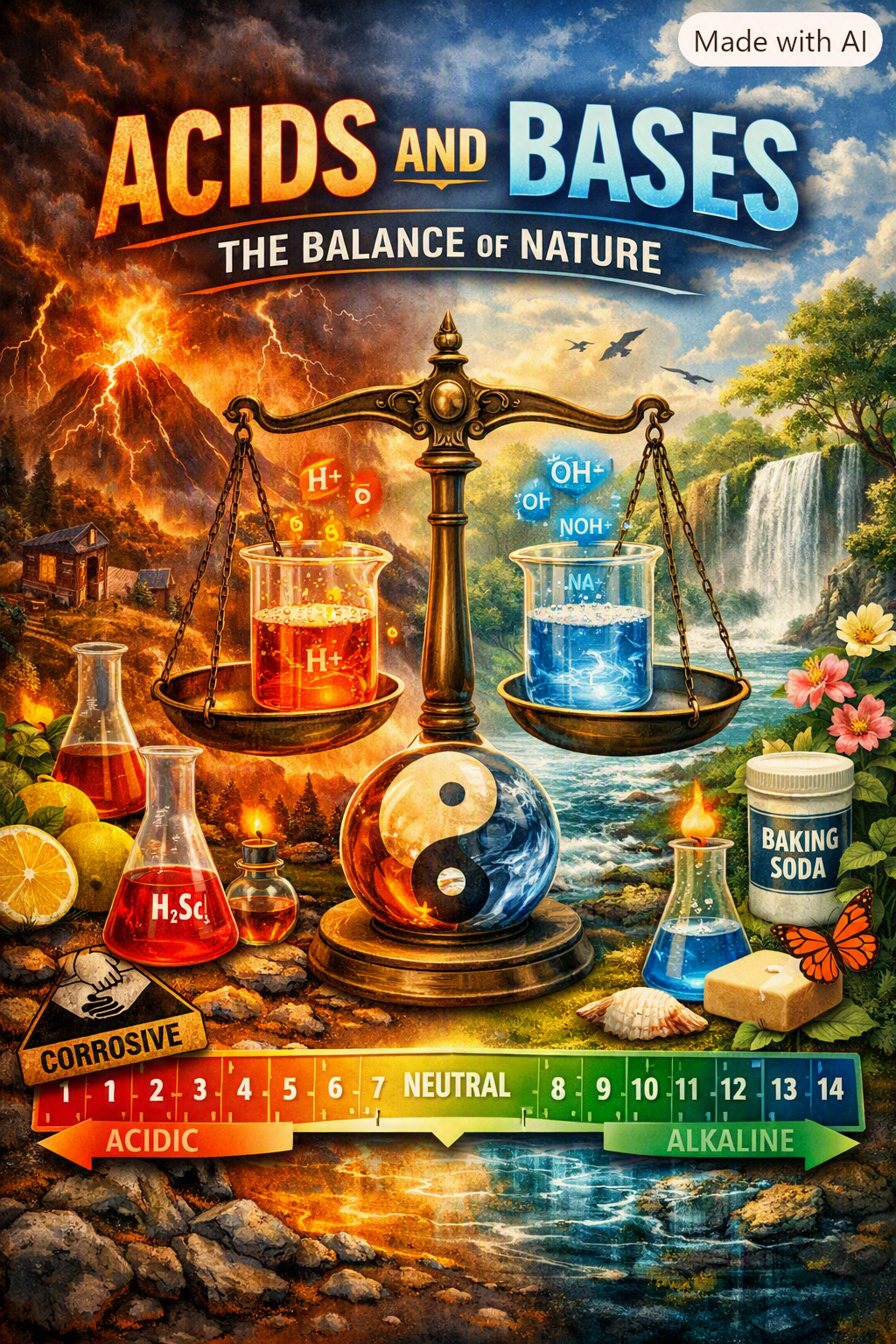
Have you ever wondered why lemons taste sour , why soap feels slippery , or how scientists measure the strength of different substances? The answer lies in the fascinating world of **acids and bases!**
In this video, we explore **“Acids and Bases: The Balance of Nature”** and discover how these two important groups of substances interact with each other. Acids and bases are found everywhere around us—from the foods we eat and the drinks we enjoy to our environment, soil, water, and many everyday products.
We’ll learn about the **pH scale**, the difference between acids and bases, neutral substances, indicators, and the process of **neutralization**. Understanding these concepts helps us see how chemistry plays an important role in everyday life.
**In This Video, You’ll Learn:**
What acids and bases are
The meaning of the pH scale
Examples of acids and bases in daily life
What neutral substances are
How indicators help identify acids and bases
What happens during neutralization
Why the balance between acids and bases is important in nature
From the chemistry of our oceans and soil to the food in our kitchens, acids and bases help maintain balance in the natural world.
Whether you're a student, science lover, or simply curious about how the world works, this video will help make chemistry interesting and easy to understand!
**Like, Share & Subscribe** for more educational videos and fascinating science topics!
**Question:** Can you name one acidic substance and one basic substance you use in everyday life?
#AcidsAndBases #Chemistry #Science #PHScale #ScienceEducation #LearnChemistry #ChemicalReactions #Neutralization #Nature #ScienceFacts #STEM #Education #LearningIsFun #ChemistryForStudents
Roll No.269
Foundation Level
Story Post No.10
**Acids and Bases: The Balance of Nature **
Have you ever wondered why lemons taste sour , why soap feels slippery , or how scientists measure the strength of different substances? The answer lies in the fascinating world of **acids and bases!**
In this video, we explore **“Acids and Bases: The Balance of Nature”** and discover how these two important groups of substances interact with each other. Acids and bases are found everywhere around us—from the foods we eat and the drinks we enjoy to our environment, soil, water, and many everyday products.
We’ll learn about the **pH scale**, the difference between acids and bases, neutral substances, indicators, and the process of **neutralization**. Understanding these concepts helps us see how chemistry plays an important role in everyday life.
**In This Video, You’ll Learn:**
What acids and bases are
The meaning of the pH scale
Examples of acids and bases in daily life
What neutral substances are
How indicators help identify acids and bases
What happens during neutralization
Why the balance between acids and bases is important in nature
From the chemistry of our oceans and soil to the food in our kitchens, acids and bases help maintain balance in the natural world.
Whether you're a student, science lover, or simply curious about how the world works, this video will help make chemistry interesting and easy to understand!
**Like, Share & Subscribe** for more educational videos and fascinating science topics!
**Question:** Can you name one acidic substance and one basic substance you use in everyday life?
#AcidsAndBases #Chemistry #Science #PHScale #ScienceEducation #LearnChemistry #ChemicalReactions #Neutralization #Nature #ScienceFacts #STEM #Education #LearningIsFun #ChemistryForStudents
#rsisb
Roll No.269
Foundation Level
Story Post No.10
🧪 **Acids and Bases: The Balance of Nature 🌿⚖️**
Have you ever wondered why lemons taste sour 🍋, why soap feels slippery 🧼, or how scientists measure the strength of different substances? 🤔 The answer lies in the fascinating world of **acids and bases!** 🔬✨
In this video, we explore **“Acids and Bases: The Balance of Nature”** and discover how these two important groups of substances interact with each other. Acids and bases are found everywhere around us—from the foods we eat 🍊 and the drinks we enjoy 🥤 to our environment, soil, water, and many everyday products. 🌍💧
We’ll learn about the **pH scale**, the difference between acids and bases, neutral substances, indicators, and the process of **neutralization**. 🧪📚 Understanding these concepts helps us see how chemistry plays an important role in everyday life.
🌱 **In This Video, You’ll Learn:**
🔹 What acids and bases are
🔹 The meaning of the pH scale
🔹 Examples of acids and bases in daily life
🔹 What neutral substances are
🔹 How indicators help identify acids and bases
🔹 What happens during neutralization
🔹 Why the balance between acids and bases is important in nature
🌍 From the chemistry of our oceans and soil to the food in our kitchens, acids and bases help maintain balance in the natural world. ⚖️🌿
🎓 Whether you're a student, science lover, or simply curious about how the world works, this video will help make chemistry interesting and easy to understand! 🧠🔬
👍 **Like, Share & Subscribe** for more educational videos and fascinating science topics! 🔔📖
💬 **Question:** Can you name one acidic substance and one basic substance you use in everyday life? 🤔🧪
#AcidsAndBases 🧪 #Chemistry 🔬 #Science 🌍 #PHScale ⚖️ #ScienceEducation 📚 #LearnChemistry 🧠 #ChemicalReactions ⚗️ #Neutralization 🧪 #Nature 🌿 #ScienceFacts 💡 #STEM 🚀 #Education 🎓 #LearningIsFun 😊 #ChemistryForStudents 📖
0 Comentários
0 Compartilhamentos
3875 Visualizações