• RSISB
    Roll No 58
    Earning Task
    Task No 3

    Address Concerns – Day 3 | ACCL Program

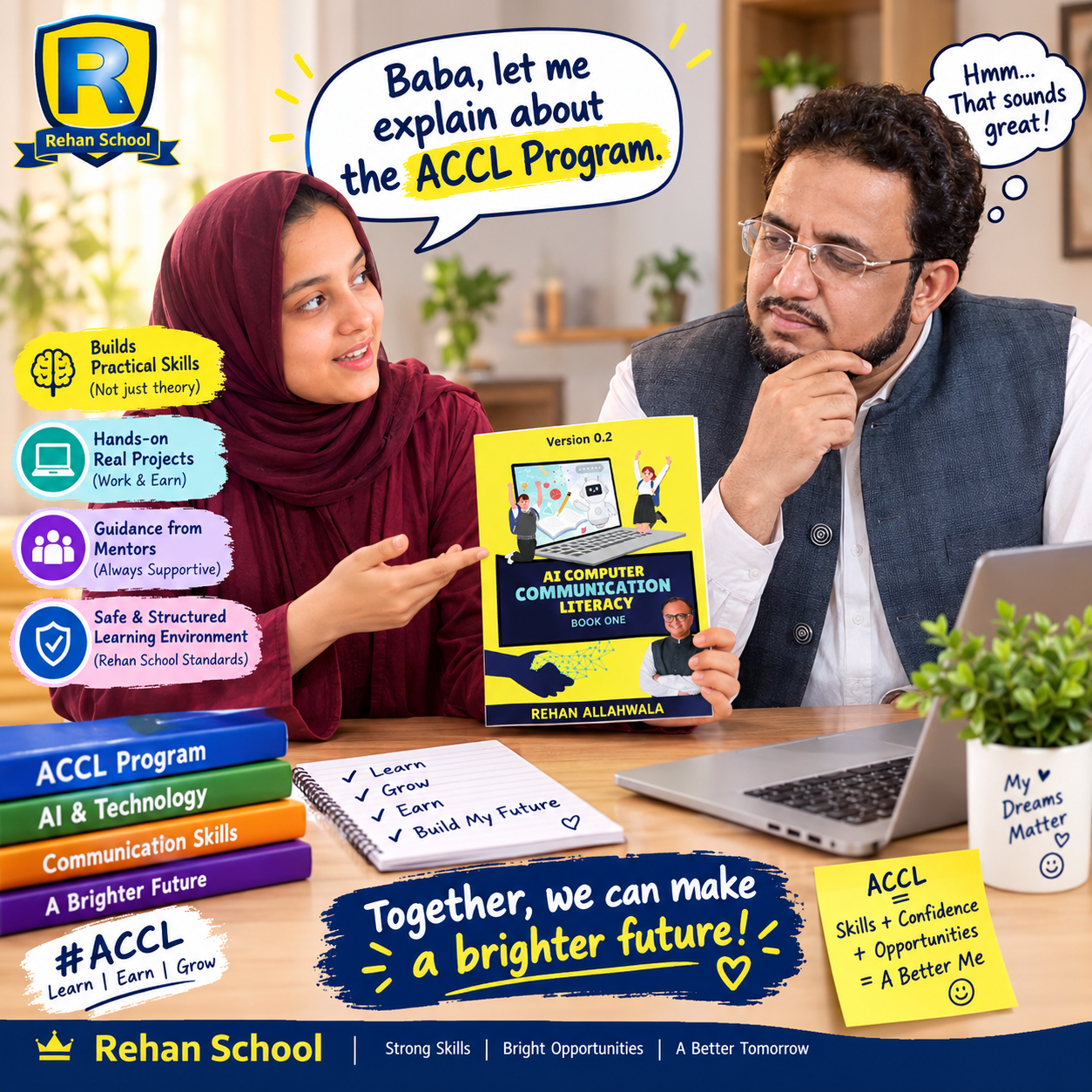
    Today, I focused on understanding and addressing my parents’ concerns about the **ACCL Program**. I explained how ACCL can benefit not only me but also my family by helping me develop **practical skills, confidence, communication abilities, and future-ready knowledge**.

    I shared how the program encourages learning through **real projects and practical experiences**, rather than focusing only on theory. It can help students become more independent, responsible, creative, and prepared for future opportunities.

    I also explained to my parents that their support and guidance are very important in my learning journey. When parents understand the purpose of the program, they can better support their children in learning, growing, and building a successful future. ‍‍

    Together, we can turn concerns into understanding, and understanding into opportunities!

    Hashtags

    #ACCL #AddressConcerns #RehanSchool #ParentSupport #FamilySupport #PracticalSkills #FutureReady #LearningAndGrowing #StudentDevelopment #AIAndTechnology #CommunicationSkills #BrightFuture #LearnEarnGrow #Education #Day3

    ‍‍


    RSISB Roll No 58 Earning Task Task No 3 🌟 Address Concerns – Day 3 | ACCL Program 🤝 Today, I focused on understanding and addressing my parents’ concerns about the **ACCL Program**. I explained how ACCL can benefit not only me but also my family by helping me develop **practical skills, confidence, communication abilities, and future-ready knowledge**. 💻📚 I shared how the program encourages learning through **real projects and practical experiences**, rather than focusing only on theory. It can help students become more independent, responsible, creative, and prepared for future opportunities. 🚀✨ I also explained to my parents that their support and guidance are very important in my learning journey. When parents understand the purpose of the program, they can better support their children in learning, growing, and building a successful future. ❤️👨‍👩‍👧 Together, we can turn concerns into understanding, and understanding into opportunities! 🌱💙 🏷️ Hashtags #ACCL #AddressConcerns #RehanSchool #ParentSupport #FamilySupport #PracticalSkills #FutureReady #LearningAndGrowing #StudentDevelopment #AIAndTechnology #CommunicationSkills #BrightFuture #LearnEarnGrow #Education #Day3 ✨📚💻🤝👨‍👩‍👧🚀🌱💙🌟
    0 Comentários 0 Compartilhamentos 625 Visualizações
  • RSIF8
    Roll no: 99
    Call Annie No: 11
    Topic: "What's the Matter?" – The Roots of Concern
    I had a 5 minute conversation with Annie on the fascinating topic "What's the Matter?" – The Roots of Concern
    #LiveConversation #Learning #ScienceAndNature #Exploration #RSIF8 #SocialMediaLive
    RSIF8 Roll no: 99 Call Annie No: 11 Topic: "What's the Matter?" – The Roots of Concern I had a 5 minute conversation with Annie on the fascinating topic "What's the Matter?" – The Roots of Concern #LiveConversation #Learning #ScienceAndNature #Exploration #RSIF8 #SocialMediaLive
    1
    0 Comentários 0 Compartilhamentos 279 Visualizações 3
  • KMC Citizen App | An Initiative of Government Innovation Center, Rehan Foundation

    Karachi Citizen app is an initiative by Rehan Foundation in association with KMC. The app will empower people to register the problems they face by adding images/footage with location and the complaint will be forwarded to the concern dept. of KMC. The complainer will be able to monitor the progress of his complaint through the app.

    #KMC #Citizen #App #mobileapp #android #digitalpakistan #pakistan #rehanallahwala
    KMC Citizen App | An Initiative of Government Innovation Center, Rehan Foundation Karachi Citizen app is an initiative by Rehan Foundation in association with KMC. The app will empower people to register the problems they face by adding images/footage with location and the complaint will be forwarded to the concern dept. of KMC. The complainer will be able to monitor the progress of his complaint through the app. #KMC #Citizen #App #mobileapp #android #digitalpakistan #pakistan #rehanallahwala
    0 Comentários 0 Compartilhamentos 485 Visualizações
  • #rsisb
    Roll No 253
    Foundation Level
    Story Post 22
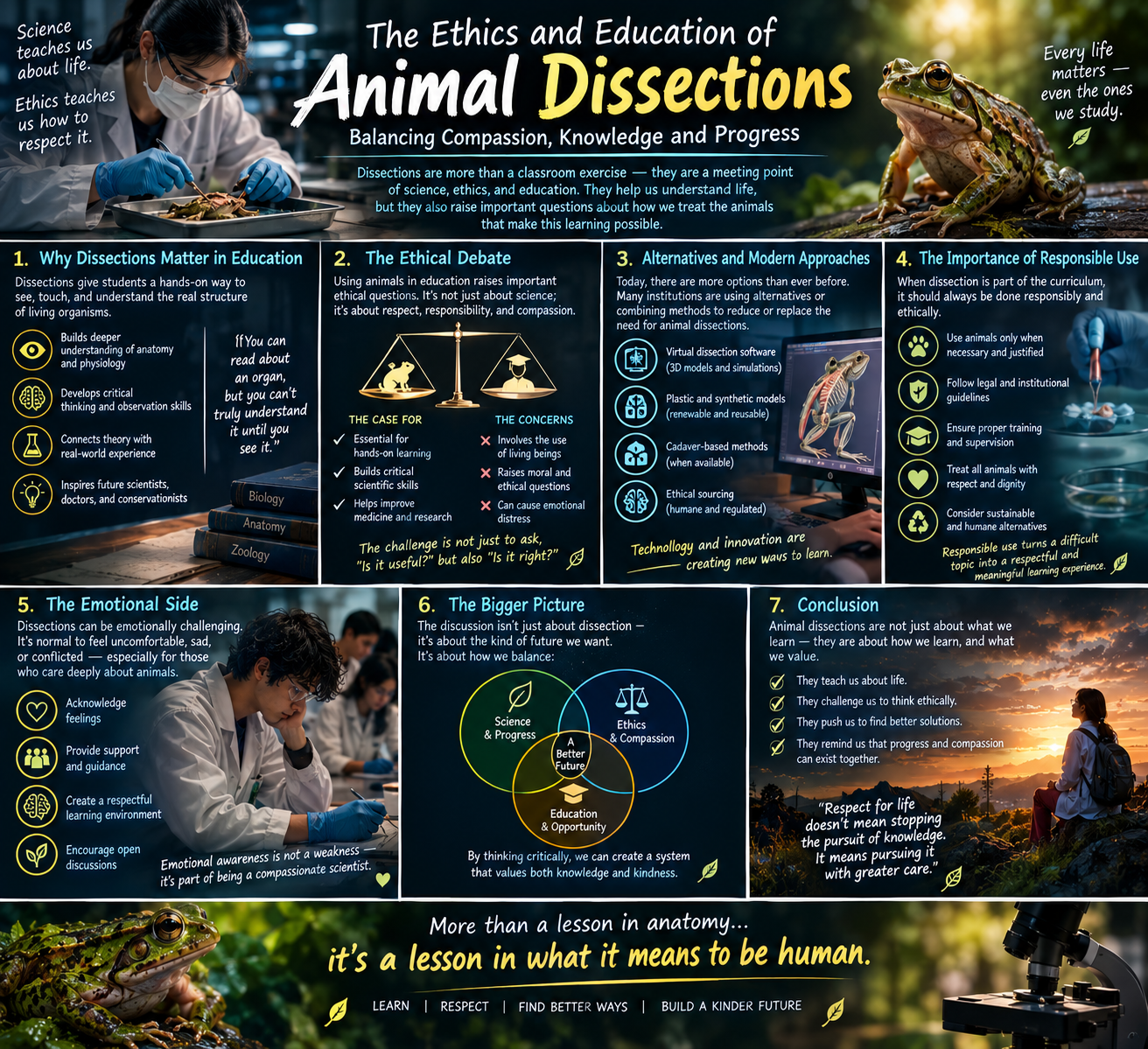
    # The Ethics and Education of Animal Dissections

    ## Balancing Knowledge, Compassion, and Scientific Progress

    Animal dissections have long been used to help students understand anatomy, physiology, and the remarkable complexity of living organisms.

    But dissection is more than a scientific technique.

    It also raises an important question:

    ### **How can we learn about life while treating life with respect?**

    Understanding both the educational value and the ethical considerations surrounding dissections allows us to approach biology with greater knowledge, responsibility, and compassion.

    ---

    ## 1. Why Dissections Matter in Education

    Dissections can provide students with a direct way to explore biological structures that are difficult to fully understand through diagrams or textbooks alone.

    They can help learners:

    Observe real anatomy
    Develop critical thinking
    Understand organ relationships
    Connect theory with physical structures
    Build curiosity about living systems

    Instead of simply memorizing the location of an organ, students can investigate how structures are positioned and connected.

    ### **It turns biological concepts into something tangible.**

    ---

    ## 2. The Ethical Debate

    Using animals for education creates a genuine ethical discussion.

    On one side, supporters may point to the educational benefits of direct anatomical study.

    On the other, concerns include:

    The use of living organisms
    Animal welfare
    Moral responsibility
    Whether alternatives can provide similar educational value

    The central question isn't simply:

    **“Is it useful?”**

    It is also:

    ### **“Is it justified, and can the same learning goals be achieved another way?”**

    Considering both questions encourages students to think scientifically **and ethically**.

    ---

    ## 3. Alternatives and Modern Approaches

    Technology has created new ways to study anatomy without always relying on traditional dissection.

    Modern educational approaches can include:

    Virtual dissection software
    3D anatomical models
    Synthetic or plastic models
    Interactive simulations
    Microscopic analysis
    High-quality anatomical imagery

    These tools can allow students to explore structures repeatedly, change viewpoints, and investigate complex systems in ways that may be difficult with a physical specimen.

    ### **Technology is creating new possibilities for learning.**

    ---

    ## 4. The Importance of Responsible Use

    When animal specimens are used for education or research, responsibility is essential.

    Important principles include:

    Following relevant laws and institutional guidelines
    Providing proper training and supervision
    Using animals only when scientifically or educationally justified
    Treating specimens respectfully
    Considering sustainable and humane alternatives

    Responsible scientific education isn't simply about obtaining knowledge.

    It is about **how that knowledge is obtained.**

    ---

    ## 5. The Emotional Side

    Dissection can affect students differently.

    Some may feel fascinated by anatomy.
    Others may feel uncomfortable.
    Some may experience sadness or conflict because they care deeply about animals.

    These reactions shouldn't automatically be dismissed.

    A respectful educational environment can encourage students to:

    Acknowledge their emotions
    Discuss concerns openly
    Support one another
    Maintain scientific curiosity
    Develop compassion

    ### **Emotional awareness can be part of becoming a responsible scientist.**

    ---

    # 6. The Bigger Picture

    The debate surrounding animal dissection isn't simply about choosing **science or compassion**.

    It is about finding ways for:

    **Scientific progress**
    **Ethical responsibility**
    **Education**
    **Compassion**

    to coexist.

    The goal is to create learning environments where students can develop strong scientific knowledge while also thinking carefully about the consequences of scientific practices.

    ### **Knowledge and compassion don't have to be opposites.**

    ---

    ## 7. What Dissections Can Teach Us

    When conducted appropriately, anatomical study can teach lessons that extend beyond individual organs.

    It can teach us about:

    The complexity of life
    Biological organization
    Interconnected systems
    Evolution and adaptation
    Scientific observation
    Ethical decision-making

    A specimen can become more than an anatomy lesson.

    It can become an opportunity to ask **how we learn, why we learn, and what responsibilities come with knowledge.**

    ---

    # 8. The Real Question

    Perhaps the deepest question isn't simply:

    **“Should animals be dissected?”**

    It is:

    How can we improve biological education?
    How can we reduce unnecessary harm?
    Which alternatives can provide meaningful learning?
    How should scientists balance discovery with responsibility?
    How can future generations learn with greater compassion?

    These questions don't have to end scientific exploration.

    They can make scientific exploration **more thoughtful.**

    ---

    # The Bigger Lesson

    Animal dissections can teach us about anatomy—but the discussion surrounding them can teach us something even larger.

    ### **Science teaches us how life works.**

    ### **Ethics asks us how we should treat it.**

    ### **Education gives us the opportunity to understand both.**

    The future of science isn't only about discovering more.

    It's also about learning to discover **responsibly.**

    So when we look inside an organism to understand its anatomy, we should also look beyond the specimen and consider the larger picture:

    **Respect life.**
    **Pursue knowledge.**
    **Think critically.**
    **Explore better alternatives.**
    **Build a more compassionate future.**

    ## **More than a lesson in anatomy—it's a lesson in what it means to learn responsibly.**


    Asma Shaheen EducationWali
    Saima Empowerment Wali
    Mishaal TrainingWali
    #rsisb Roll No 253 Foundation Level Story Post 22 # 🐸🔬 The Ethics and Education of Animal Dissections ## 🌿⚖️ Balancing Knowledge, Compassion, and Scientific Progress Animal dissections have long been used to help students understand anatomy, physiology, and the remarkable complexity of living organisms. 🧬🫀🔬 But dissection is more than a scientific technique. It also raises an important question: ### **How can we learn about life while treating life with respect?** 🐾❤️ Understanding both the educational value and the ethical considerations surrounding dissections allows us to approach biology with greater knowledge, responsibility, and compassion. --- ## 🎓🔬 1. Why Dissections Matter in Education Dissections can provide students with a direct way to explore biological structures that are difficult to fully understand through diagrams or textbooks alone. 📚➡️🔬 They can help learners: 👁️ Observe real anatomy 🧠 Develop critical thinking 🫀 Understand organ relationships 🔬 Connect theory with physical structures 🌱 Build curiosity about living systems Instead of simply memorizing the location of an organ, students can investigate how structures are positioned and connected. ### **It turns biological concepts into something tangible.** ✨ --- ## ⚖️🐾 2. The Ethical Debate Using animals for education creates a genuine ethical discussion. On one side, supporters may point to the educational benefits of direct anatomical study. 🎓🔬 On the other, concerns include: 🐾 The use of living organisms ❤️ Animal welfare 🧠 Moral responsibility 🌱 Whether alternatives can provide similar educational value The central question isn't simply: **“Is it useful?”** It is also: ### **“Is it justified, and can the same learning goals be achieved another way?”** ⚖️ Considering both questions encourages students to think scientifically **and ethically**. --- ## 💻🧬 3. Alternatives and Modern Approaches Technology has created new ways to study anatomy without always relying on traditional dissection. 🚀🔬 Modern educational approaches can include: 💻 Virtual dissection software 🧊 3D anatomical models 🧫 Synthetic or plastic models 🖥️ Interactive simulations 🔬 Microscopic analysis 📚 High-quality anatomical imagery These tools can allow students to explore structures repeatedly, change viewpoints, and investigate complex systems in ways that may be difficult with a physical specimen. ### **Technology is creating new possibilities for learning.** 💡🌍 --- ## 🧤🐸 4. The Importance of Responsible Use When animal specimens are used for education or research, responsibility is essential. ⚖️🔬 Important principles include: 📜 Following relevant laws and institutional guidelines 🎓 Providing proper training and supervision 🐾 Using animals only when scientifically or educationally justified ❤️ Treating specimens respectfully ♻️ Considering sustainable and humane alternatives Responsible scientific education isn't simply about obtaining knowledge. It is about **how that knowledge is obtained.** --- ## 💭❤️ 5. The Emotional Side Dissection can affect students differently. Some may feel fascinated by anatomy. 🔬 Others may feel uncomfortable. 😟 Some may experience sadness or conflict because they care deeply about animals. 🐾❤️ These reactions shouldn't automatically be dismissed. A respectful educational environment can encourage students to: 🧠 Acknowledge their emotions 💬 Discuss concerns openly 🤝 Support one another 🔬 Maintain scientific curiosity ❤️ Develop compassion ### **Emotional awareness can be part of becoming a responsible scientist.** --- # 🌍⚖️ 6. The Bigger Picture The debate surrounding animal dissection isn't simply about choosing **science or compassion**. It is about finding ways for: 🔬 **Scientific progress** ⚖️ **Ethical responsibility** 🎓 **Education** ❤️ **Compassion** to coexist. The goal is to create learning environments where students can develop strong scientific knowledge while also thinking carefully about the consequences of scientific practices. ### **Knowledge and compassion don't have to be opposites.** 🌱✨ --- ## 🧬📚 7. What Dissections Can Teach Us When conducted appropriately, anatomical study can teach lessons that extend beyond individual organs. It can teach us about: 🫀 The complexity of life 🧬 Biological organization 🔗 Interconnected systems 🌱 Evolution and adaptation 🔬 Scientific observation ⚖️ Ethical decision-making A specimen can become more than an anatomy lesson. It can become an opportunity to ask **how we learn, why we learn, and what responsibilities come with knowledge.** 🧠✨ --- # 🌅🌎 8. The Real Question Perhaps the deepest question isn't simply: **“Should animals be dissected?”** It is: ❓ How can we improve biological education? ❓ How can we reduce unnecessary harm? ❓ Which alternatives can provide meaningful learning? ❓ How should scientists balance discovery with responsibility? ❓ How can future generations learn with greater compassion? These questions don't have to end scientific exploration. They can make scientific exploration **more thoughtful.** 🔬❤️ --- # 🐸💚 The Bigger Lesson Animal dissections can teach us about anatomy—but the discussion surrounding them can teach us something even larger. ### **Science teaches us how life works.** 🔬 ### **Ethics asks us how we should treat it.** ⚖️ ### **Education gives us the opportunity to understand both.** 🎓 The future of science isn't only about discovering more. It's also about learning to discover **responsibly.** 🌍🧬 So when we look inside an organism to understand its anatomy, we should also look beyond the specimen and consider the larger picture: 🐾 **Respect life.** 🔬 **Pursue knowledge.** 🧠 **Think critically.** 💡 **Explore better alternatives.** 🌱 **Build a more compassionate future.** ## ✨ **More than a lesson in anatomy—it's a lesson in what it means to learn responsibly.** 🐸🔬❤️ Asma Shaheen EducationWali Saima Empowerment Wali Mishaal TrainingWali

    0 Comentários 0 Compartilhamentos 2730 Visualizações
  • RSIF8
    Roll no 68
    Task no 86
    Task topic; Talk with Annie – "What's the Matter?": The Roots of Concern

    Have you ever wondered where the phrase "What's the matter?" comes from? In this episode of Talk with Annie, we explore the history and meaning behind this caring expression that people use every day.

    Discover how this simple question became a universal way to show concern, kindness, and empathy. Learn when to use it, how it differs from similar expressions, and why asking someone "What's the matter?" can make a real difference in their day.

    Join us for an engaging conversation and uncover the fascinating story behind one of the most common phrases in English!
    RSIF8 Roll no 68 Task no 86 Task topic; Talk with Annie – "What's the Matter?": The Roots of Concern 💙 Have you ever wondered where the phrase "What's the matter?" comes from? In this episode of Talk with Annie, we explore the history and meaning behind this caring expression that people use every day. Discover how this simple question became a universal way to show concern, kindness, and empathy. Learn when to use it, how it differs from similar expressions, and why asking someone "What's the matter?" can make a real difference in their day. ✨ Join us for an engaging conversation and uncover the fascinating story behind one of the most common phrases in English!
    0 Comentários 0 Compartilhamentos 712 Visualizações 4
  • Foundation Level
    Day 146

    **Roll Number:** 005

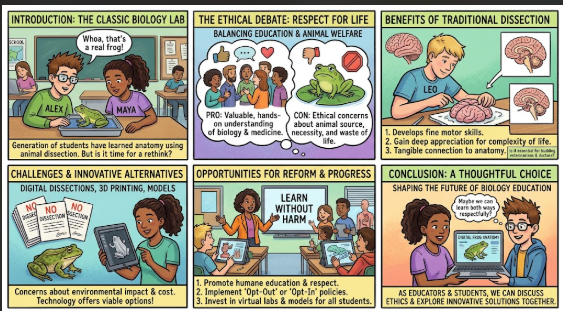
    This comic-strip illustration explores the ongoing debate surrounding animal dissection in science education, balancing traditional hands-on learning with modern, humane alternatives.

    * **Panel 1 (The Classic Biology Lab):** Alex and Maya examine a preserved frog in a traditional classroom setup, introducing the long-standing educational practice.
    * **Panel 2 (The Ethical Debate):** A visual breakdown comparing the benefits of hands-on educational value against the ethical concerns regarding animal welfare, sourcing, and respect for life.
    * **Panel 3 (Benefits of Traditional Dissection):** Highlighting how physical dissection aids fine motor skills, offers a tactile understanding of organ structures, and builds foundational experience for future medical or veterinary paths.
    * **Panel 4 (Innovative Alternatives):** Showcasing high-tech solutions like digital software, interactive tablets, and 3D-printed anatomical models that eliminate the need for real specimens.
    * **Panel 5 (Progress & Reform):** Demonstrating a modern, inclusive classroom environment that respects student ethics through opt-out policies and virtual learning tools.
    * **Panel 6 (A Thoughtful Future):** Alex and Maya reflect on finding a balance, concluding that technology and ethics can work together to advance science education without harm.
    Foundation Level Day 146 **Roll Number:** 005 This comic-strip illustration explores the ongoing debate surrounding animal dissection in science education, balancing traditional hands-on learning with modern, humane alternatives. * **Panel 1 (The Classic Biology Lab):** Alex and Maya examine a preserved frog in a traditional classroom setup, introducing the long-standing educational practice. * **Panel 2 (The Ethical Debate):** A visual breakdown comparing the benefits of hands-on educational value against the ethical concerns regarding animal welfare, sourcing, and respect for life. * **Panel 3 (Benefits of Traditional Dissection):** Highlighting how physical dissection aids fine motor skills, offers a tactile understanding of organ structures, and builds foundational experience for future medical or veterinary paths. * **Panel 4 (Innovative Alternatives):** Showcasing high-tech solutions like digital software, interactive tablets, and 3D-printed anatomical models that eliminate the need for real specimens. * **Panel 5 (Progress & Reform):** Demonstrating a modern, inclusive classroom environment that respects student ethics through opt-out policies and virtual learning tools. * **Panel 6 (A Thoughtful Future):** Alex and Maya reflect on finding a balance, concluding that technology and ethics can work together to advance science education without harm.
    1
    0 Comentários 0 Compartilhamentos 1649 Visualizações
  • #rsisb
    Roll no.247
    cava post. 45
    Foundation level

    **“Your time is limited, don’t waste it living someone else’s life.” — Steve Jobs**

    Life is precious, and every moment we receive is something we can never get back. This powerful quote reminds us that our time should be spent pursuing our own dreams, discovering our own path, and becoming the person we truly want to be.

    Sometimes, we become too concerned about what other people think. We compare ourselves with others, follow expectations, or try to live according to someone else’s definition of success. But your journey is **your own**. You have your own talents, dreams, challenges, and opportunities.

    Don’t spend your valuable time trying to impress everyone. ‍ Instead, focus on learning, growing, creating, helping others, and making meaningful progress toward your goals. Every small step matters. Every lesson makes you stronger. Every day is another opportunity to move closer to the life you want.

    Remember: **You don’t need to live someone else’s story. Write your own.** Believe in yourself, follow your passions, stay true to your values, and make your time count.

    Your future is being shaped by what you choose to do today. So stop waiting for the “perfect” moment. Start where you are, use what you have, and take that next step.

    **Be yourself. Dream boldly. Work consistently. Make your time meaningful.**

    #SteveJobs #Motivation #InspirationalQuotes #LifeQuotes #MotivationalQuotes #SuccessMindset #SelfImprovement #BelieveInYourself #FollowYourDreams #DreamBig #PositiveThinking #PersonalGrowth #LifeMotivation #Inspiration #Success #Goals #Mindset #NeverGiveUp #KeepGoing #TimeIsPrecious #MakeItCount #BeYourself #StayFocused #MotivationDaily #InspireOthers
    #rsisb Roll no.247 cava post. 45 Foundation level ⏳✨ **“Your time is limited, don’t waste it living someone else’s life.” — Steve Jobs** 🍎💭 Life is precious, and every moment we receive is something we can never get back. ⏰🌍 This powerful quote reminds us that our time should be spent pursuing our own dreams, discovering our own path, and becoming the person we truly want to be. 🌟 Sometimes, we become too concerned about what other people think. We compare ourselves with others, follow expectations, or try to live according to someone else’s definition of success. But your journey is **your own**. ❤️🛤️ You have your own talents, dreams, challenges, and opportunities. Don’t spend your valuable time trying to impress everyone. 🙅‍♂️✨ Instead, focus on learning, growing, creating, helping others, and making meaningful progress toward your goals. 📚🚀 Every small step matters. Every lesson makes you stronger. Every day is another opportunity to move closer to the life you want. 🌅💪 Remember: **You don’t need to live someone else’s story. Write your own.** ✍️📖 Believe in yourself, follow your passions, stay true to your values, and make your time count. 🔥🌟 Your future is being shaped by what you choose to do today. So stop waiting for the “perfect” moment. Start where you are, use what you have, and take that next step. 🚀💯 🌟 **Be yourself. Dream boldly. Work consistently. Make your time meaningful.** 🌟 #SteveJobs #Motivation #InspirationalQuotes #LifeQuotes #MotivationalQuotes #SuccessMindset #SelfImprovement #BelieveInYourself #FollowYourDreams #DreamBig #PositiveThinking #PersonalGrowth #LifeMotivation #Inspiration #Success #Goals #Mindset #NeverGiveUp #KeepGoing #TimeIsPrecious #MakeItCount #BeYourself #StayFocused #MotivationDaily #InspireOthers 💫🔥🚀❤️
    0 Comentários 0 Compartilhamentos 3879 Visualizações
  • #RSTA
    #Task : Talk with Maye
    #Class: Foundation Level
    #Day No: 86
    #Made By Me

    Total Post:12


    Today, I had an interesting and meaningful talk with Annie on the topic **“What’s the Matter? – The Roots of Concern.”**

    In this conversation, we talked about the simple phrase **“What’s the Matter?”** and what it really means. We discussed how people use this question when someone looks sad, worried, or has a problem.

    We also talked about how asking this simple question can show that we care about someone. Sometimes, a small question can help a person share their feelings and feel better.

    This talk helped me understand the importance of caring, listening, and supporting others. It was a simple, useful, and enjoyable conversation with Annie.
    #RSTA #Task : Talk with Maye #Class: Foundation Level #Day No: 86 #Made By Me Total Post:12 Today, I had an interesting and meaningful talk with Annie on the topic **“What’s the Matter? – The Roots of Concern.”** 🎙️ In this conversation, we talked about the simple phrase **“What’s the Matter?”** and what it really means. We discussed how people use this question when someone looks sad, worried, or has a problem. We also talked about how asking this simple question can show that we care about someone. Sometimes, a small question can help a person share their feelings and feel better. This talk helped me understand the importance of caring, listening, and supporting others. It was a simple, useful, and enjoyable conversation with Annie. 💬✨
    0 Comentários 0 Compartilhamentos 624 Visualizações 8
  • #rsisb
    Roll no.239
    maya no.16
    Foundation Level


    Have you ever wondered where the word **“Sorry”** comes from and why it is such an important part of human communication?

    The word **sorry** is more than just a simple response after making a mistake. It expresses regret, sympathy, responsibility, and sometimes a sincere desire to repair a relationship. Throughout history, apologies have played an important role in maintaining peace and understanding between people.

    Saying **“I’m sorry”** can be difficult because it requires honesty and courage. A meaningful apology shows that we recognize our mistakes and care about the feelings of others. However, a true apology is not only about saying the word—it is also about understanding what went wrong and trying to do better.

    The journey of the word **“Sorry”** also reminds us how language changes over time. Words develop new meanings as societies and cultures change. Today, “sorry” is used in many different situations: when we make a mistake, express sympathy, politely interrupt someone, or show concern.

    A sincere apology can heal misunderstandings, rebuild trust, and strengthen relationships. ‍ Sometimes, one small word can make a big difference.

    **Say sorry when you are wrong. Learn from your mistakes. Grow into a better person.**

    #Sorry #Apology #Language #WordHistory #Communication #Kindness #Respect #Forgiveness #Relationships #LearnAndGrow #EnglishLearning #Vocabulary #SelfImprovement #PositiveChange
    #rsisb Roll no.239 maya no.16 Foundation Level Have you ever wondered where the word **“Sorry”** comes from and why it is such an important part of human communication? 🤔💭 The word **sorry** is more than just a simple response after making a mistake. It expresses regret, sympathy, responsibility, and sometimes a sincere desire to repair a relationship. ❤️🤝 Throughout history, apologies have played an important role in maintaining peace and understanding between people. Saying **“I’m sorry”** can be difficult because it requires honesty and courage. 💪 A meaningful apology shows that we recognize our mistakes and care about the feelings of others. However, a true apology is not only about saying the word—it is also about understanding what went wrong and trying to do better. 🌱✨ The journey of the word **“Sorry”** also reminds us how language changes over time. Words develop new meanings as societies and cultures change. Today, “sorry” is used in many different situations: when we make a mistake, express sympathy, politely interrupt someone, or show concern. 🗣️🌍 A sincere apology can heal misunderstandings, rebuild trust, and strengthen relationships. ❤️‍🩹 Sometimes, one small word can make a big difference. ✨ **Say sorry when you are wrong. Learn from your mistakes. Grow into a better person.** ✨ #Sorry #Apology #Language #WordHistory #Communication #Kindness #Respect #Forgiveness #Relationships #LearnAndGrow #EnglishLearning #Vocabulary #SelfImprovement #PositiveChange 🌍💬❤️
    0 Comentários 0 Compartilhamentos 2612 Visualizações 3
  • #rsisb
    Roll no.247
    Foundation level

    # **“Alright” – How This Simple Affirmation Came to Be **

    The word **“Alright”** may seem like one of the simplest words in everyday conversation, but behind this small expression lies a fascinating story of language, communication, reassurance, and human connection. We often say “alright” without thinking about it—when we agree with someone, accept a situation, reassure a friend, or simply indicate that everything is okay. But how did this ordinary word become such an important part of our daily communication?

    In this 10-minute exploration, **“Alright” – How This Simple Affirmation Came to Be**, we take a closer look at the meaning and development of this familiar expression. The word combines the idea of being “all” or completely in a particular condition with “right,” suggesting that things are satisfactory, acceptable, or in order. Over time, its use became increasingly common in spoken and written English.

    One of the most interesting things about “alright” is its versatility. It can communicate agreement: *“Alright, let’s begin.”* It can offer reassurance: *“Are you alright?”* It can show acceptance: *“Alright, I understand.”* It can even express a decision to move forward: *“Alright, let’s try again.”* In just one word, we can communicate different emotions and intentions depending on our tone and the situation.

    The story of “alright” also shows us that languages are constantly changing. Words and expressions develop as people use them in new ways. Some forms become accepted in informal conversation before becoming more widely recognized in writing. “Alright” is a great example of how everyday speech can influence the evolution of language.

    Another fascinating aspect is the difference between **“all right”** and **“alright.”** Both forms are widely encountered, but their usage and acceptance have been debated by writers, editors, and language experts. “All right” has traditionally been preferred in formal writing, while “alright” is extremely common in informal communication and has become increasingly familiar in modern English. This difference reminds us that language is not always fixed—it grows and changes with society.

    The word also has an important social function. When someone asks, **“Are you alright?”**, they may not simply be asking about a situation. They could be showing concern, kindness, or friendship. A simple word can therefore become a bridge between people.

    “Alright” can also represent optimism and resilience. Sometimes life does not go exactly as planned, yet saying “alright” can mean that we are ready to continue. It can carry the feeling of **acceptance, patience, and hope**. Even when something is difficult, saying “alright, let’s keep going” can help create a positive attitude.

    This topic encourages us to think about how much meaning can exist inside ordinary words. Words that we use every day can have histories that stretch across generations. Studying them helps us understand not only language, but also the people and cultures that shaped it.

    So the next time you hear or say **“Alright,”** take a moment to notice what it means in that particular situation. Is it agreement? Is it reassurance? Is it acceptance? Is it encouragement to move forward? The answer may depend entirely on the context and the speaker’s tone.

    Ultimately, **“Alright”** is more than just a simple affirmation. It is a small example of the incredible flexibility of human language. It demonstrates how words evolve, how meanings change, and how everyday expressions can connect people.

    **Let’s celebrate the fascinating stories hidden inside ordinary words!** Every simple expression has a journey, and sometimes the smallest words can tell us the biggest stories.

    #Alright #LanguageHistory #EnglishLanguage #WordOrigins #Linguistics #LanguageLearning #EnglishWords #WordsMatter #Communication #EverydayLanguage #Affirmation #LanguageEvolution #WordHistory #LearnEnglish #EnglishLearning #Vocabulary #InterestingFacts #LanguageAndCulture #CommunicationSkills #EducationalContent #DidYouKnow #LearningIsFun #HistoryOfLanguage #WordsAndMeaning #ExploreLanguage
    #rsisb Roll no.247 Foundation level # **“Alright” – How This Simple Affirmation Came to Be 🌟** The word **“Alright”** may seem like one of the simplest words in everyday conversation, but behind this small expression lies a fascinating story of language, communication, reassurance, and human connection. 😊💬 We often say “alright” without thinking about it—when we agree with someone, accept a situation, reassure a friend, or simply indicate that everything is okay. But how did this ordinary word become such an important part of our daily communication? 🤔✨ In this 10-minute exploration, **“Alright” – How This Simple Affirmation Came to Be**, we take a closer look at the meaning and development of this familiar expression. 📚🌍 The word combines the idea of being “all” or completely in a particular condition with “right,” suggesting that things are satisfactory, acceptable, or in order. Over time, its use became increasingly common in spoken and written English. One of the most interesting things about “alright” is its versatility. 🌈 It can communicate agreement: *“Alright, let’s begin.”* It can offer reassurance: *“Are you alright?”* It can show acceptance: *“Alright, I understand.”* It can even express a decision to move forward: *“Alright, let’s try again.”* In just one word, we can communicate different emotions and intentions depending on our tone and the situation. 🗣️💡 The story of “alright” also shows us that languages are constantly changing. 🔄📖 Words and expressions develop as people use them in new ways. Some forms become accepted in informal conversation before becoming more widely recognized in writing. “Alright” is a great example of how everyday speech can influence the evolution of language. Another fascinating aspect is the difference between **“all right”** and **“alright.”** ✍️ Both forms are widely encountered, but their usage and acceptance have been debated by writers, editors, and language experts. “All right” has traditionally been preferred in formal writing, while “alright” is extremely common in informal communication and has become increasingly familiar in modern English. This difference reminds us that language is not always fixed—it grows and changes with society. 🌱📚 The word also has an important social function. ❤️ When someone asks, **“Are you alright?”**, they may not simply be asking about a situation. They could be showing concern, kindness, or friendship. A simple word can therefore become a bridge between people. 🤝😊 “Alright” can also represent optimism and resilience. 🌟 Sometimes life does not go exactly as planned, yet saying “alright” can mean that we are ready to continue. It can carry the feeling of **acceptance, patience, and hope**. Even when something is difficult, saying “alright, let’s keep going” can help create a positive attitude. 💪🌅 This topic encourages us to think about how much meaning can exist inside ordinary words. Words that we use every day can have histories that stretch across generations. 🕰️📖 Studying them helps us understand not only language, but also the people and cultures that shaped it. So the next time you hear or say **“Alright,”** take a moment to notice what it means in that particular situation. Is it agreement? 👍 Is it reassurance? 💙 Is it acceptance? 🌿 Is it encouragement to move forward? 🚀 The answer may depend entirely on the context and the speaker’s tone. Ultimately, **“Alright”** is more than just a simple affirmation. It is a small example of the incredible flexibility of human language. 🌍🗣️ It demonstrates how words evolve, how meanings change, and how everyday expressions can connect people. ✨ **Let’s celebrate the fascinating stories hidden inside ordinary words!** Every simple expression has a journey, and sometimes the smallest words can tell us the biggest stories. 📚💫 #Alright #LanguageHistory #EnglishLanguage #WordOrigins #Linguistics #LanguageLearning #EnglishWords #WordsMatter #Communication #EverydayLanguage #Affirmation #LanguageEvolution #WordHistory #LearnEnglish #EnglishLearning #Vocabulary #InterestingFacts #LanguageAndCulture #CommunicationSkills #EducationalContent #DidYouKnow #LearningIsFun #HistoryOfLanguage #WordsAndMeaning #ExploreLanguage 📚🌍✨🗣️💡❤️
    0 Comentários 0 Compartilhamentos 7682 Visualizações 8
Páginas impulsionada