The Story of “Cyber” — From the Helmsman of Ancient Seas to the Captain of the Digital World
Long before the first computer flickered to life, before humans even dreamed of artificial intelligence or the internet, the word “cyber” began its quiet journey on the waves of the ancient Aegean Sea.
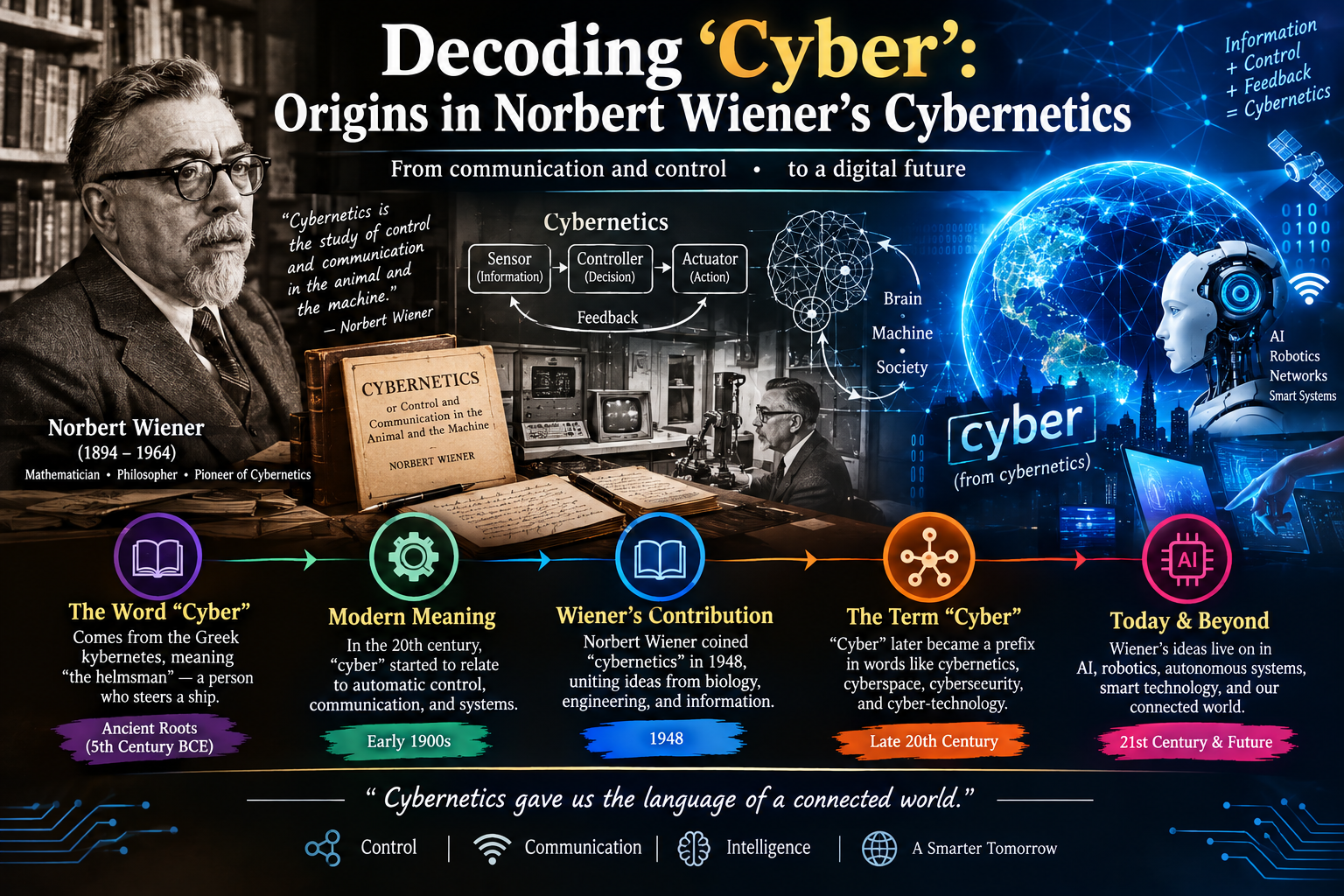
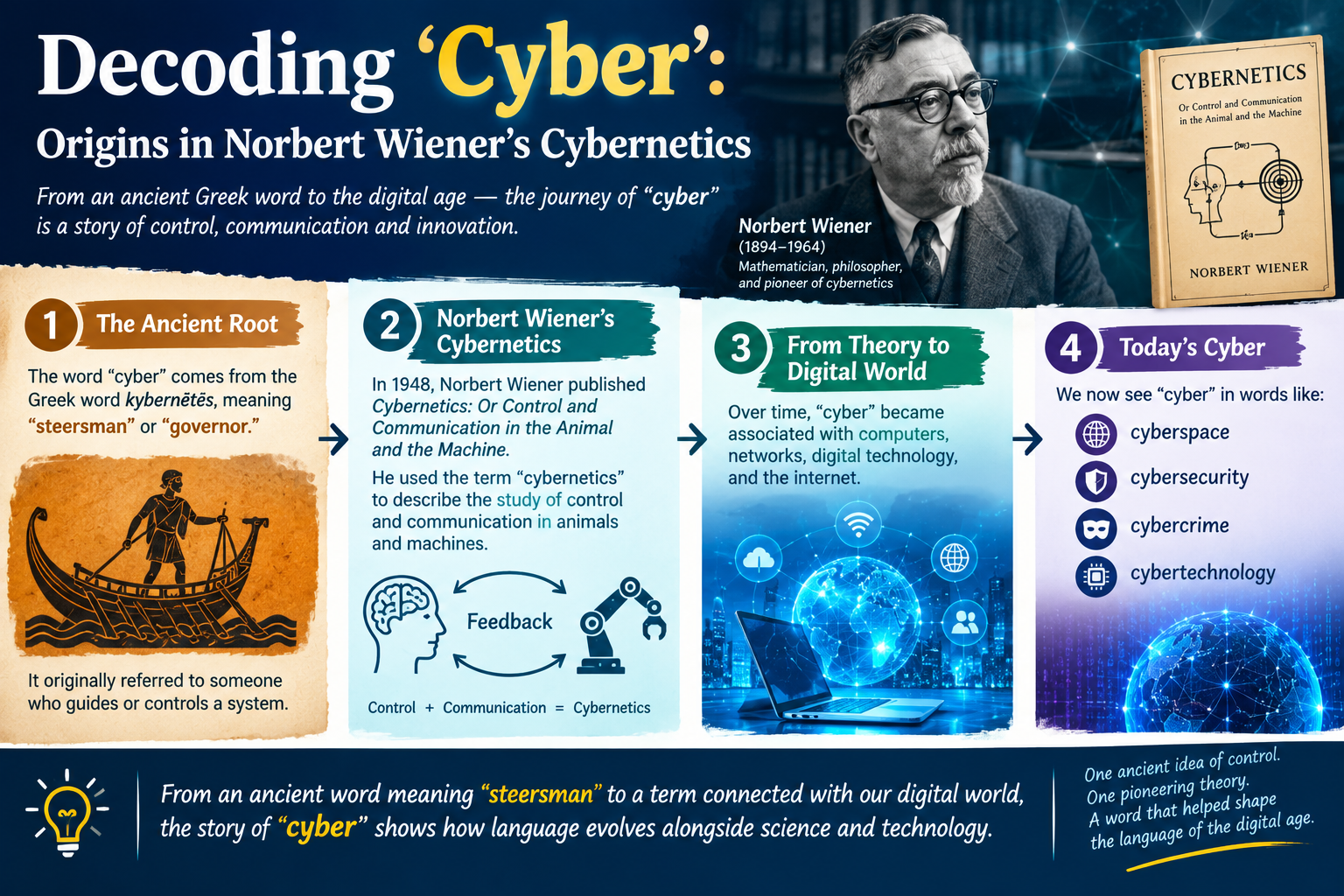
It was born from the Greek word “kybernētēs” (κυβερνήτης) — a word that meant helmsman, the one who holds the steering oar of a ship, guiding it safely through storm and sea. From the same root came the verb “kybernan”, meaning to steer, to guide, to govern.
In ancient Greece, this helmsman was not just a sailor. He was a symbol of wisdom — someone who could read the stars, predict the winds, and make decisions that kept his crew alive. The helmsman’s art was one of balance between control and chaos. He didn’t fight the sea — he worked with it. That idea, born thousands of years ago, would later evolve into one of the most powerful metaphors of the modern age.
⸻
The Machine Age and Norbert Wiener
Fast forward two thousand years. The year was 1948.
World War II had just ended, and humanity was standing between destruction and discovery. The world had seen the power of machines — radar, radio, computation — and also the danger of losing control over them.
A brilliant mathematician named Norbert Wiener, working at the Massachusetts Institute of Technology (MIT), was deeply fascinated by how machines and humans shared one common challenge: control.
He observed that both living beings and machines use feedback — a constant loop of action, response, and correction — to guide themselves. A pilot adjusts his flight path based on instruments. A thermostat regulates heat by sensing temperature. A human learns by noticing mistakes.
To describe this universal principle — the art of steering systems intelligently — Wiener reached back into ancient Greek and chose that old, wise word: “kybernētēs.”
He titled his groundbreaking book:
“Cybernetics: Or Control and Communication in the Animal and the Machine.”
And thus, the word cybernetics was born — a fusion of philosophy, science, and engineering, meaning the study of how systems, biological or mechanical, steer themselves through feedback and communication.
⸻
From Science to Culture
Cybernetics gave birth to new sciences — robotics, computer science, systems theory, and eventually artificial intelligence.
In the 1960s, as computers became more common, writers and thinkers began using the shortened form “cyber-” as a prefix to describe anything that involved control, information, or automation.
“Cybernation” meant automation of industries.
“Cybernetician” meant someone who studies intelligent systems.
But the real revolution came when imagination entered the equation.
⸻
The Birth of “Cyberspace”
In 1982, a young Canadian writer named William Gibson published a short story called “Burning Chrome.” In it, he imagined a digital universe — a world inside computers — where humans could travel through data as if it were a physical space. He called that universe “cyberspace.”
Two years later, in his novel Neuromancer, he described it more vividly:
“A consensual hallucination experienced daily by billions of legitimate operators, in every nation… a graphic representation of data abstracted from every computer in the human system.”
From that moment, cyber stopped being just a technical prefix — it became a symbol of an entire new reality: the digital universe.
The word leapt into everyday life:
• Cybercrime
• Cybersecurity
• Cyberwar
• Cyberlove
• Cyberpunk
And suddenly, everything digital was cyber.
⸻
The Meaning Behind the Modern Word
Today, when we say “cyber”, we think of networks, data, AI, and virtual life. But hidden inside this futuristic word is that same ancient wisdom: the art of steering.
To live in the cyber age is to steer — to govern technology, not be governed by it.
To build AI, social networks, and digital schools like Rehan School, is to become the kybernētēs of our time — the helmsmen of humanity’s technological ship.
Cyber is not just about computers.
It’s about communication, control, and consciousness.
It’s about understanding that every action we take online sends ripples across a vast digital ocean.
⸻
The Relevance for Rehan School and Future Leaders
At Rehan School, when we teach children to use AI, social media, and the internet, we are not just teaching them to use technology — we are teaching them to steer it wisely.
Every child learning to prompt an AI, to run a digital business, or to connect with the world online is becoming a modern cyber helmsman.
“Cyber” thus becomes a sacred word — the bridge between wisdom of the past and the intelligence of the future.
Just as the Greek sailor steered his wooden ship through dark storms, today’s cyber-leader must steer through storms of misinformation, digital addiction, and AI ethics. The challenge is the same: to stay awake, to stay aware, to stay in control.
⸻
Epilogue — The Circle of Meaning
From kybernētēs to cybernetics to cyberspace, the word has completed a full circle — from steering ships to steering minds, from oceans of water to oceans of data.
When you next hear “cyber”, remember:
It is not a cold, metallic word of machines.
It is a living word — ancient, human, wise — reminding us that technology is just a ship. The destination, as always, depends on the one who holds the wheel.
⸻
#Cyber #RehanSchool #AILeadership #DigitalHistory #RehanAllahwala🌐 The Story of “Cyber” — From the Helmsman of Ancient Seas to the Captain of the Digital World
Long before the first computer flickered to life, before humans even dreamed of artificial intelligence or the internet, the word “cyber” began its quiet journey on the waves of the ancient Aegean Sea.
It was born from the Greek word “kybernētēs” (κυβερνήτης) — a word that meant helmsman, the one who holds the steering oar of a ship, guiding it safely through storm and sea. From the same root came the verb “kybernan”, meaning to steer, to guide, to govern.
In ancient Greece, this helmsman was not just a sailor. He was a symbol of wisdom — someone who could read the stars, predict the winds, and make decisions that kept his crew alive. The helmsman’s art was one of balance between control and chaos. He didn’t fight the sea — he worked with it. That idea, born thousands of years ago, would later evolve into one of the most powerful metaphors of the modern age.
⸻
⚙️ The Machine Age and Norbert Wiener
Fast forward two thousand years. The year was 1948.
World War II had just ended, and humanity was standing between destruction and discovery. The world had seen the power of machines — radar, radio, computation — and also the danger of losing control over them.
A brilliant mathematician named Norbert Wiener, working at the Massachusetts Institute of Technology (MIT), was deeply fascinated by how machines and humans shared one common challenge: control.
He observed that both living beings and machines use feedback — a constant loop of action, response, and correction — to guide themselves. A pilot adjusts his flight path based on instruments. A thermostat regulates heat by sensing temperature. A human learns by noticing mistakes.
To describe this universal principle — the art of steering systems intelligently — Wiener reached back into ancient Greek and chose that old, wise word: “kybernētēs.”
He titled his groundbreaking book:
“Cybernetics: Or Control and Communication in the Animal and the Machine.”
And thus, the word cybernetics was born — a fusion of philosophy, science, and engineering, meaning the study of how systems, biological or mechanical, steer themselves through feedback and communication.
⸻
🧠 From Science to Culture
Cybernetics gave birth to new sciences — robotics, computer science, systems theory, and eventually artificial intelligence.
In the 1960s, as computers became more common, writers and thinkers began using the shortened form “cyber-” as a prefix to describe anything that involved control, information, or automation.
“Cybernation” meant automation of industries.
“Cybernetician” meant someone who studies intelligent systems.
But the real revolution came when imagination entered the equation.
⸻
💻 The Birth of “Cyberspace”
In 1982, a young Canadian writer named William Gibson published a short story called “Burning Chrome.” In it, he imagined a digital universe — a world inside computers — where humans could travel through data as if it were a physical space. He called that universe “cyberspace.”
Two years later, in his novel Neuromancer, he described it more vividly:
“A consensual hallucination experienced daily by billions of legitimate operators, in every nation… a graphic representation of data abstracted from every computer in the human system.”
From that moment, cyber stopped being just a technical prefix — it became a symbol of an entire new reality: the digital universe.
The word leapt into everyday life:
• Cybercrime
• Cybersecurity
• Cyberwar
• Cyberlove
• Cyberpunk
And suddenly, everything digital was cyber.
⸻
🛰️ The Meaning Behind the Modern Word
Today, when we say “cyber”, we think of networks, data, AI, and virtual life. But hidden inside this futuristic word is that same ancient wisdom: the art of steering.
To live in the cyber age is to steer — to govern technology, not be governed by it.
To build AI, social networks, and digital schools like Rehan School, is to become the kybernētēs of our time — the helmsmen of humanity’s technological ship.
Cyber is not just about computers.
It’s about communication, control, and consciousness.
It’s about understanding that every action we take online sends ripples across a vast digital ocean.
⸻
🌍 The Relevance for Rehan School and Future Leaders
At Rehan School, when we teach children to use AI, social media, and the internet, we are not just teaching them to use technology — we are teaching them to steer it wisely.
Every child learning to prompt an AI, to run a digital business, or to connect with the world online is becoming a modern cyber helmsman.
“Cyber” thus becomes a sacred word — the bridge between wisdom of the past and the intelligence of the future.
Just as the Greek sailor steered his wooden ship through dark storms, today’s cyber-leader must steer through storms of misinformation, digital addiction, and AI ethics. The challenge is the same: to stay awake, to stay aware, to stay in control.
⸻
✨ Epilogue — The Circle of Meaning
From kybernētēs to cybernetics to cyberspace, the word has completed a full circle — from steering ships to steering minds, from oceans of water to oceans of data.
When you next hear “cyber”, remember:
It is not a cold, metallic word of machines.
It is a living word — ancient, human, wise — reminding us that technology is just a ship. The destination, as always, depends on the one who holds the wheel.
⸻
#Cyber #RehanSchool #AILeadership #DigitalHistory #RehanAllahwala