• Level 1
    Book 1
    Day 4
    Task song
    big
    From the Himalayas to the Arabian Sea

    SUMMARY

    “From the Himalayas to the Arabian Sea” is a beautiful song/poem about the natural beauty, culture, unity, and spirit of Pakistan. It travels through majestic mountains, rivers, green valleys, cities, deserts, and finally reaches the Arabian Sea. The poem celebrates the beauty of the land and the connection between its people.

    INPUT
    Himalayas
    Rivers
    Green valleys
    Deserts
    Cities
    Culture
    People
    Arabian Sea
    Unity
    Pakistan
    OUTPUT
    A patriotic poem/song
    Beautiful nature imagery
    Message of unity
    Love for the homeland
    Celebration of Pakistan’s landscapes and culture
    MORAL

    We should love and respect our homeland, protect its natural beauty, and live together with unity and kindness.

    KEYWORDS

    Himalayas, Arabian Sea, Pakistan, Mountains, Rivers, Valleys, Nature, Culture, Unity, Homeland, Beauty, Peace, Hope, People, Patriotism, Landscapes, Freedom, Greenery, Deserts, Ocean

    #️⃣ BIG HASHTAGS

    #FromTheHimalayasToTheArabianSea #Pakistan #PakistanPoetry #PakistanSong #PakistaniCulture #NaturalBeauty #Himalayas #ArabianSea #BeautifulPakistan #LovePakistan #PakistanNature #Unity #Peace #Hope #Homeland #Patriotism #GreenValleys #Mountains #Rivers #Deserts #Ocean #PakistaniPoetry #Poem #Song #NatureLovers #Culture #UnityInDiversity #BeautifulLand #ProudPakistan

    Tania Khan Mentorship Wali
    Imran Khan Street Wala
    Mohsin Rathore Seo Wala
    Waryam Tharparkar Wala
    Shazia Javed Educationwali
    Level 1 Book 1 Day 4 Task song big 🌏 From the Himalayas to the Arabian Sea SUMMARY “From the Himalayas to the Arabian Sea” is a beautiful song/poem about the natural beauty, culture, unity, and spirit of Pakistan. It travels through majestic mountains, rivers, green valleys, cities, deserts, and finally reaches the Arabian Sea. The poem celebrates the beauty of the land and the connection between its people. 🇵🇰🌄🌊 📥 INPUT Himalayas 🏔️ Rivers 🌊 Green valleys 🌿 Deserts 🏜️ Cities 🏙️ Culture 🎭 People 👨‍👩‍👧‍👦 Arabian Sea 🌊 Unity 🤝 Pakistan 🇵🇰 📤 OUTPUT A patriotic poem/song Beautiful nature imagery Message of unity Love for the homeland Celebration of Pakistan’s landscapes and culture 💡 MORAL We should love and respect our homeland, protect its natural beauty, and live together with unity and kindness. ❤️🤝 🔑 KEYWORDS Himalayas, Arabian Sea, Pakistan, Mountains, Rivers, Valleys, Nature, Culture, Unity, Homeland, Beauty, Peace, Hope, People, Patriotism, Landscapes, Freedom, Greenery, Deserts, Ocean #️⃣ BIG HASHTAGS #FromTheHimalayasToTheArabianSea #Pakistan #PakistanPoetry #PakistanSong #PakistaniCulture #NaturalBeauty #Himalayas #ArabianSea #BeautifulPakistan #LovePakistan #PakistanNature #Unity #Peace #Hope #Homeland #Patriotism #GreenValleys #Mountains #Rivers #Deserts #Ocean #PakistaniPoetry #Poem #Song #NatureLovers #Culture #UnityInDiversity #BeautifulLand #ProudPakistan 🇵🇰🌄🌊❤️ Tania Khan Mentorship Wali Imran Khan Street Wala Mohsin Rathore Seo Wala Waryam Tharparkar Wala Shazia Javed Educationwali
    0 Commentaires 0 Parts 1193 Vue 9
  • Level 01 Book 01
    Day 04
    Task Song 04
    Topic 'From the Himalayas to the Arabian Sea
    Summary
    From the mighty Himalayas to the vast Arabian Sea, every river, mountain, and coastline tells a story of beauty, resilience, and unity.
    Let's celebrate the landscapes that connect us, inspire us, and remind us to protect the natural treasures we share for generations to come.
    #FromTheHimalayasToTheArabianSea #Nature #Mountains #ArabianSea #Travel #Explore #Adventure #ScenicBeauty #NatureLovers #LandscapePhotography #Pakistan #SouthAsia #Wanderlust #ProtectNature #Earth #Inspiration #BeautifulDestinations #Discover #TravelPhotography #naturephotography
    Mohsin Rathore Seo Wala
    @highlight
    Tania Khan Mentorship Wali
    Shazia EducationWali
    Imran Khan Street Wala
    Hafsa Noor
    Level 01 Book 01 Day 04 Task Song 04 Topic 'From the Himalayas to the Arabian Sea Summary From the mighty Himalayas to the vast Arabian Sea, every river, mountain, and coastline tells a story of beauty, resilience, and unity. 🌄🌊 Let's celebrate the landscapes that connect us, inspire us, and remind us to protect the natural treasures we share for generations to come. 💙🌿 #FromTheHimalayasToTheArabianSea #Nature #Mountains #ArabianSea #Travel #Explore #Adventure #ScenicBeauty #NatureLovers #LandscapePhotography #Pakistan #SouthAsia #Wanderlust #ProtectNature #Earth #Inspiration #BeautifulDestinations #Discover #TravelPhotography #naturephotography Mohsin Rathore Seo Wala @highlight Tania Khan Mentorship Wali Shazia EducationWali Imran Khan Street Wala Hafsa Noor
    0 Commentaires 0 Parts 5648 Vue 16
  • India and Pakistan share same water from the Himalayas and both countries face water issues.

    This Alliance group is to discuss these issues, listen to the other side, share new technologies and ideas on how to solve our water issues.

    Do join and ask your friends to do the same.

    https://www.facebook.com/groups/IndiaPakistanwateralliance
    India and Pakistan share same water from the Himalayas and both countries face water issues. This Alliance group is to discuss these issues, listen to the other side, share new technologies and idea's on how to solve our water issues. Do join and ask your friends to do the same. https://www.facebook.com/groups/IndiaPakistanwateralliance
    0 Commentaires 0 Parts 1112 Vue
  • The Day He Saw Beauty

    There once lived a young man named Hassan, born in a small village beneath the shadow of the Himalayas.
    His days were spent in repetition — ploughing fields that were not his, answering to masters who spoke to him as though his soul had no weight. He worked, ate, and slept. He did not dream.

    One afternoon, as he guided the oxen through the dry soil, something unusual caught his eye — a butterfly, its wings painted like a living flame, resting on a wildflower that had dared to grow beside a stone. Hassan paused. For the first time, he really looked. The field, the mountain, the clouds — everything shimmered with life. He felt as if the entire world had taken a breath, and that breath was inside him.

    That single moment, small as a heartbeat, cracked something open in him.

    He began to notice things he had never seen: how the light curved on the river at dusk, how the children’s laughter rose higher than the muezzin’s call, how his own heart beat in rhythm with the wind. He realized that beauty was not something owned by kings or poets — it was everywhere, hidden in plain sight, waiting for eyes that could truly see.

    And that realization changed him.

    When the landlord shouted, Hassan no longer bowed with fear. When others complained about fate, he smiled quietly. He had discovered a secret — that no one who has seen beauty can ever again be a slave. For beauty connects a man to the Divine, and that connection makes him free.

    Years later, when a traveler passed through the village and asked why the people spoke Hassan’s name with reverence, an old woman replied,

    “Because he taught us that freedom begins in the heart — the day you see beauty, you stop kneeling before ugliness.”

    That is what Iqbal meant when he called upon us to awaken our Khudi — our self.
    He wanted every human being to look at the world not with tired eyes, but with the vision of the soul.
    For the one who sees beauty sees truth, and the one who sees truth cannot be chained.
    The Day He Saw Beauty There once lived a young man named Hassan, born in a small village beneath the shadow of the Himalayas. His days were spent in repetition — ploughing fields that were not his, answering to masters who spoke to him as though his soul had no weight. He worked, ate, and slept. He did not dream. One afternoon, as he guided the oxen through the dry soil, something unusual caught his eye — a butterfly, its wings painted like a living flame, resting on a wildflower that had dared to grow beside a stone. Hassan paused. For the first time, he really looked. The field, the mountain, the clouds — everything shimmered with life. He felt as if the entire world had taken a breath, and that breath was inside him. That single moment, small as a heartbeat, cracked something open in him. He began to notice things he had never seen: how the light curved on the river at dusk, how the children’s laughter rose higher than the muezzin’s call, how his own heart beat in rhythm with the wind. He realized that beauty was not something owned by kings or poets — it was everywhere, hidden in plain sight, waiting for eyes that could truly see. And that realization changed him. When the landlord shouted, Hassan no longer bowed with fear. When others complained about fate, he smiled quietly. He had discovered a secret — that no one who has seen beauty can ever again be a slave. For beauty connects a man to the Divine, and that connection makes him free. Years later, when a traveler passed through the village and asked why the people spoke Hassan’s name with reverence, an old woman replied, “Because he taught us that freedom begins in the heart — the day you see beauty, you stop kneeling before ugliness.” That is what Iqbal meant when he called upon us to awaken our Khudi — our self. He wanted every human being to look at the world not with tired eyes, but with the vision of the soul. For the one who sees beauty sees truth, and the one who sees truth cannot be chained.
    0 Commentaires 0 Parts 549 Vue
  • The Day He Saw Beauty

    There once lived a young man named Hassan, born in a small village beneath the shadow of the Himalayas.
    His days were spent in repetition — ploughing fields that were not his, answering to masters who spoke to him as though his soul had no weight. He worked, ate, and slept. He did not dream.

    One afternoon, as he guided the oxen through the dry soil, something unusual caught his eye — a butterfly, its wings painted like a living flame, resting on a wildflower that had dared to grow beside a stone. Hassan paused. For the first time, he really looked. The field, the mountain, the clouds — everything shimmered with life. He felt as if the entire world had taken a breath, and that breath was inside him.

    That single moment, small as a heartbeat, cracked something open in him.

    He began to notice things he had never seen: how the light curved on the river at dusk, how the children’s laughter rose higher than the muezzin’s call, how his own heart beat in rhythm with the wind. He realized that beauty was not something owned by kings or poets — it was everywhere, hidden in plain sight, waiting for eyes that could truly see.

    And that realization changed him.

    When the landlord shouted, Hassan no longer bowed with fear. When others complained about fate, he smiled quietly. He had discovered a secret — that no one who has seen beauty can ever again be a slave. For beauty connects a man to the Divine, and that connection makes him free.

    Years later, when a traveler passed through the village and asked why the people spoke Hassan’s name with reverence, an old woman replied,

    “Because he taught us that freedom begins in the heart — the day you see beauty, you stop kneeling before ugliness.”

    That is what Iqbal meant when he called upon us to awaken our Khudi — our self.
    He wanted every human being to look at the world not with tired eyes, but with the vision of the soul.
    For the one who sees beauty sees truth, and the one who sees truth cannot be chained.
    The Day He Saw Beauty There once lived a young man named Hassan, born in a small village beneath the shadow of the Himalayas. His days were spent in repetition — ploughing fields that were not his, answering to masters who spoke to him as though his soul had no weight. He worked, ate, and slept. He did not dream. One afternoon, as he guided the oxen through the dry soil, something unusual caught his eye — a butterfly, its wings painted like a living flame, resting on a wildflower that had dared to grow beside a stone. Hassan paused. For the first time, he really looked. The field, the mountain, the clouds — everything shimmered with life. He felt as if the entire world had taken a breath, and that breath was inside him. That single moment, small as a heartbeat, cracked something open in him. He began to notice things he had never seen: how the light curved on the river at dusk, how the children’s laughter rose higher than the muezzin’s call, how his own heart beat in rhythm with the wind. He realized that beauty was not something owned by kings or poets — it was everywhere, hidden in plain sight, waiting for eyes that could truly see. And that realization changed him. When the landlord shouted, Hassan no longer bowed with fear. When others complained about fate, he smiled quietly. He had discovered a secret — that no one who has seen beauty can ever again be a slave. For beauty connects a man to the Divine, and that connection makes him free. Years later, when a traveler passed through the village and asked why the people spoke Hassan’s name with reverence, an old woman replied, “Because he taught us that freedom begins in the heart — the day you see beauty, you stop kneeling before ugliness.” That is what Iqbal meant when he called upon us to awaken our Khudi — our self. He wanted every human being to look at the world not with tired eyes, but with the vision of the soul. For the one who sees beauty sees truth, and the one who sees truth cannot be chained.
    0 Commentaires 0 Parts 469 Vue
  • Chenab — The River Born When Two Rivers Fell in Love

    Most Pakistanis grow up hearing the name Chenab.
    We cross its bridges.
    We read its poetry.
    We watch its floods on TV.
    But almost nobody knows its real birth story.

    And the truth is more magical than fiction.


    Before there was Chenab,
    there were two separate rivers high in the mountains:

    The Chandra River — “The Moon.”

    Cold. Bright. Quiet.
    Born from the melting ice of the Himalayas.

    The Bhaga River — “The Fortunate One.”

    Strong. Dark. Fast.
    Carrying the force of ancient glaciers.

    For centuries, they ran side by side.
    Close… but not touching.
    Until one day, in the valleys of Lahaul,
    the two rivers finally met.

    And when they merged, the world gave them a new name:

    Chandra + Bhaga → Chandrabhaga.

    The river blessed by the moon.

    Over thousands of years, accents changed.
    Languages shifted.
    Travelers simplified the sound.

    Chandrabhaga became Chanab.
    Chanab softened into Chenab.

    The “bhaga” slowly melted into “ab”,
    a Persian word for water.

    And that’s how the river you know today
    got its poetic meaning:

    **“Moon Water.”

    The river created when two rivers became one.**


    This is the part that matters:

    If even a river is born from a union,
    strength comes from merging,
    power comes from meeting,
    and beauty comes from connection…

    then imagine what happens
    when two humans, two ideas, two communities
    join with the same spirit.

    Greatness is always born at the point of merging.

    Just like the Chenab
    🌙 Chenab — The River Born When Two Rivers Fell in Love Most Pakistanis grow up hearing the name Chenab. We cross its bridges. We read its poetry. We watch its floods on TV. But almost nobody knows its real birth story. And the truth is more magical than fiction. ⸻ Before there was Chenab, there were two separate rivers high in the mountains: The Chandra River — “The Moon.” Cold. Bright. Quiet. Born from the melting ice of the Himalayas. The Bhaga River — “The Fortunate One.” Strong. Dark. Fast. Carrying the force of ancient glaciers. For centuries, they ran side by side. Close… but not touching. Until one day, in the valleys of Lahaul, the two rivers finally met. And when they merged, the world gave them a new name: Chandra + Bhaga → Chandrabhaga. The river blessed by the moon. Over thousands of years, accents changed. Languages shifted. Travelers simplified the sound. Chandrabhaga became Chanab. Chanab softened into Chenab. The “bhaga” slowly melted into “ab”, a Persian word for water. And that’s how the river you know today got its poetic meaning: **“Moon Water.” The river created when two rivers became one.** ⸻ This is the part that matters: If even a river is born from a union, strength comes from merging, power comes from meeting, and beauty comes from connection… then imagine what happens when two humans, two ideas, two communities join with the same spirit. Greatness is always born at the point of merging. Just like the Chenab
    0 Commentaires 0 Parts 234 Vue
  • Kudos to Sheeba Sen for her mission to re-forest Himalayas in Uttarakhand through community action. Visit her at https://alaap.in/
    Kudos to Sheeba Sen for her mission to re-forest Himalayas in Uttarakhand through community action. Visit her at https://alaap.in/
    0 Commentaires 0 Parts 142 Vue
  • This salt only comes from Pakistan it should not be called Himalayan salt any more but Pakistani salt !

    This Salt is Ambasador of Pakistan while most Indian companies sell it and world thinks it comes form Himalayas in India !

    #pakistansalt #himalyansalt
    This salt only comes from Pakistan 🇵🇰 it should not be called Himalayan salt any more but Pakistani salt ! This Salt is Ambasador of Pakistan 🇵🇰 while most Indian companies sell it and world thinks it comes form Himalayas in India 🇮🇳 ! #pakistansalt #himalyansalt
    0 Commentaires 0 Parts 626 Vue
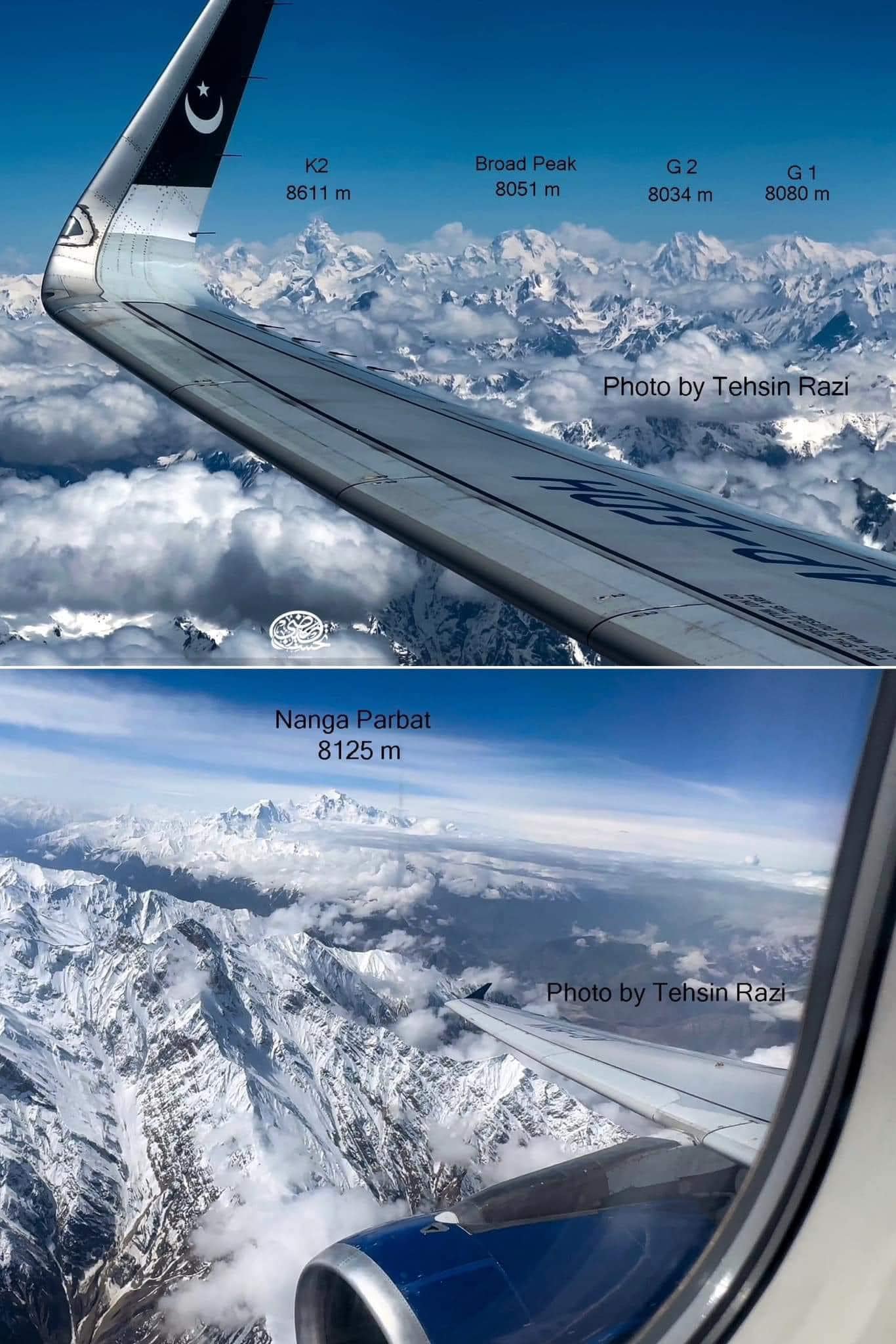
  • Out of the 20 highest peaks in the world, five are located in Pakistan. These peaks are part of the Himalayan and Karakoram mountain ranges. Here are their names:

    1. **K2** (Mount Godwin-Austen) - Standing at 8,611 meters (28,251 feet), K2 is the second-highest peak in the world. It is located in the Karakoram range and is known for its remarkable height and challenging climbs.

    2. **Nanga Parbat** - At 8,126 meters (26,660 feet), Nanga Parbat is the ninth-highest peak in the world. It is part of the Himalayas and is famously known as the "Killer Mountain" due to its dangerous climbing conditions.

    3. **Gasherbrum I** (Hidden Peak) - This mountain, which is 8,080 meters (26,509 feet) high, ranks as the 11th highest in the world. It is located in the Karakoram range.

    4. **Broad Peak** - Standing at 8,051 meters (26,414 feet), Broad Peak is the 12th highest mountain in the world and is also located in the Karakoram range.

    5. **Gasherbrum II** - The 13th highest peak in the world, it stands at 8,035 meters (26,362 feet) and is located in the Karakoram range.

    These mountains are known for their extreme elevations and challenging climbing conditions, attracting mountaineers from around the globe.
    Out of the 20 highest peaks in the world, five are located in Pakistan. These peaks are part of the Himalayan and Karakoram mountain ranges. Here are their names: 1. **K2** (Mount Godwin-Austen) - Standing at 8,611 meters (28,251 feet), K2 is the second-highest peak in the world. It is located in the Karakoram range and is known for its remarkable height and challenging climbs. 2. **Nanga Parbat** - At 8,126 meters (26,660 feet), Nanga Parbat is the ninth-highest peak in the world. It is part of the Himalayas and is famously known as the "Killer Mountain" due to its dangerous climbing conditions. 3. **Gasherbrum I** (Hidden Peak) - This mountain, which is 8,080 meters (26,509 feet) high, ranks as the 11th highest in the world. It is located in the Karakoram range. 4. **Broad Peak** - Standing at 8,051 meters (26,414 feet), Broad Peak is the 12th highest mountain in the world and is also located in the Karakoram range. 5. **Gasherbrum II** - The 13th highest peak in the world, it stands at 8,035 meters (26,362 feet) and is located in the Karakoram range. These mountains are known for their extreme elevations and challenging climbing conditions, attracting mountaineers from around the globe.
    0 Commentaires 0 Parts 168 Vue
  • The Million-Book Revolution

    How One Book Taught a Nation to Dream Again
    By Rehan Allahwala


    It was December 2026.
    Winter sunlight spread across Pakistan like a quiet blessing.
    From Karachi’s crowded classrooms to the shadowed courtyards of Thar,
    a million young voices hummed the same word — “AI.”

    It had begun not with a government plan,
    not with billions in funding,
    but with a book — soft in color, small in price, vast in purpose.

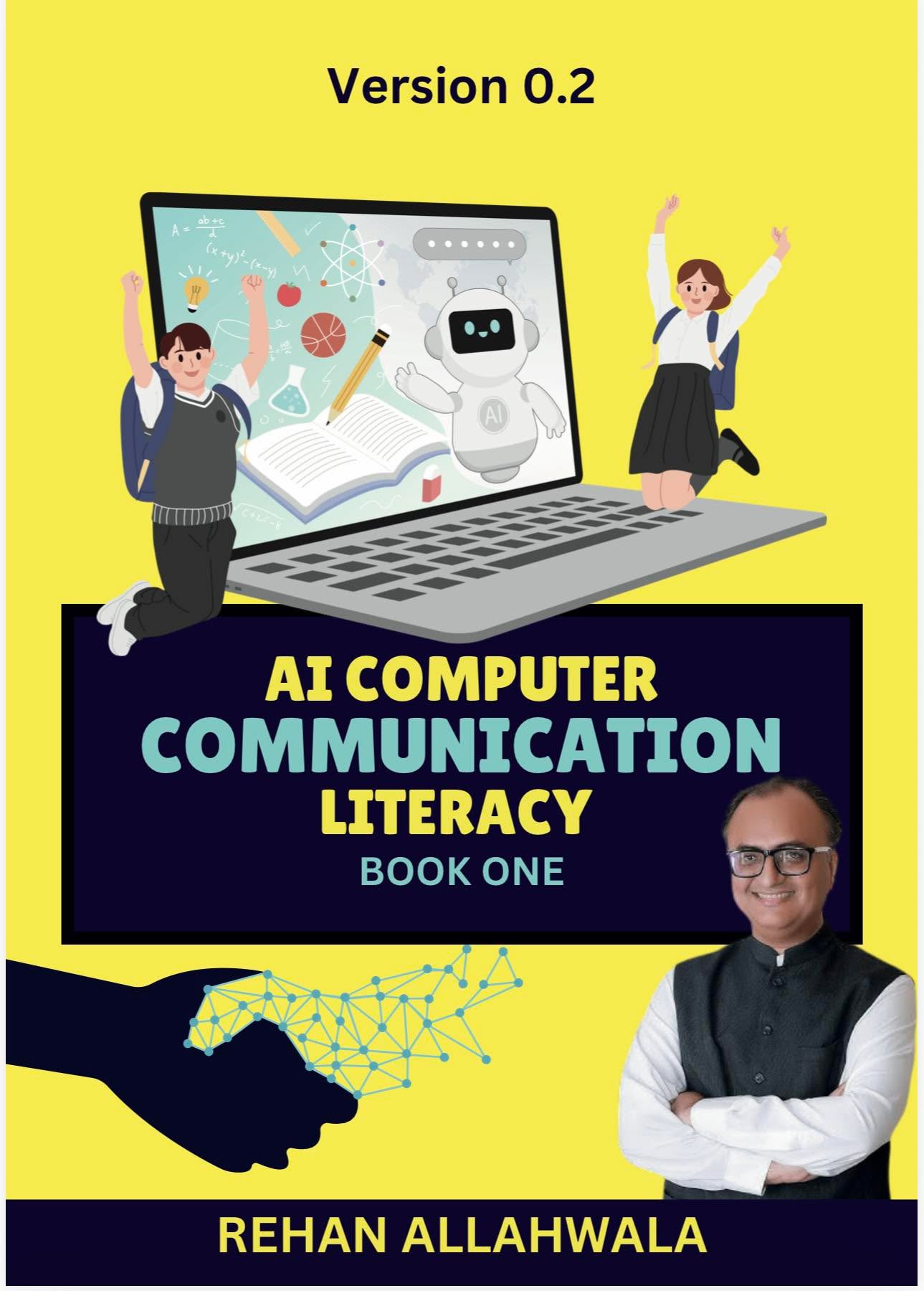
    Its name: ACCL — AI Computer Communication Literacy.
    Its creator: Rehan Allahwala.
    Its power: to awaken the sleeping intelligence of a nation.


    The World Before

    Only a few years earlier, the computer classes of Pakistan were frozen in time.
    Children memorized what a “floppy disk” was,
    as if history were more sacred than possibility.

    Screens blinked, but minds did not.
    The mouse was their master; the world, their stranger.

    The curriculum — a relic of a vanished century —
    taught hands to click, not hearts to think.
    It produced typists, not dreamers.
    Followers, not leaders.

    And somewhere in the noise of repetition,
    the light of curiosity dimmed.


    The Spark

    Then came a whisper that became a wind.
    A man asked, gently but firmly:

    “Why are our children learning to use a mouse,
    when the world has learned to talk to machines?”

    And that question became a revolution.

    In his humble office in Karachi, surrounded by laptops and laughter,
    Rehan Allahwala wrote a book.
    Not a manual — a manifesto.
    Not a syllabus — a seed.

    A book that replaced the old question “What is a computer?”
    with the eternal one —
    “What can you become?”


    The 180 Steps to Awakening

    The ACCL Book was not meant to be read.
    It was meant to be lived.

    One hundred and eighty small daily tasks —
    simple, human, profound.

    Ask an AI to write your first poem.
    Record your voice telling a story.
    Make a poster about kindness.
    Search the internet not for entertainment, but for understanding.

    In each task, a child discovered a mirror.
    And in that reflection, found a teacher more powerful than any textbook —
    themselves.


    The Unfolding Miracle

    By the end of the first year,
    thousands of schools had quietly replaced their old “MS Word and Excel” lessons
    with this strange new book that spoke of the future in the language of the present.

    Students no longer feared English — they played with it.
    They no longer repeated; they created.
    They no longer waited; they led.

    Videos of ten-year-olds conversing with AI went viral.
    Parents who had once silenced their children
    now listened —
    for the first time —
    in awe.

    And thus began The Million-Book Revolution.


    A School Without Walls

    By 2026, the book had reached one million students.
    And through them, another ten million out-of-school children.

    For Pakistan has 26 million children who never sit in classrooms —
    but they had something more powerful than a desk:
    a smartphone.

    The ACCL students became their teachers.
    In villages, they gathered children under trees and said,
    “Let’s learn together. Listen. Speak. Ask.”

    AI tools became storytellers,
    reading lessons aloud in soft, human voices.
    Children who could not write began to think.
    Those who could not read began to dream.

    Education had escaped the classroom —
    it had become an atmosphere.


    The Transformation

    In a town near Multan, a rickshaw driver’s daughter built a YouTube channel
    where she taught AI in Urdu.
    In Gwadar, fishermen’s sons began learning English through voice chat with AI.
    In Gilgit, children mapped their valleys on Google Earth and called them “our digital Himalayas.”

    They were no longer waiting for opportunity —
    they were creating it.

    And the most beautiful part?
    They didn’t even realize they were making history.


    The National Awakening

    By December 2026, Pakistan had changed.
    The Ministry of Education could not ignore the storm.
    Colleges began teaching “AI Communication Literacy.”
    Governors quoted ten-year-olds in their speeches.
    Even television anchors started asking,
    “Have you read the ACCL book?”

    The nation had found something it had lost long ago —
    its confidence.


    Rehan’s Reflection

    When journalists asked Rehan Allahwala how it all happened,
    he smiled — that calm, patient smile of a man who had already seen the future.

    “It was never about a book,” he said softly.
    “It was about giving our children permission to think.
    We taught them that intelligence is not memorized — it is awakened.”

    And in that awakening,
    a nation began to heal.


    Epilogue: The Dawn of Pakistan 2.0

    As 2026 ended, the headlines read:

    “One Million Students Now Learning AI Literacy.”

    But the truth was far larger.
    These were not just students.
    They were storytellers of a new civilization.

    A generation that spoke in code and compassion.
    That used technology not to escape the world —
    but to improve it.

    And at the center of it all, a single book —
    thin as a whisper, vast as a horizon.


    Final Words

    No war was fought.
    No law was passed.
    And yet, a nation changed.

    Because one man dared to believe
    that if you give a child a question and a tool,
    they will give you a universe.

    And that belief — printed on 180 pages —
    became Pakistan’s first true revolution of the mind.


    “The ACCL Book — a bridge between ignorance and infinity.”
    A million books. A million voices. One new Pakistan.

    🌍 The Million-Book Revolution How One Book Taught a Nation to Dream Again By Rehan Allahwala ⸻ It was December 2026. Winter sunlight spread across Pakistan like a quiet blessing. From Karachi’s crowded classrooms to the shadowed courtyards of Thar, a million young voices hummed the same word — “AI.” It had begun not with a government plan, not with billions in funding, but with a book — soft in color, small in price, vast in purpose. Its name: ACCL — AI Computer Communication Literacy. Its creator: Rehan Allahwala. Its power: to awaken the sleeping intelligence of a nation. ⸻ 🕊️ The World Before Only a few years earlier, the computer classes of Pakistan were frozen in time. Children memorized what a “floppy disk” was, as if history were more sacred than possibility. Screens blinked, but minds did not. The mouse was their master; the world, their stranger. The curriculum — a relic of a vanished century — taught hands to click, not hearts to think. It produced typists, not dreamers. Followers, not leaders. And somewhere in the noise of repetition, the light of curiosity dimmed. ⸻ 🌱 The Spark Then came a whisper that became a wind. A man asked, gently but firmly: “Why are our children learning to use a mouse, when the world has learned to talk to machines?” And that question became a revolution. In his humble office in Karachi, surrounded by laptops and laughter, Rehan Allahwala wrote a book. Not a manual — a manifesto. Not a syllabus — a seed. A book that replaced the old question “What is a computer?” with the eternal one — “What can you become?” ⸻ 💡 The 180 Steps to Awakening The ACCL Book was not meant to be read. It was meant to be lived. One hundred and eighty small daily tasks — simple, human, profound. Ask an AI to write your first poem. Record your voice telling a story. Make a poster about kindness. Search the internet not for entertainment, but for understanding. In each task, a child discovered a mirror. And in that reflection, found a teacher more powerful than any textbook — themselves. ⸻ 🌾 The Unfolding Miracle By the end of the first year, thousands of schools had quietly replaced their old “MS Word and Excel” lessons with this strange new book that spoke of the future in the language of the present. Students no longer feared English — they played with it. They no longer repeated; they created. They no longer waited; they led. Videos of ten-year-olds conversing with AI went viral. Parents who had once silenced their children now listened — for the first time — in awe. And thus began The Million-Book Revolution. ⸻ 🌐 A School Without Walls By 2026, the book had reached one million students. And through them, another ten million out-of-school children. For Pakistan has 26 million children who never sit in classrooms — but they had something more powerful than a desk: a smartphone. The ACCL students became their teachers. In villages, they gathered children under trees and said, “Let’s learn together. Listen. Speak. Ask.” AI tools became storytellers, reading lessons aloud in soft, human voices. Children who could not write began to think. Those who could not read began to dream. Education had escaped the classroom — it had become an atmosphere. ⸻ 🔥 The Transformation In a town near Multan, a rickshaw driver’s daughter built a YouTube channel where she taught AI in Urdu. In Gwadar, fishermen’s sons began learning English through voice chat with AI. In Gilgit, children mapped their valleys on Google Earth and called them “our digital Himalayas.” They were no longer waiting for opportunity — they were creating it. And the most beautiful part? They didn’t even realize they were making history. ⸻ 🧭 The National Awakening By December 2026, Pakistan had changed. The Ministry of Education could not ignore the storm. Colleges began teaching “AI Communication Literacy.” Governors quoted ten-year-olds in their speeches. Even television anchors started asking, “Have you read the ACCL book?” The nation had found something it had lost long ago — its confidence. ⸻ 🕊️ Rehan’s Reflection When journalists asked Rehan Allahwala how it all happened, he smiled — that calm, patient smile of a man who had already seen the future. “It was never about a book,” he said softly. “It was about giving our children permission to think. We taught them that intelligence is not memorized — it is awakened.” And in that awakening, a nation began to heal. ⸻ 🌟 Epilogue: The Dawn of Pakistan 2.0 As 2026 ended, the headlines read: “One Million Students Now Learning AI Literacy.” But the truth was far larger. These were not just students. They were storytellers of a new civilization. A generation that spoke in code and compassion. That used technology not to escape the world — but to improve it. And at the center of it all, a single book — thin as a whisper, vast as a horizon. ⸻ ✨ Final Words No war was fought. No law was passed. And yet, a nation changed. Because one man dared to believe that if you give a child a question and a tool, they will give you a universe. And that belief — printed on 180 pages — became Pakistan’s first true revolution of the mind. ⸻ “The ACCL Book — a bridge between ignorance and infinity.” A million books. A million voices. One new Pakistan. ⸻

    0 Commentaires 0 Parts 213 Vue
Plus de résultats